
Raw Vietnamese Hair
Can You Wear Clip In Hair Extensions Every Day? A Factory’s Honest Guide (2026)
Jul
Can you wear clip in hair extensions every day? Yes. For most people with average to thick hair, daily wear stays safe when the set is light enough and you rotate where the clips sit. The extensions are not the problem. Repeated tension in the same spot is, and over months that tension is what can lead to a condition called traction alopecia.
This guide gives you the honest version. We make clip-in wefts, so instead of only telling you to use a lighter set, we explain the weight, weft build, and clip hardware that decide whether daily wear protects or stresses your hair, alongside the dermatology on what actually causes damage and how to catch it early.
Can You Wear Clip In Hair Extensions Every Day? A Quick Verdict by Hair Type
The answer depends less on hours or days and more on your own hair. Daily wear is safe for average to thick hair when three things are true: the set is light enough for your hair to carry, you change where you clip it, and you take it out before sleeping and showering. Fine, fragile, or shedding hair can still wear clip-in hair extensions, but it needs a lighter set and regular rest days.
The table below is the quick version of who can wear clip-ins daily and what to prioritize.
| Your hair type | Daily wear verdict | What to prioritize |
| Thick, healthy hair | Generally safe daily | Standard-weight sets are fine; still rotate placement |
| Average / medium density | Safe with care | Lighter-to-standard weight, rest days, vary placement |
| Fine or thin hair | Possible, higher risk | Lightweight sets only, fewer wefts, watch the hairline |
| Fragile, chemically treated, or shedding hair | Not recommended daily | Give hair recovery time; ask a stylist or dermatologist first |
| Very short hair | Blending is difficult | Fewer, well-placed wefts; a topper may suit better |
The Real Risk of Daily Wear: Traction Alopecia
The one genuine risk of wearing clip-ins every day is traction alopecia, a form of hair loss caused by repeated pulling on the roots rather than by any chemical in the hair. The American Academy of Dermatology lists hair extensions among the styles that can cause it and advises wearing tension styles only some of the time. The AAD is explicit on this point.
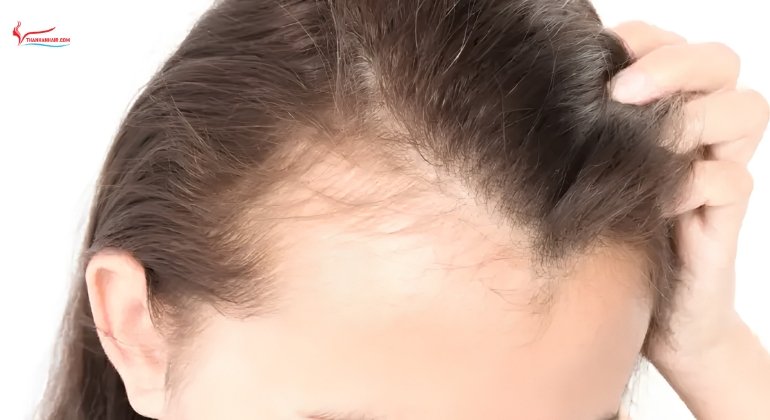
Here is the part most blog posts leave out. Traction alopecia follows a biphasic pattern: caught early it is nonscarring and fully reversible, but if the tension continues for months it can progress to permanent scarring where hair no longer grows back, as the clinical literature in StatPearls (NCBI) describes. The follicle is not harmed by the extension itself; the chronic pull shrinks the root and, left long enough, triggers inflammation and fibrosis.
That is the good news and the warning in one. Your scalp gives you time to react, but only if you know what to look for.
Early Warning Signs to Watch For
Stop and change your routine if you notice any of these along your hairline or partings, the areas that take the most tension:
- Redness or small bumps around the follicles, known as perifollicular erythema
- Tenderness, stinging, or a headache-like pulling where the clips sit
- Short, broken hairs or a fringe of fine regrowth at the hairline
- Thinning or a receding edge that was not there before
Caught at this stage, the fix is simple: stop the tension, switch to a lighter method, and let the area recover while you strengthen your natural hair. If thinning continues after you ease off, see a dermatologist or trichologist, because early treatment is what prevents permanent loss. Dermatology guidance is consistent that early intervention makes the difference.
How to Wear Clip Ins Daily Without Damaging Your Hair
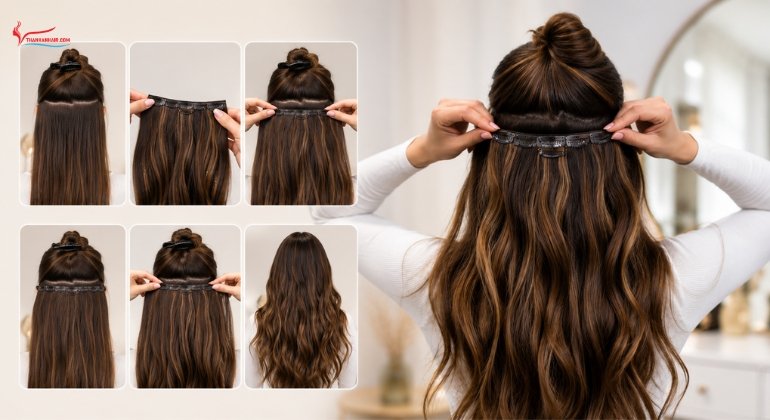
Safe daily wear comes down to a short, repeatable routine. Follow these steps every time and you spread the load across your hair instead of concentrating it in one place.
- Match the weight to your hair. Choose a set your own hair can actually carry. Fine hair needs a lightweight set with fewer wefts; reach for a fuller set only if your hair is genuinely dense. The weight of the wefts is the single biggest factor in whether daily wear is comfortable or stressful.
- Prep and section cleanly. Part your hair where the weft will sit and lightly tease the roots so the clips grip hair rather than sliding onto scalp. Clean, dry, tangle-free sections give the clips a stable base and stop them from dragging.
- Rotate where you clip. Move each weft up or down about a centimeter and change your parting every few days. Rotating placement is the habit that prevents one row of follicles from taking the load every single day.
- Clip along the tension line, never tight to the scalp. A snap clip should feel secure but never pinch. Any pulling, soreness, or headache-like sensation is your signal to reposition immediately. Pain is information, not something to tolerate.
- Remove before sleeping and showering. Never sleep or shower in clip-ins. Both press the clips into your scalp for hours and drag the wefts against fabric or water, which is where matting, breakage, and extra tension actually happen.
- Wash only when needed, then dry and store correctly. Wash the wefts when product builds up rather than on a schedule, air-dry them flat, and hang or lay them out to hold their shape. Over-washing shortens their life; correct storage keeps them smooth for the next wear.
- Build in rest days. Give your scalp extension-free days each week and pay attention to how your hairline and roots feel. Regular breaks let the follicles recover and make long-term daily wear sustainable.
Why Weft Weight and Clip Design Decide Everything
Most guides stop at use a lighter set. As a hair factory, we can be specific about why weight, weft construction, and clip hardware are what actually decide whether daily wear protects or stresses your hair.
Weft weight is scalp load. A clip-in weft transfers its entire weight to the small section of hair the clips grip. Full-head sets commonly range from around 100g up to 200g or more depending on volume [INSERT: Thanh An full-head set weights by volume, e.g. XXg / XXg / XXg]. Spread that weight across several wefts and rotate them, and the load per follicle stays low. Concentrate a heavy set on fine hair in the same spot every day, and you create exactly the repetitive tension that leads to traction alopecia.
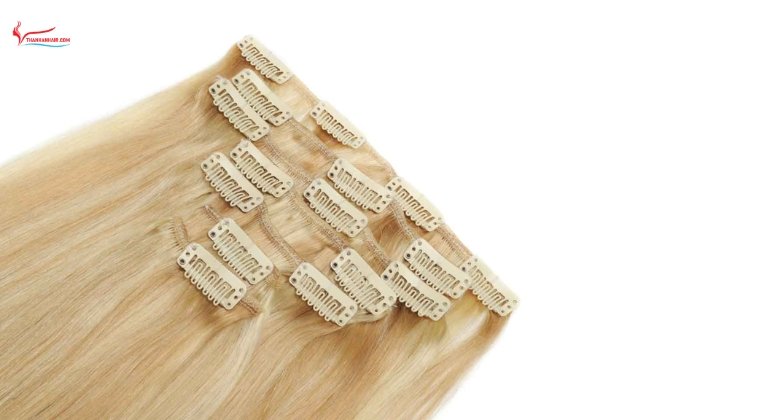
Weft construction changes the pull. A hand-tied or seamless PU weft sits flatter and lighter against the head than a thick, triple-stacked machine weft, so it distributes weight more evenly and hides more easily [INSERT: Thanh An weft types offered and their weights].
Clip design distributes or concentrates pressure. Silicone-lined snap clips hold with less bite than bare metal, spreading grip over a wider area so no single strand takes the strain. The number of clips per weft matters too; several smaller clips share the load better than a few large ones.
The hair itself matters. Single-donor raw hair with an intact, aligned cuticle stays smoother through daily clip-in and clip-out cycles, so it needs less force to detangle. Every hard brush stroke is tension on your own roots, which means smoother extension hair indirectly protects your scalp. [INSERT: one real attributable quote from founder or QC lead on weft weight or cuticle alignment – never fabricated].
Clip Ins vs Permanent Extensions for Everyday Wear
If you reach for clip-ins every single morning and the daily routine wears thin, a semi-permanent method may suit you better. None of them is safer by default; each just moves the tension around differently. Here is how the everyday-wear options compare.
| Method | Best for | Daily effort | Tension profile | Typical re wear |
| Clip-in wefts | Flexibility, occasional to daily | Clip in and out each day, 5 to 15 min | Concentrated at clip points; you control it | Reuse for months to a year or more with care |
| Halo (wire) | Fast daily volume, minimal tension | Drop on in seconds | Weight rests on the wire, not the roots | Similar to clip-ins |
| Tape-in | Low daily effort, seamless finish | None once applied | Spread along the tape; needs a pro to fit | 6 to 8 weeks per move-up |
| Nano ring / I-tip | Long-term, discreet | None once applied | Point tension at each bead or bond | 8 to 12 weeks per maintenance |
The short version: clip-ins and halos give you control and nightly rest, while tape-ins, nano rings, and I-tips remove the daily effort but hold gentle tension around the clock and need a professional for fitting and moves. If your hair is fine or already stressed, the ability to take clip-ins out every night is a real advantage.
Frequently Asked Questions
Can you wear clip in hair extensions every day?
Yes. Daily wear is safe for most average-to-thick hair when the set is light enough, you rotate placement, and you remove them at night. Fine or fragile hair can still wear them, but it needs a lighter set and rest days to keep tension off the roots.
Can you sleep in clip in extensions?
No. Sleeping in clip-ins presses the clips into your scalp for hours and drags the wefts against your pillow, which causes matting, breakage, and added tension. Take them out every night and store them flat or on a hanger.
Do clip in extensions damage your hair?
Clip-ins do not chemically damage hair. The damage risk comes from repeated tension in one spot, aggressive brushing, and sleeping in them. Used correctly, with rotated placement and gentle removal, most people wear them long-term without harm.
How many hours a day can you wear clip in extensions?
There is no fixed hour limit; a normal 8 to 12 hour day suits most people. What matters more is the weight, whether you rotate placement, and taking them out before sleep. If your scalp starts to feel sore, remove them sooner.
Are clip in extensions safe for fine or thin hair?
Yes, with caution. Fine hair should use lightweight sets, fewer wefts, and frequent placement changes. Watch the hairline for redness, tenderness, or thinning, which are early signs of traction alopecia, and switch to a lighter method if they appear.
How do I know if my clip ins are too heavy?
Warning signs include a pulling or headache-like sensation, sore spots where the clips sit, redness around the roots, and short broken hairs near the hairline. If you notice these, drop to a lighter set, use fewer wefts, or space out how often you wear them.
Get Clip-Ins Built for Daily Wear
Daily wear is only as safe as the set you start with. Thanh An Hair makes single-donor, cuticle-aligned clip-in wefts with silicone-lined clips, designed to stay light and blend cleanly wear after wear. Browse our clip-in hair extensions, or if you run a salon or resell hair, contact us for a color-matched sample and factory-direct wholesale pricing.
Contact Thanh An Hair today for expert consultation and the most competitive price list.
- WhatsApp/Hotline: (+84) 973 522 855
- Official Website: https://thanhanhair.com/
- Instagram: @thanhanhair
- Email: thanhanexport@gmail.com