
Raw Vietnamese Hair
How to Strengthen Hair for Thickness
Jul
How to strengthen hair for thickness, focus on the three things you can control: feed follicles with enough protein and key micronutrients, keep the scalp healthy with gentle washing and daily massage, and stop breakage by balancing protein with moisture and cutting heat damage. Strand diameter is largely genetic, but fuller, stronger hair is built through consistent care.
We make raw human hair for a living, which means we spend our days looking at individual strands under magnification and measuring what makes them strong or fragile. That perspective shapes this guide. Below you will find what thickness actually is, the habits that build it, and where a good set of extensions fits, without the myths that fill most hair-care articles.
What “thick hair” really means: density, diameter, and strand integrity
Most advice treats “thick” as one thing. It is really three, and separating them tells you what you can change. Density is how many hairs grow per square centimetre of scalp. Diameter is how wide each individual strand is, from fine to coarse. Integrity is how much of each strand survives daily life instead of snapping off. A head can look thin because of low density, fine strands, heavy breakage, or any mix of the three.
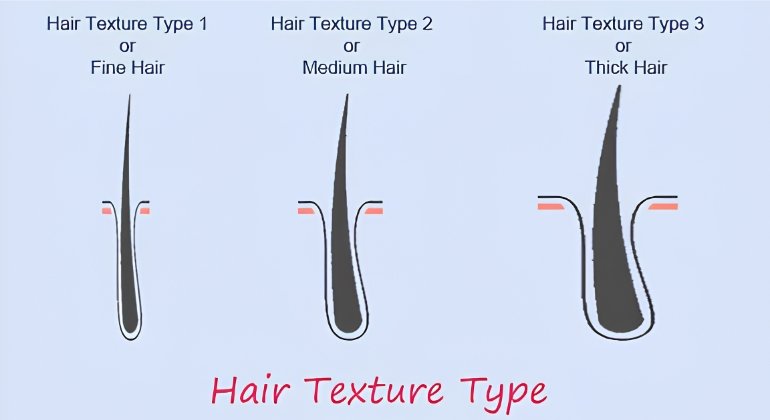
Here is the part no product label will tell you. Strand diameter is set mostly by genetics and hormones, so you cannot permanently turn fine hair into coarse hair. Density and integrity are a different story. You can protect the follicles you have, keep more of them in the growth phase, and stop the breakage that thins a ponytail from the mid-lengths down. That is where real, lasting fullness comes from.
| Factor | What it means | How much you can change it |
| Density (hairs per cm2) | Number of follicles actively growing | Moderate: protect follicles and support the growth cycle |
| Strand diameter | Width of each individual strand | Low: mostly genetic and hormonal |
| Strand integrity | How well each strand resists breakage | High: this is where daily care pays off |
The three components of hair thickness, and how much control you have over each.
Underneath, every strand is built from keratin, a tough structural protein wound into a core called the cortex and wrapped in overlapping scales called the cuticle. When the cuticle lies flat, hair reflects light, feels smooth, and holds its strength. When it lifts and chips away, the cortex is exposed, strands snap, and hair reads as thin and dull. Keeping that cuticle intact is the physical goal behind almost every tip that follows. If you want the full list of habits that quietly wreck it, our guide to 15 things you need to stop doing to your hair covers the worst offenders.
Strengthen hair from the inside: the nutrients that build keratin
Your body cannot build keratin out of nothing. Every strand is grown from the raw materials in your bloodstream, so a follicle starved of protein or key minerals produces a thinner, weaker fibre, or shifts into resting mode and sheds. Protein is the headline. Eggs, fish, chicken, dairy, beans, lentils, and tofu supply the amino acids that become keratin, and most people who eat too little protein see it in their hair before anywhere else.

Minerals and vitamins do the supporting work. Iron carries oxygen to the follicle, zinc drives tissue repair, vitamin D helps wake resting follicles, and omega-3 fats keep the scalp supple. A genuine shortfall in any of these can trigger shedding or finer regrowth, which is why a varied diet beats any single pill.
| Nutrient | Why hair needs it | Good food sources | Sign intake may be low |
| Protein | Builds the keratin in every strand | Eggs, fish, chicken, beans, tofu | Weak, brittle, slow-growing hair |
| Iron | Delivers oxygen to the follicle | Red meat, lentils, spinach, tofu | Increased shedding, fatigue |
| Zinc | Supports follicle tissue repair | Shellfish, seeds, chickpeas | Slow repair, more breakage |
| Vitamin D | Helps cycle resting follicles | Oily fish, eggs, sunlight | Diffuse thinning |
| Omega-3 | Keeps the scalp and strands supple | Salmon, flaxseed, walnuts | Dry, dull scalp and hair |
Core nutrients for hair growth, common food sources, and what a shortfall can look like.
One popular ingredient deserves a caveat. Biotin is marketed everywhere as a thickness fix, but the evidence does not back it for people who are not deficient. A review in the journal Skin Appendage Disorders found that biotin only improved hair in patients with a genuine underlying deficiency, and the NIH Office of Dietary Supplements notes there is no good evidence it helps hair or nails in well-nourished people. Real biotin shortage is rare. If you eat a balanced diet, your money does more for your hair on the plate than in a supplement bottle.
Stress and sleep close the loop. A stressful stretch, a crash diet, illness, or childbirth can push a wave of follicles into the resting phase, and the shedding shows up two to three months later. There is no supplement for that, only recovery, steady meals, and time. If you are curious how everyday habits feed into this, our roundup of 2026 wellness trends that are good for your hair connects the dots.
Scalp care that actually moves the needle
Healthy hair starts at the follicle, so the scalp deserves the same attention as your skin. The most reliable, research-backed scalp habit is also the cheapest: massage. In a controlled study published in ePlasty, men who massaged their scalp for four minutes a day saw measured strand thickness rise from 0.085 mm to 0.092 mm over 24 weeks (Koyama et al., 2016). The proposed mechanism is mechanical: stretching the cells at the base of the follicle switches on growth-related genes. Use firm fingertips, move the scalp itself rather than just gliding over hair, and give it four to five minutes daily.
Washing matters too, in both directions. Over-washing with harsh, high-lather shampoo strips protective oils and leaves the scalp dry and irritated, while going too long lets sweat, sebum, and product build up and smother follicles. For most fine or thinning hair, two to three gentle washes a week hits the balance. Reach for a low-pH, sulphate-free formula, and if your scalp turns flaky or red, calm it before chasing growth, because an inflamed scalp grows weaker hair.
One myth needs retiring: a cold-water rinse does not “seal” the cuticle and it will not make hair thicker. What actually governs how flat the cuticle lies is pH, not temperature. Hair sits at an isoelectric point near 3.67, and research in the International Journal of Trichology shows that products more alkaline than the hair raise the cuticle and increase friction, while mildly acidic ones keep the scales compact and smooth. A cool rinse feels nice and can reduce frizz slightly, but the real lever is a well-formulated, appropriately acidic product, not an icy shower.
Protect the strand: breakage is where thickness disappears
Once your follicles are producing decent hair, the whole game becomes protecting it. Most “sudden” thinning is not lost follicles at all; it is accumulated breakage that snaps strands halfway down and hollows out a ponytail. Two forces keep a strand resilient, and they have to stay in balance: protein and moisture. Protein treatments rebuild the keratin structure and add strength, while moisture keeps the fibre flexible so it bends instead of shattering. Too much protein and hair turns stiff and brittle; too much moisture and it goes limp and mushy. Alternating a strengthening protein treatment and a hydrating mask every couple of weeks keeps most hair types in the sweet spot.

Then remove the things that chip the cuticle. Heat is the big one: give your hair air-dry days, always use a heat protectant, and keep irons and dryers on a medium setting rather than the maximum. Friction is the quiet one. Brushing wet hair, rough towels, and cotton pillowcases all drag on a swollen, vulnerable cuticle, so detangle from the ends upward with a wide-tooth comb, blot with a soft towel, and switch to a silk or satin pillowcase. If you wear extensions, drying them gently matters just as much, and our guide on how to dry hair extensions without heat damage walks through it. Colour, bleach, and perms weaken strands too, so if you colour, work with a stylist who protects the hair’s integrity and space chemical services out.
How to strengthen hair for thickness: a 6-step weekly routine
You do not need a shelf of products. This is the core routine, in order, that pulls the science above into something you can actually keep up.
- Wash gently, 2 to 3 times a week. Use a low-pH, sulphate-free shampoo two to three times a week. Focus the lather on your scalp to lift oil and buildup, and let the conditioner protect your mid-lengths and ends.
- Massage your scalp daily. Spend four to five minutes a day massaging your scalp with firm fingertips. Move the scalp itself in small circles rather than gliding over the hair, because the mechanical stretch is what supports growth.
- Balance protein and moisture. Every two weeks, alternate a strengthening protein treatment with a hydrating mask. Protein rebuilds the keratin structure and moisture keeps strands flexible, so together they stop breakage.
- Cut the heat damage. Take air-dry days when you can. When you do style with heat, apply a heat protectant first and keep hot tools on a medium setting, about 180 degrees C (350 degrees F), rather than the highest.
- Handle hair gently. Detangle from the ends upward with a wide-tooth comb, blot with a soft towel instead of rubbing, and swap your cotton pillowcase for silk or satin to cut friction while you sleep.
- Feed your follicles and trim. Eat protein at every meal and include iron-rich, zinc-rich, and omega-3-rich foods. Trim your ends every eight to twelve weeks so split ends cannot travel up the shaft and thin your lengths.
Consistency beats intensity here. A routine you follow for months quietly compounds, while an aggressive regimen you abandon in two weeks does nothing.
Using hair extensions for instant thickness without damage
Sometimes you want fuller hair today while the slow work happens underneath, and good extensions are the honest shortcut. The safety rule comes first. Extensions add weight, and weight pulls on your follicles. Worn too tight, too heavy, or for too long, they cause traction alopecia, a tension-driven hair loss that starts as tiny bumps and broken hairs at the hairline and can become permanent if ignored. The American Academy of Dermatology advises wearing weaves or bonded extensions for no more than two to three months at a stretch, then giving your hair a break, and asking your stylist to loosen anything that hurts.
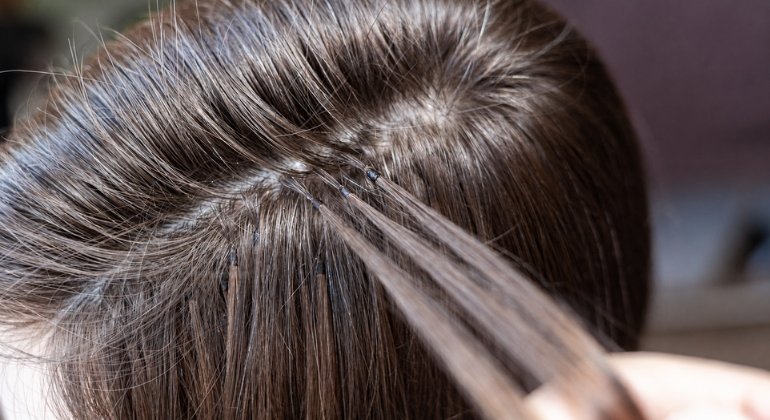
Quality is the other half, and this is where what you buy makes a physical difference. As a manufacturer, we sort raw hair so the cuticle stays intact and runs in one direction, and we build wefts and bonds to a controlled weight. Cuticle-aligned, single-donor hair moves and reflects light like your own, so it blends instead of announcing itself, and it resists the tangling and matting that make cheap hair feel heavy and look fake. Lighter, well-made pieces put less strain on your roots, which is exactly what fine or thinning hair needs.
Match the method to your hair. Lightweight clip-in extensions and halo extensions add volume with zero adhesive and come off at night, which makes them the gentlest option for fine hair. For semi-permanent fullness, hand-tied wefts spread tension across a row rather than a single point, while tape-in extensions lie flat and suit finer hair when applied correctly. If you or your stylist build custom sets, our single-donor bulk hair and nano ring and keratin tip hair give you consistent, cuticle-aligned strands to work with. Whatever the format, lightweight and well-made protects the hair you are trying to grow. New to this? Start with our guide to buying hair extensions.
How long until your hair looks thicker?
Hair is a slow-moving project, so set your clock by biology. Each strand grows in a cycle: a long growth phase (anagen) that runs for years, a brief transition, and a resting phase (telogen) of a few months before the strand sheds and a new one starts (Hughes and Saleh, StatPearls-indexed review). Scalp hair grows around one centimetre, roughly half an inch, per month, and only the hairs in the growth phase are lengthening at any moment. That is why change is gradual.

If you tightened up your diet, scalp care, and breakage habits today, expect less breakage within a few weeks, and visibly stronger, fuller-feeling hair over three to six months of consistency. When shedding follows a specific trigger like illness, stress, or childbirth, the pattern is predictable: the shed starts two to three months after the event, and density usually recovers over the following six to twelve months once the trigger passes. Small daily acts stack up quietly until one day your ponytail feels thicker.
One caveat matters for your health, not just your hair. Losing 50 to 100 hairs a day is normal, but rapid shedding, widening partings, or bald patches are not something to self-treat or cover with extensions. Hormonal shifts, thyroid problems, iron deficiency, and forms of alopecia need a real diagnosis. If your hair loss looks sudden or patchy, see a board-certified dermatologist or trichologist, because the sooner the cause is found, the better the outcome.
Add real thickness with manufacturer-grade raw hair
Thanh An Hair has spent two decades manufacturing cuticle-aligned, single-donor raw hair for salons and wholesale buyers worldwide. If you want lightweight extensions that add real thickness without straining fine hair, contact us for wholesale pricing and a sample and see the difference quality raw hair makes.
Contact Thanh An Hair today for expert consultation and the most competitive price list.
- WhatsApp/Hotline: (+84) 973 522 855
- Official Website: https://thanhanhair.com/
- Instagram: @thanhanhair
- Email: thanhanexport@gmail.com