
Raw Vietnamese Hair
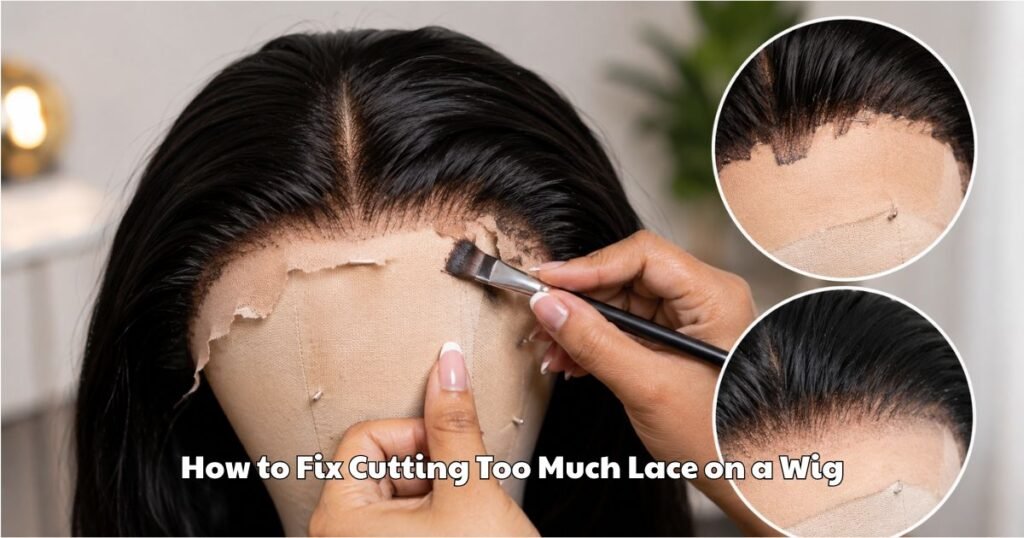
How to Fix Cutting Too Much Lace on a Wig
Aug
If you cut too much lace on a wig, stop cutting and check what is left. With at least 1/8 inch of lace past your hairline, tint the exposed edge with concealer and lay baby hairs over it. With no lace left at the front, have the hairline re-ventilated or switch to a glueless install.
Most guides on this topic tell you to assess the damage and then move straight to the same seven tricks, regardless of what you actually cut. That is where they lose people. A wig with a shaved 1/16 inch margin and a wig with the ear tab lopped off need different repairs, and one of those two problems is not fixable with makeup. Below is the triage we use in the factory when a customer sends back a frontal, followed by six repairs ranked by what they cost you in time and skill.
How to Fix Cutting Too Much Lace on a Wig: Start With a Damage Check
Three checks decide everything that follows. Hold the wig on a mannequin head, comb the front hair back, and look at the cut edge under bright light.
- Where did you cut? The frontal edge, the ear tabs, and the temple corners fail differently. An over-cut ear tab lifts the wig sideways. An over-cut front edge shows scalp.
- Did you pass the knot row? Look for the line of knots where hair is tied into the lace. If your cut sits in front of that line, you removed lace only. If strands at the front are now blunt and short, you cut hair.
- Does the wig still sit where it should? Put it on. If the cap now pulls forward to cover the gap, the fix is repositioning, not camouflage.
Damage triage for an over-cut lace wig
| What you see | What it means | First move |
| 1/8 inch or more of lace remains, edge cut straight or notched | Cosmetic only. Nothing structural is gone. | Tint the edge, add baby hairs |
| Lace cut flush to the knot row, no margin left | Recoverable, but no glue surface at the front | Pluck back, reposition, or patch lace |
| Front strands blunt and short, knots exposed or clipped | Hair was cut, not just lace. Not a home repair. | Professional re-ventilation |
| Ear tab gone, wig lifts at the temple | Anchor point lost on one or both sides | Sewn elastic band or wig grip |
Six Ways to Fix Over-Cut Lace on a Lace Front Wig
Which repair solves how to fix cutting too much lace on a wig depends entirely on the tier you landed in above. Work down this list in order. The first two solve a night out. The next two solve the wig. The last two change how you wear it.
1. Tint the exposed lace edge

This is the fastest repair and the one that buys you an evening. A high-coverage cream concealer, stippled onto the lace and set with powder, closes the visual gap between the cut edge and your skin. Match one shade deeper than your scalp rather than lighter, since a light edge catches flash photography and reads as a line.
- Stop cutting and measure the margin. Put the scissors down. Measure how much lace sits between your hairline and the cut edge. Anything at or above 1/8 inch can be camouflaged. A cut flush into the knot row needs a different route.
- Clean and dry the exposed strip. Wipe the lace edge and the skin below it with 70 percent isopropyl alcohol on a cotton pad. Let it dry for two minutes. Concealer grips a clean surface and slides off an oily one.
- Tint the lace edge to match your scalp. Stipple a high-coverage cream concealer one shade deeper than your skin onto the exposed lace with a small flat brush. Press, do not stroke. Set with translucent powder so it stops transferring onto the hair.
- Lay baby hairs across the cut line. Pull ten to fifteen strands forward from the front knot row and trim them to about one inch. Work a pea of edge control through them, then swoop them across the cut edge so the eye reads texture instead of a straight line.
- Secure the wig without pulling on your hairline. Fit a velvet wig grip or a sewn-in elastic band behind your natural hairline. Keep any adhesive at least half an inch back from your edges. The wig should hold without tension at the front.
2. Build baby hairs to break the straight line
A cut edge gives itself away because it is straight. Hairlines are not. Pulling a small amount of hair forward from the first knot row and laying it across the edge removes the geometry that makes the mistake visible.

Take strands from the very front of the cap, not from the middle, or you will thin the part. Trim to about one inch, wet them, and set them with a light gel. Two swoops on each side of center is enough. Overloading the front with baby hairs on a lace frontal creates a second obvious tell, so keep the count low.
3. Patch or re-ventilate the lace
This is the only repair that puts lace back. You have two versions of it. Patching means stitching a small piece of matching lace onto the cut edge and blending the seam under baby hairs. Re-ventilating means a technician ties new hair into fresh lace, knot by knot, to rebuild a hairline.
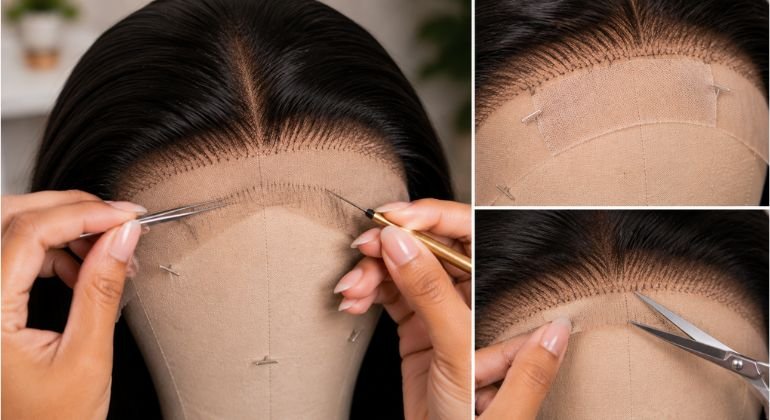
Patching works on transparent and Swiss lace, which have enough body to hold a stitch. It fails on HD lace, where the needle tears the mesh. Re-ventilation works on both, costs more, and takes days rather than minutes. If the wig is a full lace wig or another piece you plan to wear for a year or more, re-ventilation is worth the wait.
4. Pluck the hairline back and reset the part

When the lace is short but the hair is intact, thinning the front density makes the shortfall less obvious. Pin the wig to a mannequin, mist it, and tweeze in a pluck-and-skip pattern along the first two knot rows. Removing density scatters the light and softens the edge.
Watch the trap here. Over-plucking to hide a bad cut is how a wig gets a thin, receding front that no install fixes. Take out a few knots, comb back, and look again before you continue.
5. Go glueless with an elastic band or wig grip
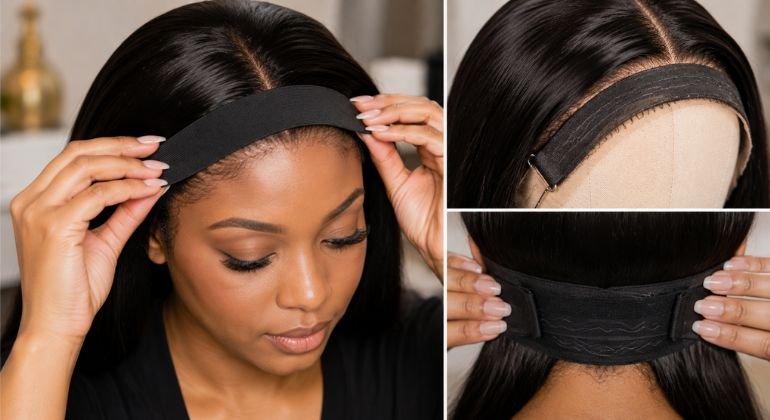
With little or no lace margin, adhesive at the front has nothing safe to bond to. A sewn-in elastic band running ear to ear inside the cap holds the wig by compression instead. A velvet or silicone wig grip does the same job without sewing and sits behind your hairline.
This route also removes the traction problem. The American Academy of Dermatology warns that hairstyles that pull at the hairline can cause traction alopecia, and researchers at Johns Hopkins have flagged adhesives and rubbing wig caps as contributors to breakage at the front. A grip that sits behind the hairline avoids both.
6. Move the whole wig back
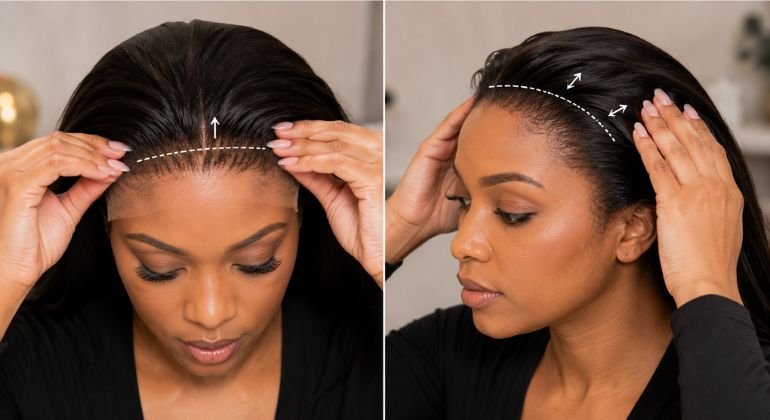
The overlooked fix. Shifting the cap a quarter inch further back on your head puts your own hairline in front of the cut edge, which hides it completely. You lose a little forehead and you may need to adjust the ear tabs, but the wig becomes wearable in under a minute with nothing but your hands.
Comparing the six repairs
| Repair | Time | Skill needed | Cost | How long it holds | Best for |
| Tint the edge | 10 minutes | None | Makeup you own | One wear | Any wig with 1/8 inch left |
| Baby hairs | 15 minutes | Low | Gel you own | One wear | Straight cut edges |
| Patch new lace | 1 to 2 hours | Sewing | Lace plus thread | Permanent | Transparent or Swiss lace |
| Re-ventilation | Days, by a technician | Professional | Service fee | Permanent | Cut knots, HD lace, high-value wigs |
| Pluck and reset | 30 minutes | Moderate | Free | Permanent | Short margin, intact hair |
| Move the wig back | 1 minute | None | Free | Every wear | Anyone with forehead to spare |
What Not to Do After You Cut Too Much Lace
- Do not keep cutting to even it up. Every correction pass removes more margin. Uneven lace hides under baby hairs. Absent lace does not.
- Do not reach for cyanoacrylate glue. Instant adhesives sold for household repair are not skin products, and ectopic contact dermatitis from ethyl cyanoacrylate is documented in the dermatology literature.
- Do not apply adhesive over irritated or broken skin. If your hairline is red, flaking, or sore from a previous install, wait until it settles.
- Do not tighten the wig to close the gap. Pulling the cap forward and cinching the straps loads tension straight onto the follicles at your temples.
Adhesive Safety When You Have No Lace Margin
This part gets skipped in most repair guides, and it matters more once the lace is short, because the natural instinct is to move the glue closer to your skin to compensate.
Wig fixatives are documented triggers for allergic contact dermatitis. A 2020 case in Contact Dermatitis traced acrylate allergy to a hair prosthesis fixative, and an earlier report identified 2-ethylhexyl acrylate in a wig-fixing adhesive tape as the culprit. Reactions typically appear hours after application rather than immediately, which is why people miss the connection.
Three rules keep the front edge safe:
- Patch test any new adhesive on the inner forearm and wait 48 hours before it goes near your hairline.
- Keep adhesive at least half an inch behind your natural edges. The bond does not need to reach your hairline to hold.
- Give the front a rest between installs. Sustained tension at the temporal and preauricular scalp is the classic pattern in traction alopecia, which is reversible early and scarring once it is chronic.
How Much Lace to Leave When You Cut a Wig Next Time
Leave 1/8 to 1/4 inch of lace past your natural hairline. That margin gives adhesive a surface to grip and gives you room to correct. Guidance elsewhere that tells you to leave several inches applies to trimming before an install, not to the final cut, and following it literally leaves lace that will not melt flat.
- Pin the wig to a mannequin head and comb the front hair backward.
- Put the wig on your head and mark your hairline position with a light pencil line on the lace.
- Return the wig to the mannequin and cut the ear tabs first, in a shallow C shape, so the lace lies flat around the ear.
- Cut the front margin last, 1/8 to 1/4 inch below your pencil line, in a shallow zigzag rather than a straight line.
- Try it on before you trim any further. Most over-cutting happens on the second pass.
Lace type changes your margin for error. HD lace is thin enough to disappear on skin but tears at the cut edge and cannot be stitched. Transparent and Swiss lace sit slightly higher on the skin and forgive a rough cut. If you are prone to over-cutting, a pre-cut hairline on a frontal wig removes the step entirely.
Why Lace Construction Decides How Fixable Your Wig Is
From the manufacturing side, the difference between a repairable wig and a write-off is set before it ships. Three factors do the work.
Lace margin at production. A frontal leaves our line with a wide, uncut perimeter so the wearer can trim to their own hairline. Cutting into that reserve is what people are actually doing when they over-cut. A generous factory margin is the buffer.
Knot density at the first row. Hairlines are ventilated with lower density at the front and higher density behind, which is what makes the transition look natural. When someone cuts through the first row, they remove the lightest knots, and the remaining edge reads abruptly dense. This is why plucking helps: it recreates the gradient.
Fiber quality. Cuticle-aligned single-donor hair holds a re-ventilated knot without slipping and survives repeated re-installs. Mixed-donor hair with stripped cuticles loosens at the knot, so a repaired hairline sheds. If you buy lace closures for a salon or a resale line, this is the specification that determines whether your customers can recover from a bad cut at all.
Demand for these products keeps climbing. Grand View Research valued the global hair wigs and extensions market at 15.22 billion dollars in 2025, with wigs the dominant segment in North America. More wigs in circulation means more first-time installs, and more first-time installs mean more scissors held too close to the hairline.
Frequently Asked Questions
Can you fix cutting too much lace on a wig without buying a new one?
In most cases, yes. If any lace remains in front of the knot row, concealer plus baby hairs hides the cut edge for a single wear. If the lace is gone entirely, a wig technician can ventilate a new hairline onto the cap, which restores the wig for repeat use.
How much lace should you leave when cutting a wig?
Leave roughly 1/8 to 1/4 inch of lace past your natural hairline, then cut that margin in a shallow zigzag rather than a straight line. Advice to leave several inches is wrong for a front install, since excess lace will not melt flat and lifts at the temples.
Does cutting too much lace ruin a wig permanently?
Only when the scissors pass the knot row and sever the hair strands themselves. Lace alone can be patched or re-ventilated. Cut hair at the front cannot regrow, so the hairline has to be rebuilt strand by strand or the part moved further back.
Can you glue a wig directly to your skin if no lace is left?
You can, but keep the adhesive back from your hairline and patch test first. Case reports in the dermatology literature link wig fixatives to allergic contact dermatitis from acrylates, and adhesive pulled off the front edge repeatedly is a known traction risk.
Is HD lace harder to fix than transparent lace after over-cutting?
Yes. HD lace is thinner and more open, so it holds a stitched patch poorly and tears under needle tension. Transparent and Swiss lace have enough body to take a sewn repair. With HD lace, plan on re-ventilation or a camouflage fix rather than a patch.
Get Lace That Gives You Room to Cut
Knowing how to fix cutting too much lace on a wig gets you through the install in front of you. The lace you start with decides whether there is anything to fix. Thanh An Hair has manufactured raw Vietnamese hair for two decades, and we ventilate our closures, frontals, and wigs with a wide uncut lace perimeter for exactly the reason above. If you supply a salon or run a resale line and want to see how our lace and knot work compares to what you carry now, contact our team for a sample and factory-direct pricing.
Ready to find your perfect match? Contact us today for expert advice and exclusive discounts on premium human hair extensions.
📲Phone/WhatsApp: +1 (206) 698‑5133
🛜Instagram: RAW HAIR LUXURY COMPANY
🌐Tik Tok: RAW HAIR LUXURY
📧 Email: Rawhairluxury.us
🌐Website: rawhairluxury.com