
Raw Vietnamese Hair
Weft Hair Extension Tool: Essential Guide for Salons (2026)
Nov
To sew and install weft hair extensions professionally, salons need suitable needles, specialized thread, silicone beads, pliers, sectioning combs, and other accessories. Choosing the right weft hair extension tools helps technicians create secure weft rows, work accurately, reduce unnecessary tension on natural hair, and achieve natural-looking results.
For salons offering hair extension services, investing in appropriate equipment can improve workflow and service quality. This guide explains the essential tools, their functions, and how to choose and maintain them.
1. Why Do Salons Need the Right Weft Hair Extension Tools?
Weft hair extensions are pre-sewn strips of hair attached to a client’s natural hair. Depending on the installation technique, technicians may sew the wefts onto braided rows or use silicone-lined beads to create a foundation.
Unlike tape-in or keratin extensions, weft installation involves several steps, including sectioning, preparing the foundation, securing the hair, and sewing the weft. Each step requires tools that are easy to control and suitable for the chosen technique.
A complete set of hair extension tools helps technicians create consistent stitches, secure attachment points, and distribute the extension weight more evenly. Salons should also clean and disinfect reusable equipment appropriately between clients to maintain hygiene and reduce the risk of cross-contamination.
2. Essential Tools for Sewing and Installing Weft Hair Extensions
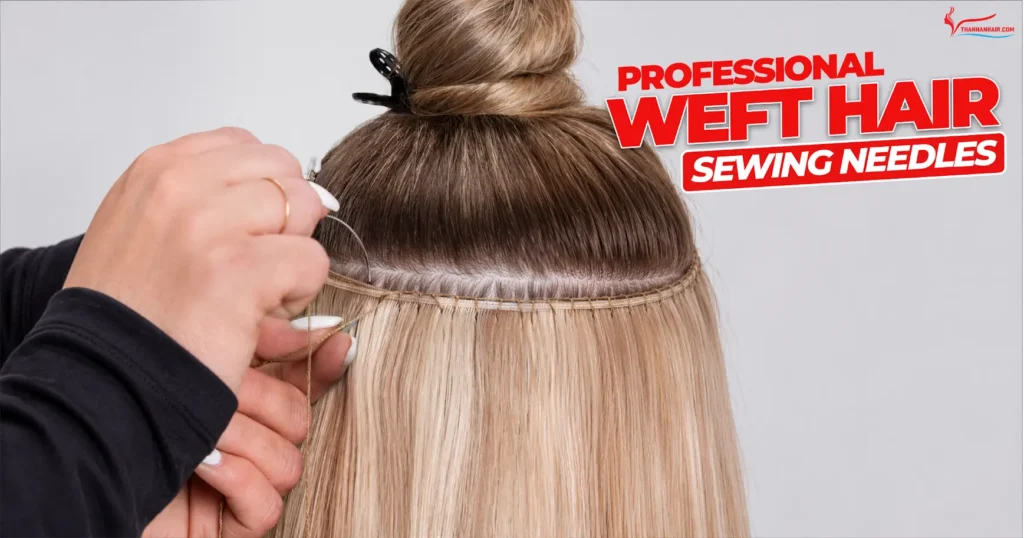
2.1. Professional Weft Hair Sewing Needles
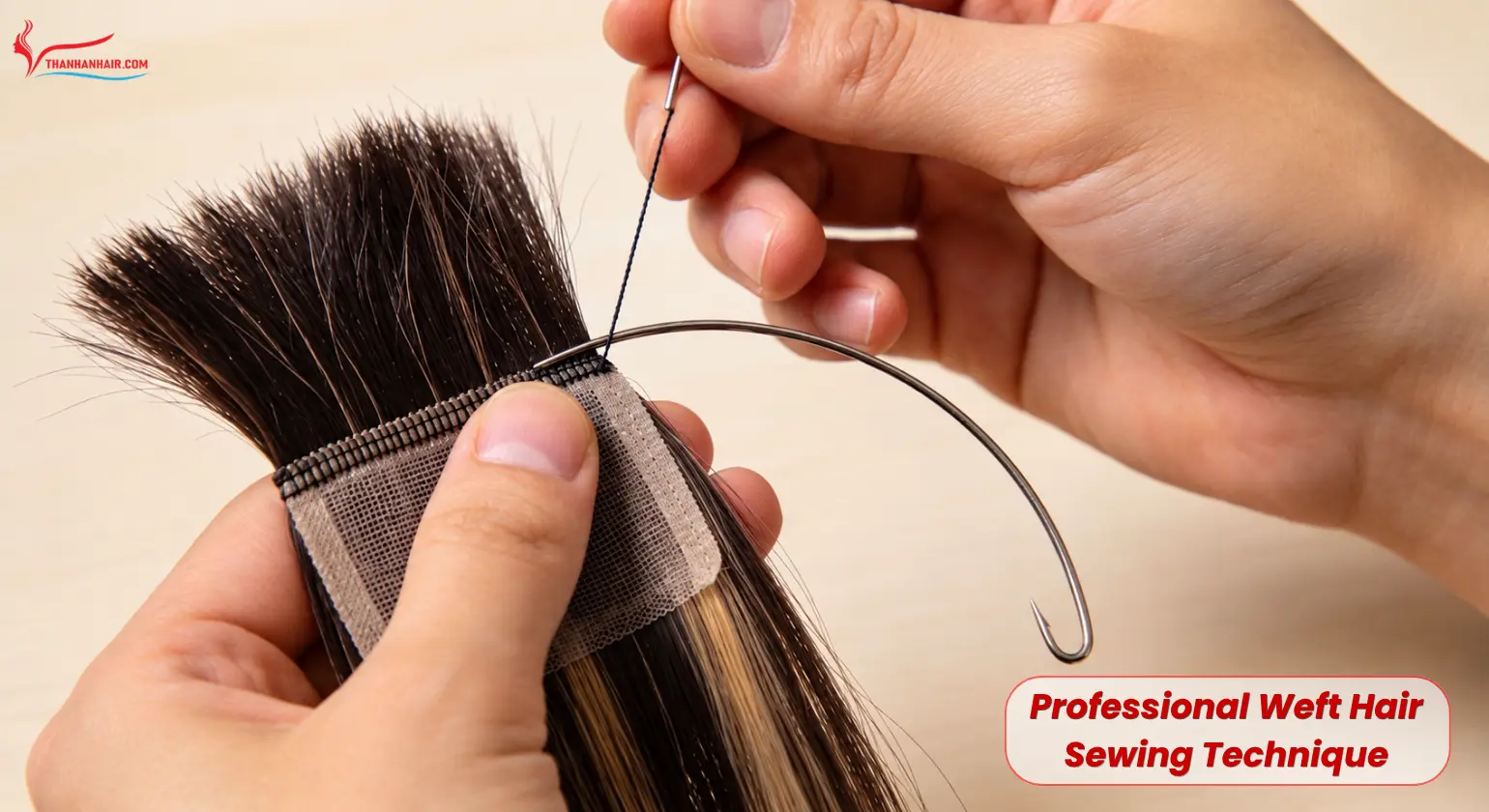
Needles are among the most important tools for sew-in weft installation. Salons commonly use two types:
- Curved needles: Their shape helps technicians pass thread through braided foundations or prepared hair rows.
- Straight needles: Suitable for techniques that require direct stitching and precise control.
When choosing weft hair sewing needles, consider their curvature, sharpness, durability, and eye size. A needle that is too large may create bulky stitches, while one that is too small can make threading difficult.
Professional extension needles are generally preferable to ordinary sewing needles because they are designed for specific installation techniques. Salons should keep several suitable sizes available for different working methods.
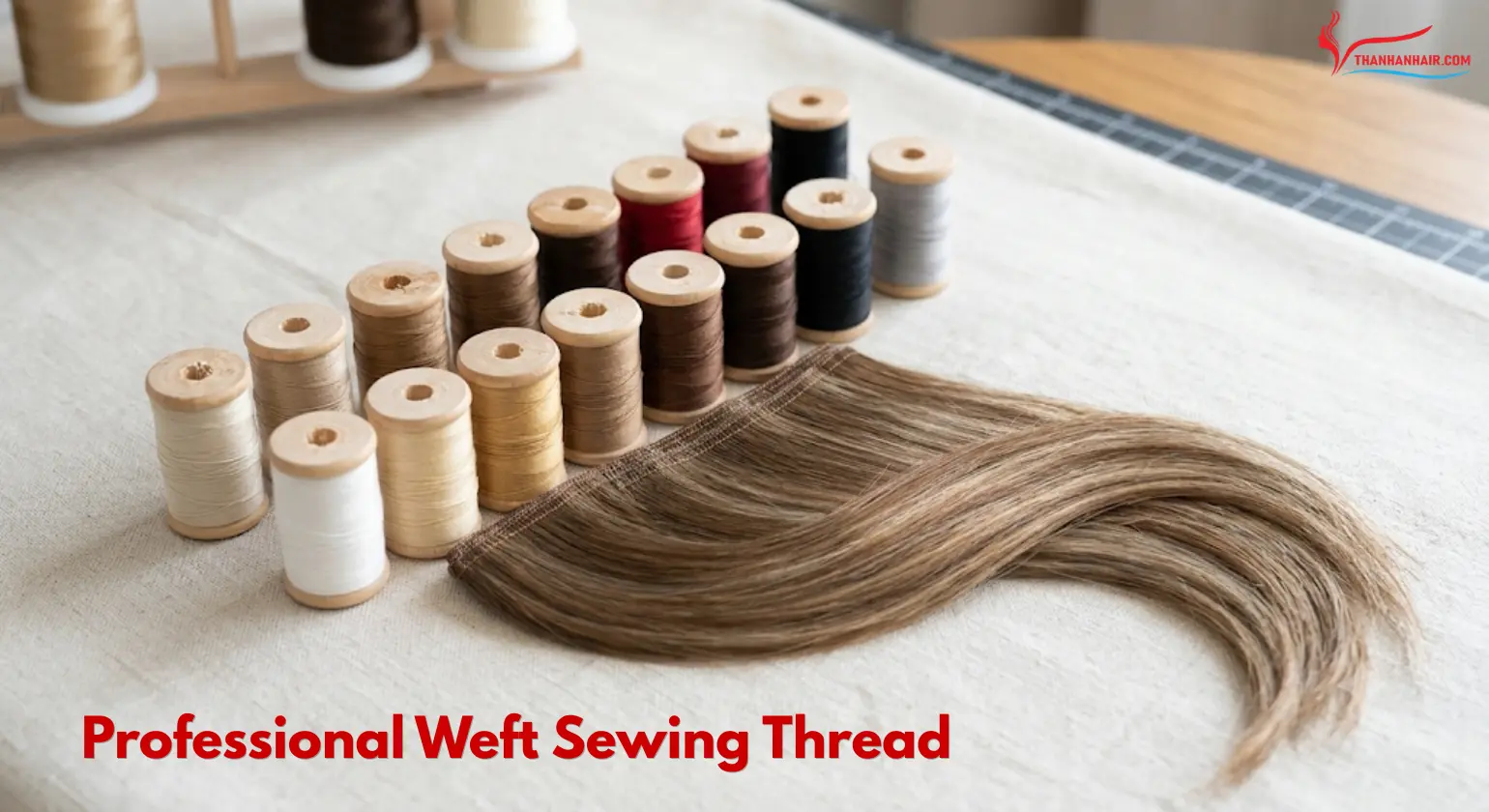
2.2. Specialized Weft Hair Sewing Thread
Sewing thread connects the weft to the prepared foundation, so its strength and quality affect installation security. Choose professional extension thread with good tensile strength, minimal fraying, and suitable thickness.
Important factors include:
- Strength: The thread should withstand normal tension during everyday wear.
- Thickness: It should be strong without creating bulky stitches.
- Color: A shade close to the client’s hair or foundation makes stitching less noticeable.
- Knot security: Knots should remain stable during normal use.
Technicians should check that the thread passes smoothly through the needle eye and test the stitching before working on a client. Avoid pulling too tightly, as excessive tension may place unnecessary stress on natural hair.
For salons providing weft services regularly, keeping several thread colors available is a practical way to accommodate different hair shades.
2.3. Silicone-Lined Hair Extension Beads
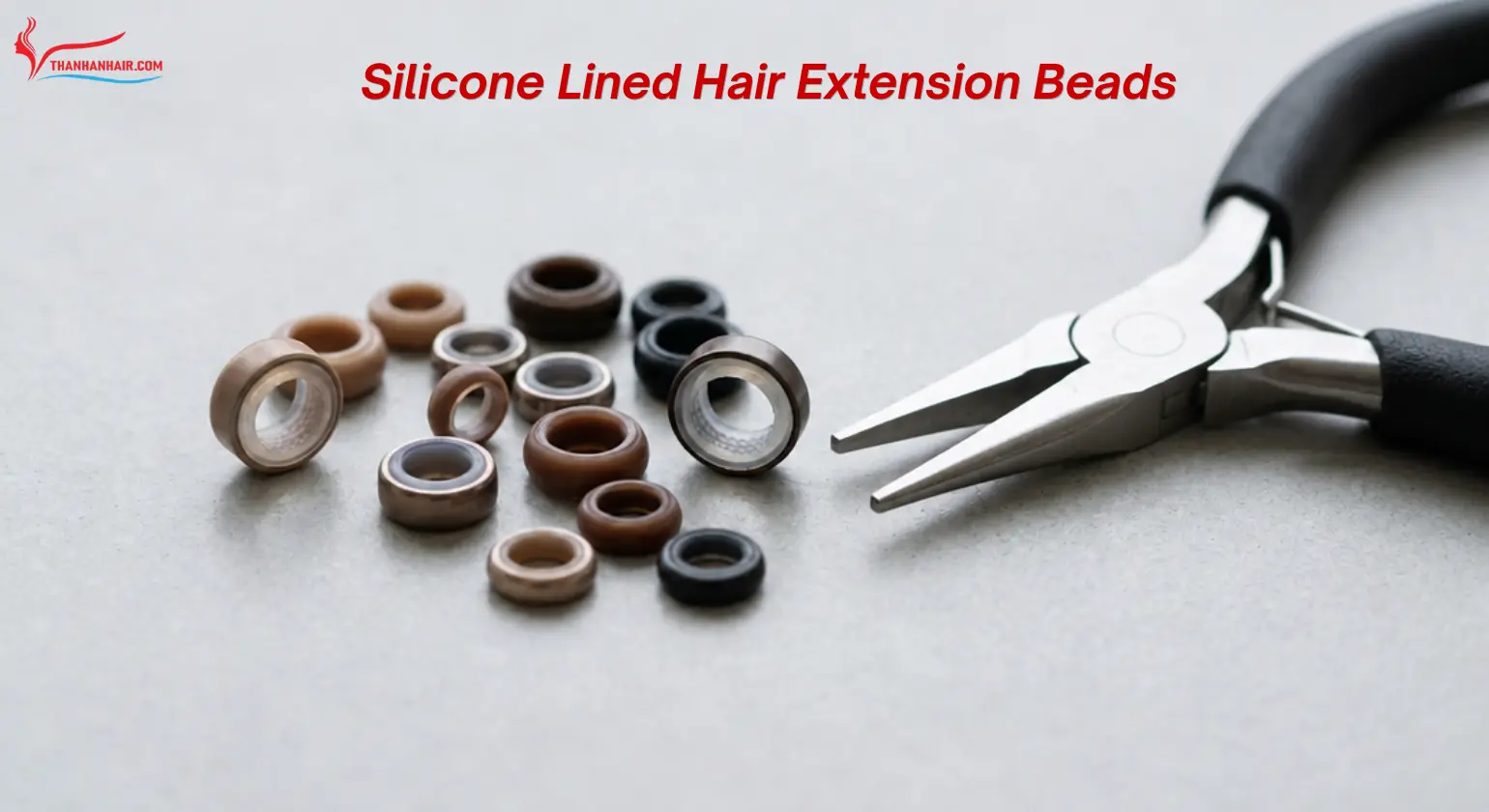
Silicone-lined beads are used in beaded-row installation and techniques that combine beads with sewn wefts. Their silicone lining helps improve grip and reduce direct friction between the metal bead and natural hair.
When selecting silicone hair extension beads, check:
- Whether the bead size suits the thickness of the hair section.
- Whether the silicone lining is intact and properly fitted.
- Whether the surface is smooth and free from sharp edges.
- Whether the color blends with the client’s natural hair.
Beads that are too small may concentrate pressure on a limited section of hair, while oversized beads can create bulky attachment points. Technicians should distribute hair evenly and replace beads with damaged or deformed linings.
These beads are important weft hair extension tools for salons that offer beaded-row or combined installation techniques.
2.4. Bead Closing and Removal Pliers
Specialized pliers help technicians secure and remove beads during installation and maintenance appointments.
- Bead closing pliers: Compress beads to hold the hair securely.
- Bead removal pliers: Open beads during removal without unnecessary pulling.
- Small-tip pliers: Provide better control when working close to the roots or in limited spaces.
Technicians should apply controlled pressure. Excessive force may deform the beads, while insufficient pressure can cause attachment points to slip. These tools should be selected according to the bead type and installation method.
2.5. Sectioning Combs, Hair Clips, and Measuring Tools
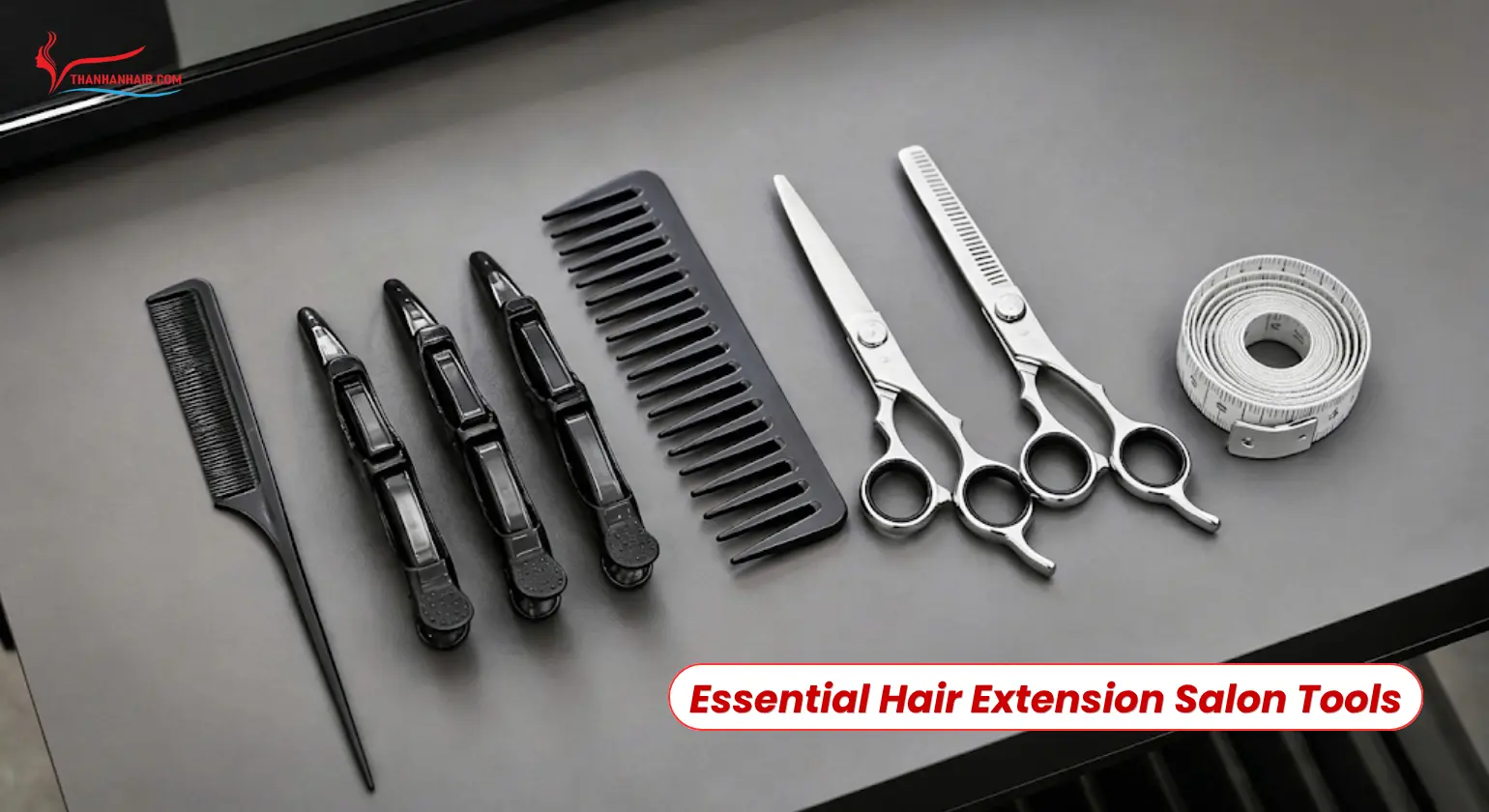
Accurate sectioning helps create balanced weft rows and makes installation easier. Essential accessories include:
- Tail comb: Creates clean, precise sections.
- Sectioning clips: Keep unused hair away from the working area.
- Wide-tooth comb: Helps detangle hair gently.
- Measuring tape: Checks weft length and placement.
- Professional scissors: Trim excess thread or handle hair when required.
Although these accessories are simple, they help technicians maintain an organized workflow and work more efficiently.
3. How to Choose Tools for Different Weft Installation Techniques
Not every salon needs the same equipment. The right tools depend on the installation method, service volume, and technicians’ experience.
| Installation technique | Recommended tools | Key considerations |
| Sew-in weft | Curved needles, thread, combs, clips | Maintain even stitching and controlled tension |
| Beaded row | Silicone-lined beads, closing and removal pliers, comb | Choose suitable bead sizes |
| Combined bead and weft | Needles, thread, beads, pliers, clips | Secure the foundation and distribute weight evenly |
For sew-in methods, needles and specialized thread are essential. Beaded-row techniques require suitable silicone hair extension beads and pliers. Salons offering both methods should prepare a versatile set of weft hair salon tools.
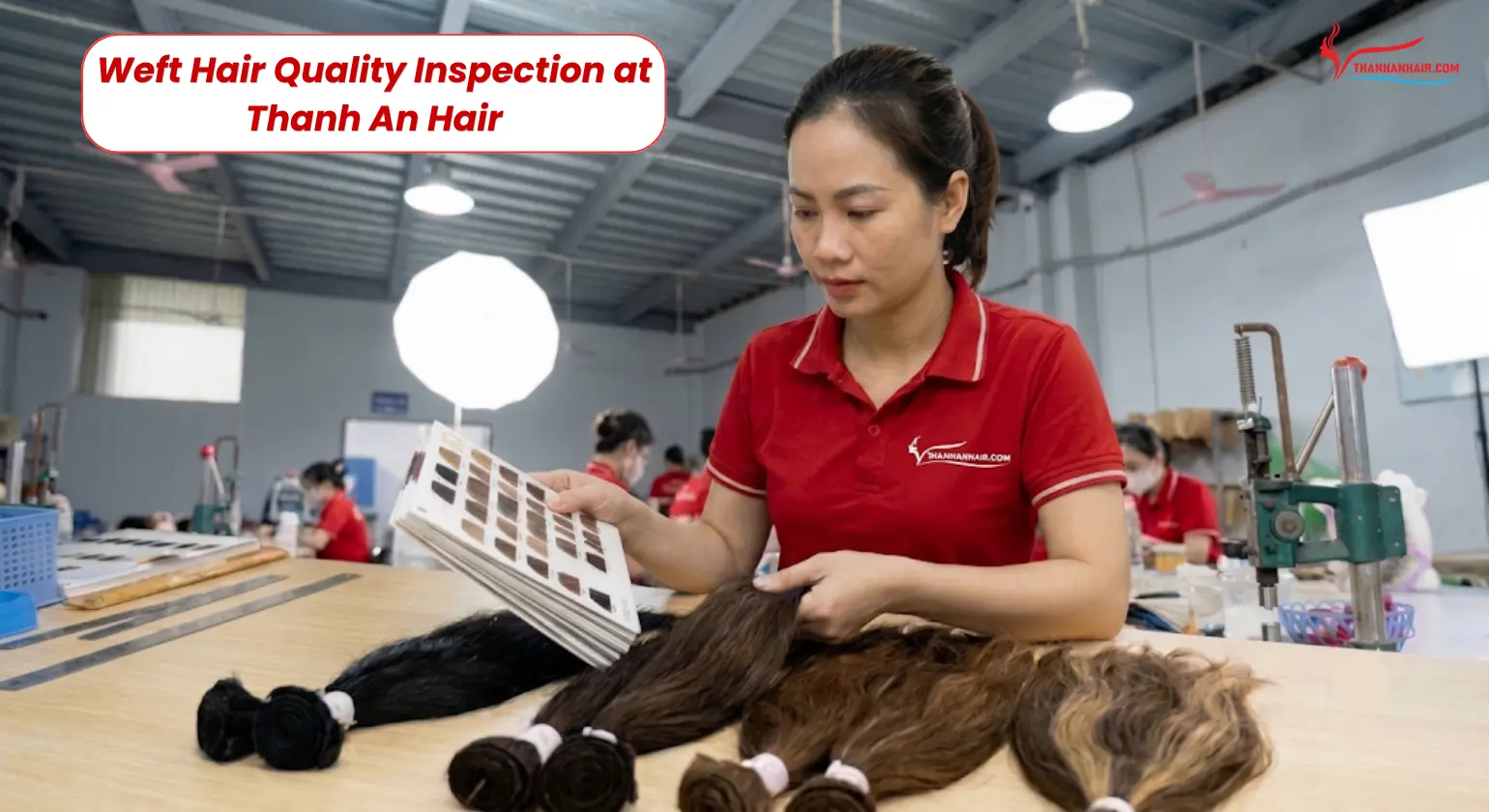
The weft itself also matters. Before installation, inspect its stitching, thickness, hair quality, and compatibility with the chosen technique. Salons looking for suitable products can explore Thanh An Hair’s weft hair extensions collection to find different options for professional installation.
4. How to Use and Maintain Weft Hair Extension Tools
Using appropriate equipment is only one part of professional installation. Technicians should follow a consistent working and maintenance routine.
Step 1: Inspect the hair and tools. Check the client’s natural hair, scalp condition, and weft product. Make sure needles are not bent, thread is not frayed, beads are not damaged, and pliers work correctly.
Step 2: Section the hair and prepare the foundation. Use a tail comb to create clean sections and clips to secure unused hair. For beaded-row techniques, select suitable bead sizes and avoid creating excessively tight rows.
Step 3: Sew or secure the weft. Use appropriate needles and thread to attach the weft. Keep stitches consistent and secure without pulling too tightly. Check that the weft is balanced and comfortable.
Step 4: Inspect and finish the installation. Check attachment points, coverage, hair movement, and weight distribution. Explain suitable brushing, washing, and maintenance practices to the client. Clients can also learn more about how to take care of weft hair extensions properly to maintain their extensions and preserve their appearance.
Step 5: Clean and store the tools. Follow manufacturers’ cleaning instructions and disinfect reusable tools appropriately between clients. Store needles in a dedicated case, protect thread from dust, and replace damaged accessories.
5. Choosing a Reliable Weft Hair Supplier for Your Salon
The quality of weft hair extensions directly affects the final service result. Even professional equipment cannot compensate for poorly constructed wefts, inconsistent hair strands, or unsuitable colors.
Before choosing a supplier, evaluate:
- Hair origin and overall quality.
- Weft stitching strength and consistency.
- Available lengths, colors, and textures.
- Ability to supply consistent quantities.
- Policies for defective or incorrectly described products.
Thanh An Hair is a Vietnamese hair manufacturer. According to company-provided information, its factory in Bac Ninh covers approximately 2,000 m², employs around 300 workers, and has a production capacity of up to 10 tonnes of hair extension products per month.
For eligible wholesale bulk hair and weft products, the minimum order quantity (MOQ) starts at 1 kg. In-stock orders generally take 1–7 business days to process, while customized orders may require up to 30 days. International shipping typically takes around 3–10 days, depending on the destination and carrier.
Customers should inspect orders immediately after delivery. Damaged or incorrect products should be reported within 48 hours. Eligible returns or exchanges may be considered within 7 days, subject to the applicable policy. A 30-day warranty applies to manufacturing defects under the relevant terms. Color matching against a reference sample is estimated at approximately 80–90%, not guaranteed as an exact match.
Salons and distributors interested in purchasing hair extensions in bulk can explore Thanh An Hair’s wholesale hair extension products and ordering options to learn more about available products, MOQ, sample options, and purchasing policies before placing an order. Confirm product specifications, samples, MOQ, and applicable policies with the supplier.
6. Frequently Asked Questions About Weft Hair Installation Tools
- Which tools should a new salon purchase first?
Start with curved needles, specialized thread, sectioning combs, clips, scissors, and accessories suited to your installation method. Beaded-row services also require silicone-lined beads and suitable pliers.
- Can ordinary sewing needles be used to install weft hair?
Professional extension needles are generally preferable because their shapes and sizes are designed for specific installation techniques and provide better control.
- Do silicone-lined hair extension beads need to be replaced after every use?
Not necessarily. However, beads with damaged silicone linings, deformation, or poor grip should be replaced. Reuse must follow appropriate cleaning procedures and manufacturer instructions.
- How can technicians create secure and natural-looking weft installations?
Use even sections, suitable needles and thread, consistent stitching, and controlled tension. Always check the balance and placement of the weft after installation.
- What is the MOQ for weft hair at Thanh An Hair?
The MOQ starts at 1 kg for eligible weft hair and bulk hair products. Confirm the specific product and ordering conditions with the company.
- How can salons contact Thanh An Hair about weft hair products?
Salons can visit the website or contact the company to ask about products, samples, MOQ, and delivery times. Reviewing the wholesale ordering terms before purchasing is recommended.
Conclusion
Professional weft installation requires the right combination of technical skills, suitable equipment, and quality hair products. From needles and thread to silicone beads, pliers, and sectioning accessories, every tool contributes to secure, balanced, and comfortable installations.
Salons should prioritize tool quality, durability, and compatibility with their installation techniques. They should also inspect weft products and confirm supplier policies before placing large wholesale orders.
Next step: Contact Thanh An Hair for product specifications, wholesale pricing, and sample options.
Ready to Upgrade Your Salon Tools or Place a Weft Hair Order?
Get in touch with Thanh An Hair for product information, wholesale quotes, and sample options:
- WhatsApp/Hotline: (+84) 973 522 855
- Official Website: https://thanhanhair.com/
- Instagram: @thanhanhair
- Email: thanhanexport@gmail.com