
Raw Vietnamese Hair
Buying Hair Extensions: Everything You Need to Know
Jul
Buying hair extensions comes down to two separate decisions: the attachment method and the hair grade. The method (clip-in, tape-in, weft, ring, or keratin bond) sets your convenience, cost, and upkeep. The hair grade (Remy, virgin, raw, or single donor) decides how natural they look and how long they last.
Most buying guides describe the types and stop there. This one is written from the factory side. Thanh An Hair has produced raw Vietnamese human hair for two decades, so the sections below go past product names into what actually separates hair that lasts two years from hair that tangles after a month. Whether you are choosing your first clip-in set or sourcing wholesale for a salon, use this as your complete hair extensions buying guide.
The global hair extension market reflects how mainstream this has become. Analysts at Fortune Business Insights value it at about USD 2.87 billion in 2025, projected to reach USD 5.54 billion by 2034, with clip-ins the single most popular fitting type and human hair the dominant material. More supply means more choice, and more low grade hair dressed up to look premium. Knowing what to check is the difference between a smart purchase and a costly one.
What are the different types of hair extensions?
Hair extension types fall into two groups: temporary methods you control yourself, and semi permanent or permanent methods a stylist installs. The table below compares every common method by how it attaches, how long it lasts, and who it suits, so you can shortlist before you read the detail.
| Method | How it attaches | Typical wear per install | Reusable hair | Best for | Salon needed |
| Clip-in | Wefts with pressure clips snap onto your own hair | Hours (in and out daily) | 1 year or more with care | Beginners, occasional length and volume | No |
| Halo | A single weft sits on a fine wire around the head | Hours (in and out daily) | 1 year or more with care | Fast volume with minimal contact on your hair | No |
| Tape-in | Thin wefts taped either side of a hair section | 6 to 8 weeks, then re-taped | Up to 6 to 12 months | Fine hair wanting a flat, natural finish | Yes |
| Weft (sew-in) | Wefts sewn onto braided sections | 6 to 8 weeks | Up to 1 year | Thick or coarse hair, maximum volume | Yes |
| Micro or nano ring | Small strands clamped in tiny rings, no glue or heat | 8 to 12 weeks, then repositioned | Up to 1 year or more | Movement and regrowth room, reusable sets | Yes |
| Keratin bond (I, U, flat tip) | Strands fused with a keratin tip | 3 to 6 months | Reusable if re-tipped | The most natural, long wear strand look | Yes |
| Ponytail or topper | Clip or wrap piece for a specific area | Hours or targeted wear | 1 year or more with care | Instant ponytails or crown coverage | No |
Wear times are commonly cited category ranges. Hair grade and home care move these figures up or down more than the method itself does.
Clip-in extensions are the flexible, commitment free choice. They take a minute or two to fit and come out when you want, which is why they suit special occasions and first time buyers. See our full breakdown in Clip-In Hair Extensions Explained, or browse clip-in hair and halo extensions.
Tape-in extensions lie flat against the scalp and stay discreet, which makes them a favorite for fine hair. Weft or sew-in systems carry the most volume and suit thick hair; a hand tied weft sits flatter than a machine weft. Micro and nano rings use no glue or heat and reuse well, while keratin bonds such as I tip and flat tip give the most seamless strand by strand result. For a full comparison of the fitted methods, read our guide to permanent hair extensions.
Which hair extensions are best for your hair type?
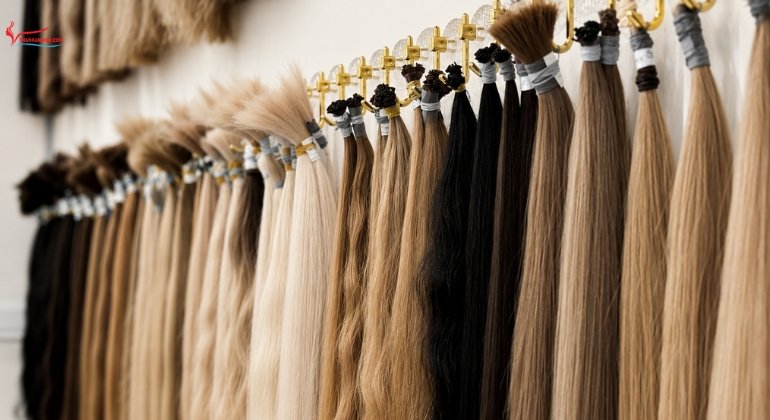
The best hair extensions for you are the ones that match your natural weight and texture. Extensions that are heavier than your own hair drag and show; extensions that are too light look thin at the ends. Match first, then think about length.
- Fine hair: lightweight methods win. Tape-ins, thin clip-in sets, and nano rings add length without the bulk that fine hair cannot hide.
- Medium hair: the most flexible category. Clip-ins, tape-ins, wefts, and keratin bonds all blend well.
- Thick or coarse hair: reach for volume. Sew-in wefts and double drawn clip-in sets carry the weight and density to keep up.
- Curly or wavy hair: match the curl pattern. Strand methods such as I tips mimic natural movement when dried, and textured wefts blend better than straight hair forced into a curl.
How much hair do you need? A weight guide
Weight, measured in grams, matters more than the number of pieces. Too little hair looks sparse; too much strains your roots. Use these commonly recommended ranges as a starting point and adjust with your stylist.
| Your natural density | Full head guide | Notes |
| Fine | About 100 to 150 grams | Prioritize light methods to avoid slippage |
| Medium | About 150 to 220 grams | Room to add length and volume together |
| Thick | 220 grams or more | Match extension weight to your own density |
For a length jump of four inches or more, increase the weight so your natural hairline blends into the extension rather than sitting on top of it.
What does “human hair” actually mean? Remy, virgin, raw, and single donor
“Human hair” on a label tells you almost nothing on its own. The words that matter are Remy, virgin, raw, and single donor, and they describe cuticle direction and processing, which is where quality is won or lost. This is the part resellers rarely explain, because it starts at the source, not the shelf.
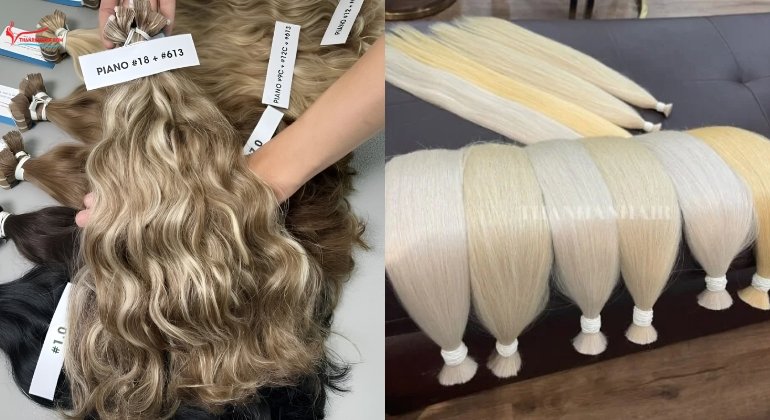
- Remy hair keeps every cuticle aligned root to tip in the same direction. Aligned cuticles slide past each other, so Remy hair resists tangling far better than hair with mixed cuticle directions.
- Virgin hair has not been chemically colored or permed. It holds its natural strength and shine.
- Raw hair is unprocessed at the fiber level, with no acid baths or silicone coating used to fake smoothness.
- Single donor hair comes from one person, so texture, density, and cuticle behavior stay consistent across the whole set. This is the grade Thanh An Hair builds its one donor wefts and one donor bulk hair around.
Why cuticle direction decides whether extensions tangle
The cuticle is the hair’s outer surface, built from overlapping scales coated in a natural lipid layer called 18-MEA. When those scales lie flat and face the same way, the surface stays smooth and low friction. As hair scientists at Keratin.com describe, a smooth, ordered cuticle reflects light in one direction and produces gloss, while lifted or eroded cuticles scatter light and turn hair dull. Cheap collected hair mixes cuticle directions, so manufacturers strip the cuticle in an acid bath and coat the strand in silicone to hide the damage. That silicone washes off within a few uses, and the hair underneath tangles and mats. Aligned, intact cuticles are why genuine Remy and single donor hair keeps behaving well wash after wash.
The cold water myth: what actually makes extensions shine
A common tip claims that rinsing in cold water “seals the cuticle” and locks in shine. It does not hold up. Shine is a structural optical property, not a coating you can seal in with temperature. Research summarized in Cosmetics and Toiletries explains that gloss comes from two things working together: a smooth, intact cuticle surface at the micro scale, and fibers lying parallel and aligned at the macro scale. Cold water can briefly reduce swelling, but it does not permanently flatten or seal cuticle scales. What genuinely keeps extensions shiny is starting with intact cuticles, keeping the fibers aligned and detangled, and using light conditioning to reduce friction. We flag this because it is the kind of well meant advice that sells cheap hair, and understanding the real mechanism protects your money.
How to tell real human hair from synthetic or low grade hair
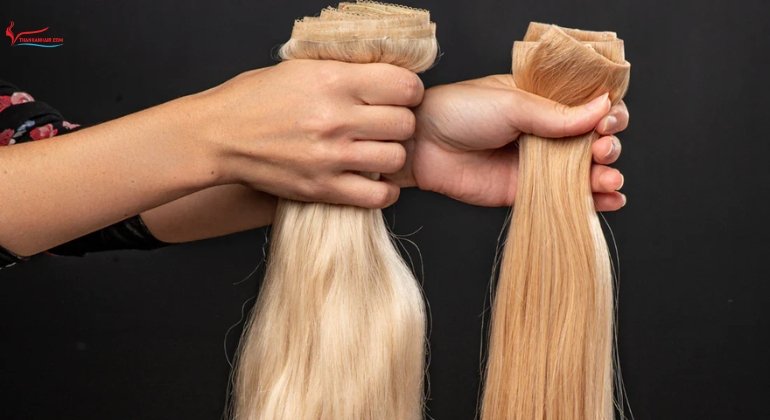
You do not need lab equipment to screen hair before you buy. Four simple checks catch most low grade or synthetic hair, and you can run them on a sample.
- The feel test: real human hair feels soft and slightly textured, not plasticky or unnaturally slippery. Overly silky, squeaky hair is often silicone coated.
- The wet and wash test: wash the sample two or three times. Genuine Remy hair stays smooth; low grade hair starts to tangle and mat as the silicone rinses away.
- The heat test: human hair tolerates a warm straightener. Synthetic fiber melts, stiffens, or gives off a plastic smell.
- The burn test: a few strands held to a flame will singe and smell like burnt hair if human, or melt into a hard bead and smell like plastic if synthetic.
The strongest red flag is hair that looks perfect in the pack and tangles within a week. That pattern almost always means stripped cuticles hidden under a coating, which is exactly what buying genuine washable, reusable hair avoids.
How much do hair extensions cost, and how long do they last?
Cost varies widely by method, hair grade, and whether you pay for professional application. The figures below are commonly cited retail ranges in US dollars, meant for orientation rather than a quote. Wholesale and factory direct pricing sits well below retail, which is why salons source differently from individuals.
| Method | Typical hair cost (retail) | Application | Lifespan with care |
| Clip-in (human hair) | About USD 100 to 400 or more | Do it yourself | 1 year or more, up to 2 years for raw hair |
| Halo | About USD 100 to 300 | Do it yourself | 1 year or more with care |
| Tape-in | About USD 150 to 400 | Salon, re-taped every 6 to 8 weeks | Hair reusable 6 to 12 months |
| Weft (sew-in) | About USD 100 to 300 | Salon install | Hair reusable up to 1 year |
| Micro or nano ring | About USD 200 to 500 | Salon, repositioned every 8 to 12 weeks | Hair reusable up to 1 year or more |
| Keratin bond | About USD 200 to 500 | Salon install, higher labor | 3 to 6 months per install |
Budget for the full cost of ownership, not just the first purchase. Permanent methods add maintenance and re-application over the year. For a detailed cost breakdown, factor in your local salon rates alongside the hair price. Thanh An Hair wholesale ranges are available on request: [INSERT: verified factory direct price ranges].
How to protect your hair and scalp when wearing extensions
Extensions are safe for most people when the weight suits your hair and the tension stays light, but they carry one real risk worth understanding before you buy. Constant pulling on the roots can cause traction alopecia, a form of hair loss concentrated at the hairline and temples.
The American Academy of Dermatology advises loosening any style that hurts or feels too tight, and warns that tight styles can lead to hair loss that becomes permanent if ignored. Medical references including NCBI StatPearls note that traction alopecia comes from tension on the follicle rather than from the hair fiber itself, and that periodic breaks from extensions plus lighter tension prevent it. Practical steps: avoid heavy sets on fine hair, alternate your parting and style, keep bonds and rings away from a painful scalp, and see a board certified dermatologist if you notice thinning. This section is general information, not medical advice.
Buying retail vs sourcing wholesale: how to vet a hair supplier
Where you buy shapes quality as much as what you buy. Retail brands are convenient for a single set. Salons, stylists, and resellers who buy in volume usually go factory direct to control grade and cost. Either way, the supplier check is the same, because the biggest quality gap is between hair sold with real sourcing transparency and hair passed through anonymous middlemen.
- Confirm who actually makes the hair. A genuine manufacturer can explain its sourcing, donors, and processing. A pure reseller often cannot, because the hair passes through many hands.
- Check certificates and verification. Look for business registration, trade verification, and export documentation such as fumigation certificates for cross border orders.
- Test single donor and Remy claims. Ask for a sample or color ring and run the wash and heat checks above before committing to volume.
- Judge consistency, not just one bundle. Reliable factories deliver the same texture and grade order after order, which matters most for salons rebuying stock.
Thanh An Hair sells factory direct as a family run manufacturer with two decades of production, single donor raw hair, and cross border shipping to salons and wholesale buyers worldwide. You can read the background on our about page or start a sourcing conversation through contact us.
How to choose the right hair extensions: a step by step checklist
Pull the decisions together into one sequence. Work through these six steps in order and you will land on the right method, grade, and quantity for your hair and budget.
- Step 1: Assess your natural hair first
Note your density (fine, medium, or thick), texture, and current length. Extensions blend best when their weight and texture match your own hair, so this step decides which methods will look seamless and which will show. - Step 2: Match the attachment method to your lifestyle
Choose clip-ins or a halo for flexible, at home wear you control. Choose tape-ins, wefts, rings, or keratin bonds for daily length that stays in for weeks between salon visits. Your routine matters as much as your hair type. - Step 3: Select the hair grade, not just the length
Ask for genuine Remy human hair at minimum, and single donor raw hair for the longest life and most natural movement. Cuticle direction and origin decide whether the set stays smooth or tangles after a few washes. - Step 4: Calculate how much hair you need
Fine hair usually needs about 100 to 150 grams for a full head, medium hair about 150 to 220 grams, and thick hair 220 grams or more. For a big length change, match the extension weight to your own thickness so the ends do not look sparse. - Step 5: Verify the supplier and order a sample
Confirm the seller is a real factory or a transparent reseller, check certificates and single donor claims, then buy a small sample or color ring before a full order. One wash and one heat test on a sample reveals low grade hair quickly. - Step 6: Plan application and maintenance
Book a trained stylist for permanent methods, and set a wash, detangle, and storage routine from day one. Keep tension light at the hairline and take periodic breaks to protect your own hair and scalp.
Frequently asked questions about buying hair extensions
Are clip-in or permanent hair extensions better for beginners?
When buying hair extensions for the first time, clip-ins are the easier starting point. You apply and remove them yourself in minutes, with no glue, heat, or salon appointment, so there is no long term commitment while you learn what length and weight suit you. Permanent methods need a stylist and upkeep.
How can I tell if hair extensions are real human hair?
Genuine human hair feels soft, moves naturally, and can be heat styled without melting. A strand held to a flame singes and smells like burnt hair, while synthetic fiber melts into a bead and smells like plastic. Hair that tangles or sheds badly after two or three washes is usually low grade or silicone coated.
How much hair do I need for a full head of extensions?
It depends on your natural density and the length you want. As a general guide, fine hair needs roughly 100 to 150 grams, medium hair 150 to 220 grams, and thick hair 220 grams or more. Add extra weight when you jump several inches in length so the ends stay full.
Do hair extensions damage your natural hair?
Quality extensions applied with light tension are generally safe, but constant pulling can cause traction alopecia, a form of hair loss. The American Academy of Dermatology advises loosening any style that hurts and taking breaks. Choose the right weight, avoid heavy sets on fine hair, and see a dermatologist if you notice thinning.
What is the difference between Remy and raw single donor hair?
Remy hair keeps all cuticles aligned in one direction, which reduces tangling. Raw single donor hair goes further: it is unprocessed hair collected from one person, so the texture and cuticle are fully intact and consistent. Single donor hair typically lasts longer and behaves more like your own than blended, chemically processed hair.
Is it cheaper to buy hair extensions wholesale?
For salons and resellers, buying factory direct at wholesale usually lowers the per unit cost and gives more control over grade and consistency than reselling through middlemen. For a single personal set, retail is normally the practical option unless you are ordering in volume. Ask a manufacturer for a sample and wholesale terms.
Source premium hair direct from the factory
Ready to buy hair extensions that actually last? Thanh An Hair produces cuticle aligned, single donor raw Vietnamese hair and ships factory direct to salons, resellers, and wholesale buyers worldwide. Request a sample or wholesale quote and test the quality before you commit.
Contact Thanh An Hair today for expert consultation and the most competitive price list.
- WhatsApp/Hotline: (+84) 973 522 855
- Official Website: https://thanhanhair.com/
- Instagram: @thanhanhair
- Email: thanhanexport@gmail.com