
Thanh An Hair
Should You Wash Hair Extensions Before Using Them?
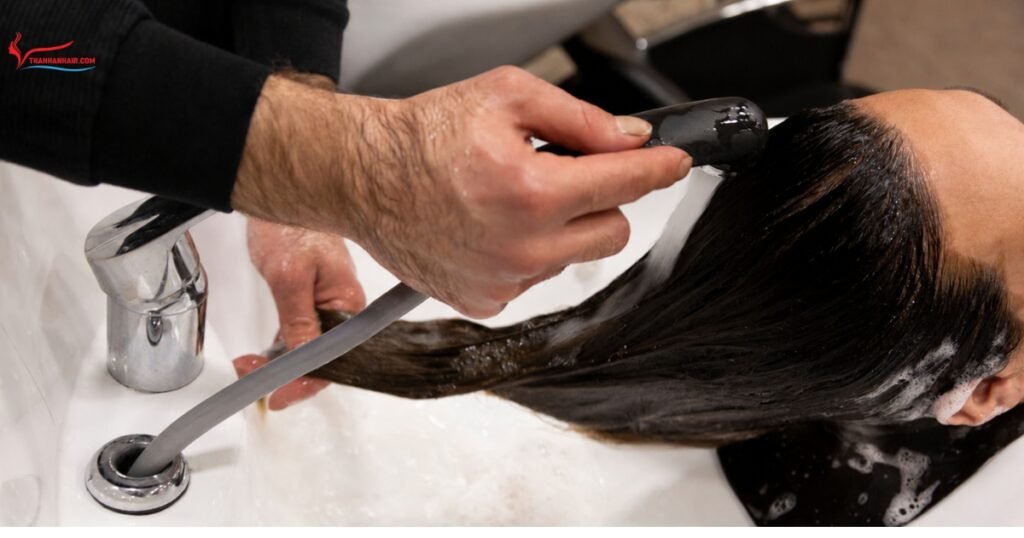
Jul
Yes, you should wash clip-in and weft hair extensions before wearing them the first time. New extensions carry a light factory silicone coating that creates their out-of-box gloss, and one gentle wash removes it so the hair blends and moves naturally. Bonded, tape-in, and keratin-tip sets are the exception. Keep those dry until your stylist installs them.
New hair extensions arrive looking flawless for a reason, and that reason washes out. This guide explains the fiber science behind the first wash, gives you a wash-or-skip rule for every extension type, and walks through the exact method we recommend as a raw hair manufacturer with two decades on the production floor. The clip-in segment now leads the global hair extension market, which Fortune Business Insights valued at USD 2.87 billion in 2025 and expects to reach USD 5.54 billion by 2034. A good set is an investment, so the first wash is worth getting right.
Should you wash hair extensions before using them? The answer by type
The correct move depends on how the extensions attach. Clip-ins, wefts, halos, and ponytails wash freely because you control them at home. Bonded, tape-in, and keratin-tip sets attach with adhesive or heat, so water before installation works against you. The table below gives the rule at a glance.
| Extension type | Wash before first use? | Why | Water temperature |
|---|---|---|---|
| Clip-in extensions | Yes | Removes the factory silicone coating so the hair blends and holds a style | Lukewarm, never hot |
| Weft and weave (hand-tied, machine) | Yes for loose wear; your stylist decides for sew-ins | Settles the hair’s natural movement once the coating is gone | Lukewarm |
| Halo and ponytail pieces | Yes | They clip or wrap on, so they wash like clip-ins | Lukewarm |
| Tape-in extensions | No | Water or product on the adhesive tab weakens the bond before install | Keep the tabs dry |
| Keratin, I-tip, flat-tip, nano bonds | No | Wetting the bond area before fitting loosens the hold | Keep the bonds dry |
| Synthetic (non-human) hair | No; follow the label | Standard shampoo and heat can ruin synthetic fibre | Follow the maker’s guidance |
What the factory coating on new extensions actually is
Premium human hair leaves a factory with a light cosmetic silicone finish, usually a dimethicone serum. According to Cosmetics Info, once you rinse a silicone product, the silicone stays behind as a thin coating over each hair shaft that fills visible gaps in the cuticle and improves how the hair combs. That coating is what gives a fresh set its mirror shine and slip in the pack. It also presses the hair flat against your head in a way that can read as synthetic. One wash lifts most of it, and the hair drops into its true texture, which blends far better with your own.
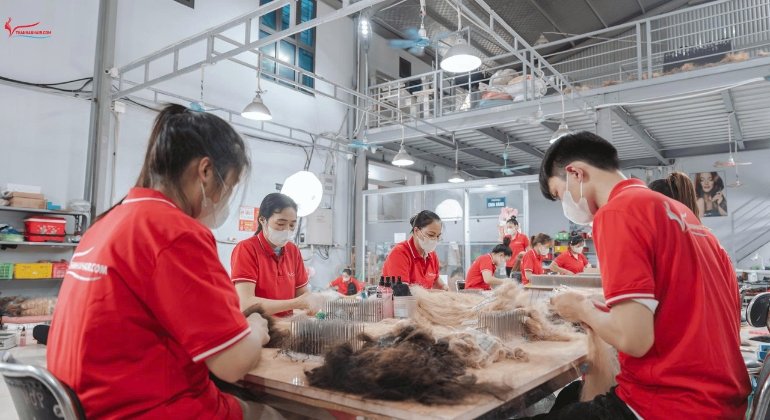
Here is the part resellers rarely explain. Cheap non-Remy hair often relies on a much heavier silicone layer, sometimes over an acid bath, to hide cuticles that were stripped or reversed during processing. It feels glorious in the box. After two or three washes the coating erodes, the damaged cuticles catch on each other, and the hair mats near the roots. Genuine raw, cuticle-aligned hair carries only a light cosmetic finish, so it behaves the same on wash one and wash fifty.
Why cuticle direction decides how extensions behave after washing
Every strand of human hair is wrapped in a cuticle, a layer of flat cells that overlap like roof shingles. StatPearls describes this cuticle as being of considerable cosmetic importance, because it gives hair its untangled appearance and shape. Those overlapping scales all point one way on healthy hair, from root to tip. Run your fingers down and it feels smooth; run them up and it catches.
In a quality weft, every strand keeps that root-to-tip direction, which is what cuticle-aligned or single-donor hair means. When you wash it, the scales still lie in one direction, so the hair rinses smooth and dries tangle-free. In collected, mixed hair, strands sit in random directions. A silicone coat masks the friction until you wash it off, and then opposing cuticles lock together. This is the single biggest reason two sets that looked identical in the box behave nothing alike after the first wash.
How to wash clip-in and weft extensions before first use
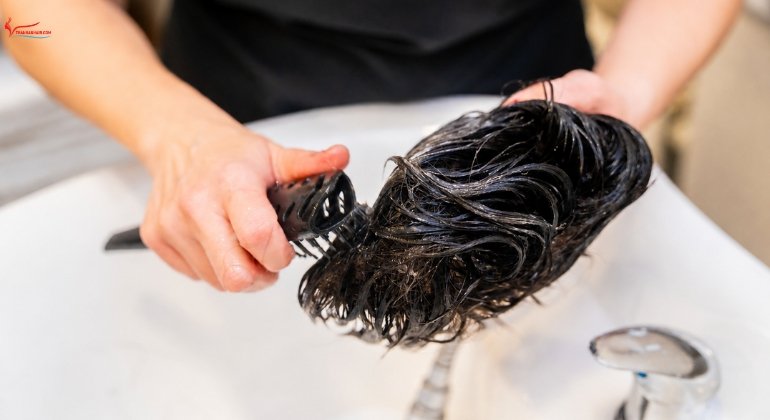
Treat a new set gently and the first wash sets it up for months of good wear. Extensions get no natural oil from a scalp, so they cannot recover from rough handling the way growing hair does. The American Academy of Dermatology notes that hair is delicate when wet and recommends detangling with a wide-tooth comb and blotting rather than rubbing dry. Those rules matter even more for weft and clip-in hair.
- Detangle while dry. Brush from the ends up toward the weft with a soft loop brush before any water touches the hair. Wet hair tangles faster and pulls harder, so a dry detangle protects every strand.
- Rinse with lukewarm water. Hold the hair under a lukewarm stream. Hot water swells the shaft and lifts the cuticle, which invites frizz and dryness, so never use hot water on extensions.
- Shampoo in one downward direction. Smooth a coin-sized amount of sulfate-free shampoo along the length in a single downward motion. Do not scrub, circle, or bunch the hair, and keep shampoo off the clip base or weft seam.
- Condition the mid-lengths and ends. Work a light conditioner from the mid-lengths to the tips and skip the roots, wefts, and bonds. Rinse until the water runs completely clear.
- Blot, never wring. Press the water out with a towel and wrap the hair to absorb moisture. Wringing snaps strands and loosens weft seams.
- Air-dry flat or on a holder. Lay the set flat on a towel or hang it on an extension holder until it is fully dry. Style only once the hair is completely dry.
Notice the reversal. The AAD advises concentrating shampoo on the scalp for growing hair, because that is where oil builds. Extensions have no scalp and no oil source, so you flip the rule and protect the mid-lengths and ends instead. Between washes, a light mist of dry shampoo made for extensions keeps roots fresh without stripping the hair.
When you should not wash extensions before wearing them
Bonded, tape-in, and keratin-tip extensions follow the opposite rule. Do not wash or wet them before a stylist installs them.
Tape-in tabs rely on a pressure-sensitive adhesive that grips your hair. Any water, oil, or product on the tab before application weakens that grip and shortens how long the set lasts. Keratin, I-tip, flat-tip, and nano bonds behave the same way, because soaking the bond area before fitting softens it and loosens the hold.
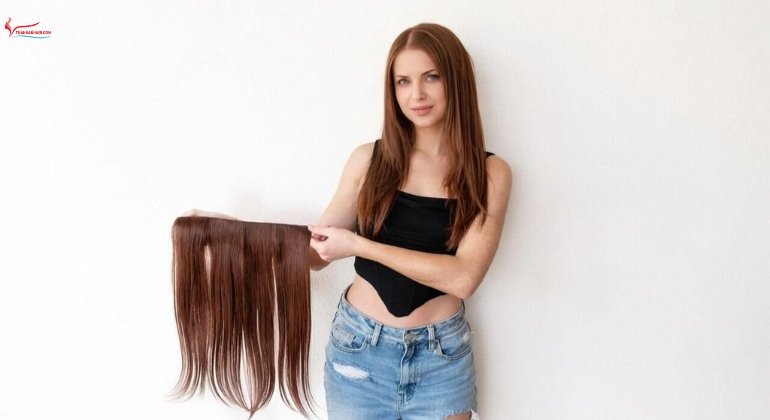
Some stylists do lightly dampen permanent hair before a big install, usually to settle very dark color that can bleed or to let the hair expand for a fuller feel. That is a controlled step at the chair, not something to do at home the night before. Once the set is installed and the bonds have set, your stylist tells you when the first wash is safe, usually after 24 to 48 hours.
Synthetic hair is its own case. Standard shampoo and heat can wreck synthetic fibre, so follow the maker care card rather than this human hair method.
The two-minute color test the pros run first
Darker and vivid shades can release a little excess dye on their first wet contact, exactly as freshly colored natural hair does. Before you wash or wear a bold set, run a quick strand test. Take one small section from the back of the weft, wet it with lukewarm water, and press it against a white towel or tissue. Light residue is normal and rinses out. Heavy color transfer tells you to wash the full set once, gently, before you wear anything pale. This quick check has saved more white blouses and bridal gowns than any product on the shelf. High heat is the other risk to manage, and the AAD guidance on reducing heat damage applies to extensions just as it does to your own hair.
Frequently asked questions
Should you wash clip-in hair extensions before the first use?
Yes. Wash clip-in extensions once before you wear them so the factory silicone coating rinses away. The hair then blends with your own, holds a curl better, and looks less glassy. Use lukewarm water and a sulfate-free shampoo, and always keep the clip base dry.
Do you need to wash hair extensions before installing tape-ins or bonds?
No. Keep tape-in and keratin bond extensions dry before installation. Water or product on the adhesive or bond weakens the hold and shortens wear. Your stylist decides on any pre-treatment, and you wash the set at home only after it is fitted, usually 24 to 48 hours later.
How do you make new hair extensions look less shiny?
Wash them once. The mirror shine on new extensions comes from a cosmetic silicone coating that a single gentle wash removes. After it rinses away, the hair settles into a natural, more realistic finish. Skip heavy serums, which rebuild the glassy look you are trying to lose.
What water temperature should you use to wash extensions?
Lukewarm, never hot. Hot water swells the hair shaft and lifts the cuticle, which causes frizz, dryness, and tangling. Lukewarm water cleans the hair while keeping the cuticle flat and smooth. A cool final rinse adds extra shine.
Will washing hair extensions ruin them?
Not if you wash them correctly. Real damage comes from hot water, sulfates, scrubbing, and wringing, not from washing itself. On cuticle-aligned raw hair, a gentle wash improves how the hair moves. Poor quality, heavily coated hair is the type that mats after washing.
Do extensions get thicker or wavier after the first wash?
They can look and feel that way. Once the flattening silicone coat is gone, high quality human hair relaxes into its natural body and often shows a soft wave. That is a good sign, because it means the hair will now take heat styling and blend the way your own hair does.
The bottom line
Wash clip-in, weft, halo, and ponytail extensions once before you wear them, using lukewarm water, a sulfate-free shampoo, and a gentle downward motion. Leave tape-in and keratin bond sets dry until your stylist fits them. Every rule comes down to two things: the silicone coating that gives new hair its gloss, and the cuticle direction that decides whether the hair stays smooth once that coating is gone. To keep a set looking its best after that, build a simple nighttime hair routine around it.
Quality is what makes the first wash predictable. Cuticle-aligned raw hair behaves the same on wash one and wash fifty, while cheaply processed hair tangles the moment its coating erodes.
Test the difference for yourself. Thanh An Hair manufactures single-donor, cuticle-aligned raw Vietnamese hair, factory direct, so your extensions blend from the very first wash. Explore our clip-in extensions and raw weft hair, or contact our team for wholesale pricing and a sample.