Raw Vietnamese Hair
4 Easy Hairstyles for Hair Extension Newbies That Hide Every Weft
Jul
The four easy hairstyles for hair extension newbies are loose waves, a low ponytail, a half-up half-down, and a messy bun. Each one bends or layers your own hair over the attachment points, so wefts and clips stay hidden. All four work on clip-ins, halos, tapes, and wefts, and none takes more than ten minutes.
Your first set of extensions can feel like a plot twist. One glance in the mirror and you have twice the hair you woke up with; the next, you are wondering how to move without flashing a clip. You are not alone in the learning curve. The global hair wigs and extensions market was worth about USD 15.2 billion in 2025, with extensions the fastest-growing segment, according to Grand View Research, which means more first-time wearers than ever are asking your exact question. As a raw-hair manufacturer, we spend our days on the thing that makes these styles work: how a weft sits, how a cuticle catches light, and why some hair blends in seconds while other hair never quite disappears. Here is what we tell beginners.
Which Easy Hairstyles for Hair Extension Newbies Should Begin With?
Start with loose waves. They are the most forgiving style for new extension wearers, because the bend of the wave breaks up the straight line where a weft sits, and they suit every hair length and extension type. The table below ranks all four beginner looks by effort, speed, and how well each one conceals your attachments.
| Hairstyle | Beginner difficulty | Time | Best extension types | How it hides attachments |
| Full-Bodied Loose Waves | Easy | 8-10 min | Clip-ins, halo, tapes, wefts | Wave bend and light diffusion break the straight weft line |
| Low Ponytail | Very easy | 3-5 min | Clip-ins, tapes, wefts, ponytail piece | Smooth crown hides near-crown clips; low height keeps wefts below the tie |
| Half-Up Half-Down | Easy | 5 min | Clip-ins, halo, tapes | Loose top layer falls over crown attachments |
| Effortless Messy Bun | Easy | 5-7 min | Clip-ins, tapes, keratin tips, wefts | Gathered hair encloses every attachment; texture disguises bumps |
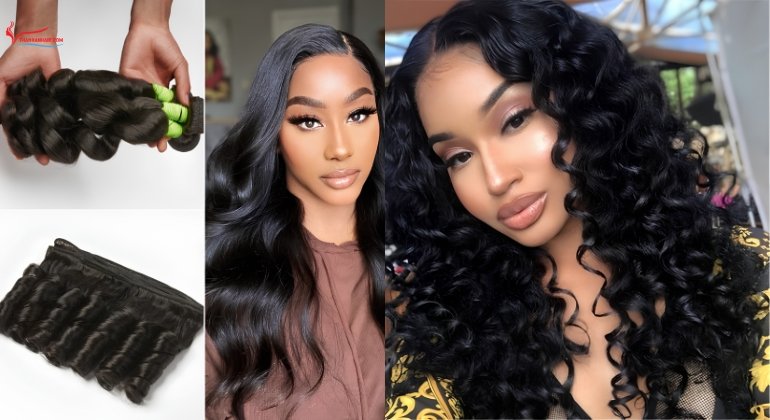
Full-Bodied Loose Waves
Loose waves are the best first hairstyle for extensions because the curve of each wave hides where your natural hair ends and the weft begins.
How to style it:
- Section clean, dry hair (extensions in) into a few thick portions. Dry hair holds a wave far better than damp hair, which heats unevenly and takes on more damage.
- Mist a heat protectant over each section. Silicone-based protectants cut heat transfer into the strand by roughly 40 to 50 percent, so the wave sets with less stress on the fiber (TRI Princeton).
- Wrap each section around a wide-barrel curling wand in the same direction, away from your face. Keep fine hair near 300°F (150°C) and medium hair around 320 to 350°F (160 to 175°C).
- Let every curl cool completely before you touch it. Waves lock in as the hair cools, not while it is hot, so this pause is what makes them last all day.
- Break the curls apart with your fingers or a wide-tooth comb, then finish with a light mist.
Why it works with extensions: The gentle S-bend does two jobs at once. It interrupts the horizontal line a weft creates, and it scatters light across the surface so your eye cannot find a seam. That is also why raw, cuticle-aligned hair blends so cleanly here: when every cuticle runs the same direction, the extension reflects light the same way your own hair does, and the two read as one. Loose waves flatter every length, so this is the style we hand every nervous first-timer. New to a wand? Our guide on how to curl halo extensions walks through the same technique, and lightweight clip-in hair extensions are the easiest canvas to practice on.
The Low Ponytail
A low ponytail is the quickest way to wear extensions without revealing them, because the sleek crown covers clips and the low position keeps wefts below the tie.
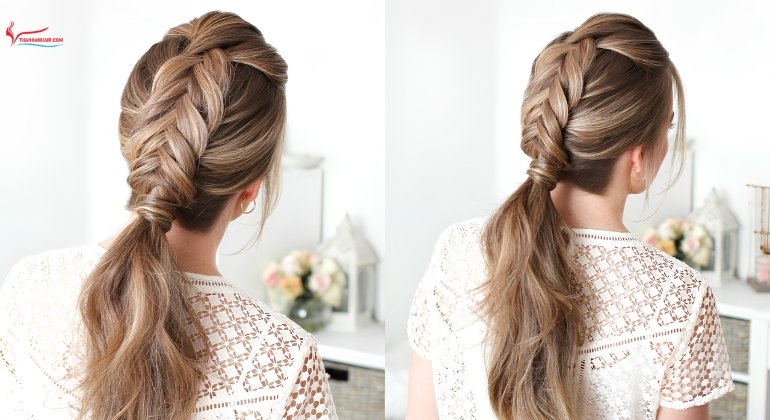
How to style it:
- Part clean hair down the center for a polished finish and brush everything back.
- Gather hair into a low ponytail at the nape. A low tie keeps the top edge of any weft or tape below it, out of sight.
- Smooth flyaways with a little serum or a light spray.
- Secure with a soft tie, then wrap a ponytail extension around the base for instant length.
Why it works with extensions: Keep the tie snug, not tight. If a style pulls hard enough to sting your scalp or tug at your hairline, it is too tight. Repeated tension on the roots can cause traction alopecia, a form of hair loss that dermatologists warn can become permanent (American Academy of Dermatology). The reassuring part: traction alopecia is largely preventable when you keep tension low and alternate your styles (NCBI StatPearls). So save the sky-high pony for special occasions, and let a low one carry your week. A dedicated ponytail hair extension adds the length without loading extra weight on your roots.
The Half-Up Half-Down
The half-up half-down hides crown clips by letting the loose top layer fall straight over them, which makes it ideal for clip-ins and halos.
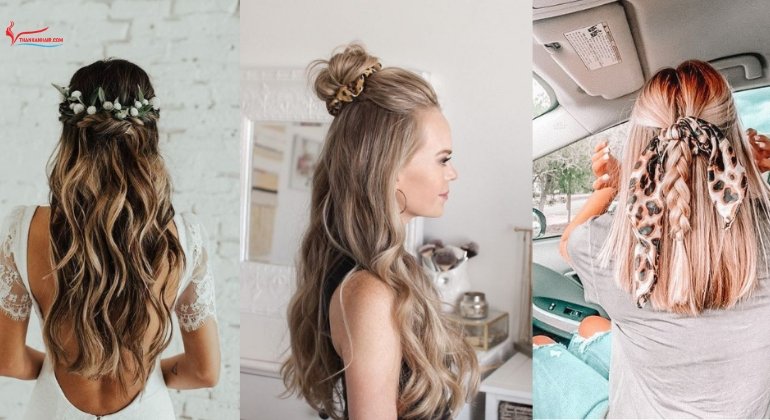
How to style it:
- Take a section from each temple, roughly ear-level and up.
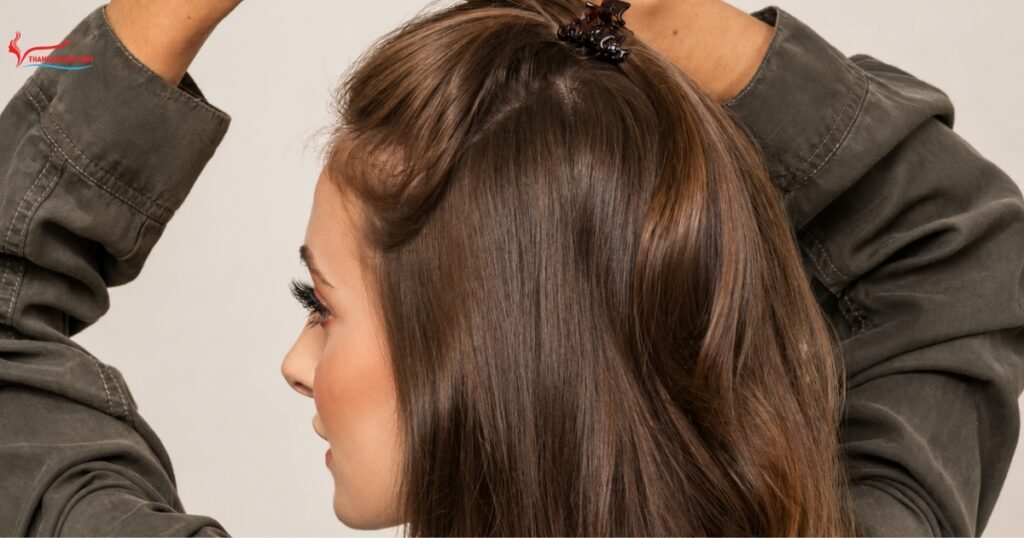
- Draw them to the back, add a small twist, and secure with a claw clip or tie.
- Leave a few face-framing pieces loose for softness.
Why it works with extensions: By keeping the upper layer down and unclipped, you drape your own hair over the crown attachments. A halo piece disappears completely here, since its single wire already sits under this exact layer. If you want that ear-to-ear ease, browse our halo hair extensions.
The Effortless Messy Bun
A messy bun is the most concealing beginner style because gathering all your hair into one knot encloses every clip, tape, and weft at once.
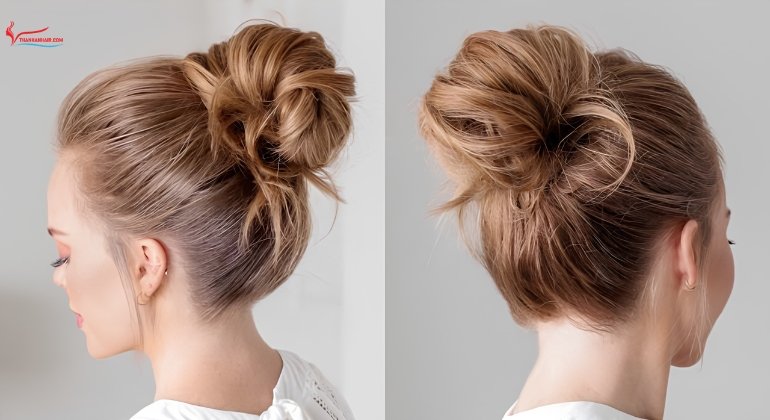
How to style it:
- Choose a middle or side part. A quick curl through the mid-lengths first gives the bun texture and grip.
- Clip hair out of the way in sections, then gather everything into a loose knot, high enough to feel relaxed but not so high it exposes a weft.
- Pull a pintail comb through to loosen a few pieces and add that lived-in texture.
Why it works with extensions: Buns are the safety net of extension styling. The gathered shape wraps around and covers attachments from every angle, and the deliberate messiness disguises any small bump where a clip or bond sits. It is the reason a bun looks intentional on a dry-shampoo day. For more low-effort options once you have the hang of it, see our easy hairstyles for medium-length hair.
Which hair extensions are easiest for beginners?
Halo extensions are the easiest for beginners because a single wire rests under your hair with nothing clipped to your scalp; clip-ins come next, followed by tapes and wefts.
A halo runs on one wire, ear to ear, under your top layer. It goes in and out in minutes, keeps clips off your scalp, and suits fine hair beautifully. Clip-ins are next: a few wefts you place and remove yourself, fully reversible, no salon visit required. Tape-ins and wefts sit flatter and last longer, but a stylist applies them and they favor a little more natural density to stay invisible.

Here is the part most guides skip: a hairstyle can only hide what the hair itself allows. Two things decide whether a beginner look truly blends. First, weft weight against your own density. Pile a heavy machine weft onto fine hair and no ponytail will hide the bulk; match the weft to your density and it vanishes. Second, hair quality. Single-donor, cuticle-aligned raw hair holds a curl the way growing hair does and moves with your own strands, so the waves and buns above behave instead of frizzing or slipping. Processed or mixed-donor hair, stripped of its cuticle and coated to fake shine, fights every style. We make raw Vietnamese hair for exactly this reason.
Not sure which type fits your hair and budget? Our guide to buying hair extensions breaks down every attachment method side by side.
How to make any beginner hairstyle blend and last
To make extensions blend, match their texture and tone to your own hair, place them without over-tightening, and always let heat-styled sections cool before you move them.
- Match texture first. Once styled, your extensions and your hair should share the same wave pattern. If your hair is wavy, buy wavy or wave the extensions to match.
- Get the tone right, not just the number. Ask for a real colour match. A shade that looks close in the packet can read obvious in daylight.
- Cool your curls. This bears repeating, because it is the single most common beginner miss: brushing while the hair is still warm drops the wave within an hour.
- Mind the heat ceiling. Repeated high heat breaks down keratin, and the protective lipid layer and cuticle degrade first (peer-reviewed research, PMC). Use the lowest temperature that still forms the style, and one pass per section.
- Do not over-clip. Space clips out and reposition them every few days so the same roots are not always bearing the load.
Frequently asked questions
How do you hide the clips on clip-in hair extensions?
Place the wefts about an inch below your parting and below the crown, then let the hair above fall over them. Wearing the length in loose waves or a low style, rather than pin-straight and pulled back, keeps the clips covered because the movement breaks up any visible line.
What is the easiest hairstyle for first-time extension wearers?
Loose waves. The bend of each wave hides the seam where a weft sits and suits every length and extension type, so beginners get a natural blend without precise sectioning or fast hands. It takes under ten minutes with a wide-barrel wand once you have tried it twice.
Can you wear hair extensions in a ponytail without them showing?
Yes, if you keep the ponytail low and the crown smooth. A low tie sits above your wefts, and a wrap-around ponytail piece adds length seamlessly. Avoid high, tight ponytails as a beginner, since they can expose the top of clips or tapes and pull on your roots.
Do hair extensions damage your natural hair?
Not when they fit and you keep tension low. Damage tends to come from clips or bonds worn too tight or in the same spot for too long, which can lead to traction alopecia. Match the weft weight to your own density, reposition pieces regularly, and take breaks between wears.
Which extensions are best for fine hair beginners?
A halo or lightweight clip-ins. A halo rests on one wire with nothing clipped to the scalp, and light clip-ins avoid overloading fine strands. Keep the weft weight close to your own density so the pieces stay hidden and feel comfortable through the day.
How long do beginner extension styles take?
Between three and ten minutes each once you have practiced. A low ponytail is fastest at three to five minutes; loose waves take eight to ten. The more you repeat a style, the faster and cleaner your blend becomes.
Style your first extensions with confidence
Ready to make these looks effortless? Explore Thanh An Hair’s beginner-friendly clip-in and halo extensions, made from raw, cuticle-aligned Vietnamese hair, factory-direct. Salon owners and resellers can message us for wholesale pricing and a sample pack.
Contact Thanh An Hair today for expert consultation and the most competitive price list.
- WhatsApp/Hotline: (+84) 973 522 855
- Official Website: https://thanhanhair.com/
- Instagram: @thanhanhair
- Email: thanhanexport@gmail.com