
Raw Vietnamese Hair
Hair Texture Change: Why It Happens and How to Deal With It
Jul
Hair texture change happens when the shape or output of your hair follicles shifts, usually because of hormones, aging, chemical or heat damage, or a change in your water and diet. Most of these shifts are gradual and manageable. Some reverse on their own, and some ask you to adapt your routine rather than fight it.
This guide explains why hair texture changes, which causes last and which reverse, and the exact steps that bring your hair back into balance. It is written from a raw hair manufacturer’s view of how the fiber actually behaves, so the advice goes deeper than surface tips.
Common causes of hair texture change at a glance
| Trigger | What changes | Usually reversible? | First move |
|---|---|---|---|
| Postpartum hormones | Sudden shedding, softer or flatter feel | Yes, over 6 to 12 months | Gentle care and time; see a doctor if it drags on |
| Menopause | Finer, drier, less curl or more coarseness | No, new baseline | Add moisture and protein, protect from heat |
| Color, bleach, or perms | Rougher, more porous, weaker | Only new growth | Cut back processing, rebuild bonds, trim |
| Heat styling | Dry, brittle, frizzy | Yes, if caught early | Lower heat, use a protectant, style less often |
| Hard water | Coarser feel, dullness, build-up | Yes | Clarify and fit a shower filter |
| Low iron or zinc | Thinning, weaker strands | Yes, once corrected | Get a blood test, then correct the gap |
| Aging follicles | Coarser or finer, less shine | No, natural evolution | Adapt the routine to your current type |
What is hair texture change?
Texture is the sum of three things: the diameter of each strand, its curl pattern, and how the surface feels. The shape of the follicle sets your baseline. Round follicles grow straight hair, while oval or curved follicles grow wavy or curly hair. Inside each strand, the cortex holds the keratin that gives hair its strength and shape, and the cuticle wraps it in overlapping scales that control shine and smoothness.
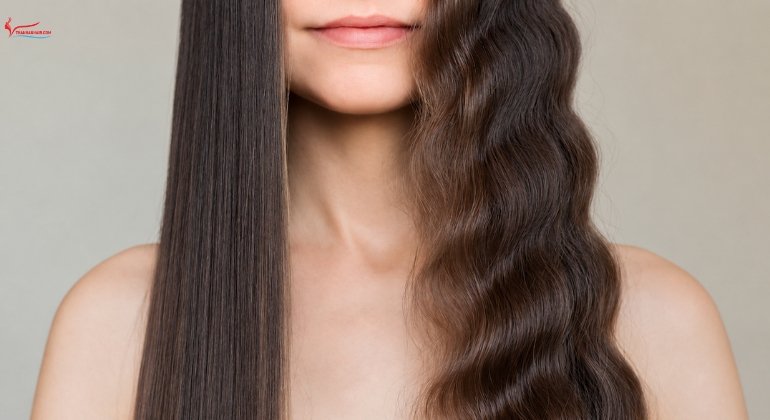
Follicles are not fixed for life. Over time, hormones, health, and wear can change how they function and subtly reshape the strand they produce. When that happens, your texture changes even though your genetics have not.
Why does hair texture change?
Most texture change traces back to one of four drivers: hormones, age, damage, or your environment and diet. Often several act at once.
Hormones reshape the growth cycle
Hair grows on a cycle. At any moment about 85 percent of your hair is in the growing (anagen) phase, which lasts around four years, and about 15 percent is resting (telogen) before it sheds. Hormones control the timing of that cycle, so when they shift, texture and density shift with them.
Pregnancy is the clearest example. Rising estrogen extends the growth phase, so hair often feels thicker and glossier. After birth, estrogen drops and a wave of hairs moves into the resting phase, then sheds two to four months later, a pattern called postpartum telogen effluvium. Hair usually recovers over 6 to 12 months, and the new growth can come back softer, finer, or wavier than before. Menopause brings a longer lasting shift: as estrogen falls and androgen influence rises, hair tends to become finer, drier, and less elastic, and some people lose curl definition while others feel more coarseness. It is chemistry, not damage. Thyroid imbalance, starting or stopping hormonal birth control, and long term stress can all move the cycle too, with sustained stress able to push a large share of growing hairs into shedding at once.
Age changes the fiber itself
Aging follicles produce less sebum, the natural oil that keeps hair smooth and shiny, so strands feel drier and coarser. At the same time the keratin inside becomes less uniform, the cuticle roughens, and fiber diameter and density change, which can leave hair looking duller, thinner, or frizzier than it once did. This is evolution rather than harm. The American Academy of Dermatology’s core advice is to learn your hair type and adapt your regimen when it changes, which matters most as hair ages.
Chemical and heat damage rewrite the bonds
Here is where a manufacturer’s view helps. Color, bleach, relaxers, and perms all work by breaking and reforming the internal bonds that hold a strand’s shape and strength. Repeated processing leaves the cortex weaker and the cuticle more porous, so hair feels rougher, drinks up water differently, and behaves in ways it never used to. Heat styling adds to the strain and dries the surface over time. The hard truth is that damaged length does not heal. Only new growth returns to your baseline, which is exactly why regular trims are part of the fix, not an afterthought.
Water, environment, and diet
Hard water leaves calcium and magnesium on the strand with every wash. In one International Journal of Trichology study, hair soaked in hard water showed measurably lower tensile strength and more mineral build-up than hair in distilled water, though results across studies are mixed. The important part is that these minerals coat the outside of the strand rather than harming the follicle, so the effect is reversible. Pollution and UV exposure roughen the cuticle and dull shine in a similar way. Diet matters from the inside: low iron and zinc are linked to shedding and weaker strands, and a peer reviewed review in Dermatology Practical & Conceptual notes that correcting a real deficiency helps, while taking more than you need does not, and can backfire.
Is your hair texture change permanent or reversible?
Sort the cause into one of two buckets. Reversible causes include heat and chemical damage, hard water build-up, nutrient gaps, and most postpartum change; these respond to gentler care and time. Long lasting causes include age driven changes and the new baseline your follicles settle into after a major hormonal event like menopause.
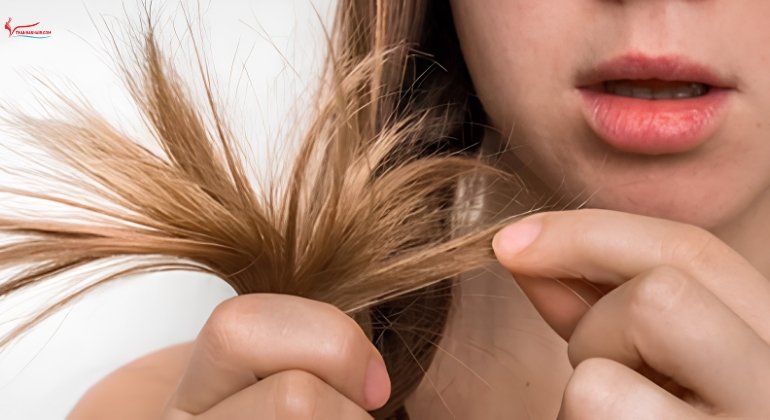
One rule cuts through the confusion: already damaged length never returns to its original state. Only new growth does. So when people talk about reversing a texture change, they usually mean growing the healthy texture out and trimming away the rest, not repairing the hair that is already on your head.
How to Care for Changing Hair Texture
When texture shifts, force rarely works. Treat the change as a cue to adapt your routine, then give it time. These steps follow guidance from board certified dermatologists.
- Re-identify your current hair type. Look at what your hair is now, coarser, finer, wavier, or drier, not what it used to be. Choosing products made for your current type is the single change dermatologists recommend first.
- Switch to a gentler, sulfate-free cleanser. Apply shampoo to the scalp rather than the lengths, then condition from mid-length to ends. This cleans build-up without stripping strands that are already drier or more fragile.
- Clarify if you have hard water or heavy product use. Use a clarifying wash once or twice a month and add a shower filter. Both remove the calcium and magnesium that coat the strand and make texture feel coarse and dull.
- Rebuild moisture and protein weekly. A weekly deep conditioning mask restores suppleness to coarse or aging hair. For fine, limp strands, a lightweight protein-infused formula strengthens without weighing hair down.
- Cut heat to about once a week and always use a protectant. Use the lowest effective heat setting, apply a heat protectant even for a quick blow-dry, and detangle damp hair with a wide-tooth comb to limit breakage.
- Reduce friction while you sleep and style. A silk pillowcase and looser hairstyles cut down on cuticle wear and snapping, which matters most when new growth is finer than the hair around it.
- Support growth from the inside, carefully. Eat enough protein, iron, and zinc. Before reaching for supplements, get a blood test, because too much selenium, vitamin A, or vitamin E can actually worsen hair loss.
For a quick reference on the habits that quietly wreck texture, the AAD keeps a plain list of hair care habits that damage hair, and its tips for healthy hair cover product matching and washing by type.
When your new texture calls for extensions
Sometimes the fastest way to feel like yourself again is to work with the new texture instead of against it. Extensions add back density or length while your own hair recalibrates, and the right method depends on which way your texture moved.
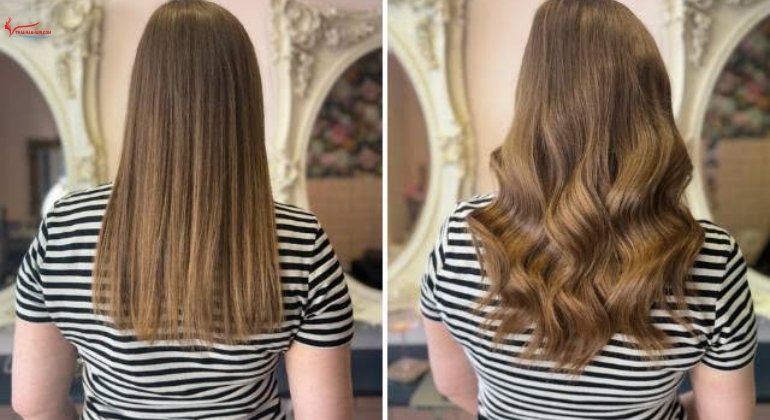
If postpartum or menopausal thinning left your hair finer, reach for the lowest tension methods. A halo piece, clip-ins, or lightweight tape sit gently on fragile hair and add fullness without pulling, and our guide to the best extensions for fine hair walks through the trade-offs. If your hair turned coarser or you simply want more body, higher density wefts and weaves match thicker, changed texture, which our guide to extensions for thick hair covers in detail.
From the production side, one factor matters more than any other for a natural blend: raw, single-donor hair with the cuticle intact and aligned moves and reflects light like your own, so it disappears into shifting texture far better than heavily processed hair. Match the extension’s texture and diameter to your current hair, not to old photos of it. And to be clear, extensions do not change your natural texture and will not stop it from changing; that job belongs to your care routine, and we bust the common misconceptions in our piece on hair growth myths.
When to see a dermatologist
Adapting at home is the right response to gradual change. Book a board certified dermatologist or your doctor when texture change is sudden or severe, arrives with heavy shedding, bald patches, or scalp pain, or comes alongside symptoms like fatigue, since a thyroid issue, iron deficiency, or a hair loss condition may be the real driver. The earlier a genuine problem is diagnosed, the more treatable it usually is. Skip the guesswork on supplements as well; the AAD warns that certain nutrients can worsen hair loss when you take more than you need, so a simple blood test is worth more than a shelf of pills.
Frequently asked questions about hair texture change
Can hair texture permanently change?
Yes. Age and major hormonal shifts like menopause can reset your baseline texture for good, making hair finer, coarser, or less curly. Damage, hard water, and nutrient gaps also change texture, but those are usually reversible once you fix the cause and grow out the affected length.
Why has my hair suddenly become curly or wavy?
A shift in curl pattern usually points to hormones, often after pregnancy, menopause, or a change in medication, which can subtly reshape how each follicle grows the strand. Certain treatments like chemotherapy are another known trigger. If the change is sudden or dramatic, ask your doctor to check your hormones and thyroid.
Does hair texture change during pregnancy?
Often, yes. Rising estrogen extends the growth phase, so hair frequently feels thicker and glossier during pregnancy. After birth, estrogen drops and many hairs shed at once, a phase called postpartum telogen effluvium. Regrowth over roughly 6 to 12 months can return softer, finer, or wavier than before.
Can I change my hair texture back to what it was?
Sometimes. If damage, heat, or hard water caused the change, gentler care plus growing out and trimming the affected hair restores your baseline over time. If age or hormones caused it, the new texture is likely permanent, and adapting your routine works far better than fighting it.
Does hard water change hair texture?
It can. Calcium and magnesium in hard water build up on the strand, leaving hair feeling coarser, drier, and duller. Research on strength is mixed, but the minerals coat the surface rather than harm the follicle, so a clarifying wash and a shower filter reverse most of the effect.
Do hair extensions work if my texture has changed?
Yes. Extensions are one of the simplest ways to manage changed texture, adding density to thinning hair or matching a new coarser feel. Choose low-tension methods for fragile hair, and pick raw, cuticle-aligned hair in a texture close to your current hair for the most natural blend.
Work with your hair, not against it
Your hair’s texture will keep evolving, and the goal is never to force it back to an old version of itself, but to help it thrive as it is now. If a changed texture has you rethinking length or density, Thanh An Hair manufactures raw, single-donor extensions factory-direct in dozens of textures and colors, cut and matched to blend with real, changing hair. Contact our team for wholesale pricing and a color and texture match and we will help you find the right fit.
Contact Thanh An Hair today for expert consultation and the most competitive price list.
- WhatsApp/Hotline: (+84) 973 522 855
- Official Website: https://thanhanhair.com/
- Instagram: @thanhanhair
- Email: thanhanexport@gmail.com