
Raw Vietnamese Hair
How to Keep Bangs from Getting Greasy

Aug
How to keep bangs from getting greasy, wash the fringe alone with a dime of shampoo on days you skip a full wash, keep conditioner off the roots, apply dry shampoo six inches away and wait two minutes before touching, switch to water-based styling products, and stop pushing your bangs aside.
Everyone with a fringe learns the same lesson: bangs go greasy on their own schedule, several hours ahead of the rest of the head. Most advice online treats this as a washing problem and stops there. It is three problems wearing one costume, and each has a different fix.
Why Do My Bangs Get So Greasy? Three Sources, Not One
Your fringe collects oil from your scalp, from your forehead, and from the products you put on both. Treating only the first source explains why the usual advice underperforms.
1. Your fringe sits on the oiliest strip of scalp you own
Sebaceous glands are not spread evenly. Research on gland distribution and the skin lipid barrier puts density on the scalp and forehead at roughly 400 to 900 glands per square centimeter, against a small fraction of that on the limbs. The frontal hairline sits at the overlap of those two zones. Your bangs grow out of the single densest oil-producing patch on your body.

The delivery mechanism matters as much as the volume. As StatPearls notes in its review of sebaceous gland physiology, sebaceous glands empty into the hair canal, and sebum reaches the surface by wicking along the hair shaft. Short hair means a short wick. Oil that would take a day to travel down 18 inches of length coats a four-inch fringe in a couple of hours.
2. Your forehead donates oil and skincare straight back
A fringe rests against skin that produces sebum at the same rate as the scalp above it, and you cover that skin every morning. Sunscreen, moisturizer, primer, and foundation transfer onto the underside of the bangs across the day. Dermatology has a name for what happens when heavy hair products run the other direction: pomade acne, a form of acne cosmetica that shows up as small bumps along the frontal hairline. Traffic moves both ways.
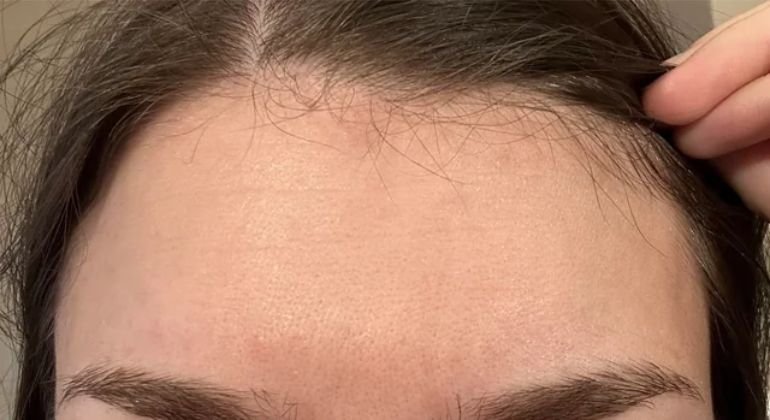
This is why people with an oil-free scalp routine still lose the battle. Check your forehead products before you change your shampoo. A rich night cream applied at 11pm has eight hours of direct contact with your fringe.
3. Product buildup and hands
Silicones, waxes, and oil-based pomades do not rinse out with a normal wash. They accumulate, attract dust, and start reading as grease within a day or two of application. Add the habit of pushing your bangs aside, and you deposit hand oil onto the exact section you are trying to keep clean. Count how often you do it tomorrow. Most people are surprised.
How to Keep Bangs from Getting Greasy: The 60-Second Bang-Only Wash
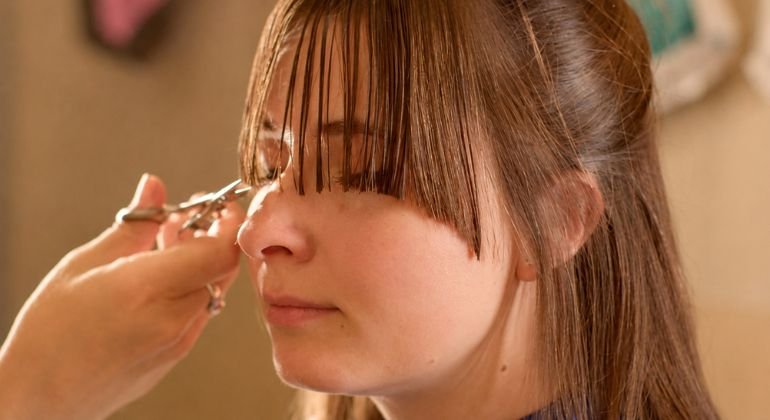
Washing the fringe alone is the technique that separates people whose bangs hold up from people who redo them at lunchtime. It takes under two minutes and leaves the rest of your hair dry, which matters if you have textured, colored, or chemically treated hair that cannot take a daily full wash. Follow the order below.
- Section the fringe off. Clip the rest of your hair back so only the bangs hang free. Keeping the length dry is the whole point of this wash, and a wet crown will drip oil and product back down into the fringe within minutes.
- Rinse with lukewarm water for 20 seconds. Hold the fringe under the tap and let lukewarm water run through the roots. Hot water loosens more sebum but leaves the mid-lengths rough, so keep the temperature just above body heat.
- Work a dime of shampoo into the roots only. Emulsify the shampoo in your palms first, then press it into the strip of scalp behind your hairline. The American Academy of Dermatology directs shampoo at the scalp rather than down the length, which is where the oil sits and where a fringe goes greasy first.
- Massage 30 seconds, then rinse twice. Use your fingertips, not your nails. Rinse once to clear the lather, then a second time to clear the film the first rinse leaves behind. Residual surfactant reads as grease by mid-afternoon.
- Skip conditioner at the roots. If your hair is fine or straight, keep conditioner to the last inch of the fringe or leave it out altogether. Conditioner on bang roots is the single most common self-inflicted cause of a fringe that looks oily an hour after washing.
- Blow-dry cool and downward in 90 seconds. Rough-dry with a towel, then finish on the cool setting with the nozzle pointing down the hair shaft. Air-drying leaves the fringe sitting damp against a warm forehead, which restarts oil transfer before you leave the house.
Dry Shampoo for Bangs: Timing, Distance, and a Ceiling
Dry shampoo absorbs oil. It does not remove it. Dr. Nada Elbuluk of the USC Keck School of Medicine has told reporters that the name is a misnomer, since the product does not clean hair the way shampoo does. The starch and the sebum both stay on your scalp until water and surfactant take them off.
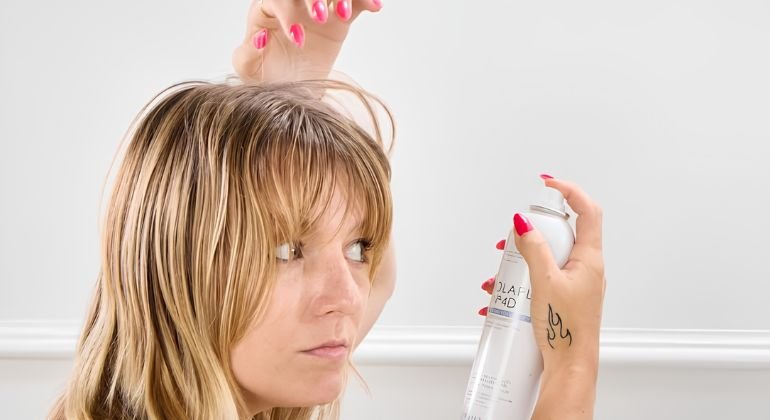
Used correctly, it buys you a day. Hold the can six inches from the roots, spray in short bursts along the part, then wait two full minutes before you touch anything. Almost everyone skips the wait, brushes immediately, and ends up with white cast and flat bangs. The dwell time is what lets the starch bind the oil.
The ceiling matters more than the technique. Dermatologists advise capping dry shampoo at once or twice a week. Beyond that, residue collects around the follicles and can trigger irritation or folliculitis, which shows up as tender bumps along the hairline. In 2022 the FDA also flagged elevated benzene in several aerosol dry shampoo brands, prompting voluntary recalls, so a powder formulation is worth considering.
Which Oil-Control Method Should You Use?
Each option below solves a different problem. Reaching for dry shampoo when the real issue is a waxy pomade will keep you stuck in the same loop every week.
| Method | What it actually targets | Time | Safe frequency | Trade-off |
|---|---|---|---|---|
| Bang-only wash | Sebum at the roots | 3 to 5 minutes | Daily if needed | Removes oil instead of hiding it |
| Dry shampoo | Surface oil on the fringe | 2 minutes plus dwell time | 1 to 2 times per week | Buildup risk; never replaces washing |
| Blotting papers | Oil on the forehead and hairline | 10 seconds | As often as needed | No residue, no buildup, no volume |
| Clarifying shampoo | Silicone, wax, and dry shampoo residue | 5 minutes | Every 2 to 4 weeks | Strips color-treated hair if overused |
| Product swap to water-based | The cause rather than the symptom | One shopping trip | Permanent | Less hold than oil or wax formulas |
Greasy Clip-In Bangs and Fringe Toppers Are a Different Problem
We manufacture fringe pieces, clip-ins, and toppers, and this is the question our wholesale customers ask most often after a salon complains. A clip-in fringe looks greasy for reasons that have nothing to do with the advice above.
Human hair extensions have no scalp attached. No scalp means no sebaceous glands, which means the piece produces exactly zero oil for as long as you own it. Everything oily on it arrived from somewhere else: your forehead, your sunscreen, your leave-in conditioner, your hands. That changes the protocol completely. Extension hair also receives none of the sebum that keeps growing hair supple, so washing it on a growing-hair schedule dries it out and shortens its life.
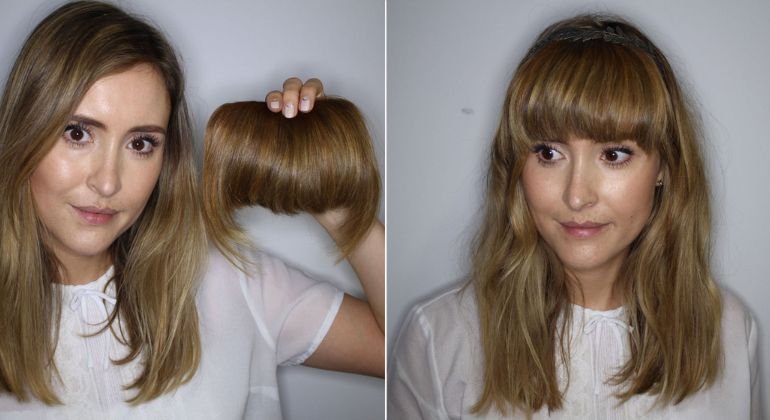
Three adjustments cover it. Wipe the base and the underside of a clip-in fringe with a damp cloth after each wear, before the transfer sets. Wash the piece every 15 to 20 wears rather than weekly. Keep oil-based serums off it entirely, since there is no scalp turnover to carry them away and they simply accumulate.
Fiber quality decides how fast a piece starts looking greasy in the first place. Hair that has been acid-stripped and re-coated with silicone looks glassy in the package and starts reading as oily once the coating breaks down unevenly, usually after a handful of washes. Cuticle-aligned single-donor hair carries its own intact cuticle layer, so it reflects light along the shaft instead of sitting in patches. On our inspection bench the difference is visible under raking light before anyone has washed anything, which is why we check it at the weft stage rather than after finishing. For a longer walkthrough of that logic, see our guide to identifying high-quality hair extensions.
The Overnight Half of the Problem
You spend seven or eight hours with your fringe pressed against fabric that has absorbed last night’s skincare. Cotton pulls moisture and holds oil against the hair. Switching to a smoother surface reduces friction and transfer, though the benefit is mechanical rather than medical, as we covered in our piece on the evidence behind silk pillowcases.
Two habits do more than the pillowcase itself. Wash your bangs at night instead of in the morning, so the fringe starts the day clean rather than eight hours into oil contact. And clip the fringe back before bed. A soft claw clip removes forehead contact for the entire night, and you will see the difference the first morning.
Sourcing Fringe Pieces That Do Not Go Greasy in the Box
If you sell or install fringe pieces, the grease complaint usually starts at the supplier rather than the client. Thanh An Hair has manufactured raw Vietnamese hair for two decades and ships factory-direct to salons, stylists, and resellers, which means you can ask about cuticle alignment and donor sourcing and get an answer from the people who ran the inspection.
Request a sample of our cuticle-aligned clip-in fringe and topper hair and check it against whatever you are using now.
Ready to find your perfect match? Contact us today for expert advice and exclusive discounts on premium human hair extensions.
📲Phone/WhatsApp: +1 (206) 698‑5133
🛜Instagram: RAW HAIR LUXURY COMPANY
🌐Tik Tok: RAW HAIR LUXURY
📧 Email: Rawhairluxury.us
🌐Website: rawhairluxury.com