
Raw Vietnamese Hair
How to Keep Your Weave Silky and Tangle-Free
Aug
How to keep your weave silky comes down to four controls: wash it every 7 to 14 days with sulfate-free shampoo using downward strokes, condition mid-shaft to ends, detangle bottom-up with a wide-tooth comb, and sleep in satin. Tangling starts when cuticle scales lift or face opposing directions.
Most weave care advice stops at “use good hair and wash it gently.” That leaves out the part that actually decides whether a bundle stays silky at week ten: which way the cuticle scales point, and what happens when they stop pointing the same way. We manufacture wefted hair, so we see the failure modes before they reach a client’s head. This guide covers the fiber science, a wash-day sequence you can follow without a stylist, and a troubleshooting table for hair that has already started to mat.
Why Your Weave Tangles: The Cuticle Science Resellers Skip
A hair fiber is not smooth. Its outer layer is built from flat, overlapping cells arranged like roof shingles, all angled from root toward tip. The StatPearls reference on hair physiology notes that this cuticle is what gives hair its untangled appearance in the first place.
Those shingles create a directional effect. Tribology researchers call it the differential friction effect: sliding one keratin fiber against another takes measurably more force in the tip-to-root direction than root-to-tip, because the scale edges catch instead of gliding. The original measurements on keratin fibers quantified this across human and animal hair.
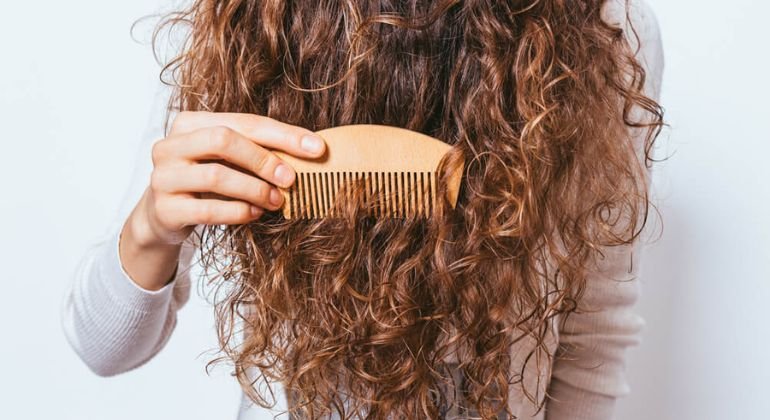
Now apply that to a weft. If every strand in a bundle came from one donor and stayed in its original orientation through processing, all the scales face the same way. Strands slide past each other. If a bundle mixes hair collected from floors and brushes, roughly half the strands sit reversed. Their scale edges lock against their neighbors’ every time the hair moves. That is mechanical matting, and no conditioner fixes it, because the geometry is wrong.
This is why single-donor bulk hair and one-donor wefts behave differently from bundles priced at a third of the cost. The cheaper hair is usually cuticle-stripped in an acid bath and coated with silicone, which hides the problem for about four washes.
How hair grade predicts tangling behavior
| Hair type | Cuticle status | Typical tangle onset | Best use |
| Raw single-donor, cuticle-aligned | Intact, all facing root-to-tip | Rare with correct care | Long-wear sew-ins, color work |
| Remy (aligned, processed) | Intact but chemically thinned | After repeated washes | Mid-tier retail bundles |
| Non-remy collected hair | Stripped by acid bath, silicone-coated | Once coating washes off | Short-term wear only |
| Synthetic fiber | No cuticle at all | Friction fuzz within weeks | Costume and temporary looks |
Wash Day Done Right: Sulfate-Free Shampoo and Deep Conditioning
Extension hair has no sebaceous gland feeding it. Your growing hair gets a continuous supply of sebum; a weft gets whatever you put on it and nothing else. Every wash is a net withdrawal. That single fact drives the whole routine.
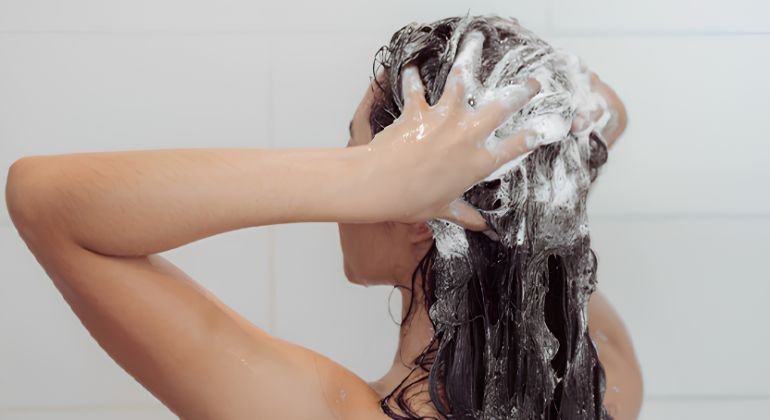
Dilute your shampoo roughly one part product to four parts water in an applicator bottle. Apply it along the track lines and scalp, not down the length. Let the runoff clean the mid-shaft on its way to the drain. The American Academy of Dermatology makes the same point about keeping the style clean with a gentle, moisturizing formula while the weave is in.
The water problem nobody mentions
Calcium and magnesium in tap water deposit on the fiber surface with every rinse. The film feels like straw and catches on neighboring strands. Worth being precise here, because the internet overstates it: a 2013 study in the International Journal of Trichology (PubMed 24574692) soaked hair in 212.5 ppm hard water for 30 days and found no significant change in tensile strength or elasticity. Hard water is a texture and buildup problem, not a structural one. A monthly chelating rinse handles it.
How to Detangle a Weave Without Shedding
Combing from the top down gathers every knot into one dense mass at the ends, then forces you to pull through it. The Hair Cosmetics review in the International Journal of Trichology observed that fibers break at the point of highest combing force, which is exactly where that mass sits.
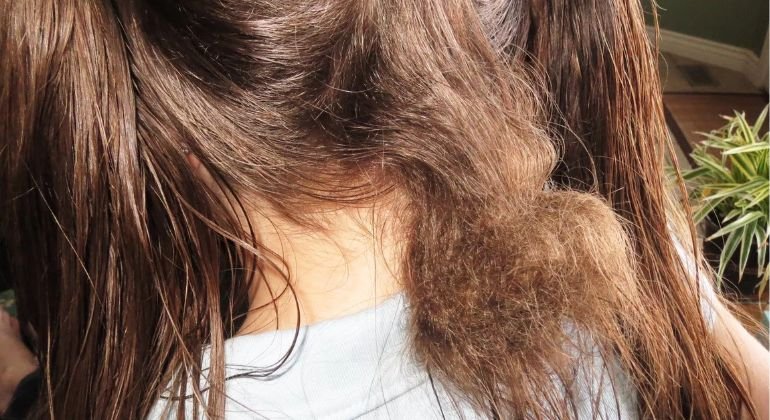
Work the other direction. Hold the section above where you are combing so tension never reaches the track. Start two inches from the ends, clear that inch, move up an inch, repeat. Use a wide-tooth comb on dry or barely damp hair with a slip product on it. Wet hair swells at the endocuticle, which lifts the scales and makes the fiber more vulnerable to friction damage than it is dry.
Budget four minutes for a full head. If a knot resists two passes, saturate it with conditioner and separate it with your fingers instead of forcing the comb through.
Picking Hair That Stays Silky in the First Place
Care routines have a ceiling set by the hair itself. Ask any supplier three questions: is it single-donor, is the cuticle intact and aligned, and how is the weft constructed. A vendor who cannot answer is reselling, not manufacturing.

Weft construction matters more than most buyers realize. A machine weft with dense stitching holds shed hair inside the seam, where it accumulates and forms the hard mat at the base. Hand-tied and genius wefts sit flatter and release trapped hair more easily during washing. Our weft hair range covers both constructions.
Troubleshooting a weave that has already started to tangle
| Symptom | Root cause | Fix |
| Hard mat at the weft base | Shed hair trapped in the track plus damp thread | Separate wefts under running water, dry the track fully, wash less often |
| Mid-shaft webbing | Product buildup binding strands together | Clarify once, then deep condition; switch to a lighter leave-in |
| Dry, snagging ends | Mineral film from hard water or heat damage | Monthly chelating rinse; trim the last half inch; cap irons at 350 F |
| Overall dullness with no tangling | Silicone or oil residue coating the surface | Single clarifying wash, then return to sulfate-free |
Source Hair That Starts Silky
Thanh An Hair has manufactured raw Vietnamese hair for two decades, selling factory-direct to salons, stylists, and resellers. Every bundle is cut from a single donor with the cuticle intact and aligned in one direction, which is the variable no aftercare routine can correct later.
Request a wholesale catalog and sample pack and judge the slip yourself before you commit to an order.
Ready to find your perfect match? Contact us today for expert advice and exclusive discounts on premium human hair extensions.
📲Phone/WhatsApp: +1 (206) 698‑5133
🛜Instagram: RAW HAIR LUXURY COMPANY
🌐Tik Tok: RAW HAIR LUXURY
📧 Email: Rawhairluxury.us
🌐Website: rawhairluxury.com