Thanh An Hair
Benefits of Silk Pillowcases for Hair: What the Evidence Supports
Aug
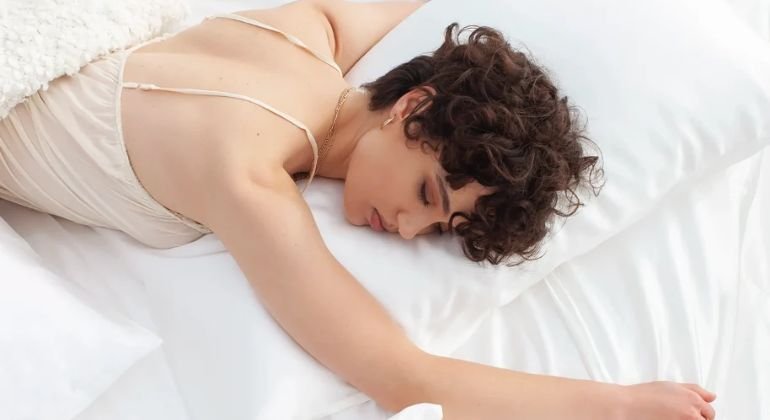
The benefits of silk pillowcases for hair are mechanical, not medical. A smooth silk surface lowers the friction your strands fight for seven or eight hours a night, which means fewer tangles, less frizz, and less cuticle chipping. Silk will not thicken hair or reverse damage already done.
We manufacture raw Vietnamese hair extensions, so we spend our working days looking at cuticle under magnification and watching what friction does to a bundle over months of wear. That vantage point makes the marketing around silk bedding easy to sort. Some of it describes real physics. Some of it inverts the fiber science it claims to cite. This guide separates the two, names the clinical evidence, and tells you what specification to buy.
What a silk pillowcase does to your hair overnight
Each strand of hair is a shaft of keratin wrapped in a cuticle. StatPearls describes that outer layer as a single layer of cells overlapping like roof shingles, with the cortex beneath carrying most of the shaft’s bulk (Martel et al., StatPearls, NCBI). Those scales point from root to tip. Rub along them and hair glides. Rub against them and the edges catch, lift, and eventually break off.
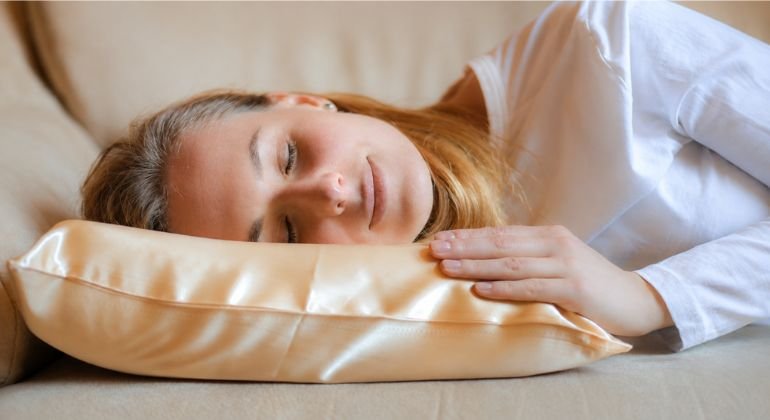
You turn over dozens of times between lights-out and the alarm. Every turn drags hair across whatever your pillow is covered in and across itself. Cotton percale has a comparatively rough surface at fiber scale, and the yarn crossings act like a very fine rasp. Over hundreds of nights that grinding removes cuticle at the mid-lengths and ends, which is where the shaft has been alive longest and defended least.
The damage compounds because hair cannot repair itself. Dermatologist Zoe Draelos, MD, speaking at an American Academy of Dermatology annual meeting, made the point plainly: hair is not living tissue and does not heal after injury. Once a cuticle scale chips away, the cortex underneath sits exposed for the rest of that strand’s life. Friction raises the surface coefficient further, so damaged hair snags more, which damages it more.
Why the cuticle carries the whole argument
Healthy cuticle is coated in a bound lipid layer that acts as the shaft’s factory lubricant. Bleaching, flat irons, and repeated mechanical abrasion strip it. Research on hair tribology links a high friction coefficient to harder combing, more tangling, and greater damage potential. A silk pillowcase does not restore that lipid layer. It removes one recurring source of abrasion from a 24-hour cycle that also includes brushing, heat, and styling. That is a genuine benefit, and a modest one.
The moisture claim, corrected
Nearly every silk bedding page tells you that silk absorbs less moisture than cotton. As written, that is wrong.
Standard moisture regain is the textile industry’s measure of how much water vapor a fiber holds at equilibrium under ISO 139 conditions, 20 degrees Celsius and 65 percent relative humidity. Mulberry silk sits at 11 percent. Cotton sits at 8.5 percent. Polyester sits at 0.4 percent. By the actual metric, silk holds more atmospheric moisture than cotton does, not less.
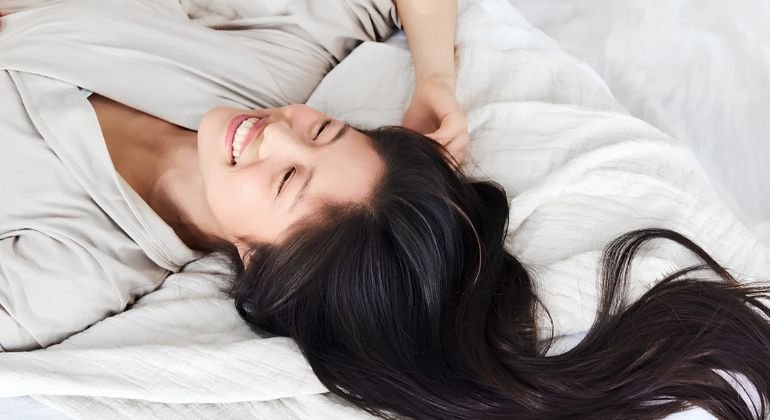
So why does cotton leave hair drier by morning? Two reasons, and neither is vapor regain. Cotton fiber has a hollow lumen and a hydrophilic cellulose surface, which makes it aggressive at wicking liquid: sebum, sweat, leave-in conditioner, and styling cream migrate off the hair and into the fabric by capillary action. Second, the abrasion discussed above lifts cuticle, and lifted cuticle loses water faster. Cotton pulls the lubricant away and then roughs up the surface that lubricant was protecting.
This matters for buyers because the corrected version predicts the right things. It explains why silk helps most for hair that produces little sebum at the ends, and why a silk pillowcase does almost nothing for an oily scalp. Ask a supplier to explain the mechanism rather than repeat the slogan. The ones who can explain it usually know what they are selling.
Silk vs satin vs cotton: the specifications that matter
Satin is a weave, not a fiber. A satin weave floats warp yarns over several wefts before locking, which produces the glossy face and dull back people recognize. You can weave satin from silk, polyester, nylon, or acetate. When a listing says “satin” and never names a fiber, it is polyester.
| Property | Mulberry silk | Polyester satin | Cotton percale |
| Fiber type | Natural protein filament | Synthetic petrochemical | Natural cellulose |
| Standard moisture regain | 11% | 0.4% | 8.5% |
| Liquid wicking from hair | Low | Low | High |
| Surface friction on hair | Lowest | Low | Highest |
| Heat behavior | Breathable, sheds body heat | Traps heat, can cause sweating | Breathable |
| Microfiber shedding in wash | None | Yes | None |
| Typical US price, standard size | $40 to $110 | $8 to $20 | $12 to $30 |
| Care | Cool wash, mesh bag, air dry | Machine wash warm | Machine wash hot |
| Best for | Extensions, curls, bleached hair, hot sleepers | Budget friction control | Durability and easy laundering |
Polyester satin buys you most of the friction benefit for a fraction of the money. It costs you breathability, and a hot sleeper who wakes up damp has traded one hair problem for another.
What the clinical evidence supports, and what it does not
Silk bedding sits in a category where marketing has outrun the research, so it pays to know the actual studies.
Dermatologists endorse the friction argument. The American Academy of Dermatology, in guidance from board-certified dermatologist Temitayo Ogunleye, MD, FAAD, advises sleeping with hair gathered in a loose pineapple or braid and notes that satin or silk bonnets and pillowcases may reduce friction and preserve a style (AAD, 6 curly hair tips from dermatologists). The AAD hedges with “may,” and so should any vendor.
The largest trial of silk textiles found no disease benefit. The CLOTHES trial, funded by the UK National Institute for Health Research, randomized 300 children with moderate to severe eczema to silk therapeutic garments plus standard care or standard care alone, and followed them for six months under observer-blind assessment. Silk garments did not improve eczema severity by any clinically important margin. Skin infections occurred in 25 percent of the silk group and 28 percent of the control group. The investigators concluded that silk garments were unlikely to help or to be cost-effective (Thomas et al., Health Technology Assessment, 2017).
The positive silk study is small and uncontrolled. A 2019 paper in Dermatology Reports followed 30 atopic dermatitis patients wearing pure silk clothing for eight weeks and recorded improvement on questionnaires (Hung et al., PMID 32269744). There was no control arm and no blinding, so it cannot separate the fabric from time and attention.
Put those together and the honest position is narrow. Lower friction against a smoother surface is real physics with dermatologist backing as a low-risk habit. Claims that silk treats scalp disease, regrows hair, or replaces medical care have no support behind them. For anything involving thinning at the part or hairline, follow the AAD’s guidance on hair care habits that cause damage and see a dermatologist.
An overnight routine that makes the pillowcase work harder
The pillowcase handles one variable. These six steps handle the rest, and they cost nothing.
- Dry your hair before you lie down. Wet hair swells and loses tensile strength, so it snaps under loads that dry hair shrugs off. Air dry or use low heat until strands feel dry to the root before bed.
- Detangle from the ends upward. Work a wide-tooth comb through the last two inches first, then move up in sections. Starting at the scalp drags every knot down the shaft and rips cuticle on the way.
- Gather hair loosely off the pillow. Use a loose braid or a high, slack pineapple held with a silk scrunchie. Keep every elastic band away from the hairline, because overnight tension at the follicle drives traction damage.
- Seal the ends with a light leave-in. The oldest two inches carry the most weathering and the least sebum. A pea-sized amount of light oil or leave-in conditioner on the ends lowers hair-on-hair friction for the whole night.
- Cover the pillow, and cover the hair if you wear extensions. Fit the silk pillowcase so no seam sits under your cheek. If you wear bonded extensions or a wig, add a silk or satin bonnet, which encloses the hair on all sides instead of one.
- Wash the pillowcase weekly. Sebum, sweat, and styling product build a tacky film that raises surface friction. A dirty silk pillowcase performs worse than a clean cotton one.
Washing and care
Silk degrades under heat, alkalinity, and chlorine. Wash weekly in cool water with a pH-neutral or silk-specific detergent, inside a mesh bag, on a delicate cycle. Skip fabric softener, which leaves a film that raises surface friction. Skip the dryer. Lay flat or hang in shade, and press on low heat from the reverse side if you want it crisp. A silk pillowcase that has gone stiff and slightly tacky has stopped doing its job, and no amount of momme count fixes that.
The honest summary
A silk pillowcase is a low-risk, moderate-return purchase. It removes one abrasion source from your hair’s daily load, it helps most for curls, bleached hair, and extensions, and dermatologists list it among reasonable overnight habits. It does not treat scalp disease, stop shedding, or rescue hair that is already damaged. Buy 22 momme mulberry silk with a stated grade and certification, pair it with a loose braid and a clean wash cycle, and set your expectations at fewer tangles rather than a transformation.
Source cuticle-aligned raw hair direct from the factory
Thanh An Hair has manufactured raw Vietnamese hair extensions for two decades, shipping cuticle-aligned single-donor bundles, wefts, and wigs to salons and resellers worldwide at factory-direct pricing. Nightly friction only matters if the hair was built to last in the first place.
Request your wholesale catalog and sample pack
Ready to find your perfect match? Contact us today for expert advice and exclusive discounts on premium human hair extensions.
📲Phone/WhatsApp: +1 (206) 698‑5133
🛜Instagram: RAW HAIR LUXURY COMPANY
🌐Tik Tok: RAW HAIR LUXURY
📧 Email: Rawhairluxury.us
🌐Website: rawhairluxury.com