
Raw Vietnamese Hair
Holiday Hair Care Tips: 2026 Travel Size Products Guide
Aug
Holiday hair care comes down to three jobs: pack products that clear airline liquid rules, shield hair from UV, chlorine, salt, and hard water, and adjust your routine if you wear extensions. This guide covers the exact TSA limits, the chemistry behind each type of damage, and packing rules we use as a hair factory.
The advice below comes from the production floor rather than a product aisle. Thanh An Hair has manufactured raw Vietnamese hair for 20 years, and the same fiber science that guides our quality checks explains why sun, pools, and hotel water treat your hair the way they do.
What Does Holiday Hair Care Actually Involve?
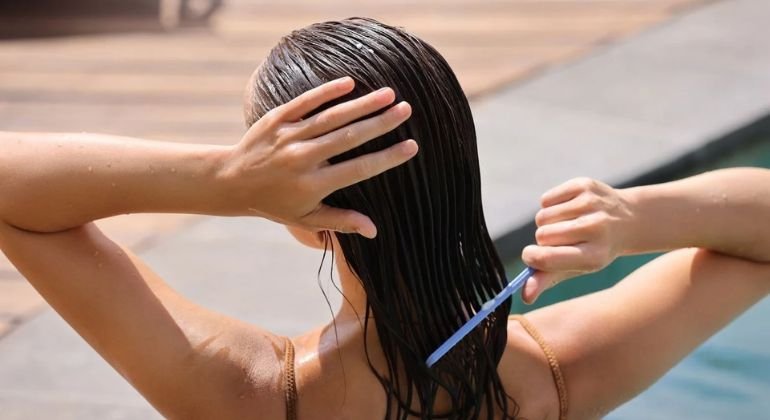
Five stressors do most holiday damage: UV light, chlorinated pool water, sea salt, hard hotel water, and rough handling in transit. Each one attacks a different part of the fiber, so no single product covers all five.
A healthy strand leaves the scalp with a shingled cuticle sealed by 18-MEA, a fatty lipid layer that keeps the surface smooth and water-resistant. UV thins that layer and drains protein. Chlorine oxidizes pigment and surface lipids. Salt crystals pull moisture out and raise friction between strands. Dissolved minerals film over the cuticle and dull it. We inspect incoming raw bundles for these same failure points at the factory, which is why every fix below targets a mechanism instead of a symptom.
Protect Hair From Sun, Chlorine, and Salt Water
Cover hair during peak sun, create a barrier before you swim, and rinse within minutes of leaving the water. Those three habits prevent more damage than anything you can buy after the fact.
Sunlight does measurable structural harm. In laboratory UV exposure tests, irradiated hair lost strength and protein, cuticle edges peeled away, and the 18-MEA lipid layer thinned. The same research found that wet hair fares worse: UV light generates hydroxyl radicals inside water-soaked fibers, and those radicals punch holes between the cuticle layers. So towel off before you settle in for a long sunbathing session, and cover up between 10 a.m. and 2 p.m., the peak window dermatologists at the AAD flag for sun exposure. Our sun protection for hair guide covers UV-filter sprays and hat choices in more depth.
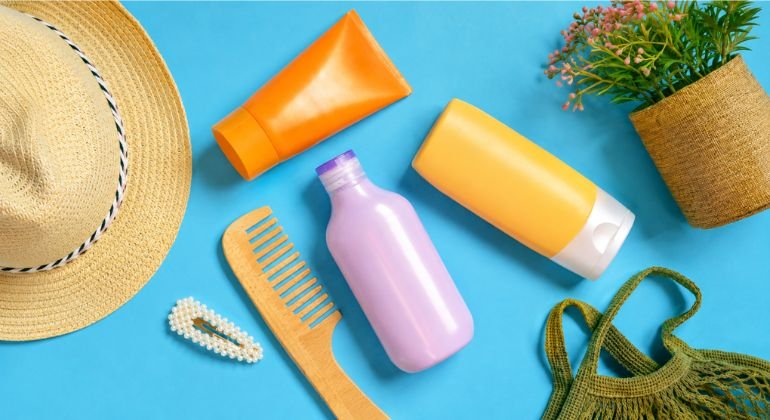
For pools, the AAD’s advice is a two-step barrier: soak hair with fresh water first, then coat it with oil or leave-in conditioner so the fiber has little room left to absorb treated water. Add a snug swim cap if you swim laps. The famous green tint on blonde hair comes from copper rather than chlorine itself; pools collect the metal from algaecides and pipework, chlorine oxidizes it, and porous lifted hair binds it. Copper also compounds sun damage: research on UV exposure shows trace copper absorbed from tap water speeds up the breakdown of hair proteins in sunlight, which is exactly the combination a pool holiday delivers.
Sea water works differently. Salt draws moisture out of the fiber, and dried crystals act like grit between strands, so friction climbs and tangles set. Rinse with fresh water as soon as you leave the beach, then detangle with conditioner and a wide-tooth comb, ends first. Rough handling at this stage snaps more strands than the salt itself; our hair breakage guide shows the wet-detangling technique that avoids it.
Hard Water at Your Destination
Hard water leaves a calcium and magnesium film that dulls shine and stiffens lengths, and the research on lasting harm is split. A 30-day trial at 212.5 ppm hardness found no change in tensile strength or elasticity, while a three-month study measured a real drop in strength. A one- or two-week trip sits well inside the safe zone, so treat hard water as a cosmetic issue: one chelating or clarifying wash on return lifts the film. Pale blonde hair and blonde extensions deserve one extra step, a final rinse with bottled or filtered water, because mineral and copper deposits shift their tone fastest.
Hair Extensions on Vacation: Packing Rules From the Factory Floor
Extension hair receives no sebum from your scalp, so every gram of moisture it gets comes from you. Plan for more conditioning, less washing, and strict rules around water and heat at the attachment points.
Clip-in hair and halo sets are the easiest travelers. Take them out before swimming and sleeping, brush each weft, and roll the set loosely instead of folding it, so the wefts keep their curve. Store the rolled set in a silk or satin pouch, and air it out for an hour before repacking.
Tape-in extensions demand the most discipline. Oils and heat soften adhesive, so keep oil applications below the tape line and cleanse the bond area with fingertips only. Chlorine and salt creep under tape edges and shorten hold. An honest disqualifier from our side: a fresh tape install and a pool-heavy week make a poor pairing. If the trip centers on water, wear clip-ins for evenings and book the install for your return.
Keratin bonds, nano rings, and sewn-in weft hair handle water better, but trapped moisture is their weak point. Braid the hair for beach days, then dry the attachment rows fully after every swim; damp wefts held against the scalp turn sour within a day or two in tropical humidity. A ponytail piece rounds out the kit for anyone with evening plans, since it clips over a bun in under a minute and shields your own hair underneath.
How to Pack and Protect Your Hair for a Holiday
Run these six steps in order. The first two happen before you zip the suitcase.
- Book a trim and color two weeks out. Fresh cuts resist split-end spread in sun and salt, and color needs 10 to 14 days to settle before chlorine exposure. Ask your stylist for a gloss if you swim often.
- Decant liquids into 100 ml bottles. Fill travel bottles almost to the top, squeeze out excess air, and tape the caps. Less trapped air means less expansion at altitude, which is what pushes product past the seal.
- Pack one barrier and one repair product. A leave-in spray or light oil handles pre-swim and pre-sun coating. A single-use mask sachet or 100 ml deep conditioner handles the repair night midway through the trip.
- Add physical protection. Pack a wide-brim hat or silk scarf, a swim cap for laps, and a wide-tooth comb. Fabric and shade block UV better than any spray-on filter.
- Follow the wet-hair rules on arrival. Soak and coat hair before every pool session, rinse with fresh water right after, and towel off before long sunbathing. Wet fibers take more UV damage than dry ones.
- Reset your hair on the last day. Use a chelating or clarifying wash once to lift chlorine, copper, and mineral film, then deep condition. Dry extensions fully and store them in a silk bag for the flight home.
The Short Version
Pack within the 100 ml rule, put a barrier between your hair and every pool, respect the wet-hair sun risk, and give extensions their own routine. None of it takes more than a few minutes a day, and all of it beats paying for repair treatments in September.
Choosing extensions that can handle a travel-heavy season? Contact Thanh An Hair for factory-direct samples and guidance on the right attachment type for your clients.
Ready to find your perfect match? Contact us today for expert advice and exclusive discounts on premium human hair extensions.
📲Phone/WhatsApp: +1 (206) 698‑5133
🛜Instagram: RAW HAIR LUXURY COMPANY
🌐Tik Tok: RAW HAIR LUXURY
📧 Email: Rawhairluxury.us
🌐Website: rawhairluxury.com