
Raw Vietnamese Hair
Hair Breakage: Causes, Prevention, and Solutions
Aug
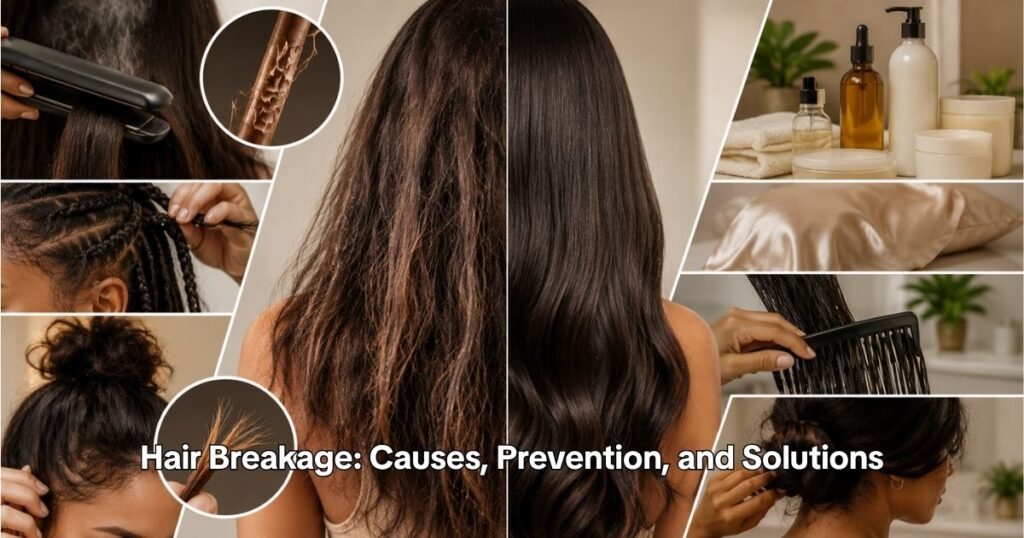
Hair breakage happens when the shaft snaps along its length instead of releasing from the follicle. Four forces cause it: heat above 175 C, chemical processing, mechanical tension, and swelling from repeated wetting. Breakage reverses if you remove the cause early. Once tension scars the follicle, regrowth stops.
Most articles on this topic list causes. This one explains the mechanics, because we handle raw hair fiber at the bench every working day. Thanh An Hair has produced cuticle-aligned extensions in Vietnam for about two decades, which means we watch strands fail under load, heat, and tension in a way a reseller never does. What follows separates what breaks hair from what only looks like it does.
Hair Breakage vs Hair Shedding: Sort Them First
Sort the hair before you treat it. Shedding is follicular release at the end of a growth cycle, and the American Academy of Dermatology puts normal daily loss at 50 to 100 strands. Breakage is structural failure of the shaft. The two need opposite responses, and treating one as the other wastes months.
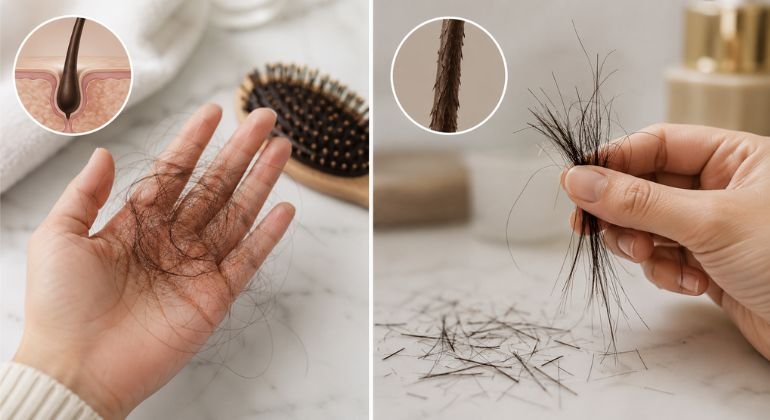
Lay a handful of loose hairs on a white towel and check three things.
| Signal | Shedding | Breakage |
| Root end | Small white or clear bulb attached | No bulb, clean or frayed snap |
| Length | Full length, matches your longest hair | Short, uneven, often 1 to 4 inches |
| Tip appearance | Tapered natural end | Blunt fracture or split into fibers |
| Where it starts | Whole scalp, diffuse | Crown, hairline, mid-lengths, ends |
| Primary driver | Hormones, illness, stress, medication | Heat, chemicals, tension, friction |
| First move | Blood work and a dermatologist | Remove the mechanical or chemical load |
One pattern deserves attention on its own. When broken hairs all measure roughly the same short length, a single event weakened the shaft at one point: a bleach session, a relaxer, one very hot pass. Scattered lengths point to ongoing daily damage instead.
What Causes Hair Breakage: Four Forces and One Medical Bucket
The hair shaft is dead keratin. It has no repair mechanism, so every insult accumulates from the root outward. Dermatology literature groups the structural result under trichorrhexis nodosa, the most common structural hair abnormality, where nodes form along the shaft and the fiber snaps at those weak points. It is a response to physical or chemical trauma, which is good news: remove the trauma and new growth comes in sound.
Heat damage above 175 C
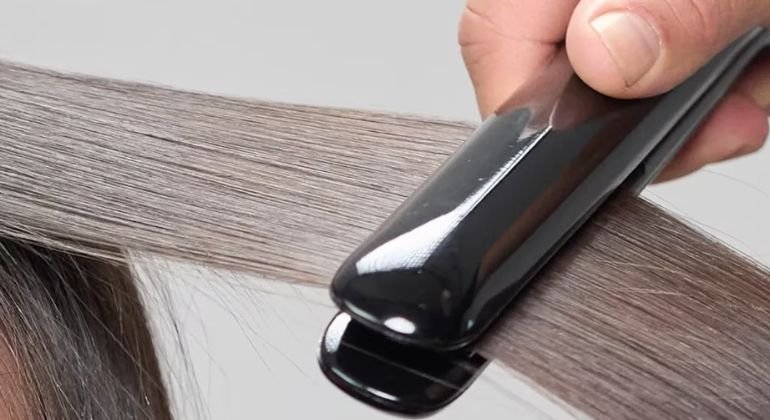
Thermal analysis of hair tresses shows chemically straightened hair beginning to decompose around 175 C, about 25 C earlier than virgin hair, which starts near 200 C. Most consumer flat irons run to 230 C. That gap explains why the same tool damages one client and not another: previously processed hair has a lower thermal ceiling.
Two things happen under the plates. Water in the cortex flashes off, and the cuticle scales lift and delaminate from repeated expansion and contraction. That disruption strips 18-methyleicosanoic acid, the lipid layer bonded to the cuticle surface. Once 18-MEA goes, the fiber flips from water-repelling to water-absorbing, and every subsequent wash swells it harder. Heat damage compounds through moisture, not just through the iron.
Chemical processing and cumulative protein loss
Bleaching, permanent color, relaxers, and perms all break disulfide bonds to restructure the fiber. Comparative testing measured protein loss of 5.1 to 16.6 mg albumin equivalents per gram of hair across these treatments, against 0.7 mg for untreated control strands. Bleaching produced the largest change and raised combing force by 46.6 percent, meaning the hair fights the comb harder after processing than before.
The order of operations matters more than most clients realize. Bleach then flat iron, and you have lowered the thermal threshold and then exceeded it in the same appointment.
Mechanical tension and traction alopecia
Tension is the cause that turns cosmetic breakage into permanent loss. The AAD names tight ponytails, buns, cornrows, braids, weaves, and extensions as direct routes to traction alopecia, and states plainly that once the follicle stops producing, hair cannot grow back. Population studies from South Africa found traction alopecia in 31.7 percent of adult women and 17.1 percent of schoolgirls, and a widely cited review puts roughly one third of women of African descent in high-tension styles at risk.
Hairline strands fail first for a structural reason. Edge hairs carry the smallest cross-sectional area on the head while absorbing the highest anchoring load from any pulled-back style. Thin fiber, heavy load. The first visible sign is short broken hairs standing up along the temples, followed by a hairline that moves back while a fringe of fine hairs stays put.
Wet handling and swell-shrink fatigue
Wet hair is more elastic but more fragile. Water enters the cortex, the fiber swells, the cuticle lifts, and friction against a terry towel or a brush tears scales that will not lie flat again. Daily washing puts the cortex through a swell and shrink cycle every 24 hours. Damaged hair that has lost its lipid barrier absorbs faster and swells harder, so the client with the most damage gets the most fatigue per wash.
Medical and nutritional contributors
Some breakage starts inside. Iron deficiency, low vitamin D, thyroid disease, and rapid weight loss all change fiber quality and can produce brittle hair that snaps under loads it used to tolerate. Congenital shaft disorders exist as well, though acquired trauma accounts for the large majority of cases seen in clinic. If your styling is gentle and your hair still breaks, the answer is a blood panel rather than another conditioner.
Extensions and Hair Breakage: What a Factory Sees That a Reseller Does Not
Extensions get blamed for breakage that tension and construction actually caused. Three variables decide which side of the line an install lands on.
Cuticle direction. In single-donor raw hair, every strand runs root-to-tip in the same direction, so cuticle scales lie parallel and slide past each other. Mixed-donor hair collected from multiple sources runs both ways. Opposing scales interlock, the bundle mats near the root, and the client brushes harder to free it. That extra brushing force lands on her own hair, not on the extension.
Acid-stripped hair. Volume suppliers strip the cuticle with acid to stop tangling, then coat the fiber in silicone. It feels flawless in the bag. After four to six washes the coating leaves, the bare cortex absorbs water without a lipid barrier, and the hair swells, roughens, and drags. Cuticle stripping is the single most common defect we see in hair sent to us for comparison.
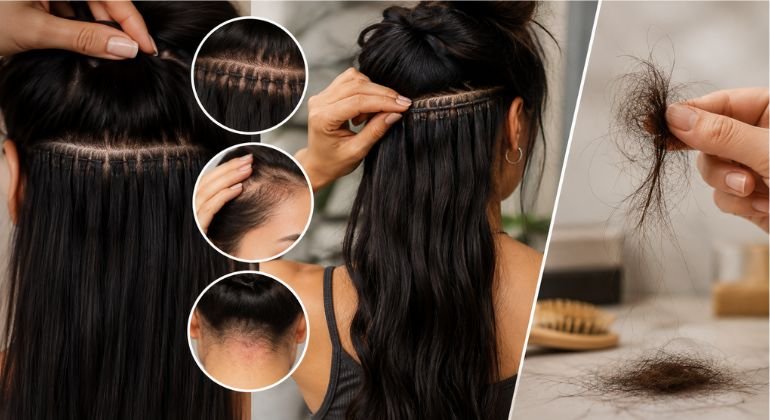
Weight per attachment point. This is the number stylists should be calculating and rarely are. Total install weight matters far less than how that weight distributes. Four heavy rows load each anchor point harder than seven light rows carrying the same grams. Hand-tied and genius wefts sit flatter and lighter than thick machine wefts, which is why they suit fine hair. The weft construction you choose sets the tension budget before the stylist ties a single bead.
For clients already showing edge fragility, low-tension formats beat sewn or bonded installs. Clip-in hair comes out nightly, and halo extensions transfer weight to a wire rather than to the follicle. Neither adds any 24-hour load at all.
How to Prevent Hair Breakage: A 7-Step Routine
Prevention beats repair because the shaft cannot heal. Run these seven controls and most breakage stops inside one growth cycle.
- Step 1: Cap your flat iron at 175 C (350 F)
Thermal analysis of hair fibers puts the start of keratin decomposition near 175 C for chemically straightened hair and near 200 C for virgin hair. Set the lowest dial that still holds the style, and pass once per section rather than three times at a lower heat. - Step 2: Apply a film-forming heat protectant before every hot tool
Polymer pretreatments cut combing breakage on thermally stressed tresses in controlled testing. Coat the mid-lengths and ends, skip the scalp, and let the product dry before the iron touches the hair. - Step 3: Detangle from the ends up with slip, never from the root down
Work a wide-tooth comb through the last two inches first, then move up in sections. Add conditioner or a leave-in so the comb glides. Dragging a brush from the scalp stacks every tangle into one load point. - Step 4: Blot wet hair, do not rub it
Squeeze water out with a cotton T-shirt or microfiber towel. Terry loops catch lifted cuticle scales and tear them. Leave hair 70 percent dry before any brush touches it. - Step 5: Keep tension out of protective styles
If a braid, ponytail, or install stings, it is too tight. The AAD advises wearing weaves and extensions for two to three months at most, then switching to a style with no tension for several weeks. - Step 6: Spread extension weight across more attachment points
Ask your stylist to use lighter rows placed further apart rather than fewer heavy rows. Weight per attachment point drives tension at the root, and tension is what snaps fine hairline strands first. - Step 7: Sleep on silk or satin and reduce wash-to-wash swelling
A smooth pillow surface lowers friction overnight. Wash on a 5 to 7 day cycle instead of daily so the cortex is not swelling and contracting every 24 hours.
Hair Breakage Treatment: What Repairs and What Only Coats
Marketing blurs a real distinction. Some treatments change the fiber. Others deposit a film that washes out. Both have a place, but only one changes what happens next time you comb.
| Treatment | What it does | Lasts | Use it for |
| Bond builders (bis-aminopropyl diglycol dimaleate and similar) | Reconnects broken disulfide links inside the cortex | Structural, cumulative | Bleached, relaxed, or heat-damaged hair |
| Hydrolyzed protein masks | Fills cuticle gaps, raises tensile strength short term | 2 to 4 washes | Hair that stretches and snaps when wet |
| Film-forming polymers and heat protectants | Buffers heat transfer, cuts combing force | Until next wash | Before every hot tool |
| Silicone serums | Smooths surface, adds slip and shine | Until next wash | Cosmetic finish, detangling slip |
| Trimming | Removes split ends before they travel upward | Permanent for that length | Every 8 to 12 weeks |
A protein-heavy routine on hair that is already stiff makes it more brittle, not less. If your hair snaps dry with almost no stretch, it needs moisture and lipids. If it stretches like elastic when wet and then breaks, it needs protein. Test one strand before committing a full head.
When Hair Breakage Needs a Dermatologist
Home correction handles most cosmetic breakage. Book a board-certified dermatologist or trichologist when you see any of the following.
- Short broken hairs along the hairline, or edges that stop growing back
- Smooth, shiny scalp showing through where density used to be
- Scalp pain, pustules, burning, or tenderness under a style
- Sudden diffuse loss after illness, childbirth, surgery, or a new medication
- Breakage that continues for three months after you removed heat, chemicals, and tension
Traction alopecia responds to intervention in its early stage and stops responding once scarring sets in. Timing decides the outcome, so early beats thorough here.
Source Hair That Does Not Fight Your Clients’ Hair
Breakage from an install traces back to construction more often than to aftercare. Thanh An Hair produces cuticle-aligned single-donor extensions at our own factory in Vietnam and ships factory-direct to salons, stylists, and resellers worldwide. If you want to check the difference yourself, run the tangle and wash test on our hair against your current supplier’s.
Request a sample and wholesale catalog from Thanh An Hair, and tell us the client cases you keep losing to breakage. We will recommend the weft format and weight that fits them.
Ready to find your perfect match? Contact us today for expert advice and exclusive discounts on premium human hair extensions.
📲Phone/WhatsApp: +1 (206) 698‑5133
🛜Instagram: RAW HAIR LUXURY COMPANY
🌐Tik Tok: RAW HAIR LUXURY
📧 Email: Rawhairluxury.us
🌐Website: rawhairluxury.com