
Raw Vietnamese Hair
How to Protect Hair From Air Pollution
Sep
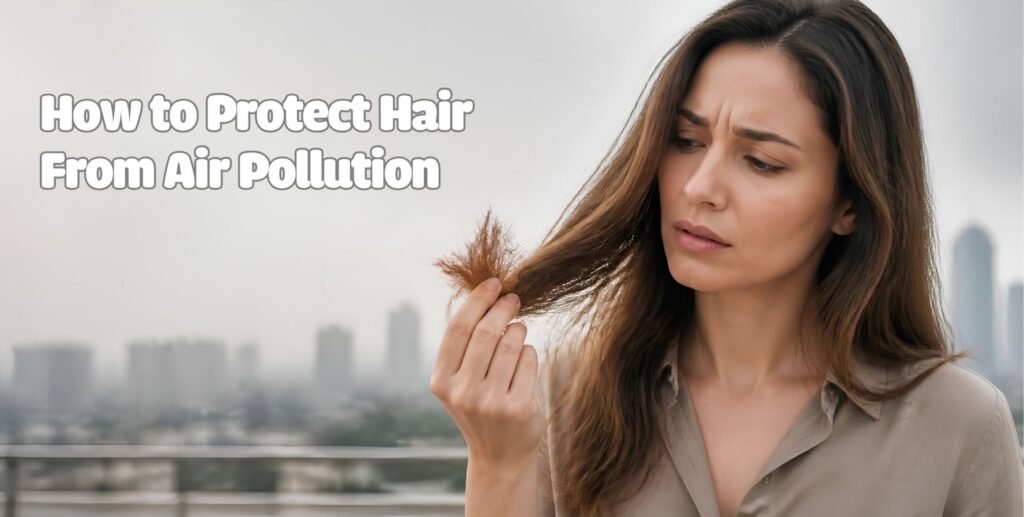
The problem reaches almost everyone. The World Health Organization reports that 99% of the world’s population lives in places where WHO air quality guideline levels are not met (WHO, 2024). Your skin gets sunscreen and moisturizer. Your hair gets nothing, even though it sits in the same traffic exhaust and construction dust all day.
This guide covers what pollution does to the hair shaft and scalp, what the research does and does not prove about hair loss, a 7-step routine you can start today, and the extra care that human hair extensions need in city air. Thanh An Hair has manufactured raw Vietnamese hair for about 20 years, so the extension section draws on what we handle at the factory every day.
How does air pollution affect hair?
Air pollution damages hair on three levels. Fine particles and soot coat the hair shaft and dull it, the chemicals they carry create oxidative stress that roughens the cuticle, and on the scalp the same particles can trigger inflammation that researchers link to weaker growth and shedding.
What particulate matter on hair does to the shaft
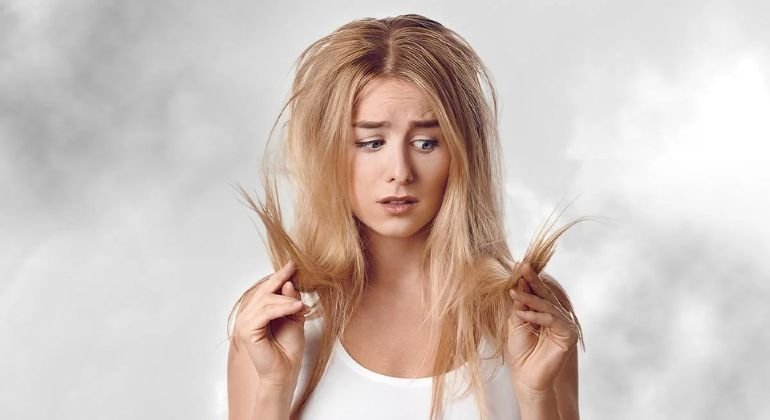
Particulate matter (PM) is a mix of soot, metals, and organic chemicals small enough to settle between cuticle scales. A 2025 review in the Polish Journal of Environmental Studies describes PM2.5, PM10, heavy metals, and polycyclic aromatic hydrocarbons (PAHs) accumulating on the hair and scalp surface, where they generate free radicals and oxidative stress (Kwon et al., 2025). On the strand, you notice it as lost shine and a gritty feel between washes.
Damaged hair suffers most. Bleaching, heat styling, and harsh washing lift the cuticle, and a lifted cuticle gives particles more surface and more gaps to sit in. That explains why colored or heat-styled hair looks dirty sooner in a city than smooth, healthy hair does.
Anti-pollution hair care: which ingredients help?
The words “anti-pollution” on a bottle have no standard definition, so judge the product by its ingredient list. Four groups do useful work:
- Chelating agents such as EDTA and sodium phytate bind metal ions so water can rinse them away.
- Antioxidants such as vitamin E (tocopherol), green tea extract, and ferulic acid help counter the free radicals that pollutants generate.
- Anti-inflammatory botanicals for the scalp. The 2025 PJOES review highlights the brown seaweed extract Ecklonia cava, which reduced an inflammatory marker in skin cells exposed to airborne particles (Kwon et al., 2025).
- Film-forming conditioners such as dimethicone or polyquaterniums smooth the cuticle and act as a light barrier. They build up over time, which is one more reason to clarify on schedule.
An anti-pollution shampoo alone will not protect your hair. Cleansing removes particles, and conditioning and sealing make it harder for the next layer to stick.
How to protect hair extensions from pollution
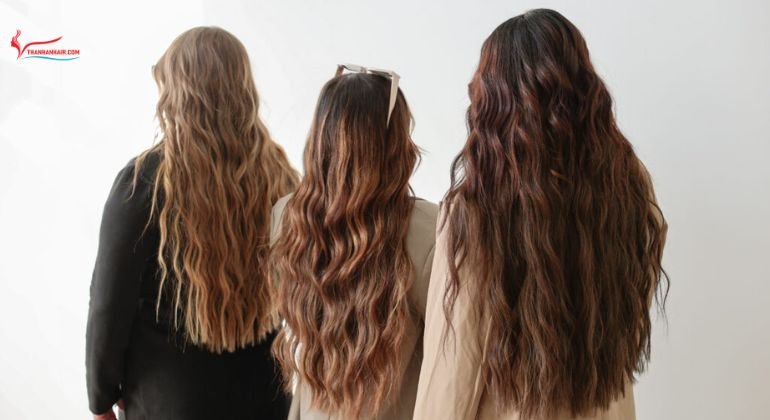
Extensions need more pollution care than the hair growing from your scalp. Your natural hair receives sebum from the scalp and replaces itself as it grows. A weft, tape-in, or clip-in set gets no natural oil and cannot repair itself, so soot and oxidative damage accumulate wear after wear until the hair looks dull and starts to tangle.
Why cuticle-aligned raw hair resists city grime
At our factory, we keep the cuticle of each strand running in one direction, root to tip, from the donor ponytail to the finished weft. Intact, aligned cuticles lie flat, so particles have less to grip and the hair rinses clean with less friction. Low-grade hair that manufacturers strip in an acid bath and coat with silicone looks glossy in the package. Once the coating washes off, its rough surface traps grime and knots fast.
Hair extension care for polluted cities
- Wash with a sulfate-free, moisturizing formula. Our guide to the best shampoo for human hair extensions lists what to use and what to avoid.
- Wash clip-ins and halos after a heavy-exposure day instead of waiting for them to look dirty. Follow the steps in how to wash clip-in hair extensions safely.
- Store removable pieces in a closed bag or box between wears. Hair left on an open vanity collects dust. See the best ways of storing hair extensions.
- Revive pollution-dulled, dry hair with a deep-conditioning soak using the method in how to soften dry hair extensions at home.
- Protect the hair overnight with a loose braid and a silk pillowcase, as covered in our nighttime hair routine.
Salon owners in high-pollution cities can build these steps into the aftercare sheet they send home with each install. [INSERT: Thanh An Hair’s recommended aftercare interval or client handout, if one exists.]
Common myths about pollution and hair
Many guides repeat advice that sounds reasonable and has little evidence behind it. Three claims deserve a correction:
- “Drinking more water flushes pollution out of your hair.” Water supports overall health, but no study shows that drinking it removes particles from the hair shaft. Washing removes them.
- “Air pollution causes baldness.” Current evidence comes from cell studies, animal studies, and population associations. Pollution adds risk; scientists have not shown it causes pattern baldness on its own.
- “Oil massages protect your scalp from pollution.” Oil on the lengths helps seal the cuticle. Heavy oil left on the scalp gives airborne grime a sticky surface, so use scalp oils as a pre-wash treatment and shampoo them out.
Conclusion
City air will reach your hair, and a few habits decide how much damage it does. Cover up on bad-air days, wash the scalp on a schedule that matches your exposure, condition and seal the lengths, and clarify every one to two weeks. For extensions, add gentle sulfate-free washing, covered storage, and hair with an intact, aligned cuticle, because a bundle cannot grow its way out of damage.
Thanh An Hair makes cuticle-aligned raw Vietnamese hair for salons and resellers across the US. Contact our factory team for texture guidance and a wholesale sample order.
- WhatsApp/Hotline: (+84) 973 522 855
- Official Website: https://thanhanhair.com/
- Instagram: @thanhanhair
- Email: thanhanexport@gmail.com