Raw Vietnamese Hair
Clip-In vs Tape-In Hair Extensions: Which Is Better for Weak Hair? (2026)
Nov
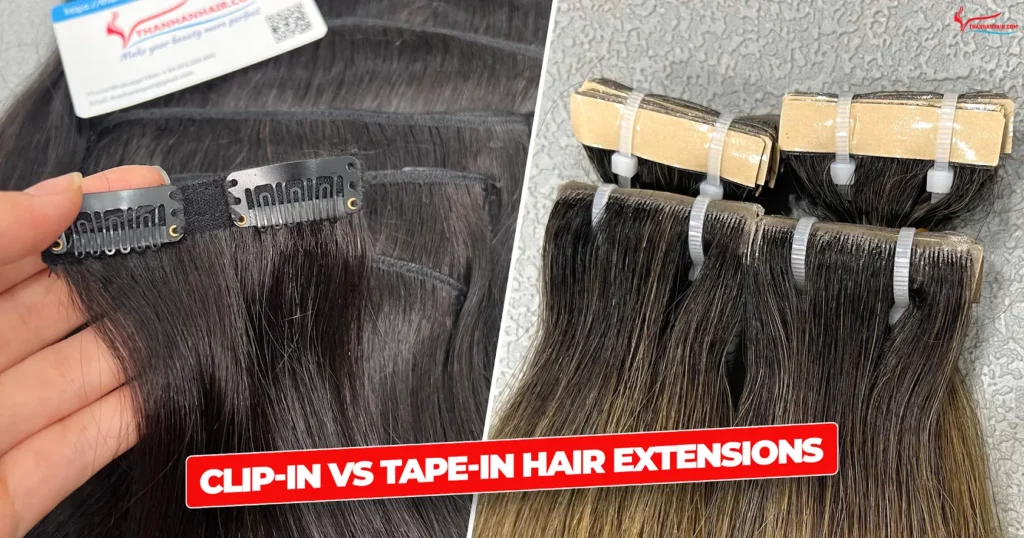
If you have weak, thin, or easily breakable hair, clip-in hair extensions are generally the safer option because they can be removed after each use without requiring adhesive. Tape-in hair extensions, on the other hand, are suitable for people who want to maintain longer, fuller-looking hair for several weeks, but they require proper installation and removal techniques to minimize tension on natural hair roots.
When comparing clip-in vs tape-in hair extensions, the most important factors are not only their appearance and styling flexibility but also how each method affects your natural hair. Both methods have different attachment systems, maintenance requirements, and potential effects on hair health. Choosing the right option can help you achieve your desired hairstyle while reducing unnecessary stress on your natural hair.
1. What Are Clip-In and Tape-In Hair Extensions? Understanding Their Differences
Before comparing clip-in vs tape-in hair extensions, it is important to understand how these two popular hair extension types are constructed and attached.
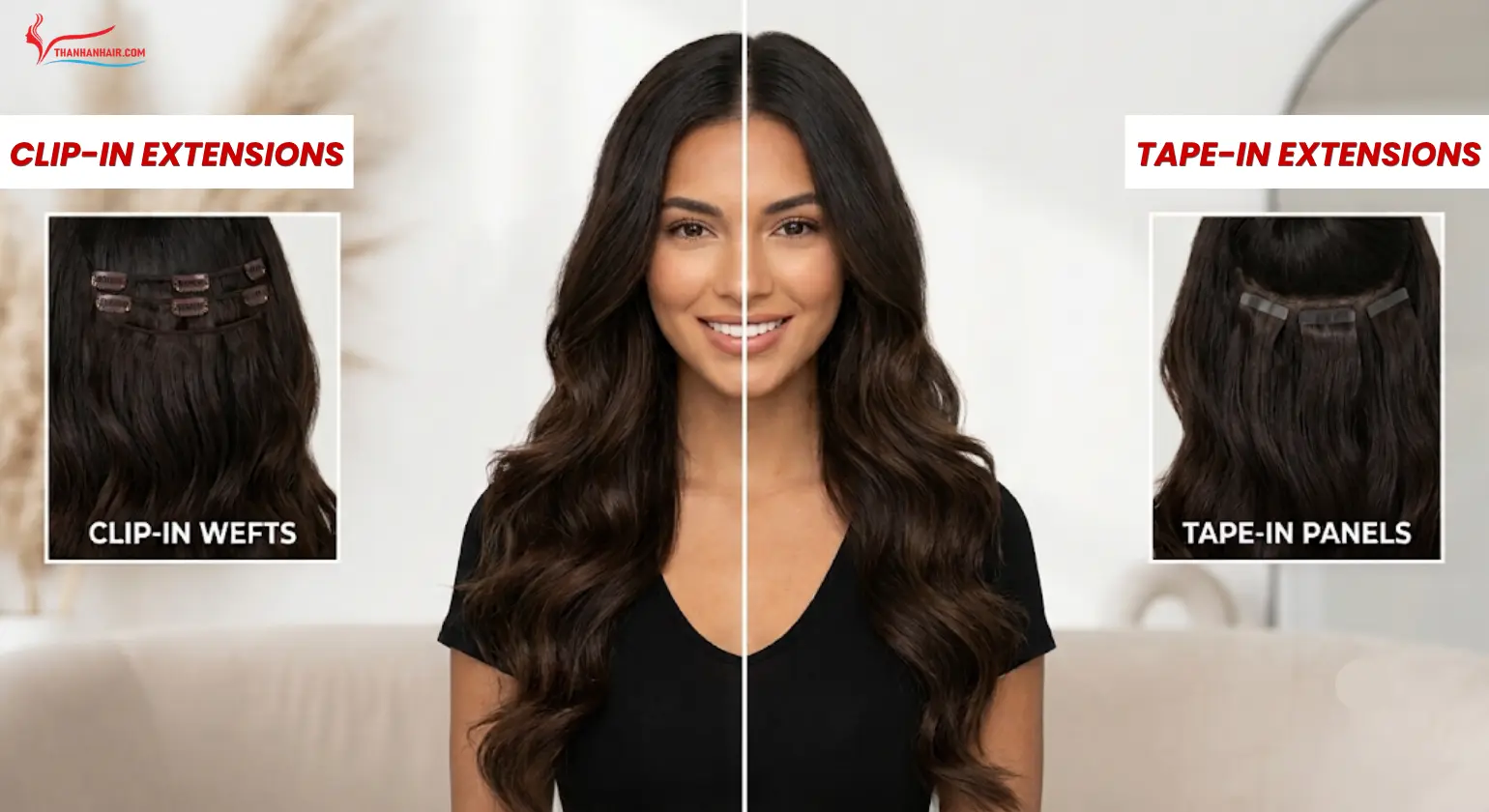
Clip-In Hair Extensions
Clip-in hair extensions are attached to natural hair using small metal or silicone-lined clips sewn onto the top of each hair weft.
Users simply divide their natural hair into sections, open the clips, position them close to the roots, and snap them shut to secure the extensions. The entire process can be completed at home without glue, heat, or chemical treatments.
A typical set of clip-in extensions includes multiple wefts in different widths, allowing users to add volume to various areas, including the sides, back, and crown.
Key advantages include:
- Easy to install and remove.
- No adhesive or chemical bonding required.
- Reusable when properly maintained.
- Flexible for different hairstyles and occasions.
- Suitable for people who want temporary length and volume.
Tape-In Hair Extensions
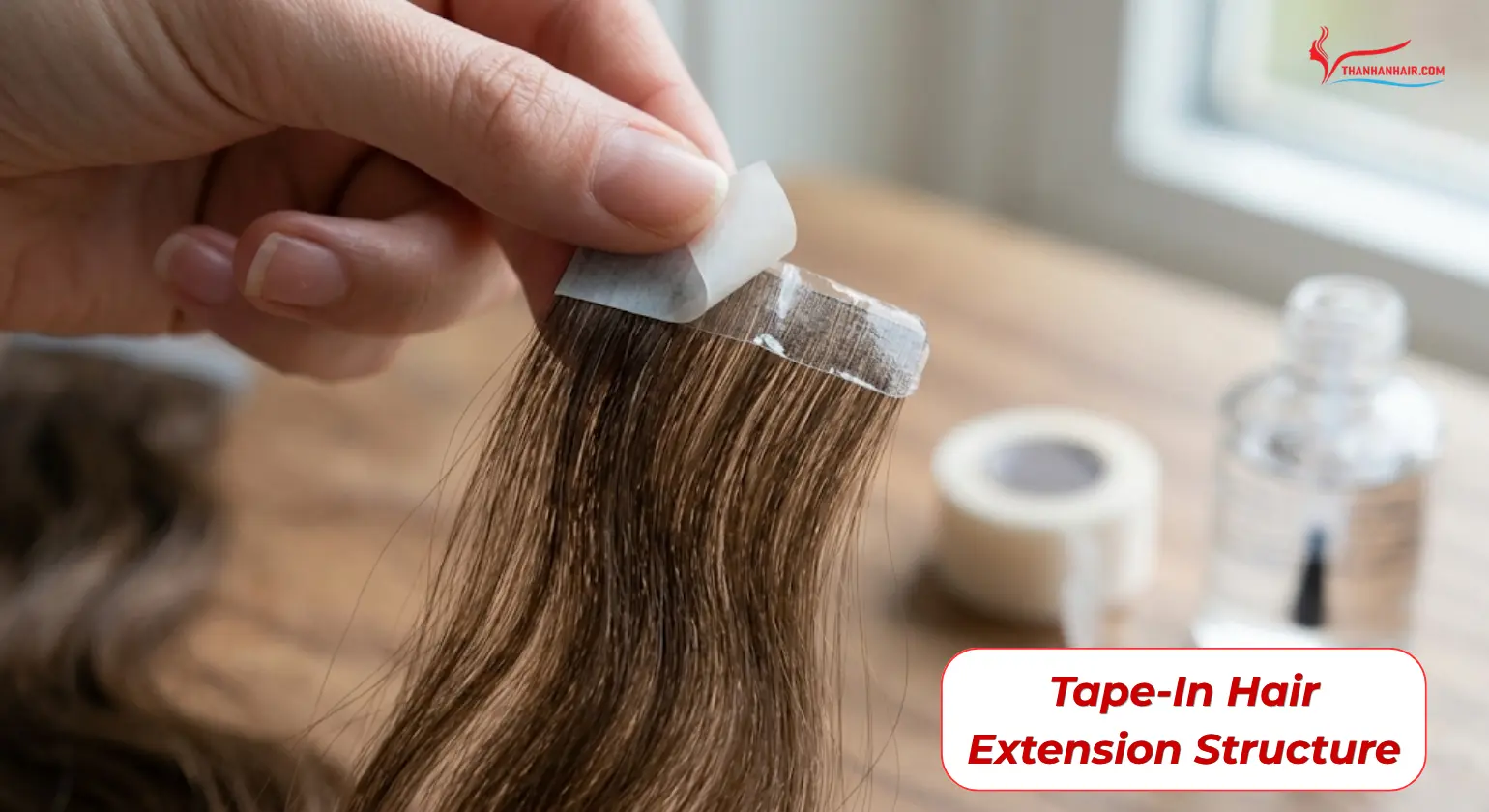
Tape-in hair extensions use pre-taped hair wefts with a specialized adhesive strip at the top. During installation, a section of natural hair is placed between two adhesive extension strips, creating a secure attachment.
This method produces relatively flat, lightweight bonds that can blend naturally with the surrounding hair when installed correctly. It is a popular salon service for clients who want to maintain longer and fuller hair without installing extensions every day.
Some key characteristics of tape in hair extensions include:
- Flat and relatively discreet attachment points.
- Hair distributed across multiple sections.
- No need to attach and remove clips every day.
- Professional installation and removal recommended.
- Regular maintenance and adhesive replacement required.
Unlike Clip-in extensions, Tape-in extensions are not designed to be removed after every use. A professional adhesive remover is needed to loosen the bonds safely and prevent excessive pulling on natural hair.
2. Clip-In vs Tape-In Hair Extensions: A Detailed Comparison
To better understand clip in vs tape in, consider the following comparison:
| Feature | Clip-In Hair Extensions | Tape-In Hair Extensions |
| Attachment method | Mechanical clips | Specialized adhesive |
| Installation time | Approximately 5–20 minutes | Approximately 45–90 minutes at a salon |
| Removal | Can be removed daily | Professional removal recommended |
| Natural appearance | Natural when positioned correctly | Natural with proper installation |
| Reusability | Yes | Yes, after replacing adhesive strips |
| Maintenance | After each use | Periodic maintenance as natural hair grows |
| Impact on natural hair | Can be minimized with proper use | May create tension if improperly installed or too heavy |
| Best suited for | People who prefer flexible styling | People who want longer-lasting extensions |
Note: Installation times are estimates and may vary depending on the number of wefts, hair density, and stylist experience.
When comparing clip-in vs tape-in hair extensions, Clip-in offers greater flexibility and easier removal. Tape-in is more suitable for people who want a consistent hairstyle without having to install their extensions every day.
However, neither method is completely free from potential damage. According to dermatological guidelines from Healthline regarding tension-related hair strain, even Clip-in extensions can cause breakage if the clips are too tight, repeatedly attached to the same area, or too heavy for the natural hair.
3. Which Hair Extensions Are Better for Weak Hair: Clip-In or Tape-In?
This is one of the most important considerations when deciding between tape-in and clip-in extensions.
Weak hair may have several characteristics, including fine strands, frequent breakage during brushing, low hair density, or roots that cannot comfortably support additional weight.
Therefore, you should choose an extension method based on your actual hair condition rather than appearance alone.
When Should You Choose Clip-In Extensions?
If your hair is thin, fragile, or easily broken, Clip-in is generally worth considering.
You can remove the extensions when sleeping, showering, or whenever you no longer need additional volume. This reduces the amount of time your natural hair has to support the extra weight.
However, remember to:
- Avoid extensions that are too heavy for your natural hair.
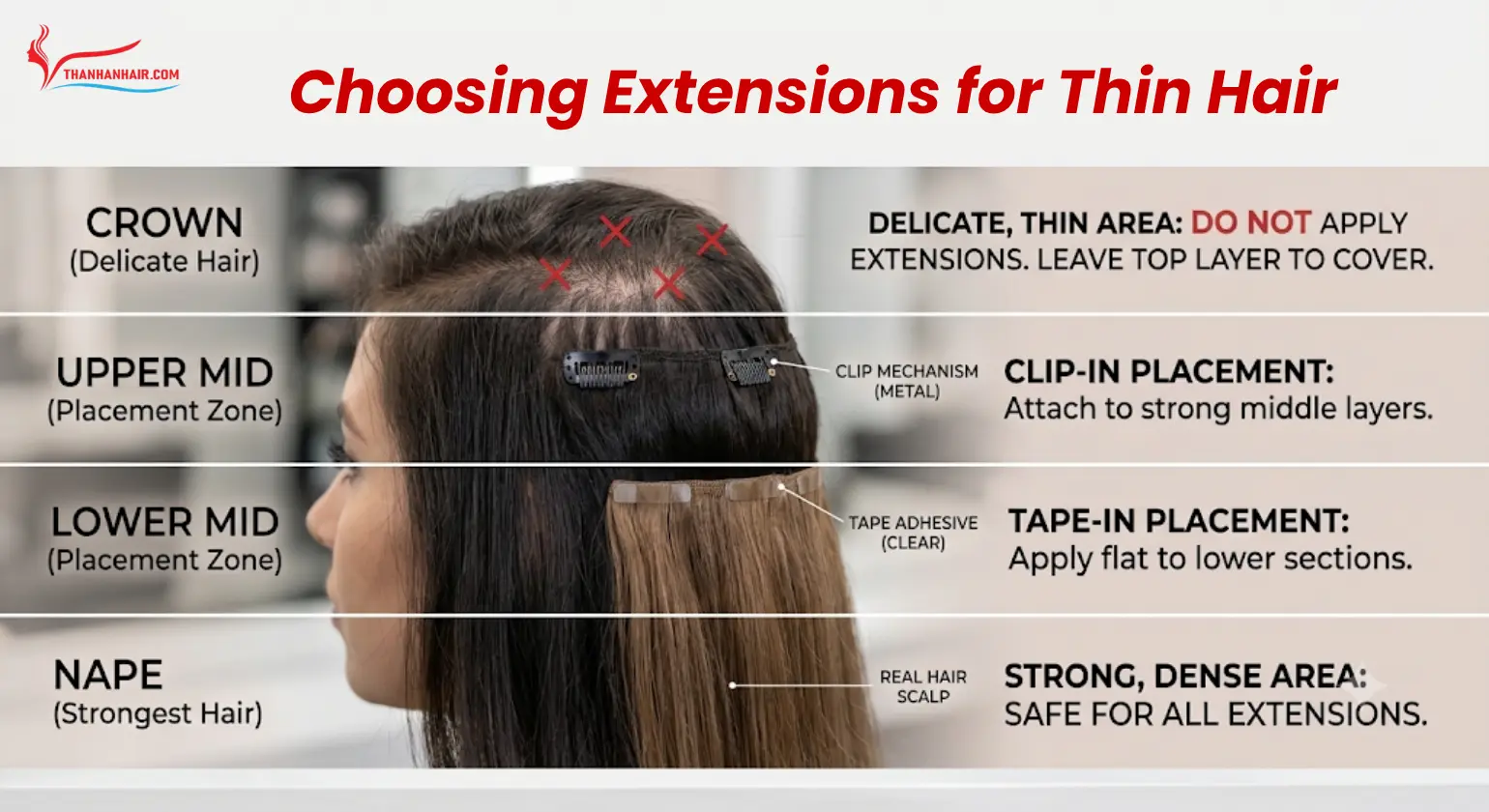
- Never attach clips directly to thinning or fragile areas.
- Avoid positioning clips too close to the scalp.
- Alternate clip placement between uses.
- Remove the clips gently without pulling your natural hair.
For people with weak hair, clip-in extensions offer an advantage because they do not require permanent attachment. However, if your hair is experiencing significant shedding or breakage, you should temporarily avoid extensions and assess your hair condition first.
When Should You Choose Tape-In Extensions?
Tape-in extensions are generally more suitable for people with relatively healthy hair who want to maintain additional length and volume without installing extensions every day.
The adhesive strips create relatively flat attachment points and distribute the extensions across different sections of the head. However, if your natural hair is extremely thin or fragile, the additional weight and continuous tension may increase the risk of breakage.
If you choose tape in hair extensions, consider the following precautions:
- Select an extension weight appropriate for your natural hair density.
- Avoid placing adhesive strips too close to the scalp.
- Do not pull aggressively when brushing.
- Never peel off adhesive strips without proper removal products.
- Follow your salon’s maintenance schedule.
Choosing Extensions Based on Your Hair Condition
| Hair Condition | Recommended Option |
| Thin but relatively healthy hair | Lightweight Clip-in |
| Weak, easily breakable hair | Avoid heavy extensions; consider lightweight Clip-in if appropriate |
| Healthy hair seeking longer-lasting length | Tape-in |
| Thick hair with frequent styling changes | Clip-in |
| Hair experiencing significant shedding | Temporarily avoid extensions and identify the cause |
So, which extensions are best for weak hair? In most cases, Clip-in is the more flexible option. However, not everyone with weak hair should use extensions. If your hair is already damaged or shedding excessively, avoid adding extra weight until its condition has been assessed.
4. Durability, Styling Flexibility, and Overall Costs
Besides hair safety, comparing clip-in vs tape-in hair extensions also requires evaluating product durability, maintenance expenses, and styling flexibility.
Product Durability
Both Clip-in and Tape-in extensions can be reused when made from high-quality human hair and properly maintained.
With Clip-in extensions, the hair can be worn multiple times. However, you should regularly inspect the clips and stitching to ensure they remain secure and do not become loose or damaged.
Tape-in extensions can also be reused after the old adhesive is removed and replaced with new extension tape. Their reusability depends on the condition of the hair, the attachment strips, and the maintenance process.
Styling Flexibility
Both extension types can be curled, straightened, and styled if they are made from human hair suitable for heat styling.
However, excessive heat should be avoided. Always use a heat protectant and test the temperature on a small section before styling the entire set.
Overall Costs
Clip-in extensions generally involve lower installation costs because users can attach and remove them at home.
Tape-in extensions require additional expenses for professional installation, removal, and periodic adhesive replacement.
When comparing clip-in vs tape-in hair extensions, consider the total cost throughout the period of use rather than focusing only on the initial purchase price.
5. Raw Vietnamese Clip-Ins: A Worthwhile Option for Premium Hair Quality
Besides the attachment method, the quality of the raw materials also plays an important role in the appearance and lifespan of hair extensions.
Raw Vietnamese clip-ins are clip-in extensions made from Vietnamese human hair that has not undergone harsh chemical processing intended to significantly alter its natural structure. However, buyers should verify the actual sourcing and processing methods of each supplier because the term “raw hair” can be used differently across the market.
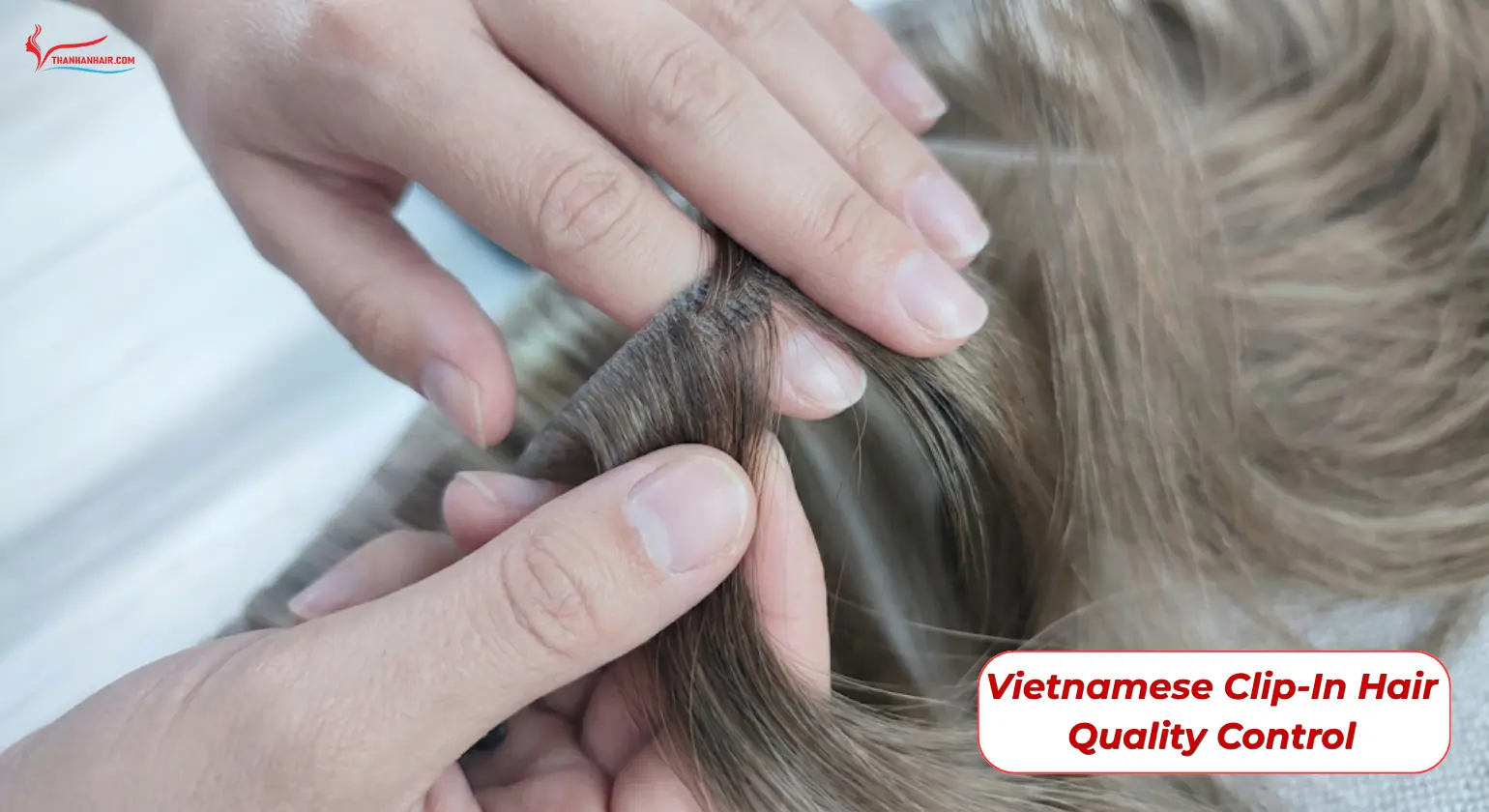
Here are several important quality indicators to consider:
- Hair consistency: Strands should have relatively consistent lengths and quality.
- Softness: The hair should not feel excessively dry, rough, or coated with artificial shine-enhancing silicone.
- Cuticle condition: Hair with intact, aligned cuticles is generally preferable.
- Construction quality: The weft stitching and clips should be securely manufactured.
- Color compatibility: The extension color should blend with the client’s natural hair.
Thanh An Hair is a Vietnamese human hair manufacturer supplying various products to salons, distributors, and private-label businesses.
The company publishes the following manufacturing information on its website:
- 2,000 m²: Factory area in Bac Ninh, Vietnam.
- 300 skilled workers: Workforce involved in different manufacturing stages.
- 10 tonnes per month: Published hair extension production capacity.
- MOQ from 1 kg: Applicable to bulk hair and weft hair; wigs have a separate MOQ of 10 pieces. The specific Clip-in MOQ should be confirmed according to the requested product.
- 1–7 business days: Processing time for available products.
- Up to 30 days: Production time for large or customized orders.
- 3–10 business days: Typical international shipping time.
Regarding after-sales policies, customers should report damaged or defective products within 48 hours of receiving the order. Eligible return or exchange requests can be made within 7 days, while a 30-day warranty applies to manufacturing defects under the relevant terms.
Thanh An Hair also publishes an estimated color-matching rate of approximately 80–90%. Buyers should request physical samples and confirm color compatibility before placing large orders.
You can browse Thanh An Hair’s full range of Vietnamese human hair extensions to explore the available product categories.
6. How to Choose and Use Hair Extensions to Minimize Damage
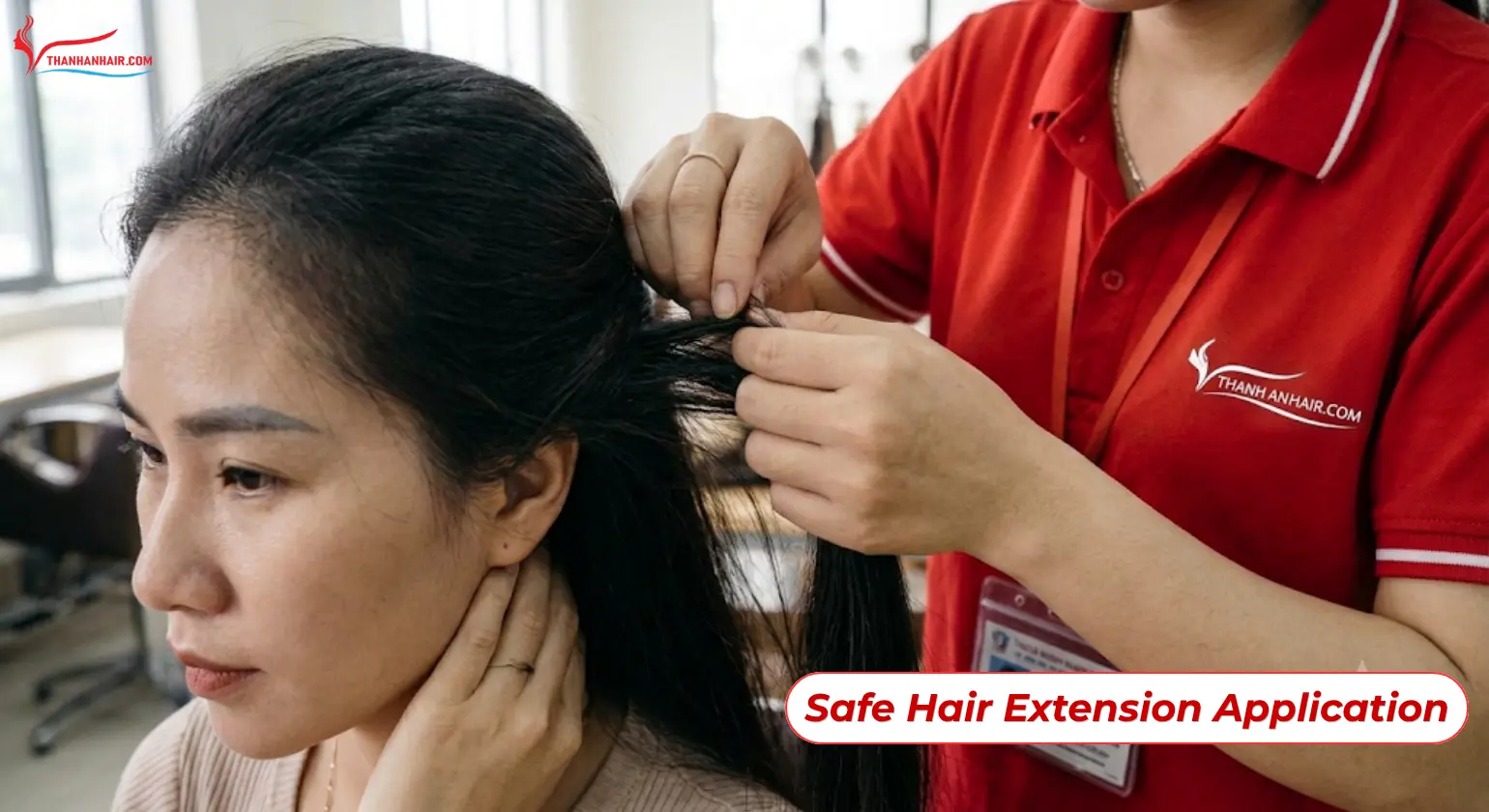
Whether you choose Clip-in or Tape-in, following proper application and maintenance practices is essential for protecting your natural hair.
For Clip-in extensions:
- Choose a set with a weight appropriate for your natural hair density.
- Divide your hair into even sections before installation.
- Avoid attaching clips to thinning or fragile areas.
- Check that all clips are securely fastened after installation.
- Remove the extensions before sleeping and never pull the clips open forcefully.
For Tape-in extensions:
- Visit a salon with experienced extension technicians for installation.
- Never remove adhesive strips by pulling on your natural hair.
- Use hair care products suitable for tape-in extensions.
- Avoid applying hair oils directly to the adhesive strips.
- Follow your salon’s recommended maintenance schedule.
An important principle when comparing clip-in vs tape-in hair extensions is that you should never sacrifice your natural hair health just to achieve a fuller hairstyle in a short period.
If you experience scalp pain, excessive tension, significant breakage, or thinning after installing extensions, have them removed properly and temporarily stop using them.
7. FAQ – Frequently Asked Questions About Clip-In and Tape-In Hair Extensions
- Are Clip-in or Tape-in extensions better for weak hair?
Clip-in extensions are generally more suitable because they can be removed after each use and do not require adhesive. However, you should choose lightweight extensions and avoid attaching them to thin or fragile areas.
- Can Clip-in extensions cause natural hair loss?
Yes. They can contribute to breakage if the extensions are too heavy, the clips are too tight, or they are removed incorrectly. Proper installation and removal can help reduce this risk.
- How long can Tape-in extensions be worn?
The maintenance period depends on natural hair growth, adhesive quality, installation technique, and care habits. Ask your stylist to recommend a suitable maintenance schedule for your extensions.
- Can I install Clip-in extensions at home?
Yes. Clip-in extensions are designed for easy home installation and removal without adhesive or specialized equipment.
- Can Clip-in and Tape-in extensions be curled or straightened?
Yes, if they are made from human hair and the manufacturer confirms that heat styling is suitable. Use an appropriate temperature and a heat protectant.
- How do I choose extensions that match my natural hair?
Consider your natural hair length, color, texture, density, and overall condition. If your hair is weak or experiencing excessive shedding, consult a professional before choosing an extension method.
Conclusion
When comparing clip-in vs tape-in hair extensions, Clip-in offers greater flexibility for people who prefer easy installation and removal while minimizing the amount of time their natural hair supports additional weight. Tape-in is more suitable for those who want to maintain longer, fuller-looking hair and are willing to follow a regular salon maintenance schedule.
For people with weak, thin, or easily breakable hair, lightweight Clip-in extensions are generally worth considering. However, hair quality, extension weight, and proper application techniques remain essential factors in long-term hair health.
If you are looking for a reliable supplier of Vietnamese human hair extensions for your salon or wholesale business, prioritize manufacturers with transparent sourcing information, quality control processes, and clear after-sales policies.
Ready to source premium Vietnamese hair extensions for your salon or wholesale business?
You can see wholesale hair extensions ordering terms and sample options or take the next step: request a paid sample pack and current product specifications from Thanh An Hair.
- WhatsApp/Hotline: (+84) 973 522 855
- Official Website: https://thanhanhair.com/
- Instagram: @thanhanhair
- Email: thanhanexport@gmail.com