
Raw Vietnamese Hair
Is Silicone Bad for Your Hair? What Lab Data Shows in 2026
Aug
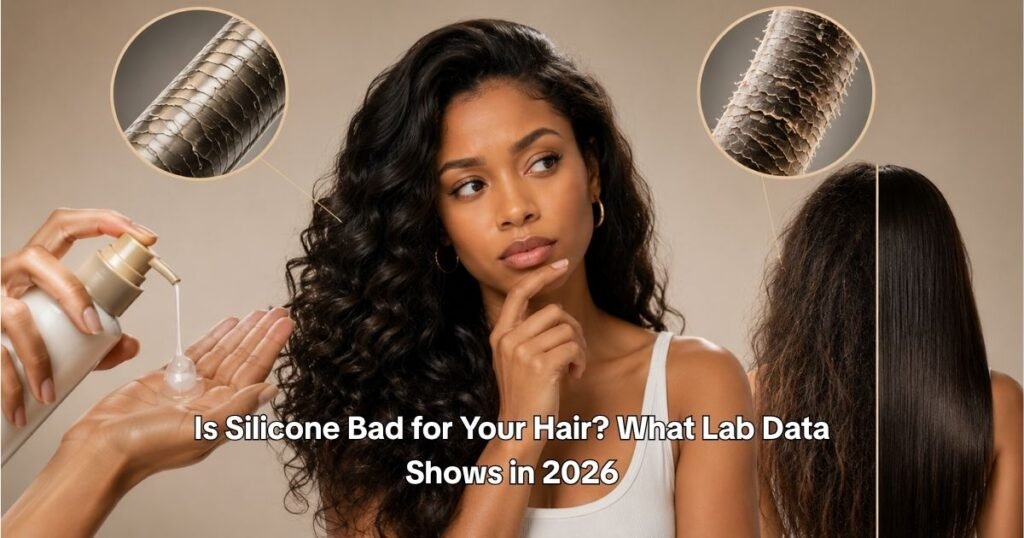
Is silicone bad for your hair? No. In lab testing by Dow Corning, hair pre-treated with the right silicone resisted heat-styling breakage up to 86% better than untreated hair. The catch is that silicone is a family of materials, not one ingredient. Solubility decides the outcome: some rinse away with water, some need a clarifying wash, and one of them can flatten fine hair while another rescues bleached hair.
Most articles on this question argue for a side. This one hands you the rule that settles it, and the rule is a suffix on an ingredient label. We make raw hair for salons and resellers, so we also cover the part almost nobody writes about: silicone behaves differently on hair extensions, because extension fiber has no oil gland behind it.
What are silicones in hair products?
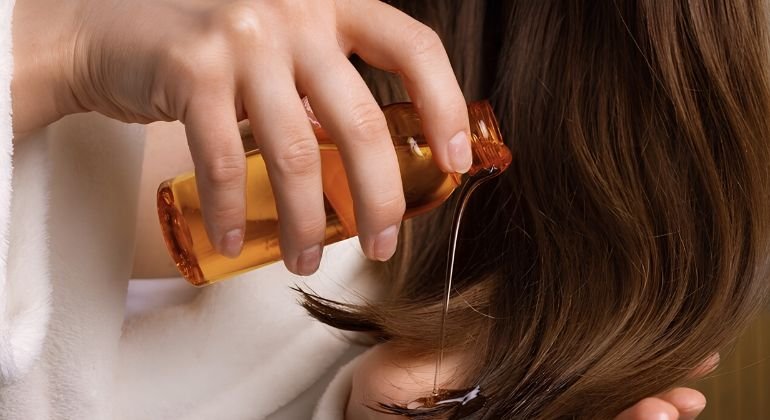
Silicones are synthetic polymers built from a backbone of silicon and oxygen, sourced from silica in sand. Applied to hair, they spread into a film a fraction of a micron thick that fills gaps in the cuticle and lowers friction between strands.
Friction is the part worth dwelling on. When a comb drags across a rough cuticle, it snags and snaps the strand. Reduce the drag and you reduce the breakage, which is why silicone shows up in almost every detangler on the shelf.
Are silicones safe, or is that the real worry?
Regulators have looked at this repeatedly and cleared it. The Expert Panel for Cosmetic Ingredient Safety reviewed dimethicone and 19 related polymers in 2003, then reassessed a group of 30 dimethicone and methicone ingredients in 2019, concluding they are safe in cosmetics at current use levels when formulated to be non-irritating. The panel flagged one gap: it found the inhalation data insufficient for products applied through airbrush devices.
The US Food and Drug Administration goes further and approves dimethicone as an over-the-counter skin protectant at 1% to 30%, and clears it as a food additive. The Joint FAO/WHO Expert Committee on Food Additives set an acceptable daily oral intake of 0 to 1.5 mg per kg of body weight. You can read the consolidated safety record at Cosmetics Info.
The hair loss claim fails on anatomy. Silicone sits outside the strand and never reaches the follicle. It fills cuticle defects and cuts combing friction, which lowers the mechanical breakage people often count as shedding.
Silicone is not a thermal shield, and the makers proved it
Brands like to describe silicone as insulation that blocks heat. The same Dow Corning team built a mathematical model to test that idea and knocked it down. A 70-micron hair fiber wrapped in a generous 5-micron silicone layer, held five seconds at 150°C, ends up only 10°C cooler than a bare fiber. The film is too thin against the diameter of the hair to insulate anything.
Three other mechanisms do the work:
- Water does the cooling. Evaporating bound water pulls heat out of the fiber. A strand holding 10% bound water runs about 25°C cooler than the same strand modeled without evaporation. Silicone films let that vapor through. Occlusive mineral oil traps it, which helps explain why the oils tested made damage worse.
- Bundled fibers run cooler. Silicone kills flyaway, so strands sit against each other and share heat. In the model, fibers in close contact reached 77°C after five seconds at 150°C, spread-apart fibers reached 94°C, and a lone fiber hit 115°C. That is a 38°C penalty for frizz.
- Fewer passes. Treated hair straightened in half as many passes, cutting total heat exposure before any protective chemistry applies.
Amino-functional silicones add one more trick. Their amino groups carry a positive charge, and damaged hair carries a negative one, so the silicone lands on cracked cuticle edges rather than coating the strand evenly. Bleached and highlighted hair gets the deposit where it needs it.
What causes silicone buildup and who gets it?
Buildup happens when a water-insoluble silicone goes on faster than your shampoo takes it off. Each wash-and-condition cycle adds another layer. Without a surfactant strong enough to lift the film, those layers stack.
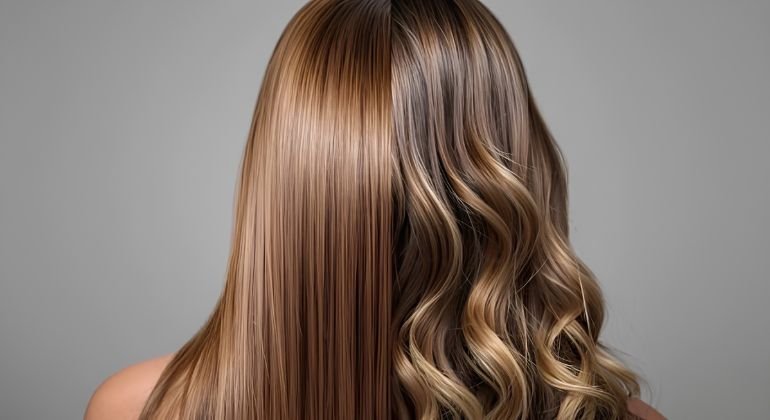
The symptoms follow a pattern. Hair feels heavy and waxy rather than rough. It looks greasy a day after washing. Masks and treatments stop working, because water and actives cannot reach the cortex through the coating. If your roots have gone limp for no obvious reason, buildup belongs on the list of causes worth checking.
Is silicone bad for your hair if you have fine, curly, or bleached hair?
The answer flips by hair type, which is the nuance most articles skip.
Fine or low-density hair tolerates it worst. A thin strand has less mass, so the same film weighs proportionally more. Roots flatten first. Stick to water-soluble silicones or use heavier ones from mid-length down.
Coarse, curly and coily hair tolerates it best. Cuticle scales on curly fiber lift more, friction runs higher, and tangling causes real breakage. In the same Dow Corning testing, curly virgin hair treated with silicone held onto 93% to 98% of its breakage resistance through heat styling.
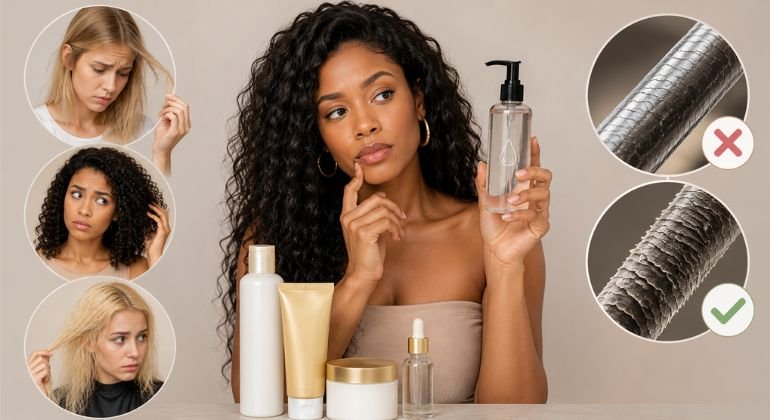
Bleached hair benefits the most and needs the most care. Amodimethicone targets the damage, which is exactly what compromised hair wants. But bleached hair is porous and already fragile, so aggressive clarifying costs more here than elsewhere.
Curly Girl Method followers hit a rule conflict, not an ingredient problem. The method drops sulfates and drops silicones together, and the two rules are linked by chemistry: once you remove the surfactant that lifts a water-insoluble film, you cannot keep using ingredients that need it. Switch to PEG-prefixed silicones and the conflict disappears.
How to remove silicone buildup, step by step
Five steps clear a water-insoluble film without leaving hair stripped. Extension wearers should read step five twice.
- Confirm it is buildup, not damage
Wet a section and feel it. Buildup stays slick and heavy when wet and dries limp with a faint waxy coating. Damage feels rough, squeaky and spongy when wet. Then read your bottles: if you find a plain -cone or -conol with no PEG prefix, buildup is likely. - Match the shampoo to the problem
A water-insoluble silicone needs a surfactant, so choose a clarifying shampoo with sodium lauryl sulfate or sodium laureth sulfate. If you also have hard water, pick a chelating formula, which adds EDTA or a similar agent to lift mineral deposits at the same time. - Wash twice and work root to mid-length
The first wash lifts surface product, the second reaches the film underneath. Focus both passes on the roots and mid-lengths where buildup concentrates, and let the lather rinse through the ends rather than scrubbing them. - Rebuild moisture the same day
Clarifying removes helpful lipids along with the silicone, so follow with a deep conditioner or mask and leave it on for 10 to 15 minutes. Skipping this step is what gives clarifying shampoo its reputation for causing dryness. - Set a schedule instead of reacting
Most people need a clarifying wash every two to four weeks. Extension wearers should clarify on a fixed schedule rather than by feel, because extension fibers stay in service for months and never grow out.
For extension-safe cleansers that clarify without stripping, see our guide to the best shampoo for human hair extensions. If your hair already feels dry before you clarify, work through how to soften dry hair extensions at home first.
Test the fiber before you commit to an order
Thanh An Hair has manufactured raw, cuticle-aligned Vietnamese hair for two decades and ships factory-direct to salons and resellers. If you stock extensions, the fastest way to judge quality is to wash, heat-style and clarify a sample yourself and watch how it holds.
Ready to find your perfect match? Contact us today for expert advice and exclusive discounts on premium human hair extensions.
📲Phone/WhatsApp: +1 (206) 698‑5133
🛜Instagram: RAW HAIR LUXURY COMPANY
🌐Tik Tok: RAW HAIR LUXURY
📧 Email: Rawhairluxury.us
🌐Website: rawhairluxury.com