
Thanh An Hair
The Truth About Virgin Hair Extensions
Oct
Virgin hair extensions are hair from one person that has never been dyed, bleached or permed, with the cuticle still intact. That is the whole definition. No authority checks it, so any seller can print the word on a bag. The label is worth what your own test says it is worth.
Whether you are buying one bundle for yourself or a hundred for a salon, the same confusion gets in the way. Two sellers describe the same thing in different words, quote very different prices, and both sound sure of themselves. This guide explains what the words mean, why the country on the label is not a country, how to test a bundle with your own hands, and how to keep good hair good.
What Virgin Hair Extensions Actually Means
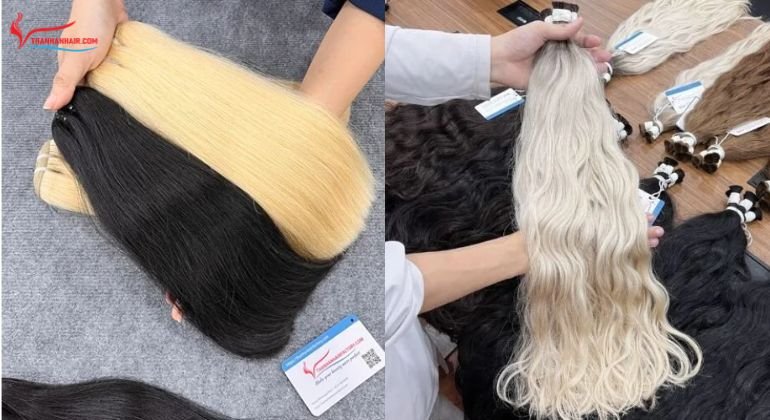
Virgin hair has to pass three tests at once. One donor. No chemical processing. Cuticle intact, with every strand facing the same way. Miss any one of the three and it is something else.
The cuticle is the part worth understanding, because it explains almost every complaint people have later. Picture roof tiles lying flat along a strand, all pointing from root to tip. When the tiles on every strand point the same way, the strands slide past each other and the hair stays smooth. Turn half the bundle around and the tiles catch. That is matting, and it usually shows up weeks before you expected to take the hair out.
Cheap hair gets around this by stripping the tiles off with acid, then adding a silicone coat so the hair feels soft in the shop. The coat is what sells the bundle. The coat is also what washes away.
Virgin, raw, remy and processed hair: what each word actually promises
| Grade | How many donors | Chemicals used | Cuticle |
| Raw hair | One | None, not even steam | On, all facing one way |
| Virgin hair | One | None, steam allowed | On, all facing one way |
| Remy hair | One or several | Dye and perm allowed | On, all facing one way |
| Processed hair | Many, mixed together | Acid strip, dye, silicone coat | Stripped off, then coated |
Five Ways to Check Virgin Hair Before You Buy
Five checks any salon owner or reseller can run on a sample bundle at their own station, with nothing more than shampoo and a little bleach. If you are ordering in volume, run them on the sample and then again on the real shipment. The second round is what catches a seller who sends a good sample and a different batch.
- Rub the strand both ways
Pull a strand between your fingers from root to tip, then go the other way. Virgin hair feels smooth one way and rough the other. If it feels the same both ways, the cuticle is gone. - Wash one bundle and let it dry
Use clarifying shampoo and let the bundle air dry. Coatings rinse off. If the shine drops or the hair starts to tangle after one wash, what you touched in the shop was silicone. - Bleach a small hidden piece
Lift a concealed section two levels. Virgin hair lifts evenly and holds together. Hair that was stripped and re-dyed lifts in patches, goes brassy unevenly, or snaps. - Hold two bundles up to a window
Take two bundles from the same order and compare them in daylight. Hair from one donor matches in thickness, color depth and curl. Clear differences mean the hair was mixed. - Ask for the batch details in writing
Ask for the collection date, how many donors, how the texture was made, and the country that will be printed on the import marking. A factory can answer all four. A middleman cannot.
One test you can stop doing: burning a strand. Flame tells you human hair from synthetic fiber, which is a different question. Stripped, mixed, heavily processed hair is still human hair, so it burns exactly like the good stuff. Our guide on how to spot fake raw Vietnamese hair walks through these checks with photos.
Why Virgin Hair Costs More
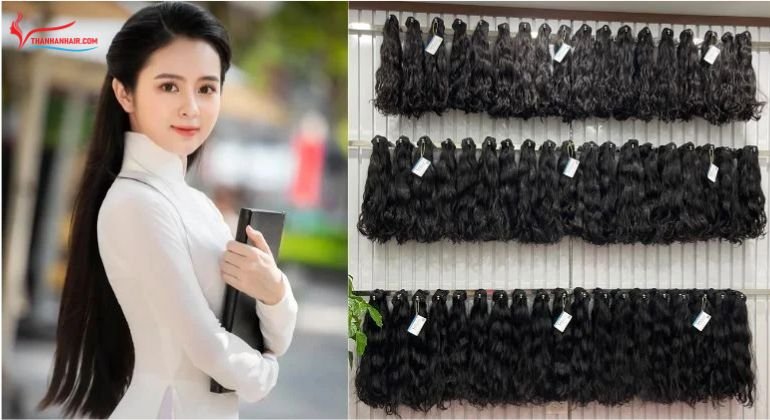
The price gap is not brand positioning. It comes from the factory floor. One head of hair gives a fixed weight at a usable length, and that weight drops fast as the length goes up. You cannot top a bundle up from a shared pile without breaking the single donor claim. Short supply is built into the grade itself.
Why one bundle costs more than another
| What drives the cost | What to ask your supplier |
| One head gives a fixed weight, and no topping up from a shared pile | How many grams do you get from one donor at this length? |
| Long hair that has never been treated is rare, and more gets thrown away | What is your reject rate at 24 inches and up? |
| Hair tied at the root before cutting keeps its direction; swept-up hair does not | Is the hair tied before it is cut? |
| Steaming a wave takes time and equipment; a perm solution is faster and cheaper | Is this wave from steam or from chemicals? |
| Hand-tied and genius wefts take far more work per gram than machine wefts | How long does one weft take to make? |
Price on its own will not tell you the grade, in either direction. Cheap hair sold as virgin is the obvious trap. Expensive processed hair sold through a reseller with a polished website is the quieter one. If you buy at volume, it helps to know whether you are talking to a factory or a trading company before you negotiate, and our guide to hair extension pricing for salons breaks down the cost per gram across weft types.
How to Make Virgin Hair Last
Good hair still fails if it is treated like growing hair. Extensions have no scalp feeding them, no blood supply, and no way to repair damage. Everything you do to them accumulates. Four habits cover most of it.
Wash it less than you think
Extensions have no scalp feeding them oil, so every wash strips something back. Two or three washes a week is plenty for most people.
Keep the heat under 180C
Virgin hair can take heat, but it cannot repair itself afterwards. Lower heat and a heat protectant buy you months.
Brush from the ends upward
Start at the bottom and work up to the root with a loop brush. Starting at the top drags every tangle down into the wefts.
Braid it loosely before bed
Most of the matting people blame on bad hair happens overnight against a pillow. A loose braid removes most of it.
Done this way, virgin hair survives re-coloring and more than one reinstall, which is the real reason it costs what it costs. Treated carelessly, the most expensive bundle on the shelf lasts about as long as the cheap one.
If you are still building a shortlist, our guide on how to find a hair vendor covers what to check before you even request a sample. The bulk hair range shows the formats single donor hair gets sold in, and wholesale hair extensions has the volume terms.
The Short Version
Virgin hair is three promises you can test: one donor, no chemicals, cuticle facing one way. The country on the bag is a texture name. Grades and certificates describe a seller, not the hair. Everything you would complain about in week six can be found in an afternoon with a sample bundle, a bottle of clarifying shampoo and a little bleach. Any seller worth going back to expects you to look.
Test the hair, not the label
Thanh An Hair collects, sorts and builds every order in its own factory in Vietnam, so the questions above have real answers rather than adjectives. Ask us for a sample bundle, run the wash and bleach tests yourself, then compare it against whatever you are buying now.
- WhatsApp/Hotline: (+84) 973 522 855
- Official Website: https://thanhanhair.com/
- Instagram: @thanhanhair
- Email: thanhanexport@gmail.com