
Raw Vietnamese Hair
Why Does My Hair Hurt? Causes, Relief, and Red Flags
Aug
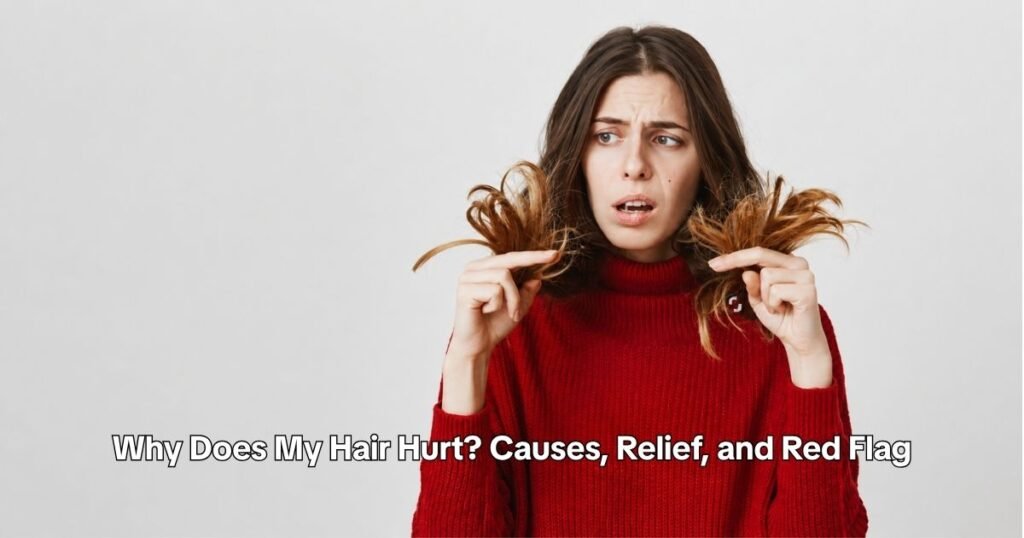
Why does my hair hurt? The strand cannot hurt. Hair is keratin, with no nerves and no blood supply, so the pain you feel belongs to the scalp underneath it. Doctors call hair pain trichodynia. Three things cause most cases: mechanical tension from a tight style, active shedding, and a scalp barrier that has stopped tolerating your products.
That distinction changes what you do next. Treat this as a skin problem and the fix gets specific. Below: a scored self-assessment, a map of what each pain location means, the load math behind extension soreness, and the four signs that turn a nuisance into an appointment.
What Hair Pain Actually Is
Every strand sits in a follicle wrapped in nerve endings, capillaries, and sebaceous glands. Pull the strand and you pull the follicle. Inflame the skin around the follicle and ordinary movement starts to register as pain. That is why a haircut is painless and a hair tie is not.
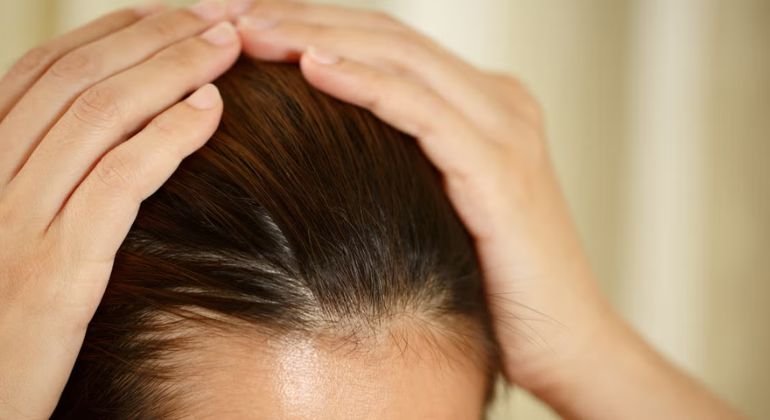
Dermatology splits the sensation two ways. Trichodynia describes pain in the hair and the scalp skin, and it usually travels with hair shedding. Scalp dysesthesia describes burning or pain in the skin alone. Patients in the original 1996 description reported it as though the hairs were bent the wrong way, which is a better description than most clinical language manages.
You are in large company. In a survey of 1,011 people representative of the French population, 44.2 percent reported a sensitive scalp, split 47.4 percent of women against 40.8 percent of men. Across the wider literature, prevalence lands between 30 and 50 percent. Actual pain is the rarer end of that: in the same survey, 25 percent reported itching, 13 percent prickling, and only 2 percent burning or pain.
Where It Hurts Tells You Why
Location narrows the cause faster than any symptom list. Press gently around your scalp and find the sore zone.
Pain location mapped to likely cause
| Where it hurts | What it usually means | First move |
| Hairline, temples, nape | Mechanical tension from ponytails, braids, weaves, or a tight covering | Take the style down and check for broken hairs along the edge |
| Crown and center part | Trichodynia, often alongside active shedding | Count strands lost over three washes before you panic |
| Diffuse, with flaking or redness | Seborrheic dermatitis, psoriasis, or a product reaction | Switch to one gentle fragrance-free shampoo for 14 days |
| A single fixed spot with a bump or crust | Folliculitis or an infected follicle | Leave it alone, do not squeeze, and get it looked at |
| One side, burning, near the forehead | Possible nerve involvement | Same-week medical appointment |
The Causes of a Sore Scalp, Ranked by How Often We See Them
Tension and Traction Alopecia
Constant directional pull is the most common and most preventable cause of scalp pain. The American Academy of Dermatology is direct about the threshold: if your hairstyle feels painful, the style is too tight. Sustained tension can progress to traction alopecia, which starts as soreness and broken hairs at the hairline and ends, if ignored long enough, as shiny bald skin that will not regrow.
The AAD asks you to wear braids for no more than 6 to 8 weeks, keep braids and locs short because longer hair is heavier and pulls harder, choose thicker braids over fine ones, and loosen everything around the hairline. Ballet dancers, military personnel, and anyone whose job requires pulled-back hair carry higher risk, as do people of African descent, whose follicle shape makes the hair more vulnerable to tight styling.
Shedding and Telogen Effluvium
Trichodynia and hair loss travel together often enough that dermatologists treat pain as a shedding signal. Reported prevalence among people with active hair loss ranges from 17 to 35.7 percent, and one 2022 study of 317 patients with alopecia found scalp sensitivity in 32 percent, with trichodynia the leading symptom and most strongly tied to telogen effluvium.
Telogen effluvium is diffuse shedding that starts two to three months after a trigger: illness, surgery, childbirth, crash dieting, or acute stress. The pain can arrive before the shedding becomes visible, which is why a sore crown deserves attention rather than dismissal. If breakage rather than shedding is what you are seeing, the mechanism differs, and our article on hair breakage causes and prevention covers the distinction.
A Scalp Barrier That Has Stopped Coping
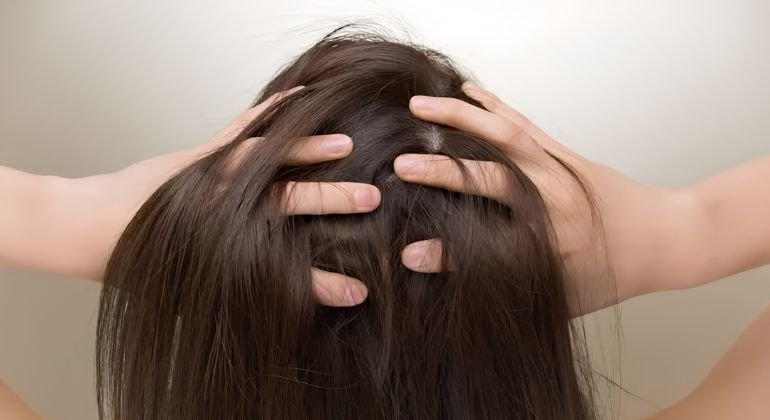
Sensitive scalp is a barrier problem with measurable signatures: elevated pH, higher water loss through the skin, altered sebum composition, and a microbiome tilted toward Propionibacterium with reduced bacterial diversity. Once that barrier is compromised, irritants that never bothered you start to.
Triggers cluster tightly across studies: heat, cold, pollution, dry air, emotional stress, and shampoos. Hair conditioners appear in more than one. Topical minoxidil irritates some users. Chemical straighteners and scalp exfoliation both sit on the standard avoid list, and scrubbing an inflamed scalp is the most common self-inflicted mistake we hear about.
Stress, Hormones, and Nerve Sensitization
The mechanism here is real rather than dismissive. TRPV1 channels on nerve endings in the scalp respond to heat, stress, and chemical triggers by releasing substance P and inflammatory signals. Higher substance P expression in hair follicles is one of the leading explanations for trichodynia. Emotional stress and hormonal shifts, including the menstrual cycle, are documented endogenous triggers rather than a polite way of saying the pain is imagined.
Washing Habits and Buildup
Both directions cause problems. Washing daily with harsh surfactants strips the barrier that is already struggling. Long gaps let sebum accumulate around the shaft, which encourages yeast overgrowth, dandruff, and the inflammation that makes a scalp tender. There is no universal correct frequency. Change the product first, keep the frequency, and judge after two weeks. Friction while you sleep adds to the load, which is where the mechanical case for silk pillowcases holds up.
How to Stop Your Hair From Hurting
Work these in order. The first two take five minutes and rule out the most common cause before you spend money on anything.
- Take the style down now
Release the ponytail, bun, braid, or clip and let the hair fall loose. If a style hurts, it is too tight, and no amount of tolerance makes it safe. Most tension pain fades within a few hours of release. - Score your symptoms before you change anything
Rate itching, prickling, tightness, pain, and burning from 0 to 4 each, using the table above. Write the total down with the date. A single number gives you something to compare against in two weeks. - Strip the variables for 14 days
Use one fragrance-free, gentle shampoo and nothing else on the scalp. Drop dry shampoo, scalp scrubs, texture spray, and any new product introduced in the last two months. Wash on your normal schedule. - Rotate the tension point
If you wear hair up daily, move the part line and the elastic position every day, and go down at least two days a week. The same follicles under the same pull every day is what does the damage. - Reduce load, not just tightness
Weigh your extension set. Divide total grams by the number of attachment points to get load per point, then move weight toward more points or lighter wefts if the number is high for your density. - Cool the surface without exfoliating
Rinse cooler, skip scalp scrubs and stiff brushes, and let hair air dry when you can. Heat is one of the most reported triggers for a sensitive scalp, and scrubbing a sore scalp makes it worse. - Re-score at 14 days and decide
Total your five symptom scores again. A drop means the trigger was mechanical or cosmetic and you found it. A flat or rising score, or any shedding, means book a board-certified dermatologist.
How Long Until It Stops Hurting
Recovery time is itself diagnostic. Pain that does not follow the expected curve is telling you the cause is not what you assumed.
Expected relief timeline by cause
| Cause | Expected relief | If it takes longer |
| Tight ponytail, bun, or braid | 2 hours to 2 days after release | Suspect early traction damage, check the hairline |
| New extension install | 2 to 3 days as tension settles | Go back to your stylist, do not wait it out |
| Product or shampoo reaction | 7 to 14 days after removing it | The trigger is still in your routine somewhere |
| Seborrheic dermatitis flare | 2 to 4 weeks with treatment | Needs a prescription rather than a shelf product |
| Telogen effluvium | Pain often eases before shedding stops | Shedding runs 3 to 6 months from the trigger |
Red Flags: When to Stop Self-Treating
The AAD names four signs that mean the style comes out now: pain from tightly pulled hair, stinging, crusts on the scalp, and tenting, where sections of scalp lift like a tent under the pull. Tenting is the one almost nobody looks for, and it is the clearest sign that tension has crossed from uncomfortable into damaging.
Book a board-certified dermatologist if you have pain lasting beyond two weeks, broken hairs around the forehead, a receding hairline, patches of loss where hair is pulled tight, pustules, or persistent crusting. Seek same-day care for sudden severe scalp pain with fever, jaw pain, vision changes, or throbbing near the temples, which can indicate temporal arteritis.
Traction alopecia reverses when caught early. It stops reversing once the follicle scars. That window is the entire reason this article exists.
For Stylists and Salon Owners
Client scalp pain costs you rebookings before it costs anyone their hairline. Three habits cut complaints.
- Weigh and divide at consultation. Record total grams and attachment points on the client card, and adjust at each move-up as their natural density changes.
- Treat day-one tenderness as data, not as normal. Immediate tightness that fades in 48 hours still represents acute stress on the follicle. Log it and reduce load next time.
- Ask about the hairline every visit. Broken edge hairs are the earliest visible sign, and clients almost never volunteer them.
If you are choosing a method for a client with fine or tension-prone hair, distribution beats everything. Our hand-tied weft range and nano ring options exist for exactly this reason. For clients new to extensions, send them what to know before getting hair extensions ahead of the appointment.
Frequently Asked Questions
Why does my hair hurt when I move it?
Hair itself has no nerves, so the pain comes from the skin and follicles it sits in. Moving hair tugs the follicle and fires nerve endings that are already irritated by tension, inflammation, or a disrupted scalp barrier. The trigger is the movement, but the sensitivity was there first.
Is a sore scalp a sign of hair loss?
Sometimes. Trichodynia is reported by roughly 17 to 35 percent of people who are actively losing hair, and it shows up most often alongside telogen effluvium. Pain alone does not mean you are shedding. Pain plus more strands in the drain is worth a dermatologist visit.
How long does hair pain last after taking down a tight style?
Simple tension soreness usually settles within a few hours to two days once the pull is released. Pain that outlasts three days, or returns without a tight style, points to something other than mechanical tension and deserves a closer look.
Can hair extensions make my scalp hurt?
Yes, through weight and tightness rather than the hair itself. A set adds roughly 100 to 200 grams spread across a finite number of attachment points. Too few points, or bonds set too close to the scalp, concentrate that load and irritate follicles.
Does washing my hair more or less often help a painful scalp?
Both extremes can hurt. Overwashing with harsh surfactants strips the barrier, and long gaps let sebum and yeast build up. Keep your normal frequency and change the product instead, using one gentle fragrance-free shampoo for two weeks before you judge.
When should I see a doctor about scalp pain?
Book an appointment for pain lasting over two weeks, visible shedding or a receding hairline, crusts, pustules, or scalp tenting. Sudden severe scalp pain with fever, jaw pain, or vision changes needs same-day care rather than a routine appointment.
The Bottom Line
Hair pain is scalp pain, and scalp pain has a findable cause. Take the style down, score your symptoms, strip your routine to one gentle shampoo for two weeks, and re-score. Most people find their trigger in that fortnight. The ones who do not have something worth a dermatologist’s time, and catching it early is what keeps traction alopecia reversible.
Choosing Extensions That Do Not Hurt
We have manufactured raw single-donor hair in Vietnam for 20 years, and weight distribution is a specification we can actually talk through with you. Tell us your client’s density and the method you use, and we will point you to the weft weight and attachment count that fits.
Talk to our factory team about low-tension extension options
Ready to find your perfect match? Contact us today for expert advice and exclusive discounts on premium human hair extensions.
📲Phone/WhatsApp: +1 (206) 698‑5133
🛜Instagram: RAW HAIR LUXURY COMPANY
🌐Tik Tok: RAW HAIR LUXURY
📧 Email: Rawhairluxury.us
🌐Website: rawhairluxury.com