
Raw Vietnamese Hair
What Is Raw Hair? Everything You Need to Know About Raw Hair Extensions
Jun
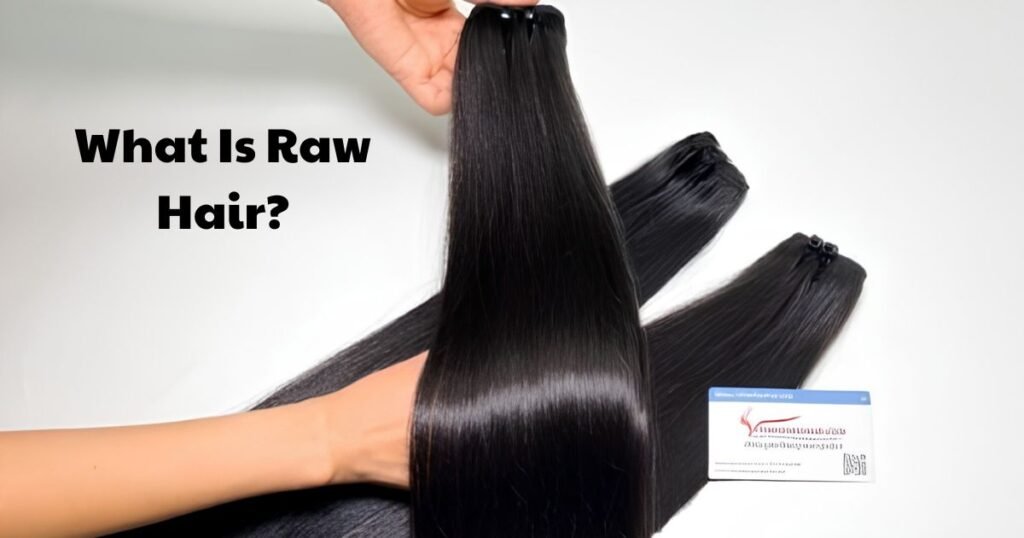
Raw hair is 100% human hair collected from a single donor and sold completely unprocessed — never dyed, bleached, steamed, or chemically textured. Because its cuticles stay intact and aligned in one direction, raw hair extensions are the most durable, natural-looking, and reusable option on the market, often lasting several years with proper care.
If you have ever bought “virgin,” “Remy,” or “Brazilian” bundles that felt silky for two washes and then turned dry, dull, and tangled, you have already met the difference that raw hair solves. This guide breaks down exactly what raw hair is, how it compares to every other category, why raw Vietnamese hair has become the gold standard, and how to tell genuine raw hair from a clever imitation.
What Is Raw Hair, Exactly?
Raw hair is the purest grade of human hair extension available. It is cut directly from one person’s head, gently cleaned, and bundled without any chemical treatment, heat styling, or steam processing. That single rule zero processing is what separates raw human hair from every other grade on the shelf. The moment a bundle is dyed, bleached, steam-curled, or permed, it is technically no longer “raw.”
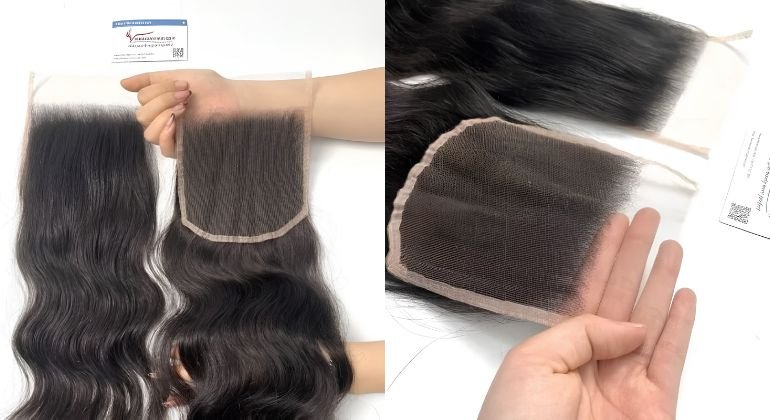
To understand why that matters, you need to know one part of the strand: the cuticle. The cuticle is the outermost layer of each hair, made of overlapping keratin scales that look like shingles on a roof. When those scales stay intact and all face the same direction, hair resists tangling, holds moisture, reflects light naturally, and lasts far longer. Strip or scramble the cuticle — as cheaper processing does — and the strand loses its strength and shine. Raw hair keeps that cuticle perfectly preserved, which is the entire point.
Anatomy of a strand. The cuticle’s overlapping scales protect the cortex and create natural shine. Raw hair preserves this layer completely; processed hair often strips it.
Raw Hair vs Virgin Hair vs Remy Hair vs Non-Remy Hair
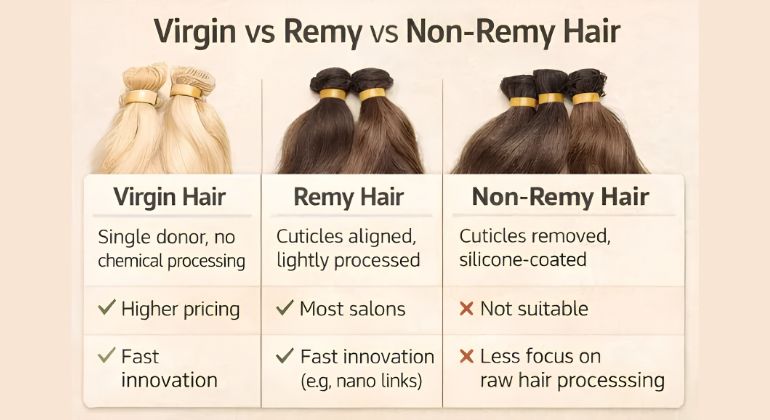
These four labels describe different levels of purity and cuticle handling — and they are constantly confused (often on purpose). Here is the plain-English version:
- Raw hair — single donor, zero processing, cuticles intact and aligned. The longest-lasting and most expensive grade.
- Virgin hair — never chemically treated, but it may be steam-processed to create a uniform curl or wave, and it often comes from several donors.
- Remy hair — cuticles are intact and aligned in one direction, but the hair may be lightly processed for colour or texture. It can come from one donor or many.
- Non-Remy hair — cuticles are scrambled or acid-stripped, then coated in silicone to fake smoothness. Usually collected from mixed sources. The cheapest grade, with the shortest life.
The relationship is simple once it clicks: all raw hair is both virgin and Remy, but not all virgin or Remy hair is raw. “Raw” is the only label that guarantees a single donor and zero processing at the same time.
Raw vs virgin vs Remy vs non-Remy at a glance
| Feature | Raw Hair | Virgin Hair | Remy Hair | Non-Remy Hair |
|---|---|---|---|---|
| Donor source | Single donor | One or multiple | One or multiple | Mixed / collected |
| Processing | None at all | Steam only, no chemicals | Light processing possible | Heavily chemically treated |
| Cuticle | Intact & aligned | Intact & aligned | Intact & aligned | Stripped or scrambled |
| Typical lifespan | 2–3+ years | ~1 year+ | 6–12 months | 4–6 months |
| Colours & bleaches | Excellent | Good | Fair–good | Poor |
| Relative price | Highest | High | Mid | Lowest |
Lifespan figures are widely cited industry ranges for properly maintained extensions; actual results depend on care and styling.
Why alignment matters. When every strand’s cuticle faces the same way, hair glides instead of catching. Scrambled cuticles snag on each other — which is why silicone is used to mask the problem temporarily.
Why Single-Donor, Cuticle-Aligned Hair Lasts Longer
Here is the open secret of the industry: a large share of bundles marketed as “virgin,” “Remy,” or “Brazilian” are actually collected, fallen “floor” hair. Because that hair arrives with cuticles facing every direction, factories acid-strip the cuticle, then coat the strands in silicone so they feel smooth and shiny in the pack. It tests beautifully in the store. But once the silicone washes out over the first few washes, the hair underneath has no cuticle left to protect it — so it dries out, tangles, mats, and sheds, often within weeks.
Single-donor raw hair has none of that hidden damage. Every strand was cut from one head, kept in its natural root-to-tip direction, and never chemically opened up — so the cuticle is doing exactly what nature designed it to do. That is why the lifespan gap is so large: non-Remy hair typically lasts 4–6 months and Remy hair 6–12 months, while well-cared-for raw hair commonly runs 2–3 years or more and can be reinstalled again and again.
Why it matters: The global hair extension market is worth roughly $2.87 billion in 2025 and is projected to reach $5.54 billion by 2034, and human hair drives the premium end of that demand. As buyers grow more selective, durability — not just a silky first impression — is what separates a product people rave about from one they return.
Why Raw Vietnamese Hair Is Considered the Gold Standard
Not all raw human hair is equal, and origin plays a real role. Raw Vietnamese hair is prized because of where and how it grows. Much of it is collected from donors in Vietnam’s cooler, higher-altitude countryside, where strands see less harsh sun and are traditionally cared for with natural ingredients rather than heat and chemicals. The result is hair that is naturally thick, strong, round in cross-section, and rich in colour, from deep black to warm brown, with cuticles that align cleanly.
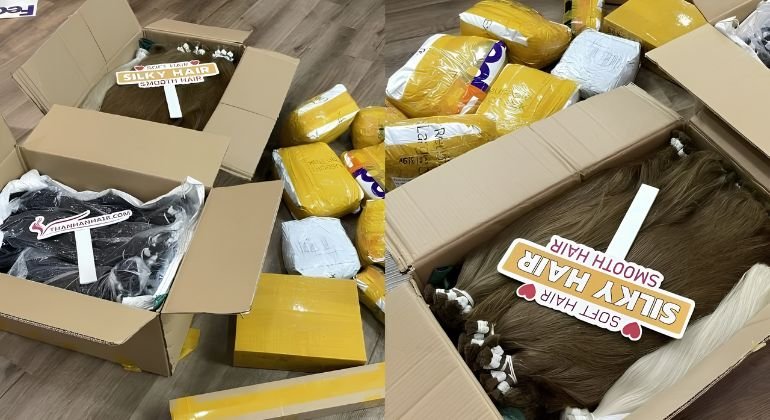
For salon owners and resellers, those traits translate into practical value. Raw Vietnamese hair is full from root to tip, so it takes fewer bundles to build a thick, finished look. Because the cortex and natural melanin are intact, it lifts and colours predictably — natural-black bundles can often be bleached toward light shades that pre-dyed jet-black hair simply cannot reach. And as new tariffs on Chinese hair imports push brands to diversify their sourcing, Vietnam has emerged as one of the most reliable origins in the world. (For the full picture of how bundles go from donor to finished weft, see our guide to hair extension manufacturing in Vietnam.)
How to Tell If Hair Is Genuinely Raw
Because “raw” is the most valuable label, it is also the most abused. Use these five quick checks to separate authentic raw hair from a silicone-coated imitation before you commit to a vendor:
- Check the finish. Real raw hair has a soft, natural sheen — not a glassy, plastic-like shine. An unnaturally glossy bundle is usually coated in silicone.
- Smell it. Genuine human hair has a faint, natural, slightly “buttery” scent. A strong chemical, burnt, or plastic smell points to heavy processing or a synthetic blend.
- Look for subtle texture variation. Single-donor raw hair has small, natural inconsistencies from root to tip. Hair that is flawlessly uniform has often been machine-processed.
- Do a co-wash test. Wash a strand with conditioner only. Truly raw hair keeps its texture and softness; coated hair turns dry, rough, and straw-like once the silicone rinses away.
- Burn a few strands (optional). Real human hair burns slowly, smells like burnt keratin, and crumbles to fine ash. Synthetic fibre melts and balls up into a hard bead.
When in doubt, buy a small sample first. A trustworthy supplier expects it — and you can learn more about vetting vendors in our breakdown of how to choose a reliable hair supplier.
How to Care for Raw Hair So It Lasts for Years
Raw hair behaves like the healthy hair it is, so the care routine is simple — and it is what unlocks those multi-year lifespans. Treat it like your own hair, with a little extra discipline around moisture:
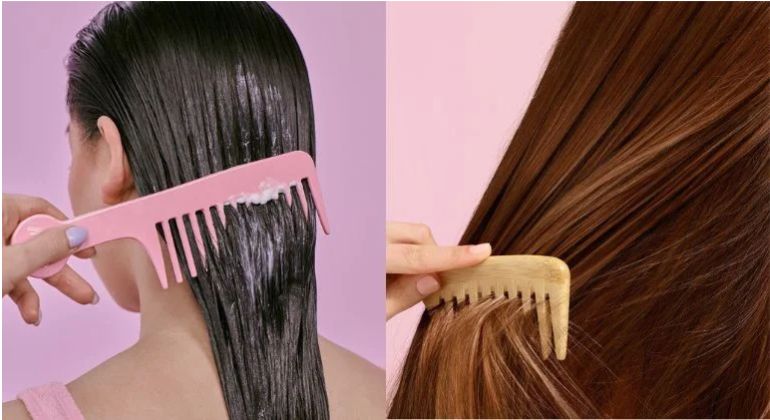
- Wash with a sulfate-free shampoo and conditioner, and avoid over-washing — roughly every 10–15 wears is plenty.
- Deep-condition regularly, and add moisture with light natural oils such as argan or coconut, especially after colouring.
- Always apply a heat protectant before styling, and let the hair air-dry whenever you can.
- Detangle gently from the ends upward with a wide-tooth comb — never yank from the root.
- At night, wrap the hair or sleep on a silk or satin scarf to cut friction and preserve the cuticle.
Is Raw Hair Worth the Price?
Raw hair is never the cheapest option on the shelf, and it shouldn’t be — single-donor, unprocessed hair is genuinely rare and labour-intensive to collect and sort. But the value math favours it. One set of raw hair you can reinstall for two or three years easily outlasts processed bundles that need replacing every few months, so the cost per wear often ends up lower. For salons and resellers, that durability also means fewer complaints, more repeat clients, and a premium product worth building a brand around. Raw hair is best understood not as an expense, but as an investment that pays back over time.
Frequently Asked Questions About Raw Hair
Is raw hair the same as virgin hair? No. Raw hair is unprocessed and from a single donor, while virgin hair is chemically untouched but may be steam-textured and sourced from multiple donors. All raw hair is virgin, but not all virgin hair is raw — “raw” is the stricter, higher grade.
How long does raw hair last? With proper care, raw hair commonly lasts 2–3 years or more and can be reinstalled several times. That is far longer than Remy hair (around 6–12 months) or non-Remy hair (around 4–6 months), which is why raw hair is treated as a long-term investment.
Can raw hair be coloured or bleached? Yes. Because raw hair is unprocessed with its natural melanin intact, it takes colour beautifully and can often be lifted to light shades. Always have a professional do it, and start with natural-black bundles — pre-dyed jet-black hair cannot be bleached as effectively.
Does raw hair come in curly textures? Mostly it comes in straight and natural-wave patterns, since raw hair reflects the donor’s natural texture. True raw curly hair exists but is rarer. Tight, uniform curls are usually steam-set — which makes the hair virgin rather than strictly raw.
Why is raw hair more expensive than other extensions? Single-donor, unprocessed hair is scarce and time-consuming to collect, sort, and match for consistency. You pay more upfront, but because raw hair lasts for years and can be reused, the long-term cost per wear is typically lower than repeatedly replacing cheaper processed hair.
Feel the difference real raw hair makes
Thanh An Hair has spent 20 years producing 100% raw Vietnamese hair for salons, distributors, and brands worldwide. Order a sample, then scale with confidence. Request a sample & wholesale quote → or read why buyers choose raw Vietnamese hair.
Contact Thanh An Hair today for expert consultation and the most competitive price list.
- WhatsApp/Hotline: (+84) 973 522 855
- Official Website: https://thanhanhair.com/
- Instagram: @thanhanhair
- Email: thanhanexport@gmail.com