
Thanh An Hair
Nano Bead Extensions Explained: What to Know Before You Book
Jul
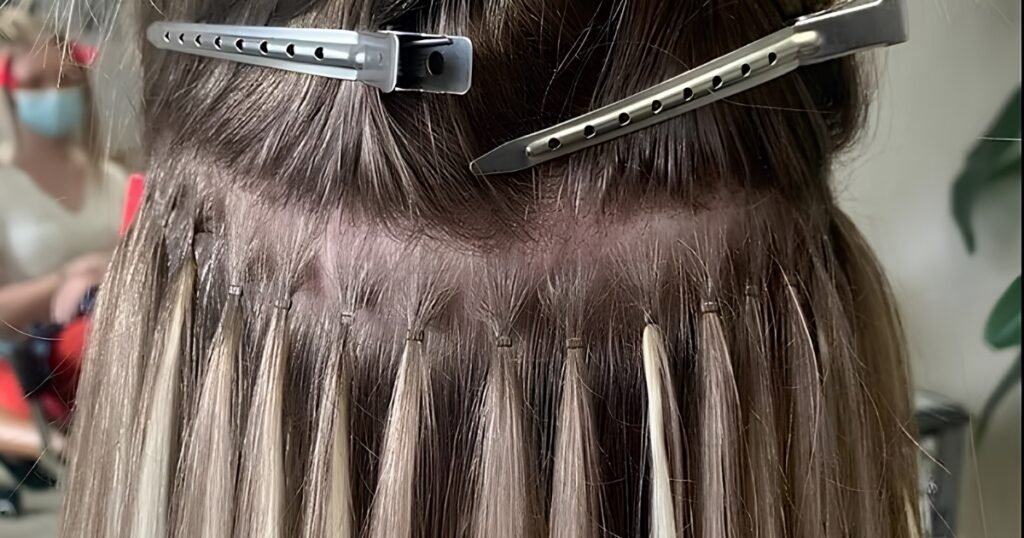
Nano bead extensions are strands of human hair joined to your own hair with a tiny silicone lined ring, roughly 2mm to 2.5mm across, that a stylist clamps shut with pliers. No heat, glue, or sewing is used. They suit fine and thin hair because each bond is small, discreet, and light on the root.
This guide covers how the method works, what it costs, how long it lasts, and the scalp health question most articles skip. Demand keeps climbing: human hair leads a global extension market that Fortune Business Insights valued at 2.87 billion dollars in 2025, with North America the largest region. It is written from the view of a factory that has produced pre bonded hair for two decades, so the focus is on what affects comfort and longevity rather than sales copy.
What Are Nano Bead Extensions?
Nano bead extensions, also called nano ring or nano tip extensions, are a permanent extension method. Each extension strand ends in a small keratin tip. A stylist threads a section of your natural hair through a nano bead, slides the tipped strand in beside it, then clamps the bead flat so it grips both. The bond holds for weeks and moves with your hair.
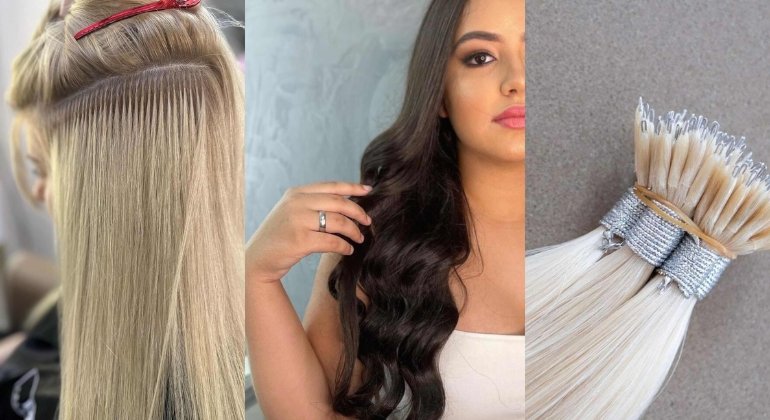
Three terms get used interchangeably, and the difference matters when you book:
- Nano tip: the individual extension strand and its keratin coated end.
- Nano bead or nano ring: the small metal ring, lined with silicone, that holds the strand in place.
- Nano ring method: the full strand by strand application done in the salon.
These are the smallest rings in common use. A nano bead measures around 2mm to 2.5mm, against roughly 3mm to 5mm for a micro ring. That size gap is the whole point. A smaller bond sits closer to the scalp, hides under finer hair, and carries less weight at each attachment.
Nano Rings vs Micro Rings, I-Tips, Tape, and Weft
Choosing an extension method is a trade off between how discreet the bond is, how much it weighs on your roots, and how long it takes to fit. The table below compares the five methods a salon is most likely to offer, so you can match the method to your own hair before you book.
| Method | How it attaches | Bond size | Best for | Reusable | Typical fit time |
| Nano ring | Silicone lined bead clamped shut, no heat or glue | ~2 to 2.5mm | Fine, thin, fragile hair | Yes | 3 to 5 hours |
| Micro ring | Larger bead clamped shut, no heat or glue | ~3 to 5mm | Medium hair, faster fitting | Yes | 2 to 4 hours |
| I-tip (keratin) | Keratin tip secured in a bead, or heat fused | Small tip | Medium to thick hair | Often | 3 to 5 hours |
| Tape-in | Thin wefts taped either side of a section | Flat panel | Fast volume, flatter finish | Sometimes | 1 to 2 hours |
| Weft / weave | Sewn onto a braided track | Continuous row | Thick, dense hair | Yes | 2 to 4 hours |
Nano rings win on discretion and low weight per bond. Tape-ins win on speed. Wefts win on coverage for thick hair. There is no single best method, only the best match for your density and how much upkeep you want. If you are weighing options for finer hair, our guide to the best hair extensions for fine hair compares the low tension methods side by side, and you can see the bonded formats in our nano ring hair, I-tip hair, and tape hair ranges.
How Nano Bead Extensions Are Applied
A full nano ring fitting is done strand by strand by a trained stylist, and that precision is one reason it takes longer than tape or weft. The steps are simple to describe and exact to execute.
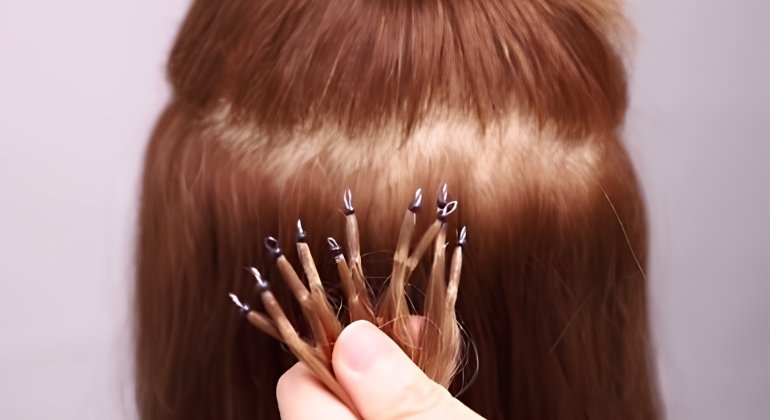
- Section and prepare. The stylist parts the hair into fine rows and keeps the work away from the hairline so bonds stay hidden.
- Thread the bead. A small section of your own hair is pulled through a nano bead with a loop tool.
- Add the strand. The nano tip is slid into the bead so it sits flush against the natural hair.
- Clamp the bond. Pliers flatten the bead until it grips both the natural hair and the extension.
- Build in rows. The pattern is repeated row by row to blend length and volume evenly across the head.
- Blend and check. The stylist checks tension, movement, and colour match, then cuts and styles.
Most full heads take three to five hours. No heat or adhesive touches your hair, which is why the method is often chosen by people who react to glue or want to avoid heat damage at the root.
Do Nano Bead Extensions Damage Your Hair?
Nano bead extensions are among the gentlest permanent methods, but gentle is not the same as risk free. The risk with any attached extension is tension. The American Academy of Dermatology lists tight, heavy, or long worn styles, including extensions and weaves, as a cause of traction alopecia, a form of hair loss driven by steady pulling on the follicle.
The reason nano rings carry less of this risk is weight. Each bond is small and holds only a few strands, so the load on any single section of natural hair stays low. Trouble appears when bonds are fitted too tightly, packed too densely, or placed on hair too fine to carry them. A 2018 review in Clinical, Cosmetic and Investigational Dermatology found traction alopecia to be one of the most common forms of hair loss, with reported prevalence reaching 31.7% in one studied group. The takeaway is not to avoid extensions, but to fit them correctly and never overload the hair. This matters most for the exact people nano rings are marketed to, since women make up roughly 80% of extension wearers and carry higher rates of tension related and postpartum thinning, per industry analysis.
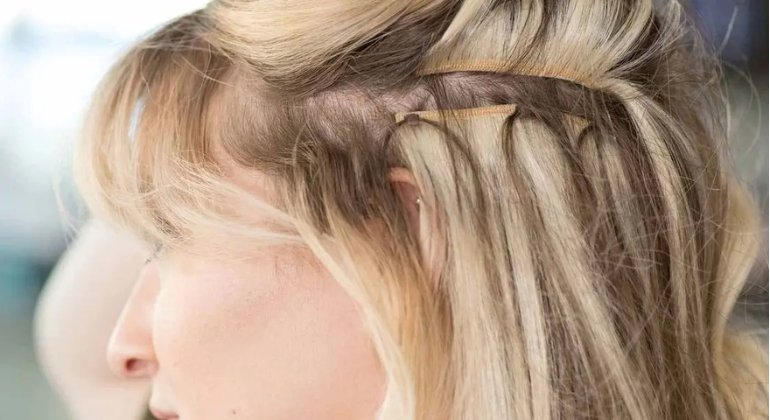
Three habits protect your natural hair:
- Book a stylist who assesses your density before fitting, not after.
- Ask for fewer, well placed bonds instead of maximum volume on fine hair.
- Reposition or remove bonds on schedule, and stop at once if a bond feels sore. The AAD advises removing any style that causes pain.
For context, the AAD notes it is normal to shed 50 to 100 hairs a day, so light shedding at a refit is expected rather than a warning sign.
How Much Do Nano Bead Extensions Cost?
Nano bead extensions carry two costs: the hair and the fitting. In the United States a full head fitting commonly runs a few hundred dollars in salon labour, and the hair is charged separately by weight or by the pack. Because the method is slower and more precise than tape or weft, the labour sits at the higher end of extension services.
The hair is where quality quietly decides the final bill. From a manufacturer’s side, three things separate hair that lasts a year from hair that tangles in a month:
- Cuticle intact Remy hair, where every strand runs root to tip in the same direction, so it stays smooth and does not mat.
- Double drawn hair, thick from root to tip, for even density along the whole strand.
- Single donor or well sorted hair, which colours and responds to heat consistently.
Cheaper nano tips often use acid stripped or mixed hair that looks fine at fitting and breaks down fast. Paying a little more per pack for cuticle correct hair usually costs less across a year of wear. You can see how we grade and finish bonded strands in our nano ring hair extensions.
How Long Do Nano Bead Extensions Last, and How Do You Maintain Them?
With correct care the hair itself can last six to twelve months, while the fitting needs attention sooner. As your own hair grows, the bonds travel down the shaft, so a stylist repositions them every six to eight weeks. Most wearers do a full removal and refit at around the three month mark.
Day to day, a few habits keep both the hair and the bonds in good shape:
- Brush from the ends upward with a soft or loop brush, holding the roots so you do not drag on the bonds.
- Wash one to two times a week with a sulphate free shampoo, directing water down the hair rather than piling it on top.
- Condition the mid lengths and ends, and keep heavy product away from the bonds.
- Use heat protection before styling and keep hot tools clear of the beads.
Because nano tips keep their keratin end intact through wear, the hair is often reusable at a refit. You replace the beads, not the strands, which keeps the ongoing cost down.
Are Nano Bead Extensions Right for You?
Nano bead extensions suit you if you have fine, thin, or fragile hair and want length or volume that stays discreet and holds for months. The small bond is easy to hide, comfortable to sleep on, and safe to wear up.
They are a weaker fit in a few cases. Very thick or coarse hair usually gets better coverage from wefts or weaves, since strand by strand work takes a long time to build that density, though a micro loop set can bridge the gap. If you change your look often or only need extensions for events, clip-ins give you flexibility with no salon time. And if your scalp already shows signs of tension damage, treat that first and ask a professional before adding any attached method.
Frequently Asked Questions
What is the difference between nano bead and micro ring extensions?
The bead size. Nano beads measure around 2mm to 2.5mm, while micro rings are roughly 3mm to 5mm. The smaller nano bond sits closer to the scalp, hides better under fine hair, and carries less weight per attachment, which is why nano suits thinner hair. Both clamp on without heat or glue.
How long do nano bead extensions last?
The human hair can last six to twelve months with good care. The fitting needs attention sooner: bonds are repositioned every six to eight weeks as your hair grows, and most wearers do a full refit around the three month mark. Higher quality Remy hair lasts noticeably longer than stripped or mixed hair.
Do nano bead extensions damage your hair?
Not when fitted and worn correctly. Each bond is small and light, so tension stays low. Damage happens when bonds are too tight, too dense, or placed on hair too fine to hold them. The American Academy of Dermatology advises removing any style that causes pain, so stop if a bond ever feels sore.
How many nano bead extensions do I need?
It depends on your natural density and your goal. Adding volume to part of the head takes fewer strands, while a full length and volume change takes more. A stylist should assess your hair before fitting and recommend a count that reaches your target look without overloading fine sections.
Can you reuse nano bead extensions?
Often, yes. Because each nano tip keeps its keratin end intact through wear, the hair can usually be refitted. At a refit you replace the beads rather than the strands, which lowers the ongoing cost. Reusability depends on the hair quality and how well the extensions were maintained.
Are nano bead extensions good for fine or thin hair?
Yes, this is their main strength. The nano bond is the smallest in common use, so it hides under fine hair and adds little weight at the root. For very fine hair, ask for a lighter, well spaced fitting rather than maximum volume, so the bonds stay comfortable and stay hidden.
Contact Thanh An Hair today for expert consultation and the most competitive price list.
- WhatsApp/Hotline: (+84) 973 522 855
- Official Website: https://thanhanhair.com/
- Instagram: @thanhanhair
- Email: thanhanexport@gmail.com