
Raw Vietnamese Hair
How Long Should You Keep Bleach in Your Hair? Safe Timing Guide for Healthy Blonde Results
May
Bleaching hair is one of the fastest ways to change your look, but it is also one of the easiest ways to cause serious damage when timing is ignored. Bleach lightens hair by oxidizing and removing melanin, and research shows that excessive bleaching can strip the cuticle, expose the cortex, and weaken hair’s internal structure. That is why the real question is not just how long should you keep bleach in your hair, but how long should you keep bleach in your hair for your specific formula, hair type, and goal.
Dermatology guidance also makes one thing clear: the more you try to lighten hair, the more damage you invite. The American Academy of Dermatology advises staying “on shade” when possible, noting that lightening hair more than three shades requires higher peroxide levels and causes more damage. For anyone planning a major blonde transformation, that is a warning worth taking seriously.
Why Bleach Timing Matters So Much
Bleach does not simply “make hair lighter.” It opens the cuticle, penetrates the hair shaft, and breaks down pigment inside the cortex. As processing continues, it can also weaken the protein bonds that keep hair strong and elastic. Once those bonds are damaged, the hair may feel gummy, stretch too far when wet, and snap more easily.
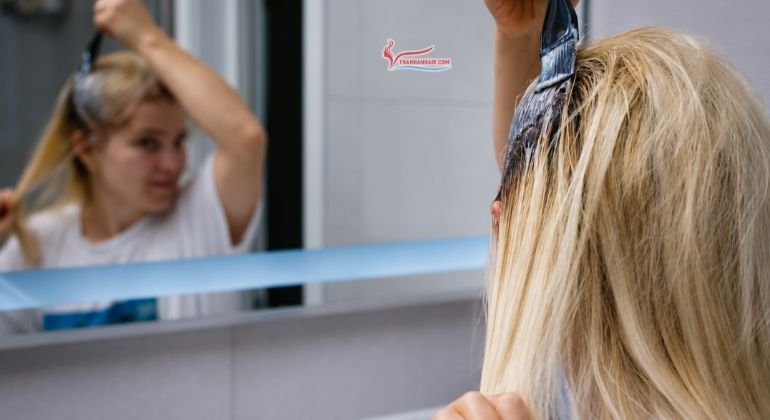
That is why there is no single answer to how long should you keep bleach in your hair. The safe processing window depends on the developer strength, your starting color, the condition of your hair, and whether heat is involved. In practice, product guidance from professional color lines shows that stronger developers lift faster, but they also narrow the margin for error.
How Long Should You Keep Bleach in Your Hair by Developer Strength?
Professional product guides generally match lower developer strengths with gentler lift and higher strengths with faster processing. Well a’s guidance, for example, associates 20 volume with about 1 level of lift, 30 volume with about 2 levels, and 40 volume with about 3 levels, while timing varies by formula and service. Another Well a education guide shows processing windows such as 25 – 35 minutes, 30 – 40 minutes, and up to 45 – 60 minutes depending on the color service. The safe takeaway is simple: stronger does not mean better, just faster and riskier.
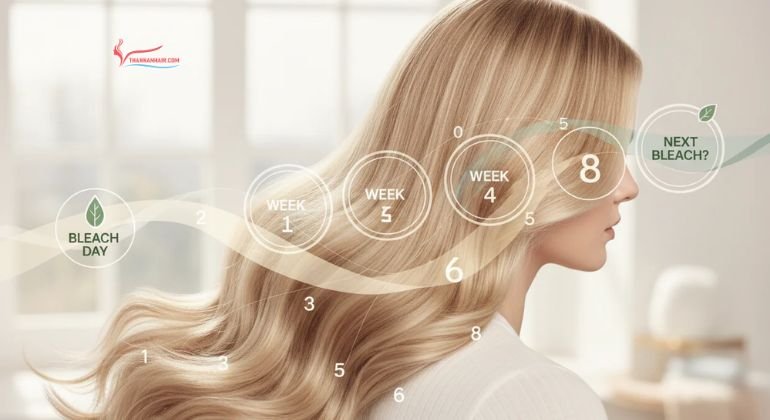
A practical way to think about how long should you keep bleach in your hair is this:
- 10 volumes is best for very gentle lift or delicate hair that needs a slow, controlled process.
- 20 volumes is the most common choice for predictable, moderate lift.
- 30 volumes can move faster, but it demands close monitoring.
- 40 volumes is the most aggressive and should be handled with extreme caution because it increases the risk of scalp irritation and overprocessing.
Starting Color Changes The Timing
If your hair is light brown, bleach may reach the desired stage much faster than if your hair is dark brown or black. Darker hair contains more melanin, so the bleach must work longer to break down more pigment. That is why how long should you keep bleach in your hair is very different for a subtle level lift versus a platinum blonde transformation.
For darker starting shades, the goal should not be “leave it longer and hope for the best.” Instead, the better approach is to use the correct developer, monitor the hair closely, and stop as soon as the strand reaches the right underlying tone. Going past that point often increases damage more than it improves color.
Your goal shade changes the answer
A soft caramel lift and an icy platinum result are not the same service. If you want a subtle sunkissed effect, how long should you keep bleach in your hair may be closer to the lower end of the processing range. If you want pale blonde or platinum, bleach often needs to process longer, but still only within the brand’s safe window. That is exactly where people get into trouble: chasing a lighter tone after the hair has already become fragile.
Professional color brands often recommend toning after lifting rather than trying to force bleach to do everything in one step. Schwarzkopf notes that toner is used after strong bleaching to neutralize brass and refine the final shade, which is why tone often matters as much as lift.
Hair Texture, Porosity and Application Method all Matter
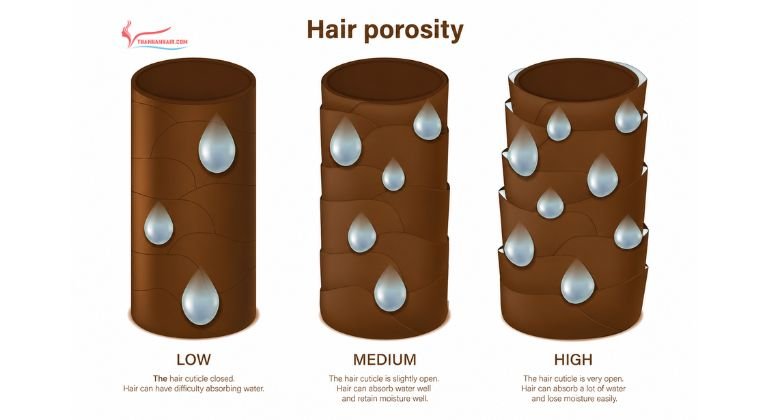
Fine or high porosity hair usually lifts faster because it absorbs chemicals more quickly. Coarse or low porosity hair resists product penetration and may need more time to lift evenly. That means the same bleach mix can behave very differently on two heads of hair.
Application method matters too. Heat speeds up bleach. Stylists and brand education sources note that scalp heat accelerates root lift, and foil can trap heat and make lightener work faster. That is why roots often develop faster than mid lengths and ends, and why foils typically require closer monitoring than open air techniques like balayage.
How to Know When It is Time to Rinse Bleach Out
Do not rely on the clock alone. The best answer to how long should you keep bleach in your hair is found by checking the strand, not just the timer. Stylists often use a strand test or scrape test to see how far the hair has lifted and whether it is still safe to continue.
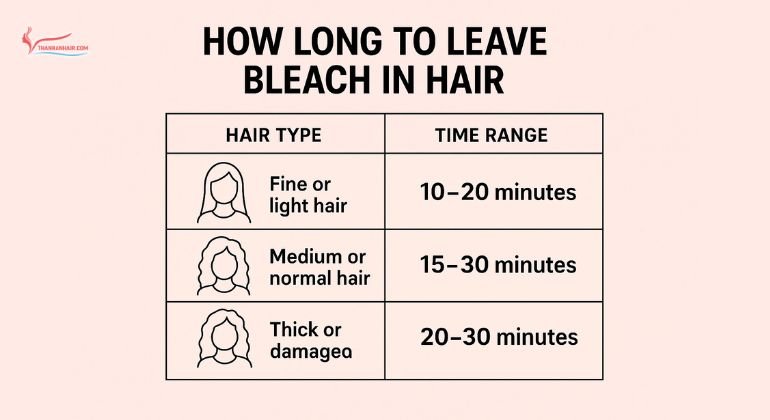
A good visual sign is pale yellow, often described as the inside of a banana. At that point, the hair is usually ready to rinse and tone. If the strand still looks orange, it may need more time within the safe window. But texture matters just as much as color. If the strand stretches like gum, feels mushy, or starts breaking, rinse immediately even if the shade is not perfect yet. That texture change is a warning sign that the hair’s structural integrity is failing.
Root Touchups Need Special Care
Root bleaching is one of the trickiest parts of the whole process because new growth lifts faster than the lengths. Scalp heat speeds up the reaction, which means bleach near the roots can process more quickly than bleach on cooler mid lengths and ends. Hair education sources repeatedly warn that this is why “hot roots” happen.
The rule is to apply bleach only where new growth is present and avoid overlapping onto previously lightened hair. Repeated overlap creates weak points that can break later, especially along the line where old bleach meets new bleach. For root touchups, check progress early and often, because the roots can move faster than you expect.
How to Bleach More Safely
If you are asking how long should you keep bleach in your hair because you want better results without unnecessary damage, the best strategy is to protect the hair before, during, and after the service. Dermatologists recommend avoiding multiple chemical processes at once and being careful with strong peroxide because the more lightening you demand, the more damage you risk. They also note that hair exposed to dye, bleach, or perming can become weak, dry, rough, faded, and brittle, especially under sun exposure.
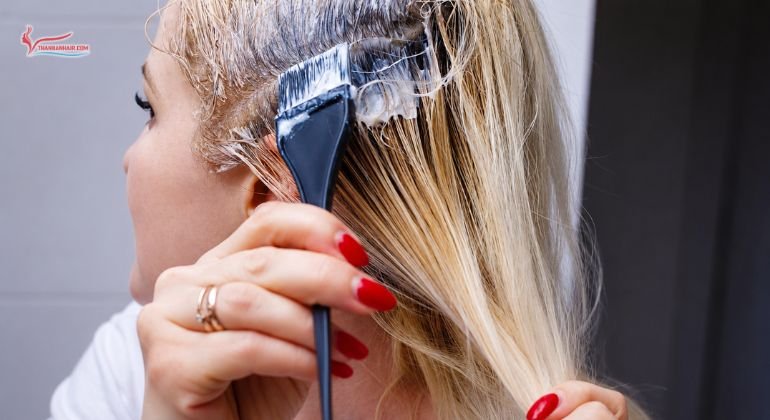
A safer bleaching routine includes these basics:
- Use the weakest developer that can still achieve your goal.
- Check the hair frequently instead of leaving bleach on blindly.
- Do not stack bleach over already lightened sections.
- Tone afterward instead of overprocessing to reach the final shade.
- Give the hair real recovery time between chemical services.
Final answer: How Long Should You Keep Bleach in Your Hair?
The safest answer is this: long enough to reach your target lift, but never long enough for the hair to become stretchy, mushy, or broken. In many professional systems, that means somewhere in the 15 to 45 minute range, depending on the developer, hair type, and desired shade. But the real rule is to follow the product instructions, watch the hair closely, and stop at the first sign of structural weakness.
If your goal is a blonde result that still looks healthy, timing is only half the formula. The other half is choosing the right developer, respecting your starting color, and knowing when to rinse before damage takes over. That is what separates a bright blonde from a broken one.
Ready to create a safer, better looking blonde result with premium hair that handles color beautifully? Contact Thanh An Hair for a wholesale quote and first order discount on premium Vietnamese hair extensions and bundles.
Contact Thanh An Hair today for expert consultation and the most competitive price list.
- WhatsApp/Hotline: (+84) 973 522 855
- Official Website: https://thanhanhair.com/
- Instagram: @thanhanhair
- Email: thanhanexport@gmail.com