
Raw Vietnamese Hair
Flat Tip Hair Extensions: A Manufacturer’s 2026 Guide to the Invisible Bond
Jul
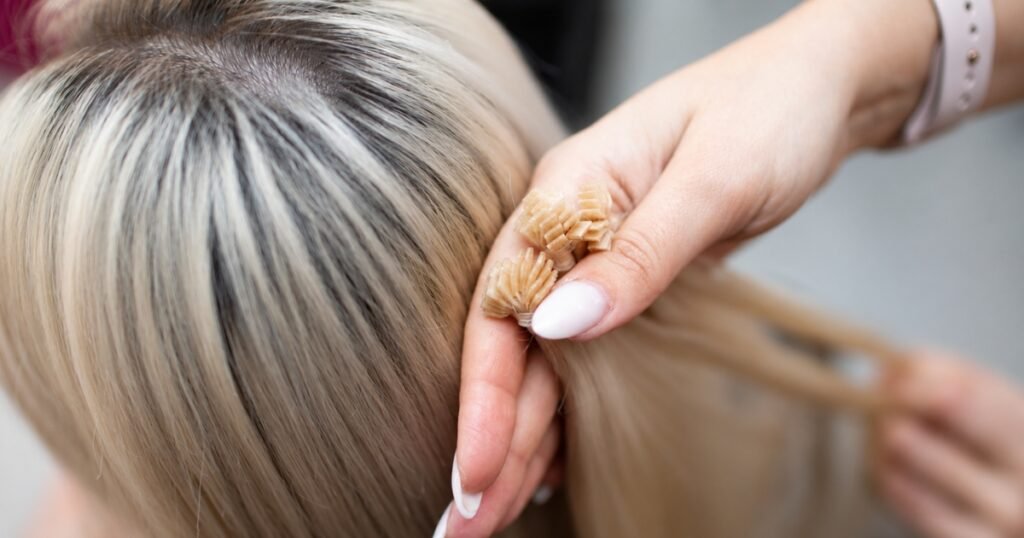
Flat tip hair extensions are pre-bonded strands of human hair joined by a keratin tip pressed flat instead of round. That flat cross-section sits closer to the scalp than a cylindrical I-tip bond, so it lies flatter, feels less noticeable under the fingertips, and blends more easily in fine hair. Each strand carries roughly 0.8 to 1 gram of hair and is fitted strand by strand by a stylist.
What Are Flat Tip Hair Extensions?
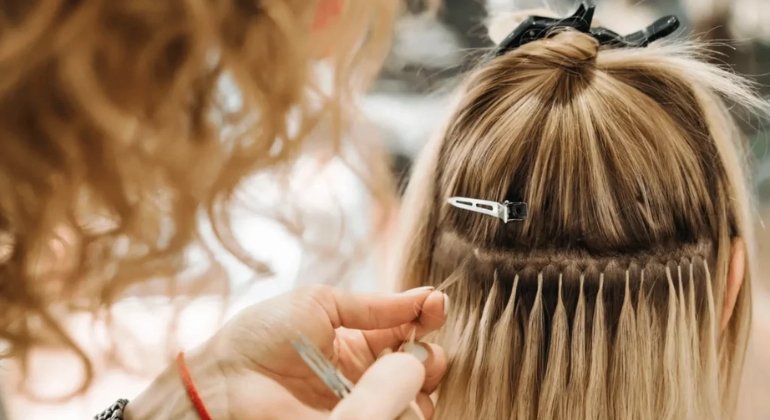
Flat tip hair extensions are a permanent, pre-bonded method. Each strand is a small bundle of human hair sealed at the root end with a keratin bond, then flattened into a thin, rectangular tip. A stylist softens the bond with a heat connector and moulds it around a section of your own hair, creating a join that holds for weeks.
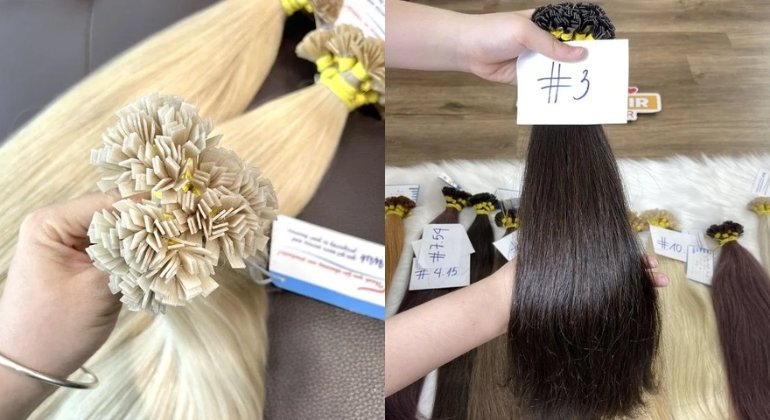
The word “flat” refers only to the shape of the bond, not the hair. It is easy to confuse a flat tip with a flat weft, which is a thin sew-in or tape panel, but the two are different products. A flat tip is an individual keratin strand. A flat weft is a wide track of hair. This guide covers the individual keratin type used for strand-by-strand fittings.
Because the bond is small and self-contained, it needs no beads, clips, or tape tabs at the root. There is nothing hard or bulky pressing against the scalp, which is the main reason the method has become a salon favourite for discreet, long-wearing volume. You can explore the range on our flat tip hair collection, part of our wider keratin tip hair line.
Flat Tip vs I-Tip, Nano Ring, Tape and Clip-In: A Quick Comparison
Choosing an extension method comes down to how it attaches, how long it lasts, and how visible the join is. The table below compares flat tip hair extensions with the four methods buyers ask about most.
| Method | Attachment | Bond shape | Wear before refit | Weight | Best for | Heat or tools |
|---|---|---|---|---|---|---|
| Flat tip | Keratin fusion or bead | Flat, low-profile | 8 to 12 weeks | ~0.8 to 1 g per strand | Fine to medium hair, discreet volume | Heat connector or micro-ring |
| I-tip | Micro-ring or bead | Round (cylindrical) | 6 to 8 weeks | ~0.8 to 1 g per strand | No-heat wearers | Bead, no heat |
| Nano ring | Nano micro-bead | Round, very small | 6 to 8 weeks | ~0.5 to 0.8 g per strand | Fine hair, no heat | Nano bead, no heat |
| Tape-in | Adhesive tape panel | Flat panel | 6 to 8 weeks | ~1 to 4 g per panel | Fast full-head fitting | Adhesive, light heat |
| Clip-in | Wefted clips (removable) | Temporary | Worn per day | 70 to 220 g per set | At-home, occasional | None |
Two points stand out. First, flat tip and tape-in both use a flat profile, but only the former attaches strand by strand, so it moves more naturally and parts in any direction. Second, a flat tip tends to hold longer between refits than a round I-tip or nano ring, because the flatter bond resists rotation and slippage as the hair grows out.
Why the Flat Bond Matters (The Part Most Guides Skip)
The real difference between a flat tip and a round I-tip is geometry, and it is the one thing most articles gloss over. A round bond is a cylinder. It touches your hair and scalp along a narrow line, and it stands slightly proud of the head. A flat bond is pressed into a thin rectangle, so the same amount of keratin spreads over a wider, shallower footprint.
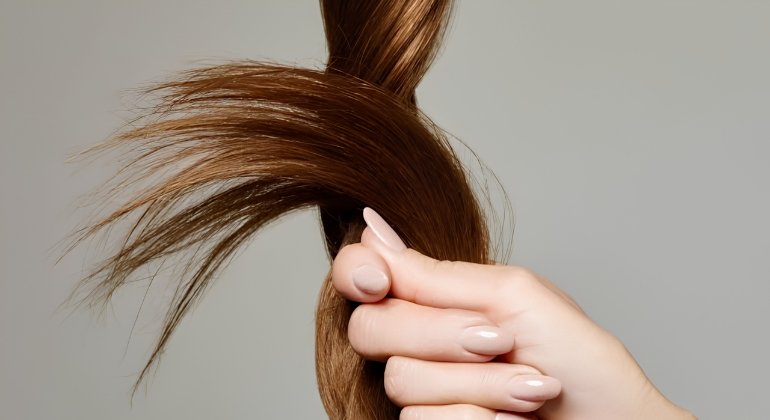
That single change of shape does three useful things:
- Lower profile. The bond sits nearer the scalp, so it is harder to see through the hair and easier to hide in an updo or a parting.
- Better hold. Spreading the keratin over a larger contact area helps the bond resist twisting while you brush and sleep.
- Smoother feel. A flat tip reduces the hard, bead-like lump that wearers can feel with rounder methods, for a cleaner finish under the fingertips.
Flat Tip Extensions for Fine Hair
Fine hair is where the flat bond earns its reputation. On thin hair, a raised round bond can telegraph through the strands and catch the light. A flat bond lies down against the head and disappears more readily, which is why stylists reach for it when a client wants length without an obvious join. The low profile also lets the extension follow the natural fall of fine hair instead of propping it up. For a wider look at method selection on delicate hair, see our guide to the best hair extensions for fine hair.
How Flat Tip Hair Extensions Are Applied
These extensions are fitted by a trained stylist, never at home. There are two main routes: hot fusion, which softens the keratin with heat, and cold fusion or bead application, which clamps the tip without heat. The hot-fusion process below is the most common.
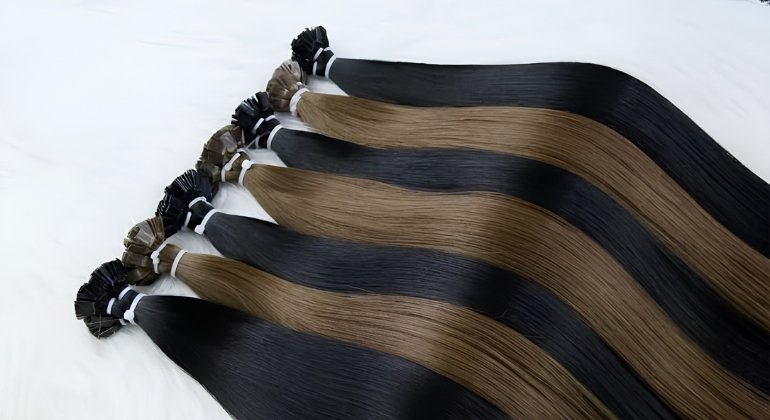
- Section and prepare. The stylist parts the hair into fine horizontal rows and isolates a small section of natural hair, roughly the width of the flat tip itself.
- Position the tip. The tip is placed a few millimetres from the scalp, close enough to be hidden but far enough to let the hair move.
- Soften the bond. A fusion connector warms the keratin to a workable state, usually in the region of 130 to 180 degrees Celsius, with no direct heat on the scalp.
- Roll and seal. The stylist rolls the softened bond around the natural section with the fingertips, pressing it into a flat, tapered join.
- Cool and set. The bond cools in seconds into a firm hold. The stylist repeats the process strand by strand until the target volume is reached.
A full head can take two to four hours, depending on how many strands are fitted. For a no-heat option, the same bond can be secured inside a lined micro-ring and clamped shut, which suits clients who prefer to avoid keratin softening altogether.
How Much Hair You Need: Density and Strand Count
One of the most common wholesale questions is how many grams to order. The honest answer is that grams and strand count are two different measures, and both depend on the head in front of you. A single strand holds about 0.8 to 1 gram of hair, so the count matters as much as the weight.
| Desired result | Approximate strands | Approximate weight |
|---|---|---|
| Light volume or a few gaps | 50 to 100 | 50 to 100 g |
| Noticeable volume plus some length | 100 to 150 | 100 to 150 g |
| Full-head length and volume | 150 to 200 or more | 150 to 200 g or more |
Very thick or coarse hair needs more strands to blend, while fine hair needs fewer but placed with care to avoid tension. Salon professionals usually confirm the final count in person, then order packs accordingly. Ordering by strand count rather than guessing by weight alone is the surest way to avoid waste.
How Long Flat Tip Extensions Last, and What They Cost
Two clocks run at once with any bonded method. The first is the fitting: how long before the extensions need moving up as your own hair grows. The second is the hair itself: how long the human hair stays wearable.
The fitting typically holds for 8 to 12 weeks before a refit, longer than the 6 to 8 weeks common for round I-tip or nano ring. The human hair, if it is good quality and cared for, often lasts 6 to 12 months and can sometimes be reused across more than one fitting. Costs vary widely by market: wholesale factory pricing per pack is a fraction of the fitted salon price, which also includes the stylist’s time. Because they wear longer between appointments, the cost per week of wear tends to compare well against methods that need more frequent refits.
The category is growing fast. The global hair wigs and extensions market was valued at about 15.22 billion US dollars in 2025 and is projected to reach 31.13 billion by 2033, with extensions the fastest-growing product segment, according to Grand View Research. That growth is exactly why bond quality and honest sourcing now matter more than price alone.
How to Wear Flat Tip Extensions Safely
Any extension that attaches to your own hair adds weight, and weight means tension. Applied well, the method is gentle because each strand carries only about a gram. Applied too tightly, or too close to the scalp, any bonded method can pull on the follicle.
The American Academy of Dermatology notes that hair extensions and weaves attached with too much tension are a recognised cause of traction alopecia, a form of hair loss from repeated pulling, and offers a simple rule: if a style hurts, it is too tight. Peer-reviewed dermatology guidance in StatPearls adds that early traction damage is often reversible when the tension is eased in time. In practice that means choosing a stylist who places bonds a few millimetres off the scalp, speaking up if anything feels sore, brushing from the ends up with a soft-bristle or loop brush, using sulfate-free care, and keeping to the recommended refit schedule so grown-out bonds do not drag.
Why Sourcing and Bond Quality Decide the Result
A flat tip is only as good as two things: the hair in the strand and the keratin in the bond. Cheap bonds can turn brittle, discolour, or loosen early. Lower-grade hair sheds its cuticle, tangles, and dulls after a few washes. This is where a factory-direct supply chain shows its value.
At Thanh An Hair, flat tips are made from raw Vietnamese human hair kept cuticle-aligned from root to tip, which reduces tangling and holds shine through repeated styling. The keratin bond is formulated to soften cleanly at fitting temperature and set into a firm, flat hold. [INSERT: real named quote from the founder or QC lead on bond and raw-hair standards.] You can view current stock on our products page or contact the factory for wholesale terms.
Frequently Asked Questions
Are flat tip hair extensions damaging?
Not when fitted and removed correctly. Each strand carries about a gram of hair, so the load is light. Damage usually comes from bonds placed too tightly or left in too long. A professional fitting, a sensible refit schedule, and gentle aftercare keep flat tip hair extensions safe for most hair types.
How are flat tips different from I-tips?
The bond shape. An I-tip bond is round; a flat tip is pressed flat. The flat shape sits closer to the scalp, hides better in fine hair, and resists twisting as the hair grows, which is why flat tips often hold a little longer between refits than round I-tips.
Can flat tip extensions be reused?
Often, yes. If the hair is good quality and well cared for, a stylist can remove the strands, re-tip them, and refit them for a second wear. Reusability depends heavily on the grade of the hair and how gently the extensions have been treated between appointments.
How long do flat tip hair extensions last?
The fitting usually holds 8 to 12 weeks before a move-up. The human hair itself, if it is high quality and maintained with sulfate-free products, commonly lasts 6 to 12 months. Good raw hair is what separates a set you can reuse from one you cannot.
Do flat tips work on thin or fine hair?
Yes, and it is one of their strengths. The low, flat bond disappears against the head more easily than a raised round bond, so it hides well in fine hair. The key is light placement and enough strands to blend without adding tension to delicate roots.
Can I apply flat tip extensions myself?
No. Flat tips need a heat connector or a lined micro-ring and precise placement to avoid damage. Both fitting and removal should be done by a trained stylist. At-home application risks uneven bonds, tension on the scalp, and shortened wear.
Stock a Flat Tip That Fits Closer and Wears Longer
Ready to offer a bond that sits flatter, holds longer, and keeps its shine? Thanh An Hair is a factory-direct manufacturer with twenty years in raw Vietnamese hair. Request a wholesale sample pack and judge the bond and hair quality for yourself.
Contact Thanh An Hair today for expert consultation and the most competitive price list.
- WhatsApp/Hotline: (+84) 973 522 855
- Official Website: https://thanhanhair.com/
- Instagram: @thanhanhair
- Email: thanhanexport@gmail.com