
Thanh An Hair
Best hair extensions for thin hair in 2026
Sep
The best hair extensions for thin hair in 2026 are invisible tape-ins, nano rings and seamless clip-ins, ordered light: about 60 to 120 grams for most fine-haired clients. Spread the weight across many small attachment points, hide each attachment under natural hair, and match strand width as carefully as you match color.
We are Thanh An Hair, a family-run Vietnamese hair manufacturer with about 20 years of production behind us. We supply salons and resellers, mostly in the US, and fine-hair orders are the ones that come back with the most questions. This guide is for extension stylists, salon owners and resellers ordering for fine-haired clients, and for clients who want to know exactly what to ask their stylist for.
Thin Hair vs Fine Hair: Why Density and Strand Diameter Change the Order
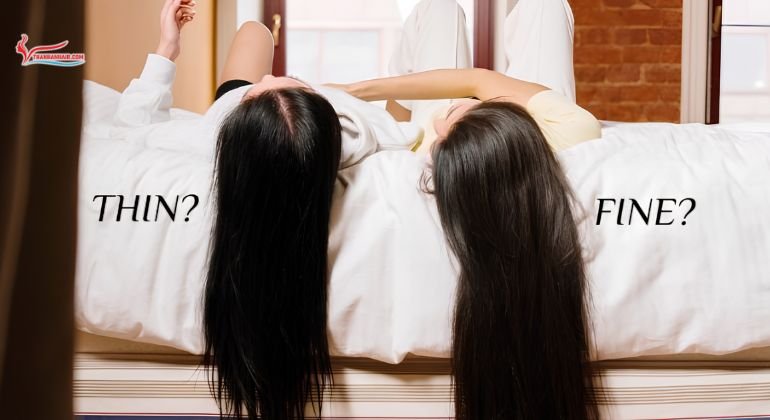
Thin hair means low density: fewer hairs per square inch of scalp, so the scalp shows through sooner. Fine hair means low diameter: each strand is narrow, even if there are plenty of them. Many clients have both, but the two traits drive different parts of the order.
Here is the manufacturer’s honest view. Vietnamese hair is our product, and it is excellent hair: long, cuticle-aligned and strong enough to bleach. It is not thinner per strand than a fine European strand, and a supplier who says it is would be contradicting the published measurements. So for a fine-haired client, the job is to hide the width difference with placement:
- Keep every attachment at least an inch below the part line and away from the hairline.
- Leave a full canopy of natural hair over the top so the client’s own strands form the visible surface.
- Use multi-tonal or rooted shades, which break up the line where two strand widths meet.
Best Hair Extensions for Thin Hair, Ranked by Anchor Load
Every method hangs its weight on your natural hair somewhere. We call that point the anchor. The best hair extensions for thin hair use many small anchors with little weight on each, and they sit flat so the top layer of hair can cover them.
| Method | How it anchors | Weight on each anchor | Typical wear cycle | Fine-hair verdict |
|---|---|---|---|---|
| Invisible tape-in | Thin injected tab, sandwiched around a slice of hair | Low, spread across the tab width | 6 to 8 weeks, then retape | Best everyday choice |
| Nano ring | Tiny ring on a small strand group | Very low per ring, many rings | Move-ups every few weeks | Best for updos and movement |
| Seamless clip-in | Silicone-lined clips, removed nightly | Higher per clip, daytime only | Daily wear | Best for occasional wear |
| Halo | Invisible wire resting on the head | None on the roots | Daily wear | Safest for very thin hair |
| Hand-tied or genius weft | Sewn to a row of beads | Medium, spread along the row | 6 to 10 weeks | Only with enough hair to cover the row |
| Keratin I-tip or flat-tip | Individual bonds | Low if bonds are small | Up to 3 to 4 months | Works in micro sizes only |
| Sew-in machine weft | Sewn to a tight braid | High, concentrated on the braid | 6 to 8 weeks | Avoid on fine hair |
Invisible tape-in extensions: the default for fine hair
Invisible tape-in extensions use hair injected into a thin polyurethane tab, so there is no sewn seam to feel through the top layer. The tab spreads weight across its full width, which is why tape-ins suit most fine-haired clients. For very thin sections, stylists can use a single-sided application: one extension tab paired with a blank adhesive tab, which halves the weight on that slice of hair. Our guide on how long tape-in extensions last covers retaping and wear cycles.
Nano ring extensions for fine hair that goes up
Nano rings are the smallest anchors on the market, so they disappear even in fine hair and let clients wear ponytails. The trade-off: fine hair is slippery, and rings can slide. Ask for silicone-lined rings, keep each strand group small, and book regular move-ups. Our overview of permanent hair extension methods compares nano rings with keratin bonds.
Seamless clip-in and halo hair extensions for very thin hair
Seamless clip-in extensions put more weight on each clip, but only during the day, so the roots rest every night. For clients with very thin hair, a halo hair extension sits on a clear wire and touches nothing at the root. Neither needs a salon visit. If you are deciding between a daily method and a semi-permanent one, read our tape-in vs clip-in comparison.
How Many Grams of Hair Extensions for Thin Hair?
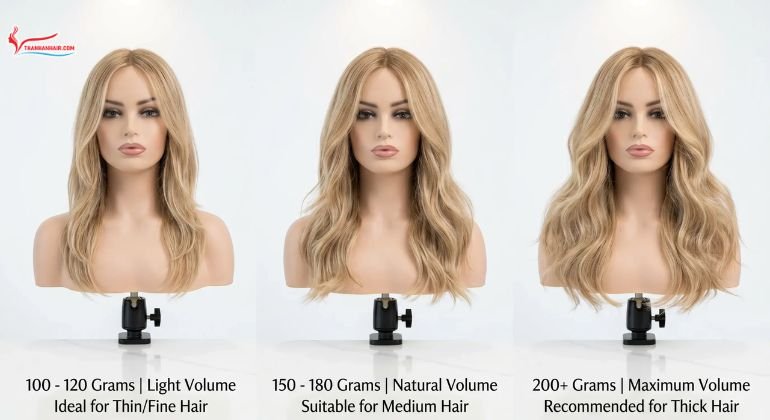
Most fine-hair installs land between 60 and 120 grams. Very thin hair often looks best at 40 to 80 grams, while fine hair with average density can carry 100 to 150 grams. Compare that with thick hair, which routinely takes 150 grams or more (see our guide to extensions for thick hair).
Now run the anchor math. Suppose a tape-in pack uses 2.5-gram pieces. 100 grams is 40 pieces, which a stylist installs as 20 sandwiches, so each anchor carries about 5 grams. The same 100 grams as a 7-piece clip-in set puts roughly 14 grams on each clip. Both are 100 grams, but the roots feel them very differently. Check the piece weight on the product page before you plan an install, since it varies by supplier and length.
Length changes the picture too. The same grams that look full at 16 inches look sparse at 22 inches, because the hair has farther to travel. For most fine-haired clients, 14 to 18 inches gives visible length without thin, see-through ends.
Single Drawn vs Double Drawn Hair for Fine Hair
Drawn type describes how many short hairs stay in the bundle. Double drawn removes most of them, so the ends stay nearly as thick as the top. That fullness is the goal on thick hair. On fine hair it creates a blunt, heavy line that the client’s own tapered ends never match. If the client’s natural ends are thin, order single drawn or standard double drawn and keep the length moderate. If the client wants a full, blunt finish, keep double drawn but lower the total grams.
Least Damaging Hair Extensions for Fine Hair, and When to Say No
The American Academy of Dermatology warns that pain or a headache during installation means the style is too tight, and it advises wearing a weave or extensions for two or three months at most before giving the hair a break. Repeated pulling can cause traction alopecia, which can become permanent once follicles are damaged.
Extensions add length and fullness through the mid-lengths and ends. They do not fix thinning at the part or crown. That pattern can point to female pattern hair loss, and a board-certified dermatologist should assess it before anyone adds weight to the area. A topper or a halo is usually the kinder option while the cause is investigated.
How to Order Hair Extensions for Thin Hair in 2026: 6 Steps
The 2026 extension trends favor strategic density placement over dramatic transformations, which suits fine hair well. Use this checklist before every fine-hair order.
- Measure density and strand width. Pull dry hair into a ponytail at the crown and measure it with a soft tape. Then lay one extension strand next to the client’s own hair in daylight. Circumference tells you how much weight the head can carry; the side-by-side tells you how visible the join will be.
- Pick the method by density and lifestyle. Choose invisible tape-ins for everyday wear, nano rings for clients who want movement and updos, seamless clip-ins for occasional wear, and a halo for very thin hair. Skip sew-in machine wefts on fine hair.
- Set a gram target and an anchor count. Start at 60 to 120 grams for most fine-haired clients and divide the weight across as many small attachment points as the method allows. More anchors at lower weight beats fewer anchors at higher weight.
- Choose length and drawn type together. Keep most fine-hair orders between 14 and 18 inches. If the client’s own ends are thin, order single drawn or standard double drawn so the extension ends taper instead of stopping in a blunt line.
- Match color at the root line. Match the shade where the extension meets the client’s hair, not at the sun-lightened ends. Multi-tonal, rooted or balayage colors hide the join better than one flat shade.
- Order one test unit before bulk. Install a single pack, check comfort and blend at two weeks, and inspect the natural hair at removal. Only then place the bulk order, and test the second batch the same way.
The Bottom Line
Order light, anchor wide and hide the join. For most fine-haired clients that means invisible tape-ins or nano rings at 60 to 120 grams and 14 to 18 inches, placed under a canopy of natural hair and matched at the root line. For very thin hair, choose a halo or seamless clip-ins, and send any client with thinning at the part to a dermatologist before adding weight.
Contact Thanh An Hair to discuss hair textures, lengths, and wholesale options for your business.
- WhatsApp/Hotline: (+84) 973 522 855
- Official Website: https://thanhanhair.com/
- Instagram: @thanhanhair
- Email: thanhanexport@gmail.com