
Raw Vietnamese Hair
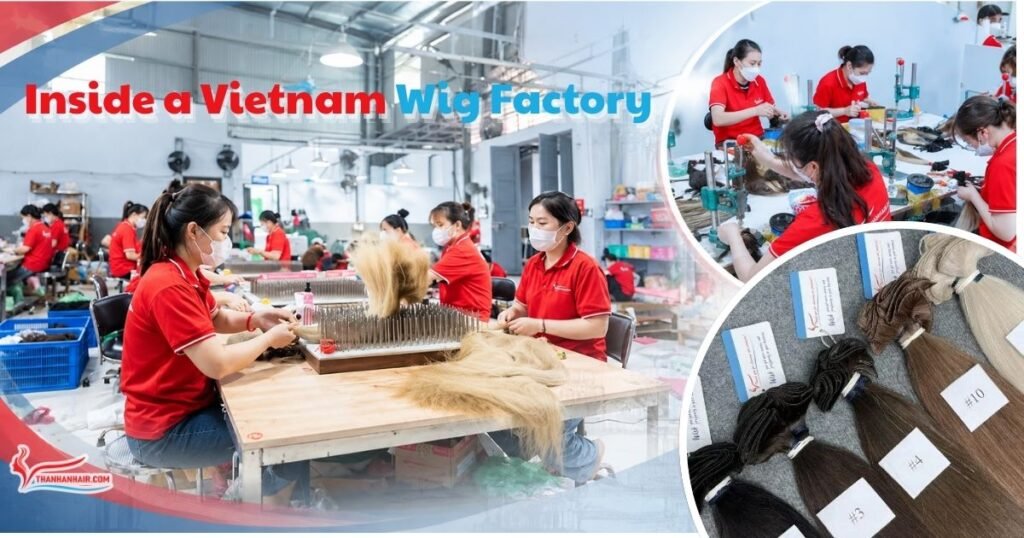
Inside a Vietnam Wig Factory
Sep
This guide covers nine facts that factory sales pages tend to skip: trade data, customs origin rules, forced-labor law, bleaching chemistry, and a seven-step checklist for vetting a supplier. We wrote it from the production floor at Thanh An Hair, a family-run Vietnamese raw hair manufacturer with about 20 years in the trade. So what inside a Vietnam Wig Factory ?
Is Vietnam a major wig exporter?
Vietnam’s hair strength sits upstream. Factories here built their names on bulk hair, bundles, and extensions, then added wigs as buyers asked for them. Vietnam also ranked fourth in synthetic beards and eyelashes at $67.3 million, a figure up 124.7% since 2021.
Before you order, ask what share of monthly output goes to wigs and how many staff tie lace. A small wig team means longer queues in peak season.

How does a Vietnam wig factory make a human hair wig?
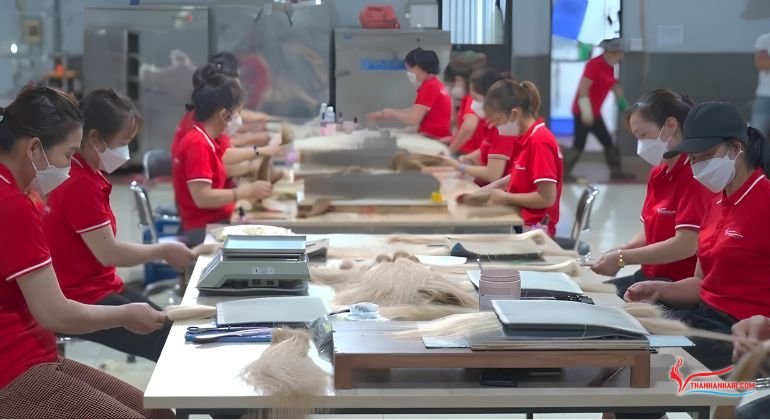
A human hair wig passes through seven stages, and hand work dominates the last four. The sequence below reflects how our floor runs; other factories vary in order and tooling.
- Sorting: Workers sort donor ponytails by length and color and keep the roots together.
- Drawing: Staff pull short hairs out of each bundle by hand. Single drawn keeps some shorter strands; double drawn removes most of them for full ends.
- Texturing: Steam and heat set patterns such as body wave or deep wave without a chemical perm.
- Wefting: Machines or hands sew hair into wefts for the back and sides of the cap.
- Ventilating: Workers tie single strands or small groups into lace with a fine hook, one knot at a time, at the hairline or across the full cap.
- Finishing: Staff bleach knots, pluck the hairline, and cut baby hair so the lace reads as scalp.
- Inspection: QC staff check shedding, knot security, cap size, and length against the order.
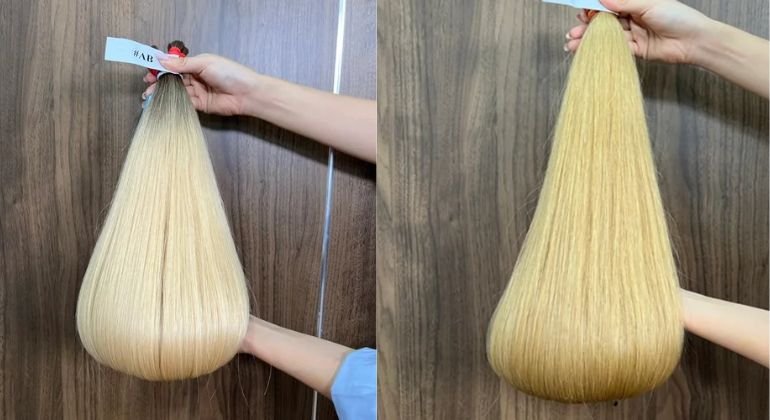
Can dark Vietnamese hair become a 613 blonde wig?
Yes, but lightening carries a cost that sales pages skip. Melanin pigment inside the hair shaft gives hair its color, and the outer cuticle layer gives the shaft strength and protection (StatPearls, NCBI Bookshelf). Most Vietnamese hair starts at natural black or dark brown (1B to 2). Lifting it to a pale 613 blonde means removing most of that melanin, and each lift stage stresses the cuticle.
Skilled colorists lift in controlled stages, check the hair between rounds, and stop before the cuticle fails. Rushed factories lift in one hot pass and coat the result with silicone so it feels soft on arrival. The silicone washes out within a few shampoos. Order your blonde sample, wash it three times, and judge it then.
What do raw, Remy, and double drawn hair mean on a wig spec sheet?
No industry-wide standard governs these words, so two factories can use them for different hair. At Thanh An Hair we define them this way:
- Raw: hair cut from a donor and never treated with chemicals. Color and texture stay as they grew. Our guide to raw hair goes deeper.
- Remy: hair with cuticles kept pointing the same direction, root to tip, which reduces tangling.
- Single donor: each bundle comes from one person’s ponytail, so texture and color match within the bundle.
- Double drawn: short strands removed so most hair reaches the stated length.
Ask a supplier to write these definitions into your purchase terms. A mismatch then gives you grounds for a claim. Density labels work the same way: 150% at one factory can look like 180% at another, so compare samples side by side with our wig density guide.
Why does a Vietnam wig factory quote weeks instead of days?
Hand-tied lace sets the pace. A factory can pull a machine-made unit from stock, but a custom full lace wig waits in line for ventilators, and each knot takes skilled hands. Many Vietnamese factories also keep lean wig stock and build to order, which keeps cash out of idle inventory but adds time.
Can a factory prove its hair came from young, healthy donors?
No factory can document the age and lifestyle of every donor. Claims such as “donors aged 18 to 25 who wash their hair with herbs” circulate on supplier sites, and no buyer can audit them. Judge the hair you hold instead:
- Cuticle test: Run your fingers from tip to root. Remy hair feels rougher going up than coming down.
- Burn test: Burn a few strands. Human hair smells like burnt protein and turns to ash; synthetic fiber melts into hard beads.
- Wash test: Wash and air-dry the sample. Coated hair turns dry and tangles once the silicone rinses away.
- Knot test: Pull at the hairline with light pressure. Well-tied knots hold; weak ones shed.
Our article on hair origins and common scams covers more red flags to watch for.
The bottom line on choosing a Vietnam wig factory
Vietnam holds a small share of finished wig exports and a strong name in raw hair. The right Vietnam wig factory for your shop documents hair origin, defines its terms in writing, and passes a sample test on your best-selling unit. Compare price once those three checks pass.
Want to run the seven-step test on a factory-direct unit? Request a sample wig from Thanh An Hair →
- WhatsApp/Hotline: (+84) 973 522 855
- Official Website: https://thanhanhair.com/
- Instagram: @thanhanhair
- Email: thanhanexport@gmail.com