
Raw Vietnamese Hair
Best Hair for Extensions: How Distributors Pick Stock
Sep
For a distributor, the best hair for extensions is raw or virgin human hair with every cuticle running root to tip, sold at full weight, in the lengths and textures your buyers reorder. “Best” also means provable: stock that passes five arrival tests and carries label claims your supplier backs in writing.
What Makes the Best Hair for Extensions?
Start with the cuticle, “the outermost of the three layers of a hair shaft,” according to Kenhub’s anatomy reference. Its overlapping cells give hair a scale-like surface and protect the shaft against abrasion.
On a donor’s head, those scales all point toward the tip. A factory that keeps each strand in that order through cutting, sorting and wefting ships hair whose strands glide past each other. Mix roots with tips and the scales catch on each other, so the hair tangles and mats. The trade calls aligned hair remy hair, and our guide to what remy hair is and how factories collect it covers the collection side.
Non-remy hair can still feel silky in the bag. Some processors strip its cuticle in an acid bath and coat the fiber in silicone to hide the damage. Washing removes the coating, and the tangling starts.
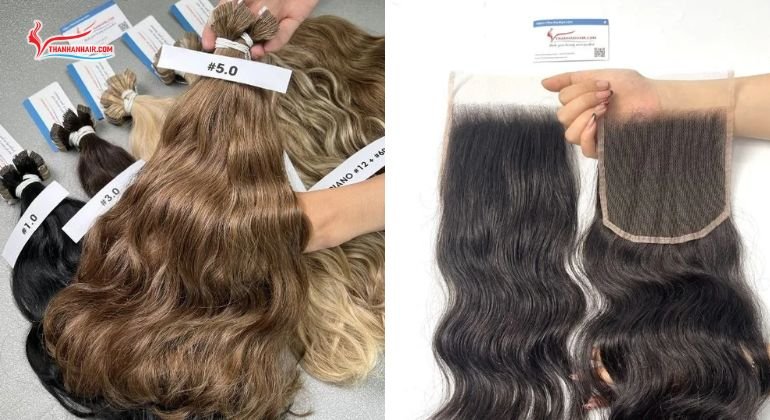
Raw vs Virgin vs Remy Hair: Hair Extension Grades Compared
Suppliers use grade labels differently, so get each supplier’s definitions in writing before you compare prices. The table gives the standard trade meaning of each label and the risk to check.
Hair extension grades compared
| Grade | What the label should mean | Cuticle | What to watch for |
| Raw | Cut from the donor, washed and sorted, with no steam-setting or chemical processing | Intact, aligned root to tip | Natural color and wave vary between donors |
| Virgin | No chemical color, bleach or perm; may be steam-set into a wave | Intact, aligned root to tip | Ask whether the wave is native or steam-set |
| Remy | A cuticle claim: strands kept in root-to-tip order | Aligned | Says nothing about chemical history on its own |
| Non-remy | Mixed-direction or fallen hair that processors may acid-strip and coat in silicone | Stripped or mixed | Feels smooth new, tangles after washing |
Single donor hair goes one step further: one person’s hair fills the bundle, so color and wave stay consistent from strand to strand. For a side-by-side look at the two premium grades, read our guide to raw hair vs virgin hair.
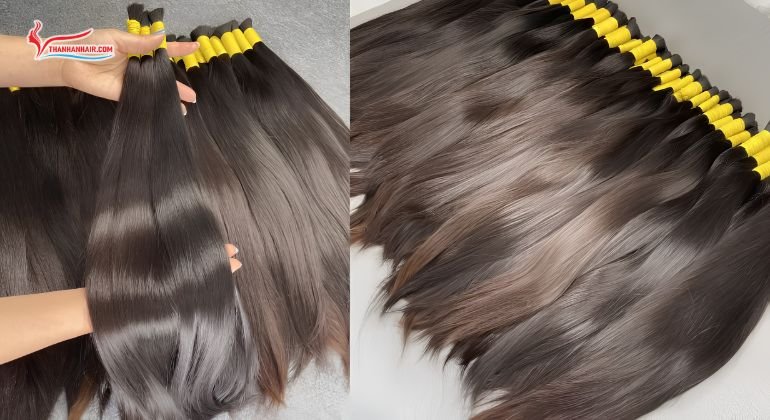
Single Drawn vs Double Drawn Hair
Drawing sorts hair by length. Single drawn bundles keep the donor’s natural mix of long and short strands, so they thin toward the ends. In double drawn bundles, the factory pulls out the shorter strands, which gives a full, even end and raises the price per gram. Stock double drawn for salons that sell blunt, full installs, and single drawn for buyers who blend extensions into thinner natural ends.
Is Brazilian Hair From Brazil? What Trade Data Shows About Origin Labels
Trade data suggests not. World’s Top Exports puts global exports of unworked human hair at US$280.6 million in 2025. India shipped US$269.2 million of that, or 95.9%. Brazil shipped US$253,000, about 0.1%, and Peru did not make the top 15 exporters.
Brazil and Peru are missing from the finished-goods ranking too. China shipped US$3.5 billion, or 88.1%, of the US$4 billion in human hair wigs and hair articles exported in 2025, Vietnam ranked fifth at US$20.8 million, and 15th place shipped US$7.8 million, per World’s Top Exports. Hair also crosses borders before anyone processes it: India exported about US$188 million of unworked hair in 2023, and 99% of it went to Myanmar, according to TrendEconomy trade data.
Treat Brazilian, Peruvian and similar names as texture descriptions. Then ask each supplier two questions in writing: where did the donors live, and where did processing take place? A factory that collects and processes hair in one country can answer both. A trading company that buys finished bundles may know only the second.
If you sell under a country name, check the marking rules as well. Under 19 CFR 134.46, when a foreign country name other than the true origin appears on an imported article or its container and “may mislead or deceive the ultimate purchaser,” the real country of origin must appear “in close proximity” and “in at least a comparable size,” preceded by “Made in,” “Product of” or other words of similar meaning. For more on origin claims, read our guide to hair extension origins, quality and scams.
How to Test Hair Extension Quality When Stock Arrives
Pull bundles from several boxes and layers in each shipment, and run these five checks before any stock reaches your shelf.
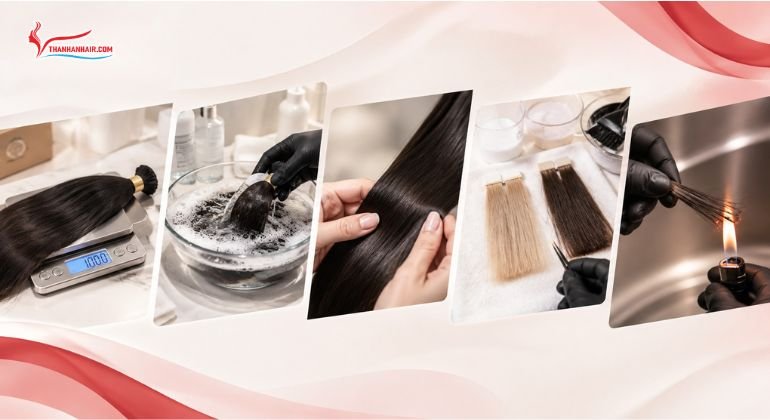
You need: a digital scale, gloves and a lighter, plus clarifying shampoo, hair lightener and developer.
- Weigh every bundle Remove the band and packaging, weigh each bundle on a digital scale, and log the reading against the batch number. Agree a weight tolerance with your supplier before you order, then hold them to it. Short weight raises your real cost per gram.
- Wash out the finish Wash one bundle twice with clarifying shampoo, skip conditioner, and let it air dry. Clarifying shampoo removes silicone coatings, so you see the fiber your client will see after regular washing. Aligned hair stays soft and separates; stripped hair dries out, dulls and mats.
- Check cuticle direction Use the washed bundle, since a silicone finish can mask the cuticle. Pinch a few strands near the weft and slide your fingers from tip to root, then from root to tip. Aligned cuticles catch on the way up and glide on the way down. Hair that feels the same in both directions has mixed or stripped cuticles.
- Run a lift test on a swatch Cut a small swatch from the weft end and lighten it next to a swatch of hair you know is raw, using the same lightener, developer and timing, with gloves on in a ventilated room. Expect some strand-to-strand variation in multi-donor bundles. If the test swatch snaps or turns gummy and stretchy while the control holds up, suspect earlier chemical processing.
- Burn test a few strands Take small clusters of strands from several spots on the weft and touch each to a flame over a sink. Human hair singes, smells like burnt protein and leaves ash that crumbles. Synthetic fiber melts into a hard bead. The test can reveal synthetic blends but cannot tell human hair from animal hair such as yak, so back it with supplier documents.
How to Calculate Landed Cost Per Gram for Wholesale Hair
Add every cost of getting hair onto your shelf, then divide by the grams that pass your arrival tests:
Landed cost per usable gram = (invoice + freight + duties and fees + payment and broker charges) ÷ usable grams received
Use usable grams as the divisor. Pay for 10,000 grams, lose 400 to short weight or failed tests, and you sell 9,600 grams on a cost base built for 10,000. That raises your cost per usable gram by about 4.2% before you set prices.
Landed cost worksheet for a wholesale hair order
| Cost line | What to include | Where the number comes from |
| Invoice | Hair price at the agreed weight, plus sample or packaging charges | Supplier proforma invoice |
| Freight | Air or sea charges, fuel surcharges and insurance | Freight forwarder or courier quote |
| Duties and fees | Duty rate, any additional duties and customs processing fees | Licensed customs broker |
| Payment and broker charges | Wire, card or escrow fees and brokerage | Bank, payment platform and broker invoices |
| Usable grams | Grams received minus short weight and failed bundles | Your arrival test log |
How to Vet a Wholesale Hair Extensions Supplier
Vet a supplier on paper first, then with a sample order. Ask for written answers to these six questions before you commit to bulk:
- Where did the donors live, and where did processing take place?
- How do you define raw, virgin and remy, and what processing does each grade go through?
- What weight tolerance do you guarantee, and how do you settle short weight?
- Can you match a reorder to my first batch in color, wave and fullness?
- What happens when a batch fails my arrival tests: replacement, credit or refund, and who pays return freight?
- What documents can you give me to back the claims on my packaging?
Keep the answers to question six on file. The Federal Trade Commission’s advertising guide for small businesses states that “advertisers must have evidence to back up their claims,” and its guidance for catalog marketers says to ask manufacturers for material that backs up product claims instead of repeating them. The same logic applies when you print a supplier’s grade claim on your own label.
Then place a sample order and run the five arrival tests on it. Keep a labeled reference swatch from each batch you accept, and compare your first bulk shipment against it side by side. Place your next order with the supplier whose bulk matches the sample and whose reorders match the bulk.
The Bottom Line on Picking Hair Extension Stock
The best hair for extensions is hair you have tested yourself. Weigh it, wash it, check the cuticle, lift it and burn it before it reaches a shelf. Price each order on usable grams, keep your supplier’s documents behind every claim on your label, and keep a reference swatch from each batch so reorders match what your customers bought the first time.
Test our hair against this checklist
Order a sample set from Thanh An Hair’s Vietnamese factory, run all five arrival tests, and compare the results with your current stock.
Browse wholesale stock and request a sample set →
Contact Thanh An Hair to discuss hair textures, lengths, and wholesale options for your business.
- WhatsApp/Hotline: (+84) 973 522 855
- Official Website: https://thanhanhair.com/
- Instagram: @thanhanhair
- Email: thanhanexport@gmail.com