
Thanh An Hair
How Long Should I Leave Bleach in My Hair?
Sep
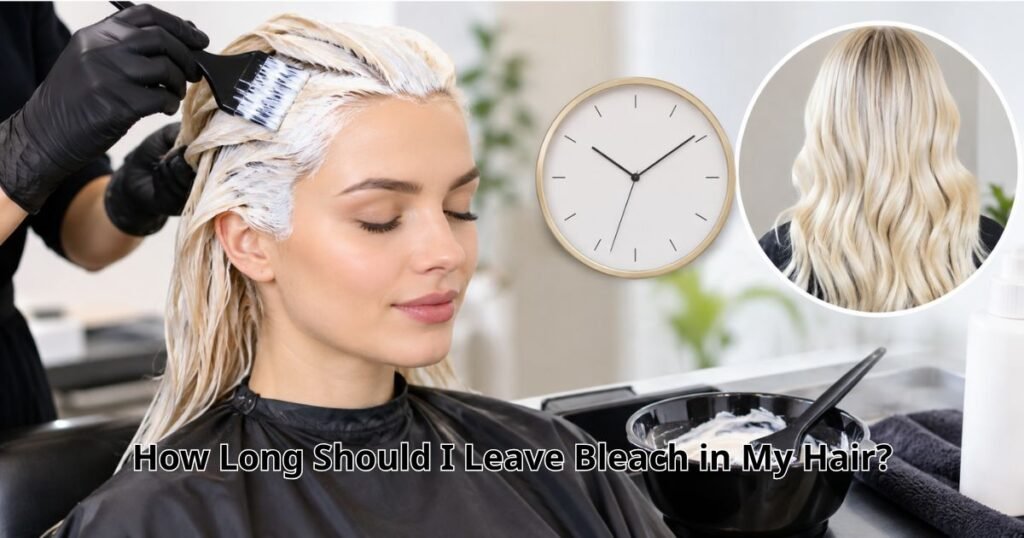
Bleaching is the most powerful method for lightening natural hair, removing dark artificial dye, or preparing hair for vibrant pastel shades. However, it is also one of the most aggressive chemical processes you can perform on your scalp and hair strands. Leave bleach on for too little time, and you end up with uneven, brassy orange patches. Leave it on for too long, and you risk severe protein loss, chemical burns, or hair breakage often referred to as a chemical haircut.
The central question every DIY colorist and salon client asks is straightforward: how long should I leave bleach in my hair? While product labels provide general guidelines, the exact timing depends on your starting hair level, porosity, and developer strength. In this ultimate guide, we analyze professional chemical processing rules, developer volume timing, and critical safety steps so you can achieve your dream blonde level without compromising your hair health.
Understanding Hair Bleach Oxidation and Processing Limits
To understand how long to leave bleach in hair safely, it helps to examine the chemical reaction taking place inside the hair shaft. Hair bleach consists of persulfate salts mixed with hydrogen peroxide developer. When combined, this alkaline mixture opens the outer cuticle layer and enters the inner cortex, where it oxidizes and breaks down natural melanin pigments.
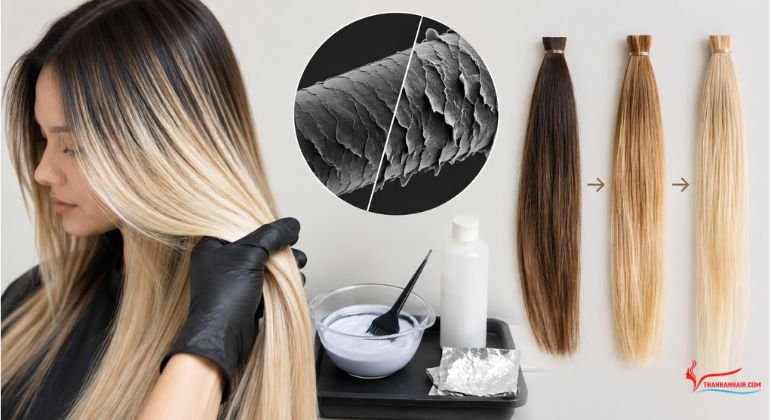
Chemical oxidation occurs in active stages. During the first 15 to 25 minutes, bleach works at its maximum strength, breaking down dark eumelanin pigments into reddish-orange undertones. As the reaction progresses, the mixture slowly lightens yellow pheomelanin pigments.
However, hydrogen peroxide and persulfates eventually dry out and lose their lifting active power. According to professional colorist protocols published by Blendsor, bleach active lifting peaks within 30 to 45 minutes. After 45 to 50 minutes, the chemical reaction stalls: the bleach ceases to lift color effectively and instead continues breaking down internal keratin disulfide bonds, causing structural weakening.
Developer Volume Timing: 20 Vol vs 30 Vol Bleach Processing Time
The single most important factor determining your hair bleaching processing time is the volume strength of your developer. Developer contains hydrogen peroxide, measured by volume concentration (10, 20, 30, or 40 volume) or percentage strength. Higher volume developers open the cuticle faster, but they also accelerate potential structural damage.
Below is a detailed breakdown of 20 vol vs 30 vol bleach processing time guidelines and safety boundaries:
10 Volume Developer (3% Peroxide)
10 volume developer provides minimal lift (1 level) and is primarily used for gentle toning, glossing, or lifting fragile, fine hair. Recommended processing time is 15 to 25 minutes.
20 Volume Developer (6% Peroxide)
20 volume is the standard choice for safe hair bleaching at home and in professional salons. It lifts hair 2 to 3 levels gradually, allowing for maximum control with minimal breakage. Recommended processing time is 25 to 35 minutes. It is ideal for fine hair, on-scalp root touch-ups, and pre-lightened hair strands.
30 Volume Developer (9% Peroxide)
30 volume provides fast, high-lift action (3 to 4 levels). It is frequently used for dark brown or coarse virgin hair off the scalp. Recommended processing time is 15 to 30 minutes. Because 30 volume works rapidly, monitor your hair every 5 to 10 minutes to avoid over-processing.
40 Volume Developer (12% Peroxide)
40 volume developer provides extreme lift but poses a high risk of rapid hair destruction and scalp chemical burns. Health safety guidelines from Healthline strongly advise against using 40 volume bleach at home or directly on the scalp. If used by experienced stylists for open-air freehand balayage, processing time should never exceed 15 to 20 minutes.
Bleach Processing Time Matrix by Hair Type & Starting Level
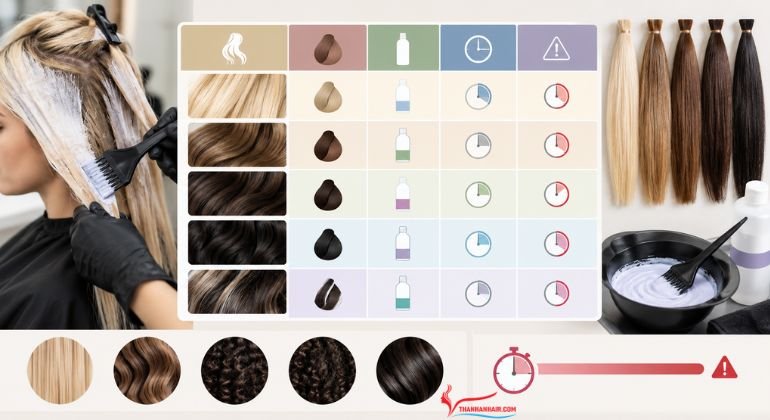
Your natural hair texture, thickness, and porosity dictate how fast bleach penetrates the cortex. Fine or highly porous hair absorbs chemical lightener quickly, whereas thick, coarse, or low-porosity dark hair resists lifting.
Use the following reference guide to determine your personal bleach processing time by hair type:
| Hair Type & Condition | Starting Hair Color | Recommended Developer | Optimal Processing Time | Maximum Time Limit |
| Fine or High Porosity | Light Brown / Dark Blonde | 10 Vol or 20 Vol | 15 to 25 Minutes | 30 Minutes |
| Medium Texture (Normal) | Medium Brown | 20 Vol | 25 to 35 Minutes | 45 Minutes |
| Coarse or Low Porosity | Dark Brown / Black | 30 Vol | 30 to 40 Minutes | 45 Minutes |
| Previously Color-Treated | Dyed Dark Shades | 20 Vol | 20 to 30 Minutes | 40 Minutes |
| Scalp Roots (Touch-Up) | Natural Growth | 20 Vol Max | 15 to 25 Minutes | 30 Minutes |
Crucial Safety Rule: The absolute maximum time to leave bleach in hair under any circumstance is 45 to 50 minutes. Never leave bleach on overnight or cover it with sealed plastic under intense external heat without professional supervision.
Essential Pre-Bleach Test: The Hair Strand Test
Never apply a full head of bleach without performing a proper hair strand test for bleach first. A strand test is your personal safety preview: it reveals exactly how fast your hair lightens, what underlying warm tones will emerge, and whether your hair can handle the chemical stress.
- Snip or Select a Hidden Section: Choose a small, half-inch section of hair near the nape of your neck or behind your ear.
- Mix a Small Batch: Combine 1 teaspoon of bleach powder with 2 teaspoons of your chosen developer volume.
- Apply and Time: Saturate the strand completely and set a timer. Check the strand every 5 to 10 minutes by gently wiping away bleach with a damp paper towel.
- Inspect Elasticity: Once desired lightness is achieved, rinse the strand thoroughly. Gently pull the wet strand: if it bounces back, your hair is healthy. If it stretches like rubber or snaps immediately, your hair is too damaged for full bleaching.
According to dermatological care standards published by the American Academy of Dermatology, checking hair elasticity before major chemical services is vital for preventing permanent scalp follicle trauma and hair breakage.
Recognizing Signs of Over-Processed Bleached Hair
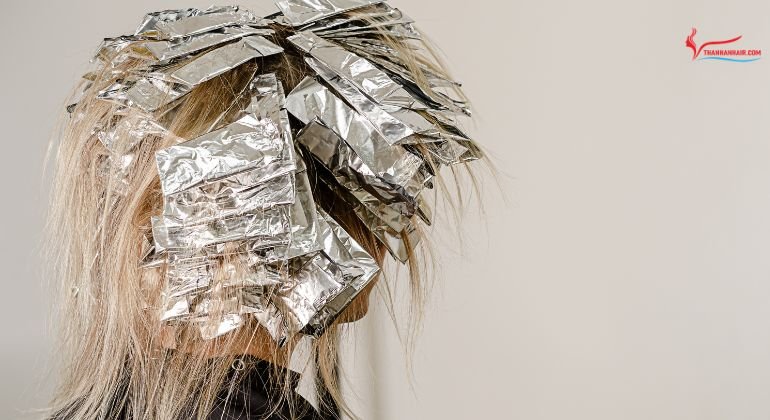
Knowing when to wash bleach out immediately can save your hair from total destruction. If you notice any of the following signs of over processed bleached hair while processing, rinse with cool water right away:
- Gummy or Gummy-Like Texture: Wet hair strands feel sticky, mushy, or stringy when touched.
- Excessive Scalp Burning: Sharp, stinging, or burning sensations on your scalp signify impending chemical burns. For scalp safety guidelines, review health advisories on Mayo Clinic and WebMD.
- Extreme Elasticity or Shedding: Hair stretches excessively without returning to its original shape or clumps fall out during washing.
- Rapid Foaming or Heat Spikes: If the bleach mixture begins smoking, expanding rapidly, or feeling hot to the touch, wash it off instantly. This reaction indicates a dangerous chemical conflict with metallic salts from previous low-quality dyes.
Bleaching Human Hair Extensions Safely
If you want to achieve striking platinum blonde, ash, or pastel colors without risking damage to your natural hair and scalp, bleaching premium human hair extensions is an ideal alternative. Coloring custom hair pieces on a flat workspace gives you total control over lightener placement and timing.
When bleaching human hair extensions safely, follow these essential tips:
- Source Unprocessed Virgin Hair: Always start with high-grade raw Vietnamese hair bulk or virgin bundles. Chemically pre-treated synthetic or mixed hair strands will melt or turn orange under bleach.
- Protect Base Lace Systems: When lightening lace closures and frontals, apply a thick gel or protective barrier underneath the lace to prevent lightener from bleeding onto delicate hand-tied knots.
- Opt for Pre-Lightened Bundles: If you want hassle-free platinum results, consider using pre-bleached blonde human hair extensions that have been safely lifted under controlled laboratory conditions.
- Use Custom Hair Piece Services: Sourcing through specialized manufacturers like custom hair extensions suppliers ensures consistent cuticle orientation and superior longevity after coloring.
Post-Bleach Hair Care Treatment and Recovery
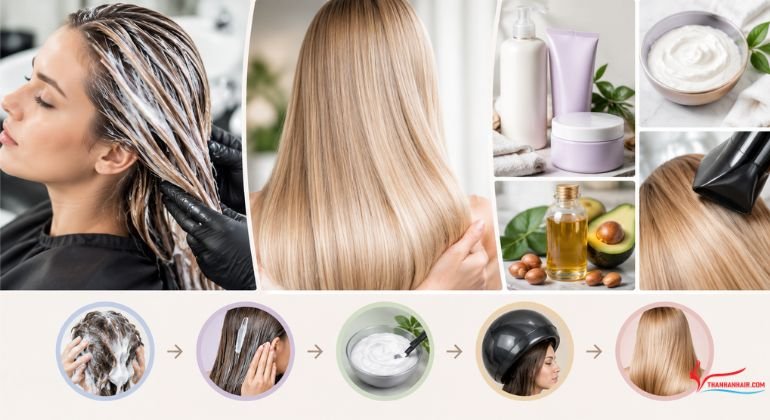
Bleaching temporarily expands the hair cuticle and alters its structural moisture balance. Implementing an immediate post bleach hair care treatment routine is essential to rebuild internal bonds and lock in hydration.
- Use Bond-Building Treatments: Apply a bond-repairing treatment containing bis-aminopropyl diglycol dimaleate or peptide chains to restore broken disulfide bonds.
- Restore Moisture Balance: Follow every bleach session with a deep conditioning mask rich in ceramides, argan oil, or keratin proteins.
- Lower Water Temperature: Rinse bleached hair with lukewarm or cool water to encourage cuticle flattening and preserve toner pigments.
- Minimize Heat Styling: Avoid hot flat irons or curling wands for at least 7 to 10 days post-bleaching. Always apply a high-grade thermal protectant spray before blow-drying.
Conclusion and Expert Takeaway
Knowing how long should I leave bleach in my hair comes down to developer strength, hair porosity, and continuous monitoring. Never exceed the 45 to 50 minute absolute limit, always use a lower developer like 20 volume for controlled lifting, and perform a strand test before committing to full application.
Tired of risking chemical breakage on your natural hair? Upgrade your style effortlessly with 100% pure human hair from Than Han Hair. Our raw Vietnamese hair bundles, HD lace frontals, and custom extensions provide luxurious volume and vibrant color options while keeping your natural hair protected. Explore our collections today to discover your next stunning hair transformation!
- WhatsApp/Hotline: (+84) 973 522 855
- Official Website: https://thanhanhair.com/
- Instagram: @thanhanhair
- Email: thanhanexport@gmail.com