
Raw Vietnamese Hair
Permanent Hair Extensions: Types, Cost, and Care (2026 Guide)
Jul
Permanent hair extensions are strands or wefts of human hair that a trained stylist fixes to your own hair, where they stay for six weeks to several months before a maintenance visit. Unlike clip-ins, you sleep, shower, swim, and work out in them. The five main methods are tape-in, weft, nano ring, micro ring, and keratin fusion.
Demand for extensions is now the fastest-growing part of a hair market that Grand View Research valued at 15.22 billion dollars in 2025. This guide comes from a manufacturer that makes the raw hair behind these methods, so it goes past the sales copy into the fiber science and scalp-health facts that decide whether your investment lasts. You will find a side-by-side comparison, real United States cost ranges, and dermatology-backed guidance on protecting your own hair.
What Are Permanent Hair Extensions?
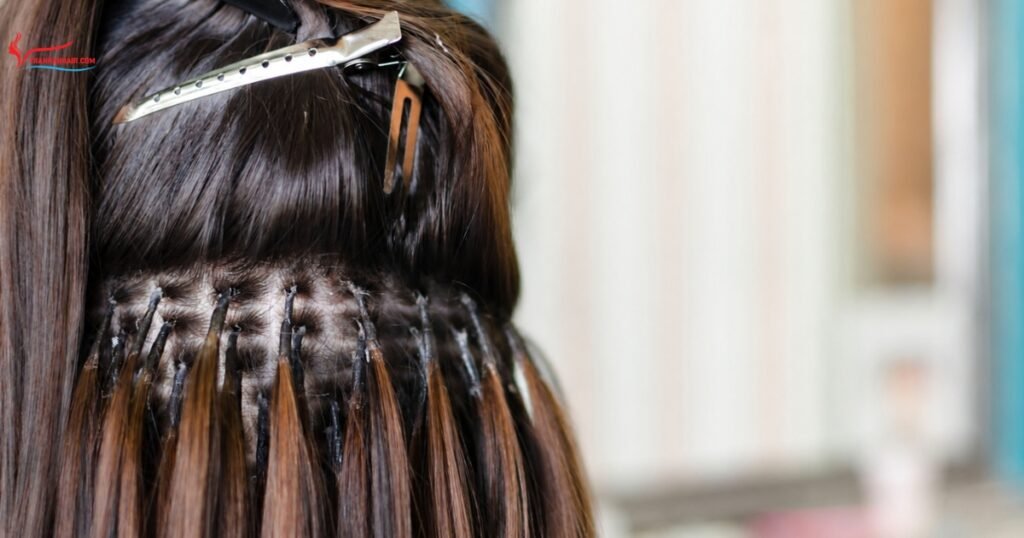
Permanent hair extensions are a semi-permanent way to add length, volume, or color that stays fixed for weeks at a time. A professional applies them by taping, sewing, clamping with tiny rings, or fusing them with a keratin bond, so they move with your natural hair and need no daily removal.
The word permanent is slightly misleading, because no method lasts forever. Each one is removed and refitted on a schedule as your hair grows, and the hair itself can often be reused for months. What separates permanent extensions from clip-ins and halo pieces is commitment. You wear them continuously and visit a salon to maintain them, rather than taking them out each night.
Types of Permanent Hair Extensions: A Side-by-Side Comparison
Five attachment systems dominate the professional market. The table below compares them on the factors that actually decide your choice: how they attach, how long a full head takes, how long the hair lasts, the hair type each suits, and a realistic United States price range for hair plus fitting.
| Method | How it attaches | Full-head application | Wear and reuse | Best for | Heat or glue | Typical US cost (hair plus fitting) |
|---|---|---|---|---|---|---|
| Tape-In | Wefts sandwiched around a section of hair with medical-grade adhesive tabs | 45 to 90 minutes | Move-up every 6 to 8 weeks; hair reusable up to about 12 months | Fine to medium hair, worn down | Adhesive, no heat | About 200 to 600 dollars |
| Weft / Sew-In (Weave) | A weft sewn onto a braided track, or glued and clamped in | Under 2 hours | Refit every 6 to 8 weeks; hair reusable up to a year | Medium to thick hair | Thread or bonding | About 250 to 800 dollars |
| Nano Ring | Strands threaded and clamped inside a bead the size of a sesame seed | 4 to 5 hours | Refit every 6 to 8 weeks; hair reusable 6 to 12 months | Very fine or thin hair, active wearers | Neither | About 400 to 1,000 dollars |
| Micro Ring / I-Tip | Pre-tipped strands clamped inside a small copper or silicone-lined ring | About 4 hours | Move-up every 6 to 8 weeks; hair reusable many times | Most hair types except very sparse hair | Neither | About 300 to 900 dollars |
| Keratin Fusion (Flat, U, K-Tip) | A keratin tip softened with a warm tool and bonded to the hair | 3 to 4.5 hours | Stays in up to 3 to 4 months per application | Medium hair, low-maintenance wearers | Heat | About 300 to 1,000 dollars |
Prices vary widely by region, length, weight, and stylist. These are typical United States full-head ranges that combine hair and professional fitting. Maintenance appointments are an added cost.
Permanent Hair Extension Methods Explained
Tape-In Hair Extensions
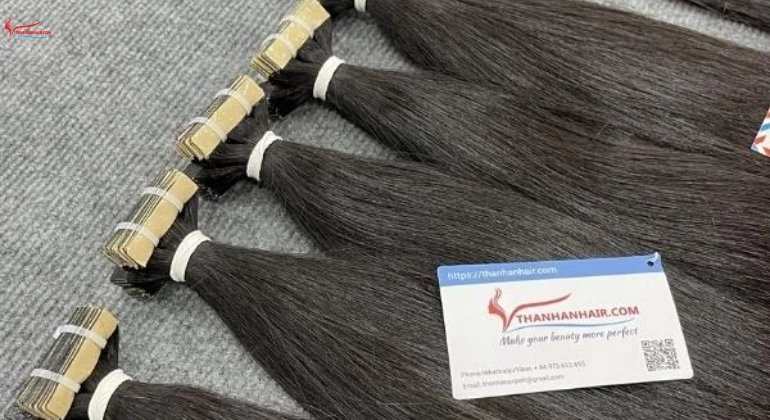
Tape-in extensions use paper-thin wefts, roughly 4 cm wide, backed with a medical-grade adhesive tab. Your stylist sandwiches a fine section of your own hair between two tabs. Because the wefts lie flat against the head, they stay discreet even in fine hair, and a full head goes in fast. They suit people who wear their hair down, since the tab edges can show in a high ponytail. From a manufacturer’s view, tape wefts live or die on how the hair is sewn to the tab and how cleanly the cuticle runs, so cuticle-aligned Remy hair sheds less and keeps the tab flat for the full wear cycle. Explore our tape hair extensions range for the weft grades salons rely on.
Weft and Sew-In (Weave) Hair Extensions
A weft is a wide strip of hair that a stylist sews onto a braided track, glues, or clamps in, the popular version being the sew-in weave. It is the fastest route from short, thick hair to long, dense lengths, often in under two hours. Weaves need enough natural density to hide the track, so they favor medium to thick hair. Hand-tied wefts sit thinner and flatter than machine wefts, which matters for comfort over weeks of continuous wear. The seam is the weak point, so a tightly finished, low-shed weft is worth paying for. See how we build both hand-tied weft hair and machine wefts for that finish.
Nano Ring Hair Extensions
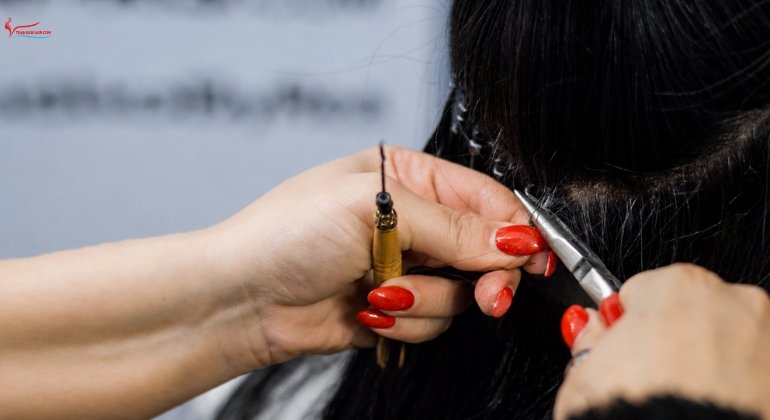
Nano rings are the most discreet method. Your stylist threads a small section of your hair through a bead about the size of a sesame seed, slots the nano-tip strand inside, and clamps it shut. No glue, no heat. Because the beads are so small, they stay hidden even when you pull your hair up, which makes them a favorite for fine hair and active wearers. The trade-off is time and cost, since a full head is placed strand by strand over four to five hours. Bond quality here is about the tip: a smooth, consistent keratin or silicone tip passes through the bead cleanly and holds without slipping. Our nano ring hair extensions are made for that clean pass-through.
Micro Ring and I-Tip Hair Extensions
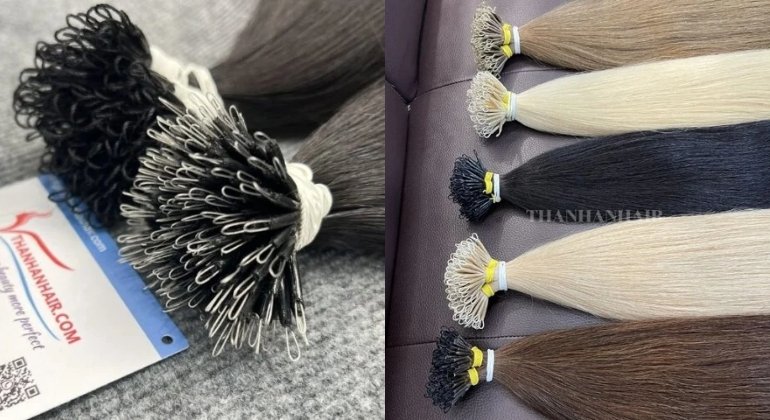
Micro ring extensions, also called I-tips or stick tips, clamp a pre-tipped strand inside a small copper or silicone-lined ring using no glue or heat. They are forgiving, reusable, and a common starting point for stylists new to bonded work. Slightly larger than nano rings, they apply and refit a little faster and suit most hair types apart from very sparse hair. Because the same ring can often be reused at each move-up, running costs stay reasonable over time. Browse our I-tip keratin hair for reusable, natural-tip strands.
Keratin Fusion Extensions (Flat, U, and K-Tip)
Fusion extensions, sometimes called pre-bonded or hot fusion, use a warm tool to soften a keratin tip and bond it to your hair. Tip shapes vary. U-tips and K-tips are classic, while flat tips sit closer to the head and resist slipping. Fusion is the lowest-maintenance permanent method, holding up to three or four months before a refit, which suits frequent travelers. Heat is the concern, but applied correctly by a professional it does not damage healthy hair. The keratin itself matters, because a clean, evenly molded bond fuses smoothly and releases cleanly at removal. Compare tip shapes in our flat tip hair line, and read our manufacturer guide to the invisible flat-tip bond.
What Makes Permanent Extensions Last: The Hair Quality Factor
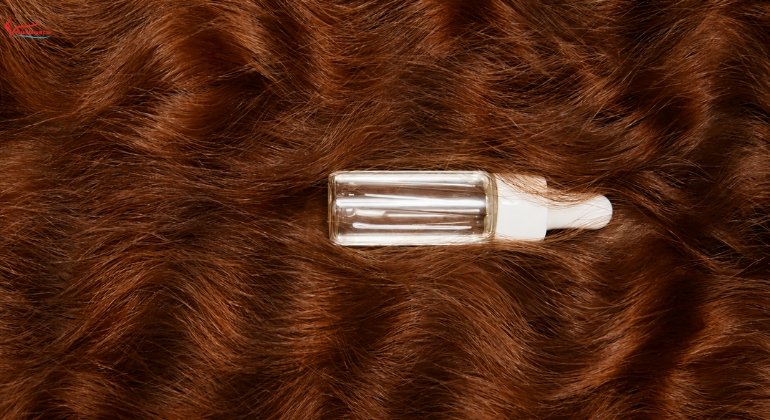
The method gets the attention, but the hair decides how long your investment lasts. Permanent extensions stay in for weeks and endure dozens of washes, so any weakness in the fiber compounds over time in a way it never does with clip-ins you remove each night. Three things separate hair that lasts from hair that mats and dulls within a month.
- Cuticle alignment. The microscopic scales on each strand should all face the same way, root to tip. Mixed-direction hair tangles as the cuticles catch on each other. True Remy hair keeps the cuticle intact and aligned, which is why it stays smooth through repeated washing.
- Single donor versus blended. Hair collected from one donor behaves consistently in texture and in how it takes heat and color. Blended hair gathered from many sources reacts unevenly, so a set can look mismatched after a few tone corrections.
- Raw and minimally processed. Hair that has not been acid-stripped keeps its natural strength, so a bond holds and the ends stay full rather than thinning into wispy tips.
This is why sourcing transparency matters at the premium end of the United States market, where buyers increasingly want hair that is ethically sourced and free of harsh chemical treatment, which points them toward cuticle-intact Remy hair (Fortune Business Insights). A reseller cannot verify any of this from a photograph. A manufacturer can, because it controls the sorting and the cuticle direction at the source.
How Much Do Permanent Hair Extensions Cost?
Permanent hair extensions cost more than the sticker price on the hair. Your real budget covers three things: the hair, the professional fitting, and ongoing maintenance every six to eight weeks, which fusion stretches to about three months. In the United States, a full head of quality human hair plus fitting typically runs from a few hundred dollars to over a thousand, set by length, weight, method, and your stylist’s rates.
The number that matters is cost per wear. Reusable Remy hair that lasts six to twelve months and refits several times is far cheaper across a year than a low-grade set replaced every few weeks. For salons and resellers buying at wholesale, that lifespan is also what keeps clients returning, because hair that still looks good at month five sells the next appointment for you.
How to Protect Your Hair and Scalp
Worn correctly, permanent extensions are safe for healthy hair. Worn too tight or for too long, the tension methods can cause traction alopecia, a form of hair loss driven by prolonged pulling on the follicle. Dermatology research links weaves, extensions, and tight styles to this condition, which affects about one-third of women of African descent who wear high-tension styles for long periods; the risk rises with the force and duration of pulling, and untreated cases can progress to permanent scarring (Billero and Miteva, 2018; StatPearls). The American Academy of Dermatology advises wearing weaves and extensions only for limited periods and removing them right away if they cause pain (AAD).
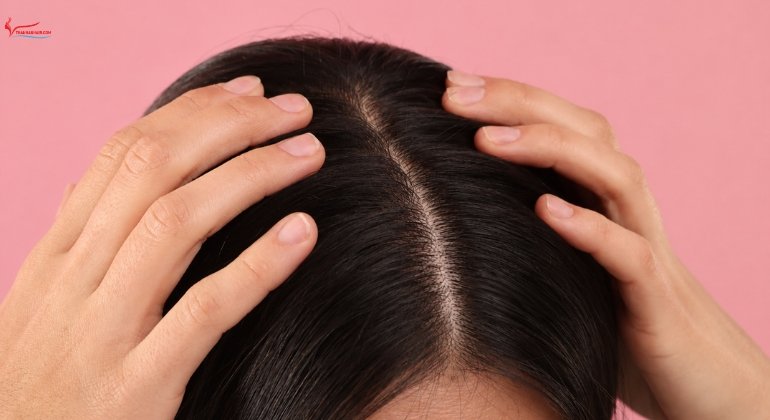
None of this means permanent extensions are unsafe. It means the fit has to respect your hair. Protect yourself with a few habits.
- Match the weight to your hair. Fine hair needs light, low-tension methods such as nano rings or tape, placed with even tension across the head.
- Treat pain as a warning, never a normal. Tenderness, tingling, small bumps or pustules along the hairline, or a fringe of short retained hairs all signal too much tension.
- Keep every maintenance appointment. As your hair grows, the bond drags on it, which causes matting and adds strain. Timely move-ups prevent both.
- Mind heat and adhesive on sensitive scalps. If tape has irritated you before, ask for a patch test, and choose glue-free and heat-free methods.
- See a board-certified dermatologist if you notice thinning at the hairline, so any traction damage is caught while it is still reversible.
How to Choose the Right Permanent Extension Method
Work through these steps in order, and the right method usually chooses itself.
- Assess your hair honestly. Density, condition, and scalp sensitivity narrow the field fast. Fine or thin hair points to nano rings, tape, or invisible tape. Medium to thick hair opens up weaves and I-tips.
- Match the method to your lifestyle. If you work out or wear your hair up daily, pick the most discreet, secure options. If you travel and dislike salon visits, fusion needs the fewest.
- Set a realistic budget, maintenance included. Price the full year, not just the first fitting, so upkeep does not surprise you.
- Choose the hair quality first. Cuticle-aligned, single-donor Remy hair outlasts cheaper blends and protects your own hair by holding a clean, even bond.
- Book a consultation with a certified extension stylist. A professional confirms your hair and scalp can safely carry the method and the tension it applies.
- Plan your maintenance schedule before you commit. Put the move-up appointments in the calendar so no bond ever overstays its wear cycle.
Not sure your hair is dense enough for a given method? Our guide to the best hair extensions for fine hair walks through the lightest, lowest-tension options in detail.
Frequently Asked Questions
What is the difference between permanent and semi-permanent hair extensions?
They are the same thing. Permanent hair extensions are semi-permanent: a stylist fixes them for weeks or months, then removes and refits them. Nothing stays in forever. The label mainly separates them from temporary clip-ins and halo pieces, which you put in and take out yourself each day.
How long do permanent hair extensions last?
The hair and the bond last on different clocks. Most methods need a move-up every six to eight weeks as your hair grows, while keratin fusion holds up to three or four months. Quality Remy hair itself can be reused for six to twelve months with correct care and gentle washing.
Are permanent hair extensions safe for fine or thin hair?
Yes, if you choose light, low-tension methods and a careful stylist. Nano rings, tape-ins, and invisible tape spread weight gently and stay discreet in fine hair. Avoid heavy sets and over-tight application, which strain the follicle and, over time, can lead to traction alopecia.
Do permanent hair extensions damage your own hair?
Not when they are fitted and maintained correctly on healthy hair. Damage comes from excess weight, tension, skipped maintenance, or rough removal, not from extensions themselves. Keeping appointments, matching the method to your hair, and using cuticle-intact human hair all protect your natural strands.
How much do permanent hair extensions cost in 2026?
In the United States, a full head of quality human hair plus professional fitting typically runs from a few hundred dollars to over a thousand, set by length, weight, method, and stylist rates. Maintenance every six to eight weeks adds an ongoing cost, offset over time by hair you can reuse.
Which permanent hair extension method is best?
There is no single best method, only the best fit. Fine hair favors nano rings and tape, thick hair suits weaves and I-tips, and low-maintenance wearers prefer fusion. The bigger lever is hair quality, because single-donor, cuticle-aligned Remy hair lasts longest whichever method you pick.
Source the Right Hair for Every Method
Thanh An Hair manufactures cuticle-aligned, single-donor raw Vietnamese human hair for every permanent method in this guide, sold factory-direct to salons and resellers worldwide. To match the right hair to your clients or check wholesale pricing, contact our team or request a sample.
Contact Thanh An Hair today for expert consultation and the most competitive price list.
- WhatsApp/Hotline: (+84) 973 522 855
- Official Website: https://thanhanhair.com/
- Instagram: @thanhanhair
- Email: thanhanexport@gmail.com