
Raw Vietnamese Hair
Hair Extensions for Beginners (2026): Types, Costs & How to Choose | Thanh An Hair
Jul
For most beginners, clip-in and halo extensions are the best starting point. You fit them yourself in minutes, wear them only when you want, and take them out with no damage to your natural hair. Tape-ins suit semi-permanent everyday wear, while keratin bonds and nano rings are salon methods for long-term length. Match the method to your hair type, budget, and commitment.
New extensions can add length, hide thinning, or give flat hair real body, and the choice no longer stops at clip-ins. This guide to hair extensions for beginners comes from a factory that has produced raw human hair for two decades, so it covers what most beginner guides skip: how each method attaches, what it costs, how long it lasts, how to tell good hair from cheap hair, and how to wear it without harming your own. By the end you will know which type fits your hair and your routine.
Extensions are not a niche buy anymore. Fortune Business Insights valued the U.S. hair extension market at 2.68 billion dollars in 2025 and projects 4.49 billion by 2032, and it names the rising adoption of Vietnamese hair as a current market trend. Globally, Grand View Research expects the wider wigs and extensions market to reach 12.27 billion dollars by 2030, with extensions the fastest-growing segment and human hair holding the largest share. More first-timers buy every year, which makes choosing well worth the effort.
What are hair extensions, exactly?
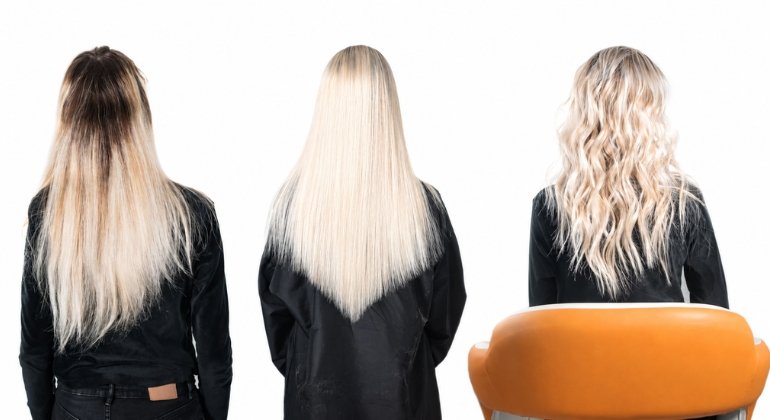
Hair extensions are wefts or individual strands of hair added to your own to build length, volume, or colour. Two choices sit underneath every method and matter more than the method itself: the fibre and the grade.
Human hair versus synthetic
Human hair behaves like your own. You can wash it, heat-style it, and often colour it, and it lasts far longer. Synthetic fibre costs less but melts under hot tools and looks glassy in daylight, so people who wear extensions regularly choose human hair. That preference shows in the numbers: the human hair segment holds roughly two thirds of the market.
Remy, raw, and processed hair
Remy hair keeps its cuticles intact and aligned in one direction, which stops tangling. Raw hair goes a step further. It comes from a single donor with little chemical processing, so it stays strong through colouring and lasts the longest. Cheaper non-Remy hair has the cuticle stripped and is coated in silicone that washes out within weeks, after which it mats. If a beginner learns one thing before buying, it is to ask what grade the hair actually is.
The main types of hair extensions
Here is every common method side by side, from the easiest do-it-yourself option to salon-only bonds. Use it to shortlist two or three before you read the detail.
to $
| Type | How it attaches | DIY or salon | Wear time before refit | Best for | Relative cost |
| Clip-in | Pressure clips on wefts | DIY | On and off daily | First-timers, occasional wear, volume or length on demand | $ |
| Halo | One weft on an invisible wire | DIY | On and off daily | Fine hair, damage-free volume, the nervous beginner | $ to $$ |
| Tape-in | Wefts taped around a section with medical adhesive | Salon (DIY with practice) | 6 to 8 weeks | Semi-permanent everyday wear, fine to medium hair | $$ |
| Weft / sew-in | Wefts sewn onto braided hair | Salon | 6 to 8 weeks | Thick or coarse hair, maximum density | |
| Keratin bond (I-tip, U-tip, flat-tip) | Strands fixed with a keratin bond or micro-ring | Salon | 3 to 4 months | Seamless movement, long-term length, medium to thick hair | $$$ |
| Nano / micro ring | Strands threaded through a tiny ring and clamped, no heat or glue | Salon (micro-loop is DIY-friendlier) | 2 to 4 months | The gentlest permanent method, fine hair, heat-free | $$$ |
Temporary extensions you can fit yourself
Clip-in hair extensions are the beginner favourite for good reason. Small pressure clips grip your own hair, you fit a full set in five to ten minutes, and you take them out before bed. Worn correctly they cause no lasting damage, and one good human-hair set lasts a year or more. Halo extensions go on even faster. A single weft sits on a clear wire that rests like a headband under your top layer, with no clips touching the roots. Both are the right call when you want volume for a night out without any commitment.
Semi-permanent and permanent salon methods
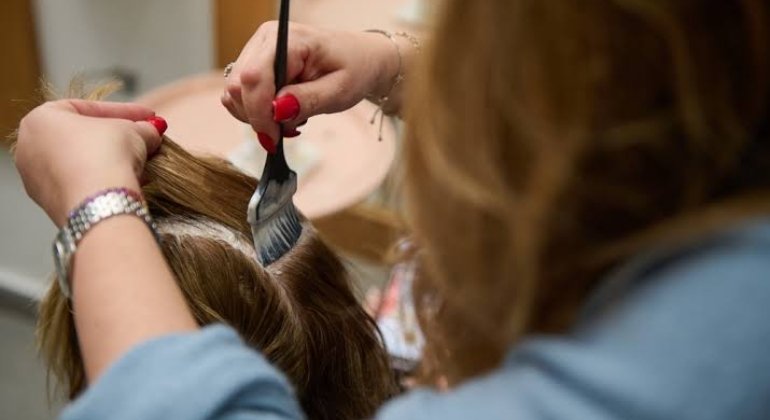
Tape-in hair extensions are the usual next step. A stylist sandwiches thin wefts around sections of your hair with medical-grade tape so they lie flat, and a full head goes on in under an hour. They stay put for six to eight weeks, then get moved up as your hair grows. Sew-in wefts, also called weaves, are stitched onto braided hair and suit thick or coarse textures that need real density. Keratin bond extensions, sold as I-tip, U-tip, or flat-tip, attach individual strands with a small keratin join and last three to four months, moving naturally with your hair. Nano and micro rings thread strands through a tiny silicone-lined ring that clamps shut with no heat and no glue, which makes them the gentlest long-wear option and a strong choice for fine hair.
How to choose the right hair extensions
Choosing hair extensions for beginners comes down to six questions. Work through them in order and you will land on the right method the first time, instead of learning the hard way with a set that does not suit your hair.
- Assess your hair type and density. Fine hair needs light methods such as a halo, one-piece clip-ins, tape-ins, or nano rings. Thick or coarse hair can carry heavier sets and sew-in wefts. Weight that overpowers your own hair strains the roots, so read the next section on damage before you go heavy.
- Decide your goal: length, volume, or both. For pure volume, a one-piece clip-in or a halo does the job. For real length, a full multi-weft set or a permanent bond method works better.
- Choose DIY or salon. If you want to fit and remove extensions yourself, stay with clip-ins or a halo. If you want a look you wake up with every day, book a salon method and budget for the upkeep.
- Set a realistic budget. The method matters less than the hair. Spend where it counts, on human Remy or raw hair, because cheap fibre is the single most common reason a first set disappoints.
- Match the grade to how hard you will wear it. Everyday, heat-styled, or coloured wear calls for raw or double-drawn human hair. Occasional wear can use a lighter grade.
- Colour-match and order a sample first. Colour is where extensions give themselves away. Order a single weft or a colour ring and check it against your own hair in daylight before you commit to a full set.
Choosing by hair type is worth its own read. For thinner hair, see our guide to the best hair extensions for fine hair; for dense hair, the best hair extensions for thick hair covers sets that hold.
How to spot good-quality hair: a manufacturer’s shortcut
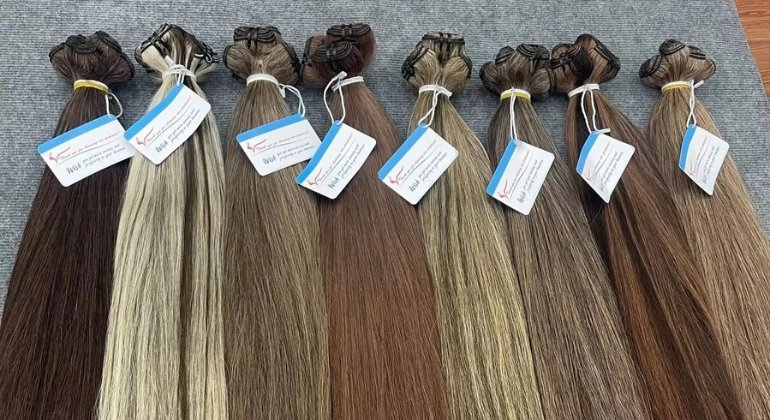
Retail sites rarely explain this, but as a factory it is the first thing we check. Four signals separate hair that lasts from hair that mats within a month.
- Cuticle direction. Run your fingers from root to tip, then tip to root. Quality Remy or raw hair feels smooth one way and slightly resistant the other, because the cuticles all point the same way. Hair that feels equally slick both ways has usually been acid-stripped and coated, and it tangles once the coating washes off.
- Single versus double drawn. Single-drawn hair thins toward the ends. Double-drawn hair is sorted so nearly every strand runs full thickness top to bottom, which gives a fuller, more even look and costs more because it wastes more hair to make.
- The wet test. Wet a small section. Good human hair stays soft and separates cleanly. Poor hair turns straw-like or clumps, a sign of heavy processing.
- Weft or bond construction. On wefts, look for a thin, tight seam that does not shed when you tug gently. On bonds, the join should be small and even. Loose construction sheds and slips.
Protecting your natural hair: how to wear extensions safely
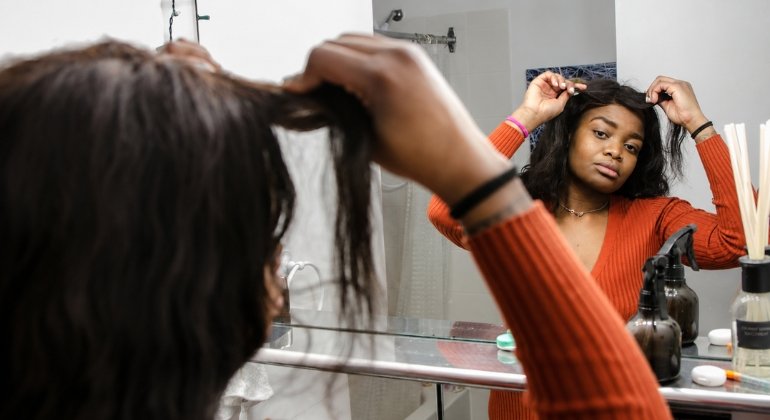
Extensions are safe when they fit your hair and you give your scalp breaks. Worn too heavy or too tight, any method can pull on the follicle and cause traction alopecia, a form of hair loss the American Academy of Dermatology warns can become permanent if it is ignored. These rules keep your own hair healthy:
- Watch the weight. Heavier is not better. A set that overpowers fine hair drags on the roots. Match the grams to your density, and drop to a lighter method if you feel constant tension.
- Take breaks. The AAD advises wearing weaves or extensions for two to three months at most, then giving your hair a rest before the next set.
- Trust the pain signal. If a style hurts or feels tight, it is too tight. Ask your stylist to loosen it, or reposition a clip-in. Losing 50 to 100 hairs a day is normal shedding. Broken hairs along the hairline or a sore, tender scalp is not.
- Get help early. See a board-certified dermatologist at the first sign of thinning at the temples or hairline. Caught early, traction alopecia often reverses. Left too long, it does not.
Hair extensions for beginners: your FAQ
What are the best hair extensions for beginners?
Clip-in and halo extensions. Both fit at home in minutes with no tools, heat, or glue, come out before bed, and cause no lasting damage when worn correctly. A single human-hair set can be reused for a year or more, which makes them the lowest-risk way to try extensions before committing to a salon method.
How much do hair extensions cost?
It depends far more on the hair than the method. Temporary clip-in and halo sets are a one-time buy at the lower end. Salon methods such as tape-ins, keratin bonds, and nano rings cost more because you pay for the hair plus fitting and upkeep every few weeks. Human Remy or raw hair costs more than synthetic but lasts many times longer, so it is usually cheaper over time.
How long do hair extensions last?
Wear time varies by method. Clip-ins and halos come out daily and, with care, the hair lasts six to twelve months or more. Tape-ins need moving up every six to eight weeks, keratin bonds last three to four months, and nano rings two to four months before a refit. The reusable lifespan of the hair depends on its grade and how you treat it.
Do hair extensions damage your natural hair?
Not when they fit your hair type and you follow basic care. Damage happens when extensions are too heavy, fitted too tight, or left in too long, which can lead to traction alopecia. The American Academy of Dermatology advises taking breaks between sets and loosening any style that feels painful. Clip-ins and halos carry the lowest risk because nothing bonds to the root.
Should a beginner choose human hair or synthetic?
Human hair, in almost every case. It washes, heat-styles, and often colours like your own, blends more naturally, and lasts far longer, which is why human hair holds about two thirds of the market. Synthetic costs less but cannot take hot tools and looks artificial in daylight, so it suits one-off costume wear rather than everyday extensions.
Can beginners apply hair extensions at home?
Yes, with clip-ins, halos, and micro-loop sets. Clip-ins and halos need no skill and go in within minutes. Micro-loops are DIY-friendly with practice. Tape-ins, keratin bonds, sew-ins, and nano rings need a trained stylist for a secure, even, damage-free fit, so leave those to a salon until you are experienced.
Start with the right hair
Whichever method you pick, the hair decides the result. Not sure what suits you, or sourcing extensions for a salon or store? Browse our full range of extension types, from clip-ins and tape-ins to keratin bonds and raw-hair wefts, or contact our team for a colour match and factory-direct wholesale pricing.
Contact Thanh An Hair today for expert consultation and the most competitive price list.
- WhatsApp/Hotline: (+84) 973 522 855
- Official Website: https://thanhanhair.com/
- Instagram: @thanhanhair
- Email: thanhanexport@gmail.com