
Raw Vietnamese Hair
Clip-In Extensions for Black Hair: A Manufacturer’s Complete Guide (2026)
Jul
Clip-in extensions for Black hair are removable wefts of human hair, fitted with pressure-sensitive clips, that add length and volume in minutes with no glue, heat, or tension on your roots. The secret to a seamless result on natural or relaxed hair is matching the extension texture to your own, from kinky straight to tight coils.
Most guides on this topic treat “black hair” as a shade on a color chart and stop at jet black versus off-black. That misses what most people searching for clip-in extensions for Black hair actually need: extensions that blend with afro-textured, coily, and relaxed hair. As a family-run raw-hair factory with two decades of production behind us, we wrote this guide from the side that cuts, wefts, and textures the hair, so you can pick a set that disappears into your own.
What are clip-in extensions for Black hair?
Clip-in extensions are wefts, or rows of hair sewn at the top, with small clips attached. You open the clips, press them onto sections of your own hair, and take them out at the end of the day. Because they are never bonded to your scalp, they are the most beginner-friendly and lowest-commitment way to add length or fullness. For Black hair, the deciding factor is not the clip but the hair itself: raw human hair holds a curl, takes heat, and catches light the way afro-textured and relaxed hair does, which synthetic fiber cannot.
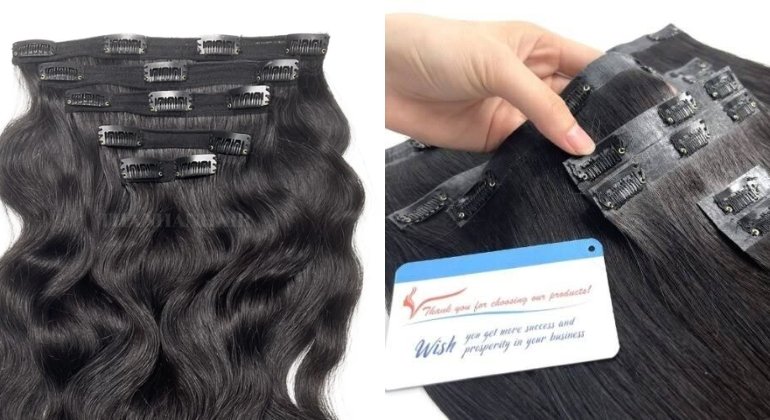
Clip-ins are also the most popular type of extension by a wide margin. Analysts at Fortune Business Insights report that the clip-in segment leads the global hair extension market, which they valued at about 2.87 billion US dollars in 2025 and expect to reach 5.54 billion by 2034.
Do clip-in extensions work on 4C, coily, and afro-textured hair?
Yes. Clip-in extensions for Black hair work on every type, including tightly coiled 4C hair, as long as you match the extension texture to your natural pattern and give the wefts a flat base to grip. The blend fails when a straight, silky weft is clipped into coily hair, not because clip-ins do not suit Black hair, but because the two textures do not agree. Match the texture and the seam disappears.
Use this table as a starting point for texture matching. Curl names differ between brands, so confirm against a real strand or sample before you buy.
Texture matching: your natural hair to clip-in texture
| Your natural hair | Best clip-in texture | Why it blends |
| Relaxed or silk-pressed (straight) | Yaki / kinky straight | Yaki mimics pressed afro texture and lies flat against smoothed hair |
| Fresh blow-out (loose natural) | Natural straight or light wave | Matches the soft body of a blowout |
| Wavy (type 3A to 3B) | Body wave or loose wave | Curl diameter lines up with a wash-and-go wave |
| Curly (type 3C to 4A) | Steam curly, bouncy curly, or deep wave | Defined spirals blend with a curly wash-and-go |
| Coily (type 4B to 4C) | Kinky curly or spring curly | Tight coil pattern matches shrinkage and density |
Length and shrinkage on coily hair
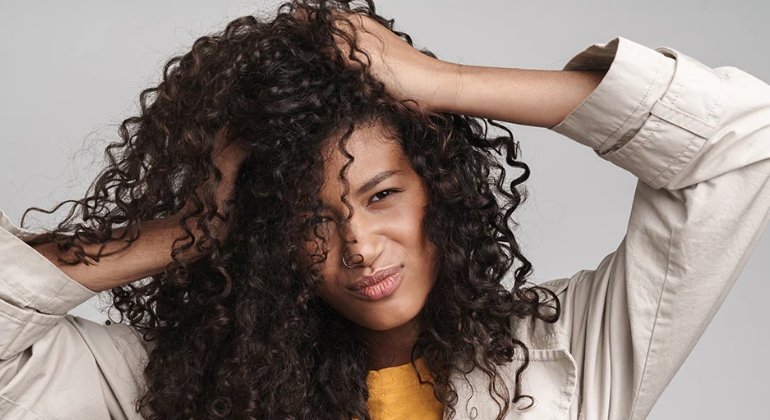
Coily and kinky hair shrinks, often by half or more of its stretched length. A 16-inch curly weft wears noticeably shorter once it is blended with hair that shrinks. If you have 4B or 4C hair, choose a set 2 to 4 inches longer than your target so the finished look reads the length you actually want.
Clip-ins vs sew-in weaves, tape-ins, and micro-links
For most people with natural Black hair, clip-ins are the gentlest of the common methods because you remove them nightly, so nothing pulls on your roots for days or weeks at a time. Sew-ins, tape-ins, and micro-links all stay anchored to the hair or scalp continuously, which adds tension. The table below compares them on the factors that matter for fragile edges and coily density.
Clip-ins vs other extension methods for Black hair
| Method | Tension on roots | Reusable | Remove at home | Best for |
| Clip-in | Very low (removed nightly) | Yes | Yes | Beginners, flexible protective wear, fragile edges |
| Sew-in weave | Moderate to high (braided base) | Hair yes, install no | No (stylist) | Continuous full-coverage wear |
| Tape-in | Low to moderate | Yes, with re-taping | No (needs remover) | Flat, semi-permanent lay |
| Micro-link / i-tip | Moderate (beads clamp strands) | Yes | No (needs tool) | Strand-by-strand volume |
This matters more for Black hair than most product pages admit. The American Academy of Dermatology notes that the shape of afro-textured follicles makes the hair more prone to damage from tight or heavy styling, and that women of African descent are at higher risk of traction alopecia, the gradual hair loss caused by prolonged tension. Because clip-ins are the only method here that comes off every night, they give the scalp the daily break dermatologists recommend. For a permanent, full-coverage alternative, see our manufacturer’s guide to weave extensions for Black hair.
How to install clip-in extensions on natural Black hair
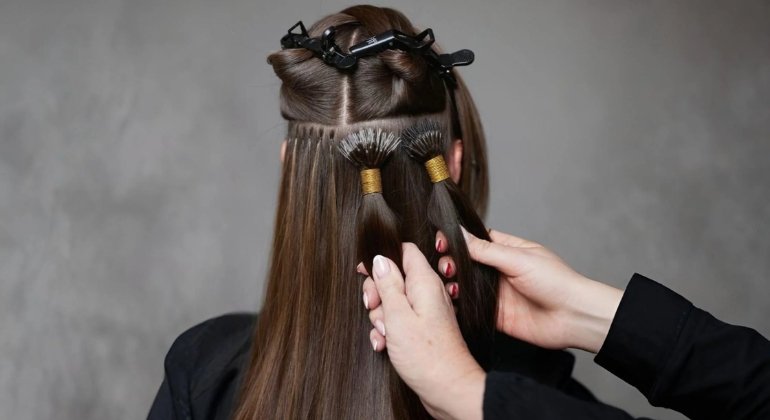
Fitting clip-ins on afro-textured hair takes about 10 to 15 minutes once you have a routine. The steps below are written for coily and relaxed hair, where a flat, stretched base is what makes the wefts sit flush.
- Start on clean, stretched hair. Wash and moisturize, then blow-dry, silk-press, or stretch your hair so its texture matches the set. Straight sets need pressed hair; curly sets need defined curls.
- Build a flat base. Part horizontally from ear to ear. For coily hair, lay a few flat cornrows or a low, loose braid so the wefts have something even to grip. Keep every braid loose enough to slide a finger under.
- Backcomb lightly. A gentle tease at each parting gives the clips grip without stressing the strand.
- Clip from the nape upward. Open the clips, seat the weft just below the part, and press each clip shut. Work up in rows and leave the crown for last.
- Leave out a top layer. Keep a thin layer of your own hair loose over the highest weft so it hides the track and covers your part.
- Blend the textures. Curl, flat-iron, or fluff your hair and the extensions together, always over a heat protectant, so the two read as one.
- Unclip at night. Take the wefts out before bed and store them flat or hung. Sleeping in clip-ins is the fastest way to tangle the hair and stress your edges.
Protecting your edges: what the science says
Clip-ins lower the risk of tension damage, but they do not remove it, and honesty here matters more than a sale. Traction alopecia is common and, if caught late, permanent. A salon-based study of women in Yaounde published on NCBI found traction alopecia in 34.5 percent of participants, and broader population studies put the prevalence among women of African descent between roughly 17 and 32 percent. The Skin of Color Society confirms it is one of the most common forms of hair loss in African-American women, and stresses that prevention beats treatment.
To keep clip-ins on the safe side of that line: never clip repeatedly onto the same fragile edge hairs, skip heavy full-head sets if your hairline is already thinning, keep any braided base loose, and stop at once if a style causes tenderness or you see sparse patches along your hairline. Healthy length also starts at the scalp, and a lot of what circulates about growth is myth, which we sorted out in our guide to hair growth myths. If you have active hair loss, see a board-certified dermatologist before adding any extensions. [INSERT: medical or trichology reviewer name and credentials for this YMYL section.]
How to care for and store your clip-ins
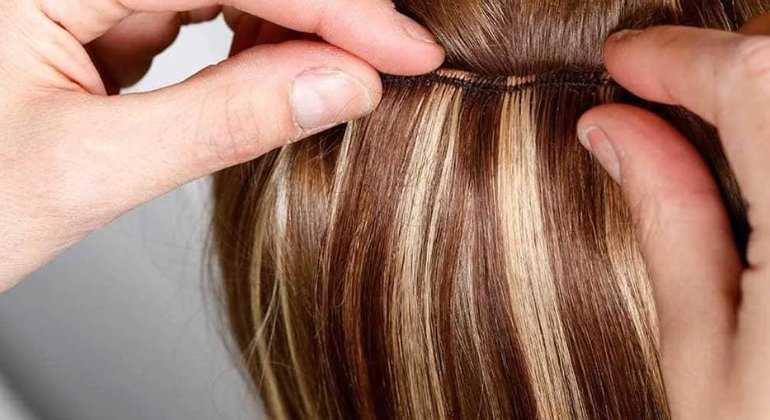
Treat human-hair clip-ins like a garment you want to keep for years. Wash them only when product builds up, not on a fixed schedule, using a sulfate-free shampoo and a moisturizing conditioner, then air-dry flat. For curly and coily textures, refresh the pattern with a little leave-in and your fingers rather than heavy brushing. Store the wefts flat in a pouch or hung on a hanger so the clips do not bend and the hair does not crease. Kept this way, a quality raw-hair set stays wearable far longer than a synthetic one. [INSERT: brand-tested lifespan for your clip-in sets, if measured.]
Buying clip-in extensions wholesale: a manufacturer’s checklist
If you are a salon owner or reseller stocking clip-ins for Black-hair clients, texture range and construction decide whether a set sells or sits. From the factory floor, these are the quality signals that matter most:
- Single-donor raw hair. Hair from one donor holds a consistent curl and sheds far less than blended, over-processed hair, which is what coily clients notice first.
- Double-drawn density. Thickness that runs from root to tip, rather than tapering to thin ends, is what afro-textured and thick-hair clients mean by “full.”
- A true texture range. Kinky straight (yaki), kinky curly, and defined curl patterns, not just straight and wavy, so you can match every client.
- Secure wefts and clips. Tight, sealed wefts and firm clips that hold heavier coily hair without slipping.
- Color consistency. Natural black tones that match root to tip across every pack in a batch.
Thanh An Hair produces all of these as a factory-direct supplier of raw Vietnamese hair, shipping to salons and wholesalers worldwide. [INSERT: current minimum order quantity and wholesale pricing tiers.]
Frequently asked questions
Will clip-in extensions damage natural Black hair?
Not when they are fitted and removed correctly. Clip-ins are among the lowest-tension methods because you take them out every night, so nothing pulls on your roots long term. Damage usually comes from heavy full-head sets, tight braided bases, or sleeping in the extensions, all of which are avoidable.
What length of clip-ins looks natural on 4C hair?
Because coily hair shrinks, pick a set 2 to 4 inches longer than the length you want to see. A 16-inch curly weft blended with 4C hair wears shorter than the number suggests. Buying slightly longer lets the finished style read the length you actually planned for.
How many packs or grams of clip-ins do I need?
Afro-textured and thick hair usually needs more volume than fine, straight hair to look balanced. Most full-head looks use two to three wefts or packs, added where you want fullness. Order a fuller set if your natural hair is very dense. [INSERT: gram weights per set.]
Can I straighten or curl human-hair clip-ins?
Yes. Raw human-hair clip-ins take heat like your own hair, so you can flat-iron, silk-press, or curl them to match your style. Always work over a heat protectant and keep your irons at a moderate temperature to protect the cuticle and keep the hair reusable for longer.
Can I wear clip-ins if I have thinning edges or traction alopecia?
Often yes, because clip-ins avoid the continuous scalp tension that causes traction damage. Still, do not clip directly onto fragile edge hairs, and skip heavy sets while your hairline recovers. If you have active hair loss, see a dermatologist before wearing any extensions.
Are clip-ins or a sew-in weave better for natural hair?
Choose clip-ins for flexibility, low tension, and at-home control, and a sew-in for continuous, weeks-long wear without daily fitting. Beginners almost always start with clip-ins because they are removable, reusable, and forgiving. Many people keep both and switch by occasion.
Get a texture-matched sample
The fastest way to see whether a set will blend is to test the real hair against your own. Explore our clip-in hair collection, and contact us for factory-direct pricing or a texture-matched sample kit for your salon.
Contact Thanh An Hair today for expert consultation and the most competitive price list.
- WhatsApp/Hotline: (+84) 973 522 855
- Official Website: https://thanhanhair.com/
- Instagram: @thanhanhair
- Email: thanhanexport@gmail.com