
Raw Vietnamese Hair
Types of Hair Extensions: Pros and Cons
Oct
There are eight main types of hair extensions: clip-in, halo, tape-in, hand-tied weft, machine weft, genius weft, nano ring and keratin bond. Clip-in and halo you put in yourself and take out at night. The other six stay in for weeks and need a stylist. Here is how to pick.
All 8 types of hair extensions in one table
Clip-in and halo: the easy ones
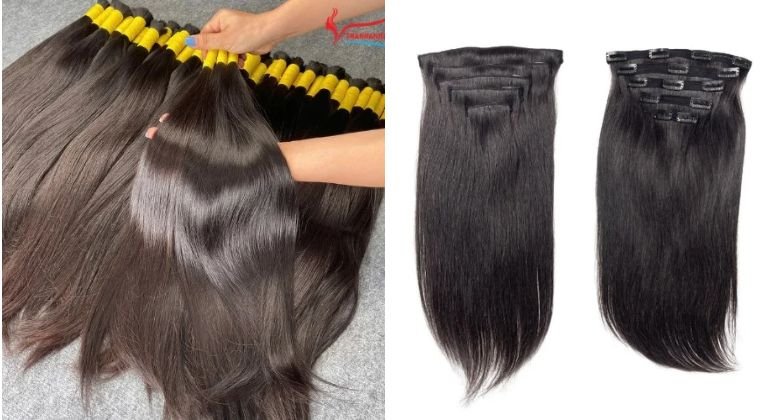
Clip-in extensions are small wefts with little combs sewn on. You clip them in yourself in about five minutes and take them out before bed.
Good: no appointment, no glue, no damage. Cheapest way to try long hair.
Not so good: the clips show in thin hair, and you cannot sleep, swim or work out in them. Handling them every day wears the hair out faster than you would expect.
A halo is one weft on a clear wire that sits on your head like a headband, hidden under your own hair. Nothing clips in at all, so it is the gentlest option here. The catch: it adds length in one band, so it cannot build soft layers, and it moves around if you are active.
Tape-in extensions: fast and flat
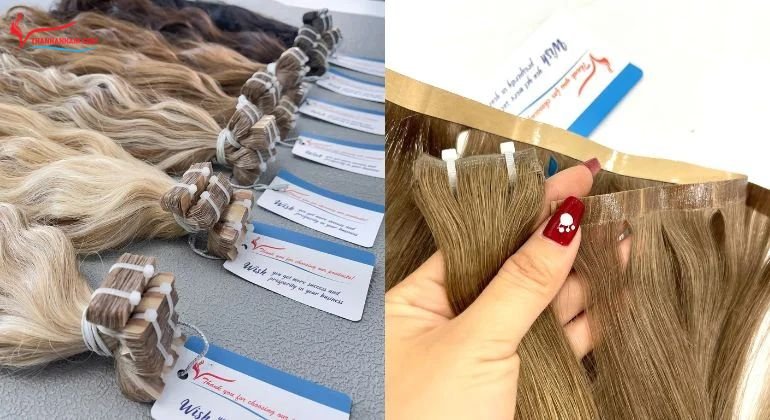
Two thin wefts with sticky backing sandwich a small section of your hair. A full head goes in under an hour, which is why so many salons use them.
Good: they lie flat, so they hide well under straight hair. Removal uses a solvent, not pulling. The weight spreads across a wide panel, which is kind to fine hair.
Not so good: glue is the weak point. Oil, heavy conditioner, sweat and heat all make tapes slip. If you use oil-based products, this is not your method. You also buy new tape at every appointment, so the small costs add up over a year.
Weft extensions: three kinds, and the difference matters
A weft is a curtain of hair joined along the top edge. How that edge is made changes everything, and this is the part most guides skip. All three sit in our weft hair range.
Hand-tied weft
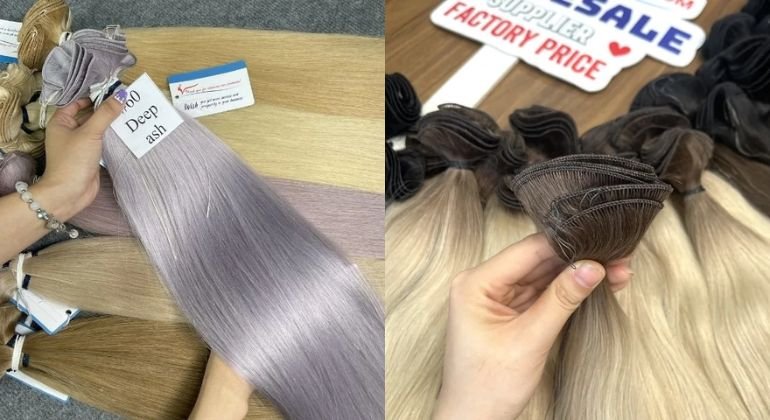
Tied by hand into a thin, soft seam that lies almost flat on your head. You can wear three or four rows without feeling a ridge. The downside: it unravels if you cut it, so it has to be ordered in the right width.
Machine weft
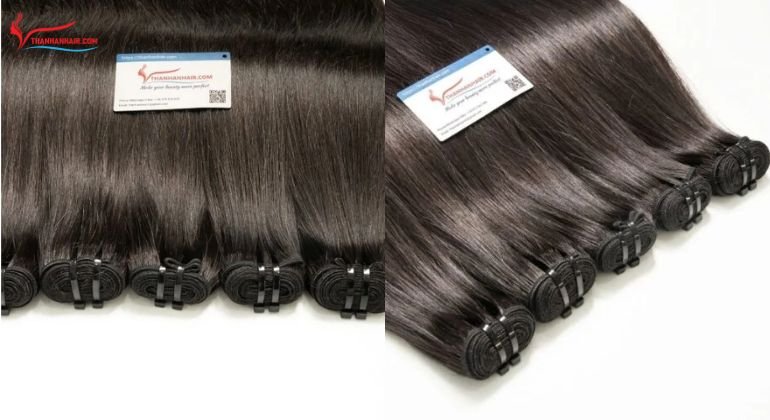
Sewn by machine. The seam is thicker but much stronger, and you can cut it to any width without it falling apart. Best for thicker hair and for anyone who needs to size it themselves. You will feel the seam more.
Genius weft
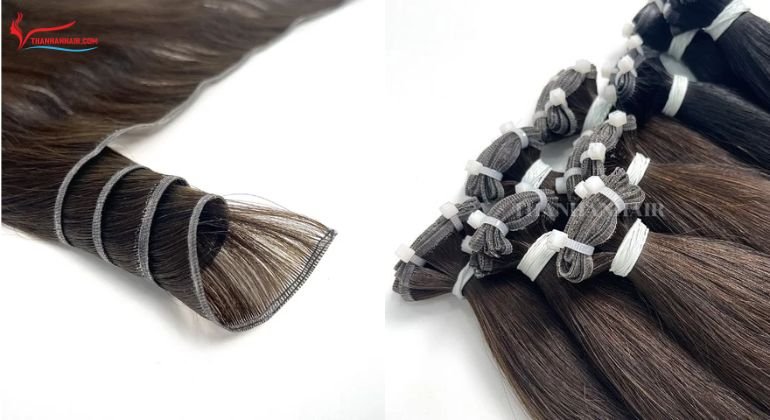
The middle ground. Hand-tied, then reinforced so you can cut it. Nearly as flat as a hand-tied weft with the freedom of a machine weft. It costs more because it takes two steps to make.
Nano ring and keratin bond: strand by strand
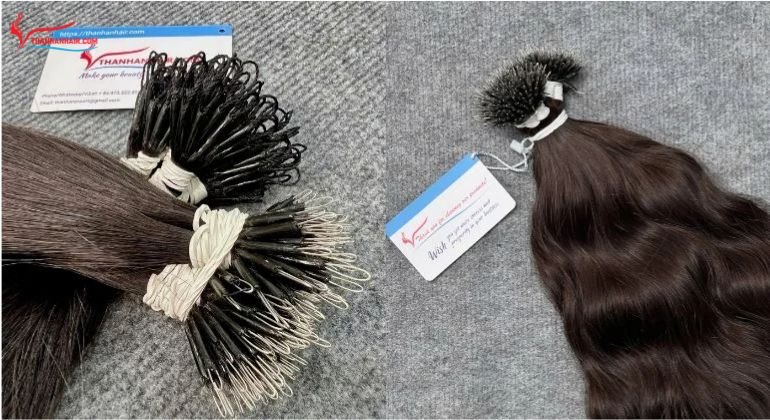
A nano ring pulls a few of your own hairs through a tiny metal bead lined with silicone, then clamps it shut. No glue and no heat, so oil and flat irons do not loosen it. Single strands can be moved or taken out one at a time. It takes a long time to install, and a bead clamped too tight is the main cause of soreness.
Keratin bonds (I-tip, flat tip, U-tip) use a heat-softened tip that wraps around your hair. They hold the longest, three to four months, and they move naturally. But the bond is used up when it comes out, so the hair has to be re-tipped before it goes back in. Flat tips sit closer to the head and are more comfortable to sleep on than round U-tips.
Both are made from loose hair, which is why the grade of the single donor bulk hair behind them matters so much.
How to choose the right hair extension method
Go through these five steps in order. Skipping the first two is the usual reason a good install still looks wrong after six weeks.
- Look at how much hair you have now. Thin hair at the temples cannot hold a heavy sew-in. If your own hair is fine, go with nano rings, tape-ins or a halo. Your hair decides the method, not the photo you liked.
- Ask your stylist what she installs best. A stylist who braids well will give you a beautiful weft. One trained on beads will give you better nano rings. The best method in the world looks bad in hands that have not practiced it.
- Be honest about how often you can go back. Tape-ins and wefts need a salon visit every six to eight weeks. Keratin bonds last three to four months. If you cannot keep that schedule, buy clip-ins or a halo instead.
- Pick the hair quality before the method. Any method looks good on day one. What separates good hair from bad hair is how it looks after twenty washes. Choose the hair first, then the way it goes in.
- Try a small order before a big one. Buy one bundle in the color and texture you use most. Wash it ten times, let it air dry, then look at the ends. Do that before you spend money on a full set or a full stock.
The hair matters more than the method
Every method on this list fails the same way when the hair itself is wrong. Each strand is covered in flat overlapping scales that keep hair smooth and tangle-free. When a bundle is mixed from different donors, those scales face opposite ways, catch on each other and mat. No tape, bead or bond can fix that.
That is why we sell single donor hair and build every format above from the same sorted stock. It is also why a sample tells you more than any spec sheet. Wash a bundle ten times, air dry it, and look at the middle of the strand.
Try one bundle before you commit
Thanh An Hair is a family-run Vietnamese factory with around twenty years of experience, selling straight from the factory to salons and resellers. We make all eight types above from the same single donor stock.
Order a sample in the color and texture you use most, give it the ten-wash test, and compare it with what you buy now. Message us for a sample and wholesale pricing.
- WhatsApp/Hotline: (+84) 973 522 855
- Official Website: https://thanhanhair.com/
- Instagram: @thanhanhair
- Email: thanhanexport@gmail.com