Nov
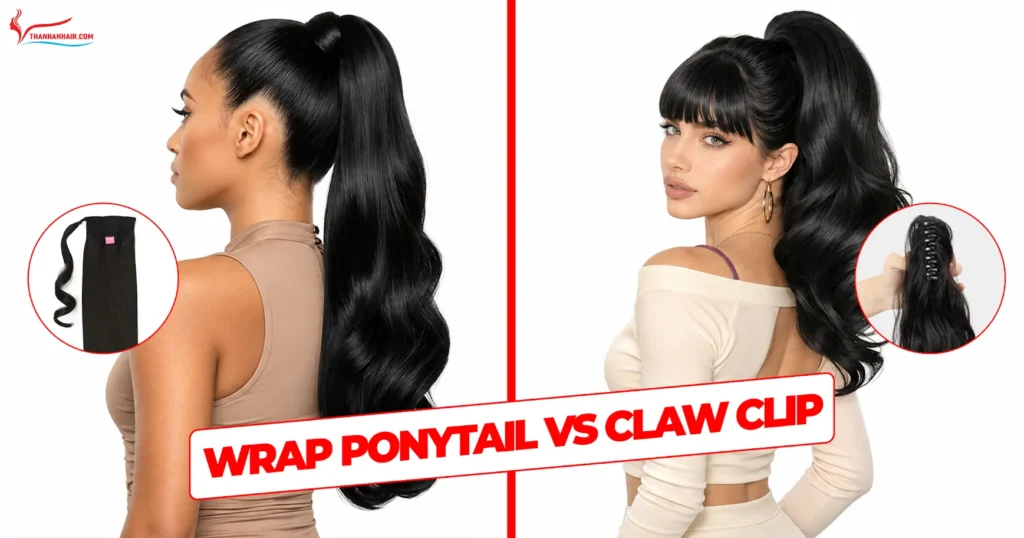
Choosing between a claw clip ponytail vs wrap ponytail depends on how you want to attach the extension, how natural you want the base to look, and how much time you want to spend styling your hair. A claw clip ponytail uses a built-in gripping clip for quick attachment, while a wrap ponytail uses a fastening system and a separate strand of hair to cover the base. Both can add length and volume, but they suit different routines, hair types, and styling preferences.
If you are wondering which fake ponytail to choose, this guide compares their construction, appearance, comfort, security, maintenance, and value so you can make a more confident decision.
1. What Is the Difference Between a Claw Clip Ponytail and a Wrap Ponytail?
The main difference is the way each hairpiece attaches to your natural hair and conceals the connection.
What Is a Claw Clip Ponytail?
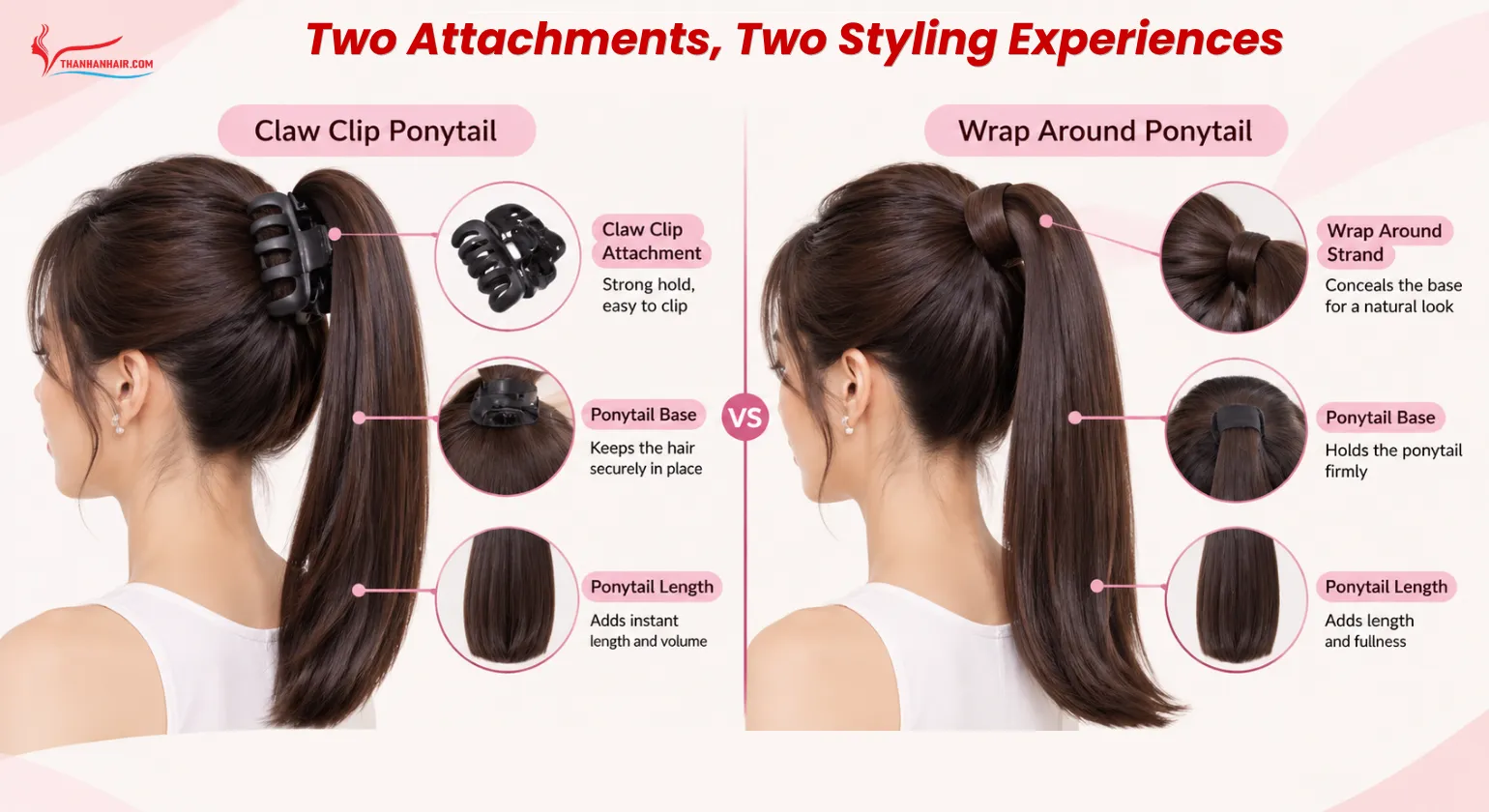
A claw clip ponytail is a hair extension attached with a small jaw-style clip. The clip opens, grips the hair gathered at the base of your natural ponytail or bun, and closes to hold the extension in place.
Its main advantages are convenience and speed. You do not usually need to wrap an extra strand around the base, so it is a practical option when you want a quick hairstyle for daily activities, casual outings, or short styling sessions.
However, the clip itself may be visible if the hairpiece is not positioned correctly or if your natural hair is too thin to cover it. The size and grip of the clip also matter: a clip that is too large may feel bulky, while one that is too small may not hold enough hair securely.
What Is a Wrap Ponytail?
A wrap ponytail is designed with a fastening section and a separate strand of hair that wraps around the base. After attaching the extension, you wind this strand around the connection point to hide the hair tie and attachment area.
This creates a cleaner, more seamless finish, particularly when you want a polished high ponytail or a sleek, salon-inspired look. The wrapped strand can also help conceal the transition between your natural hair and the extension.
The trade-off is that it takes slightly more time to install. You need to wrap the strand evenly and secure its end properly to prevent it from loosening during wear.
2. Claw Clip Ponytail vs Wrap Ponytail: A Side-by-Side Comparison
Both styles can create a fuller ponytail, but their practical differences become clearer when you compare them directly.
| Feature | Claw Clip Ponytail | Wrap Ponytail |
| Attachment | Jaw-style gripping clip | Fastener plus wrapping strand |
| Application | Usually quicker | Requires an extra wrapping step |
| Base appearance | Clip may be visible | Can create a more concealed base |
| Styling finish | Casual to polished | Often more seamless and sleek |
| Adjustment | Easy to reposition | Requires adjusting the wrap |
| Best for | Quick everyday styling | Sleek, refined hairstyles |
| Main concern | Clip visibility or grip | Wrap strand becoming loose |
Which One Looks More Natural?
A wrap ponytail generally has an advantage when hiding the attachment is your priority because the wrapping strand is specifically designed to cover the base. However, a claw clip ponytail can also look natural when the clip is well concealed, the hair color matches, and the extension is positioned correctly.
The final appearance depends just as much on color, texture, density, and placement as it does on the attachment method.
3. Which Fake Ponytail Is Easier to Use?
If convenience is your biggest concern, a claw clip ponytail is often the simpler option.
Claw Clip Ponytail: Best for Quick Styling
The basic application process is straightforward:
- Brush your natural hair to remove tangles.
- Gather it into a ponytail or compact base, depending on the product instructions.
- Open the claw clip and position it over the base.
- Close the clip and gently adjust the extension until it sits naturally.
This method is useful when you need to get ready quickly or frequently change your hairstyle throughout the day.
Wrap Ponytail: Best for a More Refined Finish
A wrap ponytail requires a few additional steps:
- Brush and secure your natural hair into a ponytail.
- Attach the extension using its built-in clip, comb, strap, or other fastening system.
- Take the designated wrapping strand and wind it around the base.
- Secure the end according to the manufacturer’s instructions.
- Check the back and sides in a mirror to make sure the attachment is concealed.
The wrapping step may take longer at first, but it becomes easier with practice.
For a more detailed installation walkthrough, see the guide below.
=>> Read more: How to Attach a Fake Ponytail at Home: Easy 2-Minute Guide – Learn how to secure, position, and style a ponytail extension at home.
4. Which Ponytail Is More Secure and Comfortable?
A common mistake is assuming that a claw clip is always more secure or that a wrap ponytail always stays in place longer. In reality, stability depends on the attachment design, the amount of natural hair available, the extension’s weight, and how well it is installed.
Factors That Affect Hold
Consider these points before buying:
- Natural hair thickness: Fine or slippery hair may not provide enough grip for some clip designs. A suitable fastening system and careful placement become especially important.
- Extension weight: Longer and fuller ponytails can place more downward pressure on the attachment. Choose a weight that your natural hair can support comfortably.
- Clip construction: For claw clip designs, check the clip’s size, teeth, hinge, and closing strength.
- Wrapping security: For wrap designs, check how the wrapping strand is fastened and whether the end can be secured without excessive tension.
- Activity level: A ponytail for a relaxed day may not need the same hold as one worn while dancing or moving frequently.
Which One Feels More Comfortable?
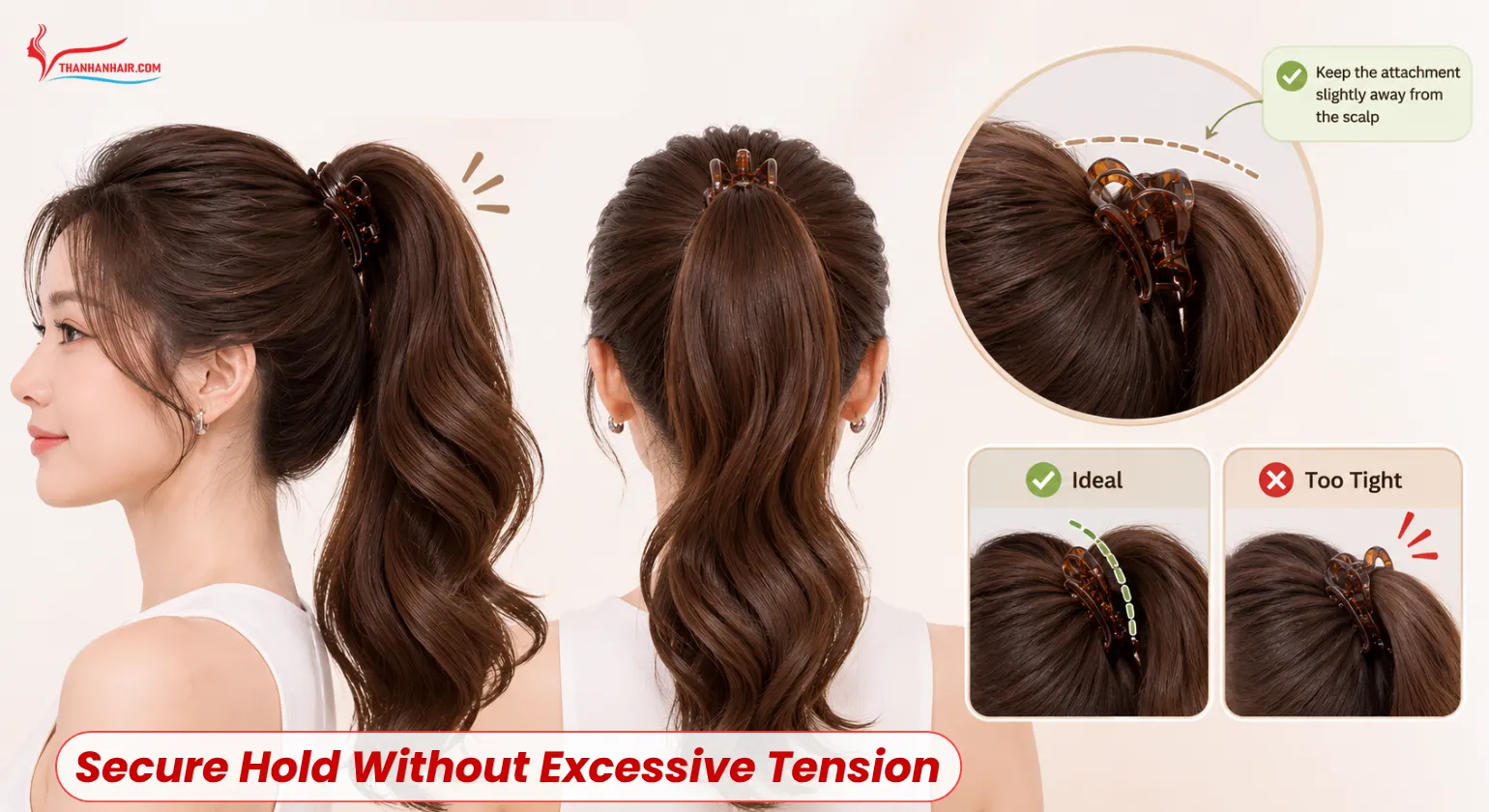
Neither attachment method is automatically more comfortable. A poorly positioned claw clip can press against the scalp, while a wrap ponytail that is fastened too tightly can pull on the natural hair.
The extension should feel stable without causing pain, headaches, or a strong pulling sensation. If it feels uncomfortable, remove it and adjust the base rather than tightening it further.
Dermatologists warn that repeated tension from tight ponytails and hair extensions can contribute to traction alopecia. The American Academy of Dermatology explains that tightly pulled hairstyles and extensions can damage hair over time. Read its guidance on hairstyles that can lead to hair loss. DermNet also explains that prolonged or repeated tension can cause traction alopecia.
5. How to Choose the Right Ponytail for Your Hair Type and Lifestyle
The best ponytail is the one that works with your natural hair rather than forcing your hair into an uncomfortable position.
Choose a Claw Clip Ponytail If:
- You prefer a fast attachment method.
- You often change hairstyles during the day.
- You want a convenient option for casual or everyday styling.
- Your natural hair provides enough volume for the clip to grip securely.
- You do not mind checking whether the clip is concealed.
Choose a Wrap Ponytail If:
- You prefer a sleek, polished ponytail.
- Concealing the attachment point is a priority.
- You enjoy spending a little extra time styling your hair.
- You want the base to look more seamless in photographs or formal settings.
- You are comfortable securing and adjusting the wrapping strand.
What If You Have Short or Thin Hair?
Short hair can still work with some ponytail extensions, but the natural hair must be long enough to create a suitable base. If your hair is very short, layered, or slippery, some attachment systems may be difficult to secure.
For fine hair, avoid choosing an excessively heavy extension. A lighter ponytail may be more comfortable and easier to position. You should also check whether the clip or fastening system can be concealed without pulling tightly on a small section of natural hair.
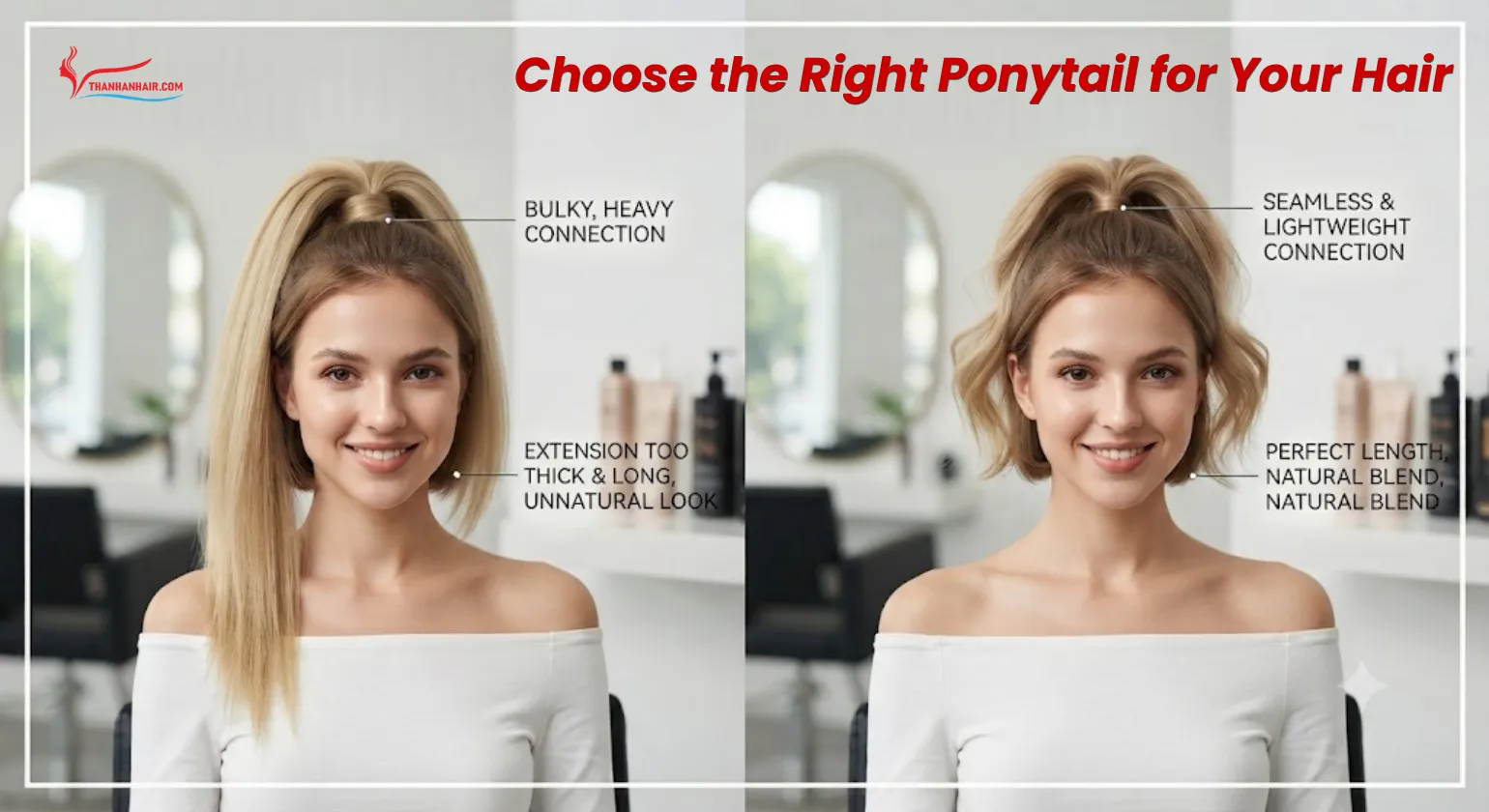
6. How to Make a Fake Ponytail Look Natural
Even a high-quality hairpiece can look artificial if the color, texture, or proportions do not match your natural hair.
Match the Color Carefully
Compare the extension with your natural hair in daylight whenever possible. Look at the mid-lengths and ends, not only the roots. If your hair has highlights, balayage, or multiple tones, a single flat shade may not blend perfectly.
A color chart can help narrow down the options, but screen displays and physical hair samples may look different under various lighting conditions. Ask the supplier for real product photos or a sample when an exact match is important.
Choose a Suitable Length and Density
A very long ponytail can look dramatic, but it may also appear disproportionate if your natural hair is short or fine. Consider your height, face shape, and preferred hairstyle.
For a natural everyday look, choose a length and volume that blend with your own hair. For special occasions, you may prefer a fuller or longer finish.
Match the Texture
Straight extensions work well with sleek ponytails, while wavy or curly textures can create a softer, more voluminous appearance. Matching the texture of your natural hair reduces the amount of styling needed and helps the transition look more consistent.
Check the Base Before Leaving
After attaching the ponytail, inspect it from the front, sides, and back. Check that the clip is concealed or the wrapping strand covers the base evenly. Move your head gently to make sure the extension stays in position.
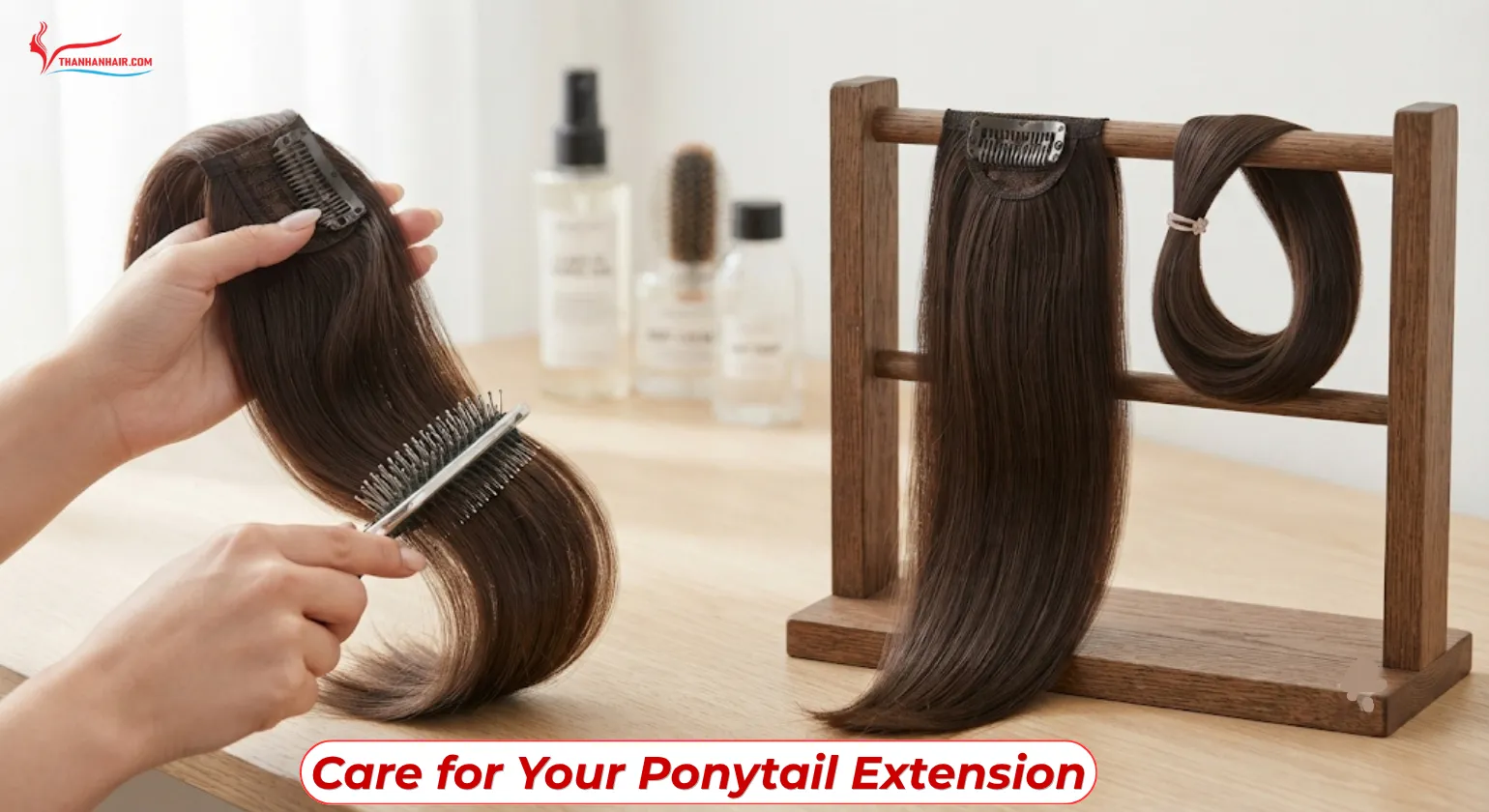
7. How to Care for Claw Clip and Wrap Ponytail Extensions
Proper care helps maintain the appearance of the hair and protects the attachment structure.
- Remove gently: Open the clip fully before taking off a claw clip ponytail. For a wrap ponytail, loosen the fastening and unwrap the strand carefully.
- Detangle from the ends: Use a suitable brush or wide-tooth comb, working upward in small sections.
- Avoid excessive pulling: Do not tug the hairpiece by its attachment point or pull hard on the wrapping strand.
- Use heat only when permitted: Human hair and synthetic fibers have different styling limitations. Check the product specifications before using hot tools.
- Store properly: Keep the extension dry, detangled, and protected from dust. Avoid crushing the clip or bending its fastening components.
- Give your natural hair a break: Do not wear a heavy or tight ponytail continuously. Change your hairstyle and avoid sleeping with the extension attached.
If you notice pain, scalp irritation, or unusual hair breakage, remove the extension and stop using the attachment method until you understand the cause. The American Academy of Dermatology’s advice on preventing hair damage from extensions is a useful reference.
8. Where to Buy Ponytail Hair Extensions: What Should You Check?
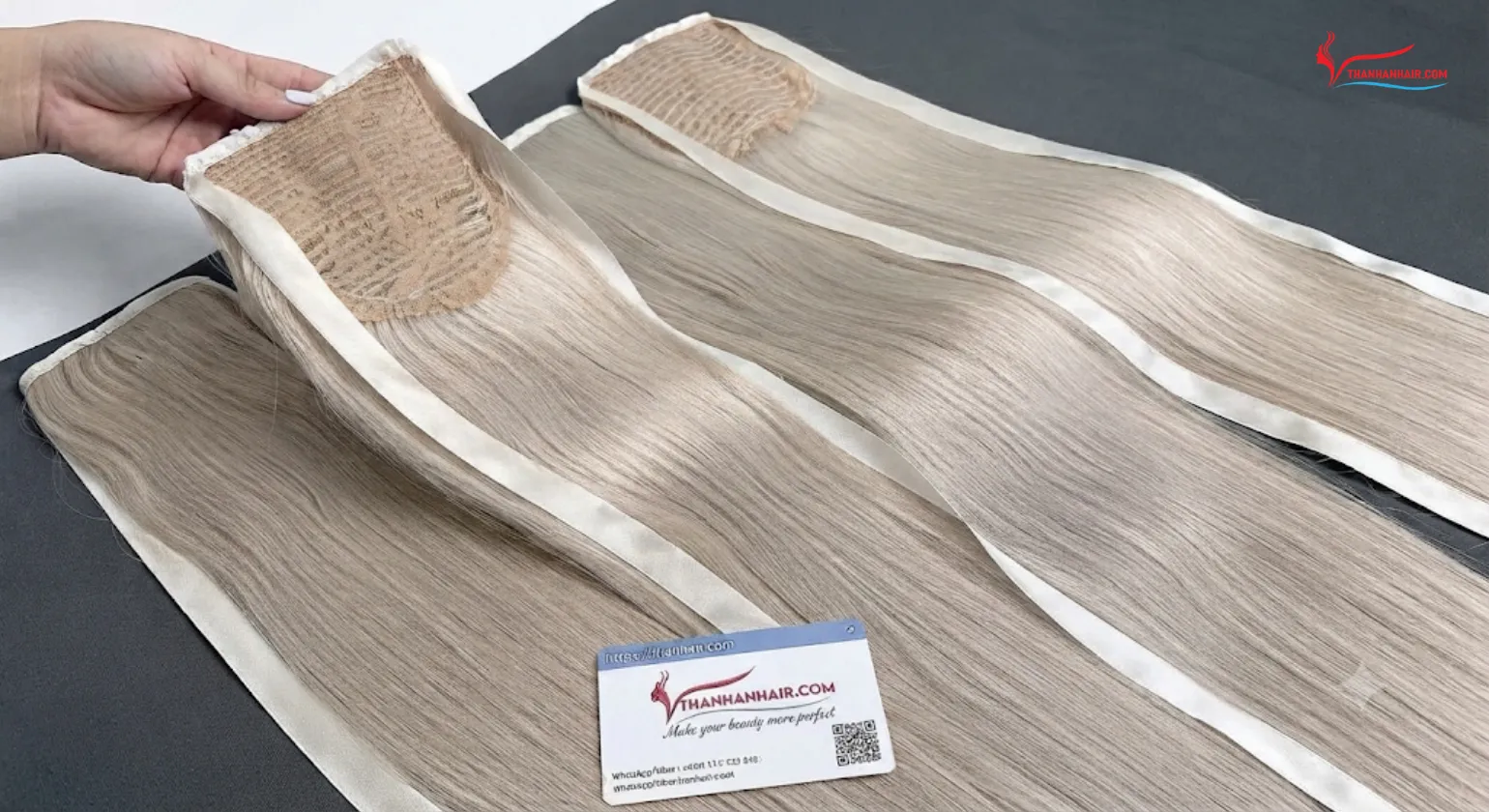
Before choosing a supplier, check more than the product photo. Ask about the hair material, attachment construction, available colors, lengths, textures, weight, and care instructions. Confirm whether the product is human hair or synthetic fiber, and request clear images of the attachment area.
Thanh An Hair lists ponytail hair among its extension product categories and presents wrap and drawstring ponytail styles within its product range. Buyers should confirm the exact attachment method and current specifications for the particular style they want.
Compare the Product Specifications Before Ordering
A product listing should help you understand what you are buying. For example, Thanh An Hair’s listed ponytail product provides selectable color, length, standard, and texture options, including Natural Straight and Natural Wavy. Check the available specifications and confirm the attachment design with the sales team before placing an order.
What Wholesale Buyers Should Know
Thanh An Hair operates a factory of approximately 2,000 m² in Bac Ninh, Vietnam, with around 300 workers and a stated production capacity of up to 10 tonnes of hair extensions per month. These figures describe the company’s overall manufacturing operation, not the stock availability of every ponytail design.
For ordering and planning, the published business information includes:
- MOQ: From 1 kg for bulk hair and weft products. The minimum order quantity for ponytail styles should be confirmed directly with the sales team.
- Production time: In-stock orders generally require 1–7 business days; customized orders may take up to 30 days.
- Shipping: Approximately 3–10 days, depending on the destination and carrier.
- Defect reporting: Report damage or discrepancies within 48 hours of receiving the order, with supporting photos or videos.
- Returns and exchanges: Eligible unused products in original condition may be returned or exchanged within 7 days, subject to the applicable terms.
- Warranty: A 30-day warranty applies to manufacturing defects under the relevant policy.
- Color matching: The stated color-ring matching accuracy is approximately 80–90%; it is an estimate rather than a guarantee of an exact match.
Before paying, request written confirmation of the selected attachment type, product specifications, MOQ, delivery schedule, and after-sales terms.
For a broader overview of the company’s product range and manufacturing services, visit its wholesale information page.
=>> Read more: Wholesale Hair Extensions – Thanh An Hair – Review factory capabilities, product formats, ordering information, and wholesale support.
Explore Other Hair Extension Options
If you are comparing ponytails with other extension formats, the product catalogue can help you review the available categories, including clip-in hair, wefts, wigs, tape extensions, and ponytail hair.
=>> Explore: Thanh An Hair Products Catalogue – Browse ponytails, clip-in extensions, wefts, wigs, and other hair extension products.
Conclusion: Claw Clip Ponytail or Wrap Ponytail – Which Is Better?
A claw clip ponytail is a practical choice if you value quick application, easy adjustment, and everyday convenience. A wrap ponytail is often a better option if you prefer a more concealed attachment and a sleek, polished finish.
Before choosing, consider your natural hair thickness, the weight and length of the extension, your preferred hairstyle, and how much time you want to spend attaching it. Most importantly, the ponytail should feel secure without pulling painfully on your natural hair.
There is no universal winner in the claw clip ponytail vs wrap ponytail comparison. The right choice is the one that gives you the appearance you want while remaining comfortable and easy to maintain.
FAQ: Claw Clip Ponytail vs Wrap Ponytail
1. Is a claw clip ponytail better than a wrap ponytail?
A claw clip ponytail is usually more convenient for quick styling, while a wrap ponytail can create a more concealed and polished base. The better option depends on your styling needs.
2. Which ponytail looks more natural?
A wrap ponytail often makes it easier to hide the attachment point. However, both styles can look natural when the color, texture, length, and placement match your own hair.
3. Is a claw clip ponytail suitable for thin hair?
It can be, provided the clip is appropriately sized and grips securely without pulling. Choose a lightweight extension and avoid clips that feel bulky or uncomfortable.
4. Can I wear a wrap ponytail every day?
You can wear one regularly if it is comfortable and attached without excessive tension. Remove it gently after use and give your natural hair breaks from tight hairstyles.
5. Can I curl or straighten a fake ponytail?
It depends on the material and the manufacturer’s instructions. Some human hair extensions can be heat-styled, while synthetic fibers may require special care or may not tolerate heat.
6. What should I check before buying a ponytail extension?
Check the hair material, attachment method, color, length, texture, weight, care instructions, return policy, and warranty. For wholesale orders, confirm the MOQ, production time, and shipping schedule before payment.
Contact Thanh An Hair
Looking for ponytail hair extensions or comparing styles for your salon, hair business, or personal use? Contact Thanh An Hair to ask about available products, colors, lengths, textures, attachment methods, and wholesale quotations.
Our team can help you review product specifications and find a suitable option for your requirements.
- WhatsApp/Hotline: (+84) 973 522 855
- Official Website: https://thanhanhair.com/
- Instagram: https://www.instagram.com/thanhanhair/
- Email: thanhanexport@gmail.com