Raw Vietnamese Hair
How to Protect Raw Hair Extensions When Swimming or at the Beach (2026)
Nov
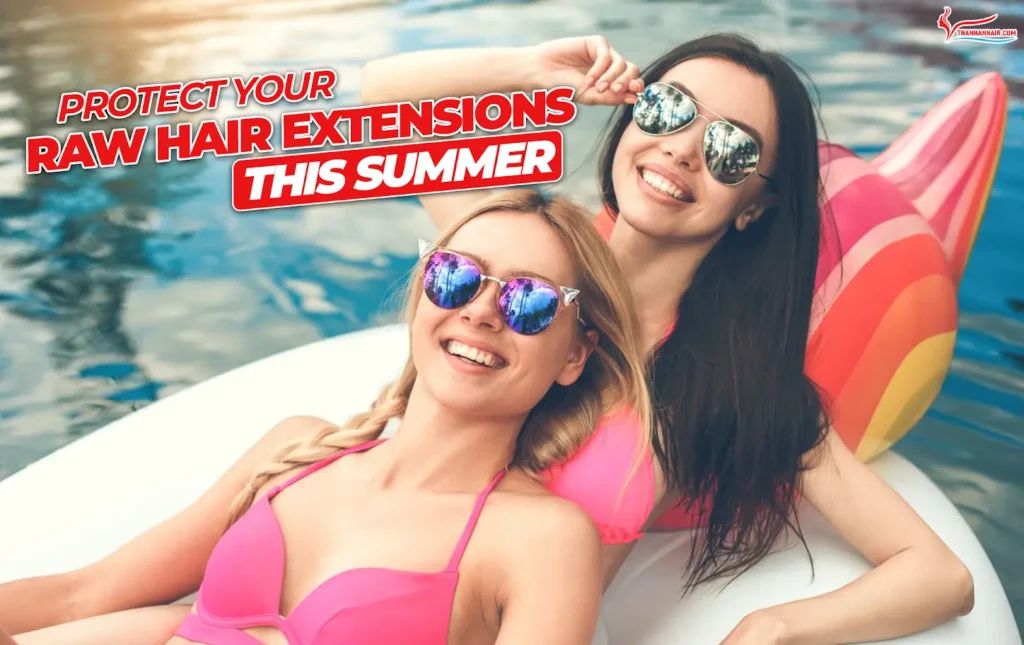
Summer is the perfect time to enjoy swimming pools, beach holidays, and outdoor activities, but knowing how to protect raw hair extensions when swimming is essential if you want to maintain their softness, shine, natural texture, and manageability. Although raw human hair offers a natural appearance and styling versatility, it is not waterproof or immune to environmental damage.
Whether you wear Vietnamese raw hair bundles, tape-in extensions, weft hair, keratin tips, or clip-ins, exposure to chlorine, saltwater, sunlight, and repeated wetting can make the hair feel dry, rough, or tangled. The attachment method also matters: removable extensions should generally be taken off before swimming, while installed extensions require extra care around their bonds, tapes, beads, or wefts.
The best approach is to prepare your hair before entering the water, minimize friction while swimming, and rinse and dry it carefully afterward. This guide from Thanh An Hair explains how to protect your extensions at the pool or beach and maintain their condition throughout the summer.
1. Can You Swim with Raw Hair Extensions?
Yes, you can swim while wearing some types of installed human hair extensions, but swimming is not completely risk-free. Chlorinated water, seawater, sunlight, and friction can affect the hair fiber and may place additional stress on attachment points.
The safest choice depends on your extension method:
- Clip-in extensions: Remove them before entering the pool or ocean. They are designed to be removable, so there is no reason to expose their clips and wefts to unnecessary water.
- Halo extensions: Take them off before swimming to protect the wire, attachment area, and hair weft.
- Tape-in extensions: These may remain installed, but prolonged soaking, rubbing, and unsuitable products around the adhesive can affect the installation.
- Keratin tip extensions: Avoid excessive pulling and rough handling, especially when the hair is wet. Follow your stylist’s instructions for water exposure and drying.
- Nano ring extensions: Pay attention to tangling and product buildup around the attachment points.
- Weft extensions: Secure the lengths before swimming and carefully dry the weft tracks afterward.
If you are planning a beach holiday or a day at the pool, ask your extension specialist whether your installation method is suitable for swimming. If you are unsure, avoiding submersion is the safest option.
For removable styles, choosing the right extension type also makes summer maintenance easier. You can compare different options before deciding which style suits your routine.
=>> Shop now: Clip In Hair – Thanh An Hair – Explore removable human hair extensions that you can take off before swimming.
2. How Chlorine Affects Raw Hair Extensions
Swimming pools are commonly treated with chlorine or other disinfecting chemicals to maintain water quality. Although these treatments are necessary for pool hygiene, repeated exposure can affect human hair.
Unlike natural hair growing from the scalp, extension hair does not receive a continuous supply of sebum from the scalp. This means its lengths depend on suitable conditioning and maintenance to remain manageable.
Common Effects of Chlorine Exposure
Dryness and loss of softness
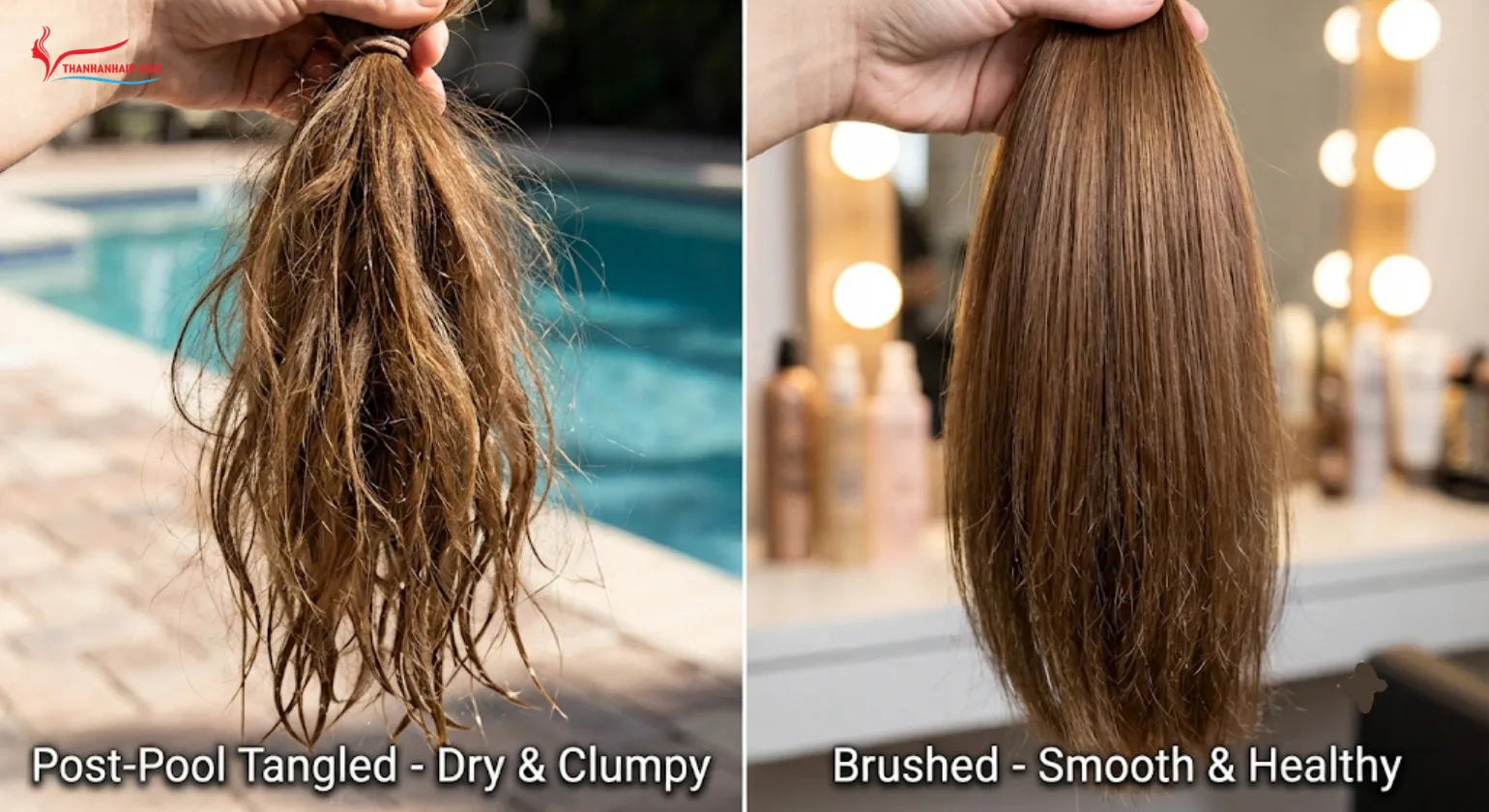
Pool chemicals and repeated washing can affect the protective surface of the hair fiber. Extensions may begin to feel rough, less silky, or harder to manage, particularly when they are not rinsed and conditioned properly afterward.
Tangling and rough texture
When hair becomes dry or its cuticle surface becomes rougher, individual strands can catch on one another more easily. This is especially noticeable around the nape of the neck, where wet hair rubs against the shoulders and back.
Changes in color appearance
Pool water may affect the appearance of colored or lightened extensions. A greenish tint in blonde or light-colored hair is often associated with copper deposits in the water rather than chlorine alone. Chlorine can contribute to the conditions that allow metals to interact with the hair.
Stress on attachment points
For installed extensions, frequent soaking, rough brushing, and pulling on wet lengths may place additional stress on tapes, bonds, beads, or weft areas.
The American Academy of Dermatology explains that chlorine can dissolve protective lipids in hair and contribute to protein damage. Its summer hair care recommendations include applying a suitable leave-in conditioner or oil before swimming, wearing a swimming cap when practical, and rinsing and conditioning hair afterward.
Read the American Academy of Dermatology’s summer hair care recommendations for additional guidance on protecting hair from pool chemicals and sunlight.
3. How Saltwater and Sun Exposure Affect Hair Extensions at the Beach
A beach holiday can be relaxing, but seawater presents a different challenge for hair extensions. Salt remains on the hair when seawater evaporates, while wind, sunlight, and friction can make long extensions harder to manage.
Why Saltwater Can Cause Problems
- Dryness: Saltwater exposure and repeated drying can leave hair feeling less soft and manageable.
- Tangling: Wind, waves, and movement can cause long extensions to knot together.
- Roughness: Salt residue on the hair surface may increase friction until the hair is rinsed properly.
- Color changes: Prolonged sunlight can affect the appearance of colored or lightened hair over time.
Sun exposure is another factor worth considering. Ultraviolet radiation can contribute to changes in hair proteins and color, particularly in lighter or chemically treated hair. A wide-brimmed hat, shade, and reduced exposure during intense sunlight can help limit unnecessary stress.
The combination of seawater, sunlight, wind, and friction is often more challenging than a brief swim alone. To protect your extensions, keep the hair secured, avoid leaving it loose in strong wind, and rinse it with fresh water as soon as possible after swimming.
Choosing a hairstyle that keeps long hair contained can also reduce friction during outdoor activities.
=>> Read more: Beach Hairstyles for Summer 2026 – Discover practical hairstyles for managing long hair in sunny, windy, and humid beach conditions.
4. How to Protect Raw Hair Extensions Before Swimming
Good preparation is one of the most effective ways to reduce potential damage. Before entering a swimming pool or the ocean, follow these practical steps.
Step 1: Detangle Your Hair Gently
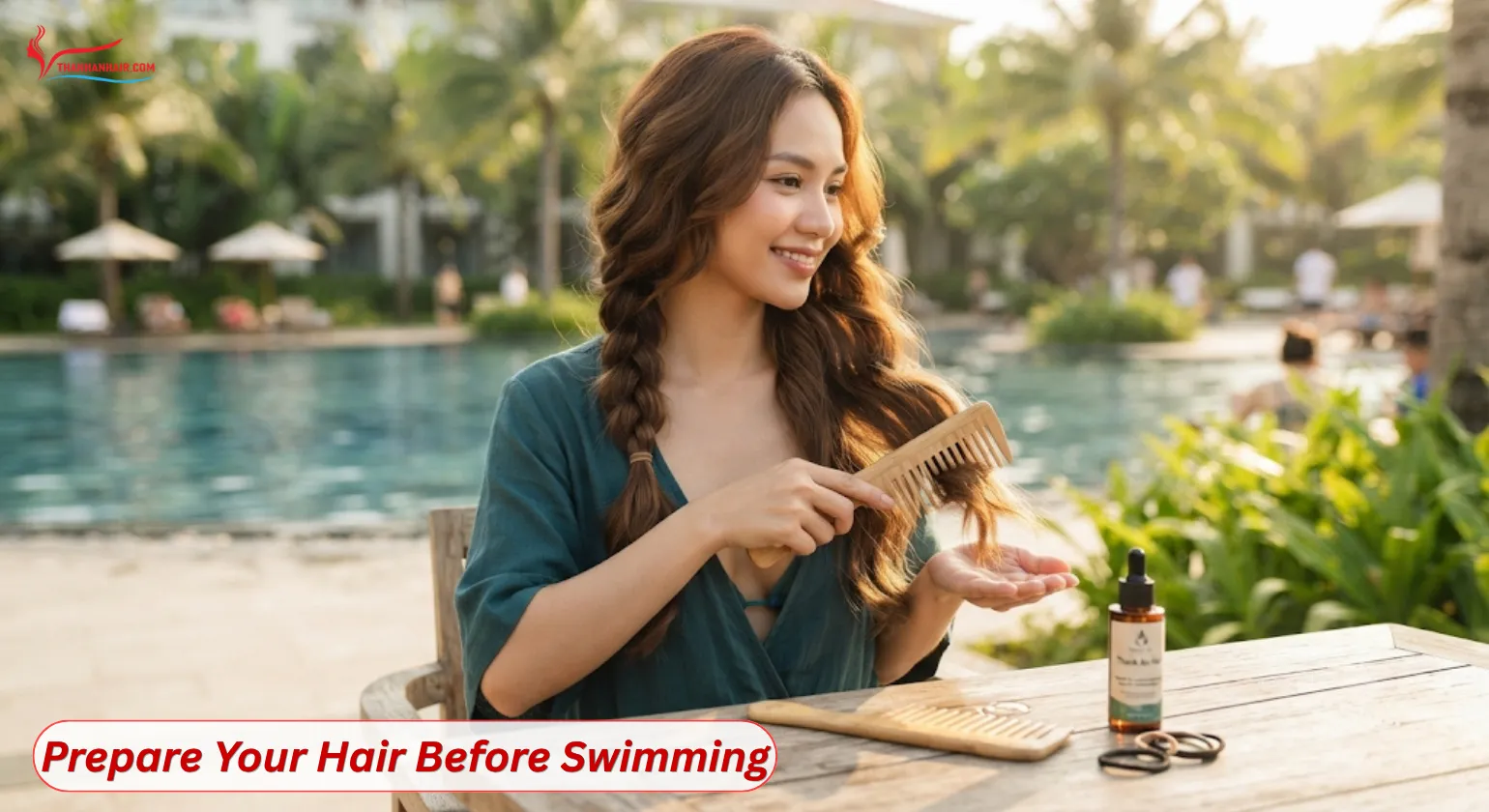
Brush your extensions before swimming to remove existing knots. Use a suitable extension brush or a wide-tooth comb, starting at the ends and gradually working upward.
Avoid pulling or brushing aggressively around tape, beads, keratin bonds, or weft attachments. If your hair is already tangled, resolve those knots before getting it wet.
Step 2: Apply a Lightweight Leave-In Conditioner
A lightweight leave-in conditioner may help improve manageability and reduce friction between strands.
Apply a small amount to the mid-lengths and ends. Avoid applying oily or heavy products directly to tape bonds or other attachment areas because some ingredients may interfere with adhesives or leave unwanted buildup.
If you are using a product specifically formulated for swimming, follow its instructions and check that it is compatible with your extension method.
Step 3: Braid or Secure Your Hair
Leaving long extensions loose in the water makes them more likely to tangle.
Try one of these protective hairstyles:
- One loose braid.
- A low ponytail secured with a soft hair tie.
- A loose bun.
- Two loose braids for very long extensions.
The goal is to keep the hair together without creating excessive tension. Avoid tight hairstyles that pull on your natural hair or extension attachments.
Step 4: Wet Your Hair with Fresh Water First
Before entering the pool or ocean, rinse your hair with clean, fresh water.
Hair that is already wet with fresh water may take up less additional pool or seawater than completely dry hair. However, this does not make extensions waterproof or eliminate the need for aftercare.
Step 5: Consider a Swimming Cap
A swimming cap can help reduce direct water exposure, although it may not keep all your hair completely dry.
Choose a comfortable cap that does not pull tightly on your extensions or attachment points. If your hair is very long, arrange it carefully rather than forcing it into a cap that feels too small.
For a beach or pool holiday, packing suitable hair products and tools in advance can make this routine easier.
=>> Read more: Hair and Beauty Must-Haves to Pack This Summer – Find useful hair care products and accessories for protecting your extensions during summer travel.
5. Best Hairstyles to Protect Hair Extensions at the Beach
Choosing the right hairstyle can make a noticeable difference when spending time near the pool or ocean. A protective style keeps the lengths together, reduces friction, and makes it easier to manage your hair after swimming.
Loose Braid
A loose braid helps keep long hair together and reduces friction from wind and movement. It is a practical option for people with long extensions who want to spend time at the beach.
Low Ponytail
A low ponytail is simple and comfortable. Use a soft, fabric-covered hair tie and avoid pulling the hair too tightly around the attachment areas.
Loose Bun
A loose bun keeps the lengths away from your shoulders and reduces tangling while relaxing on the beach. Make sure it is not too tight, especially if your extensions are installed with tapes, bonds, or beads.
Two Braids
For very long extensions, two loose braids can help distribute the hair and make it easier to manage. This style is particularly useful when there is strong wind.
Avoid tight hairstyles that create constant tension on your natural hair or extension attachments. Wet hair is more vulnerable to stretching and mechanical damage, so gentle handling is essential.
If you wear removable clip-in extensions, you can also explore simple summer hairstyles for occasions when you are not swimming.
=>> Read more: 10 Quick and Easy Summer Hairstyles With Clip-In Extensions – Explore easy styling ideas for clip-in extensions during summer holidays and outdoor activities.
6. How to Wash Raw Hair Extensions After Swimming
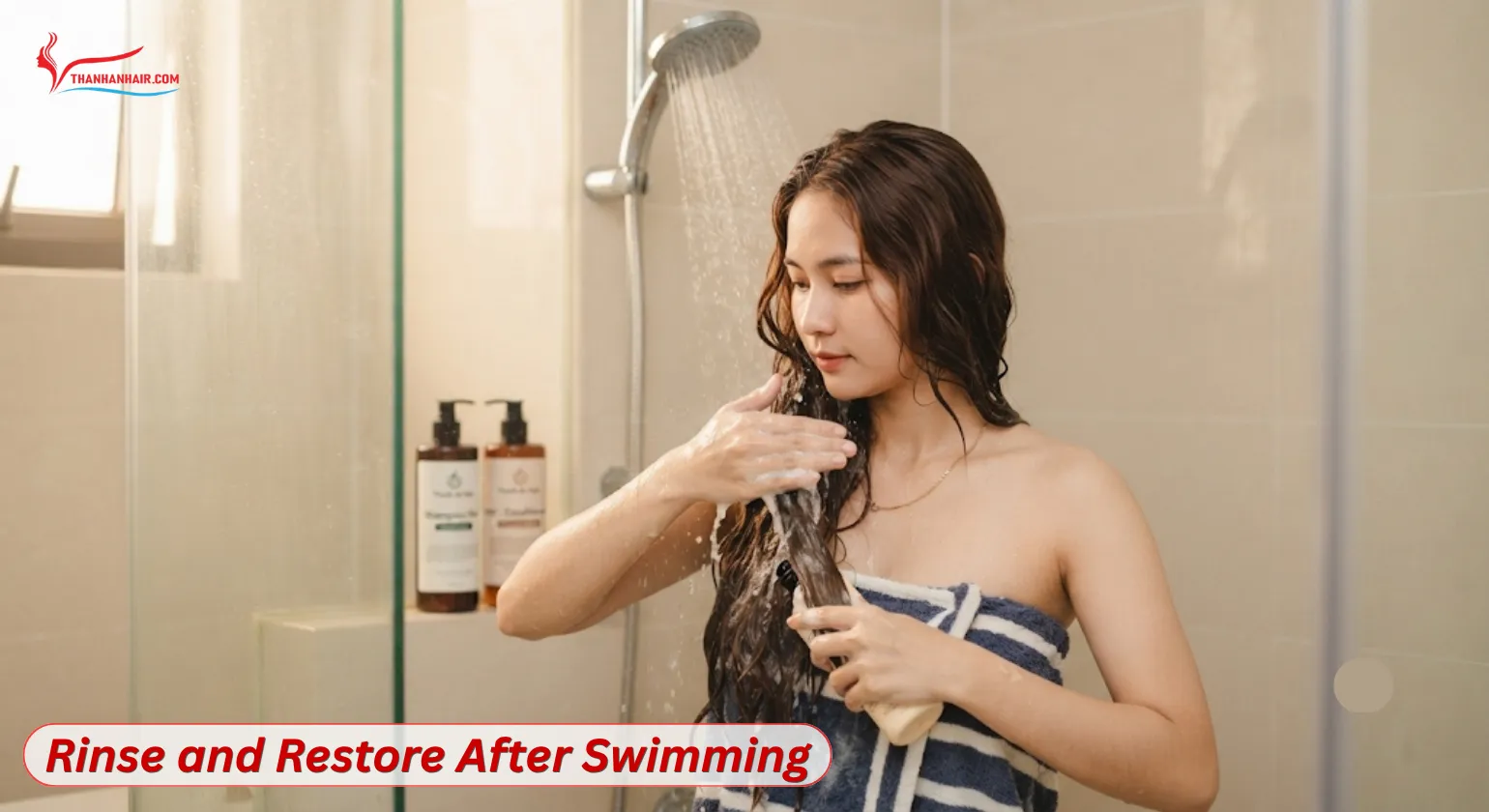
After swimming, do not leave chlorine or salt residue sitting on your extensions for an extended period. Rinsing and cleansing promptly can help remove unwanted residue and make the hair easier to manage.
Step 1: Rinse Thoroughly with Fresh Water
Rinse your hair with clean, lukewarm water as soon as possible after swimming.
Allow the water to run through the lengths and ends. If you wear installed extensions, rinse carefully around the attachment areas without pulling or rubbing them.
Step 2: Use a Gentle Shampoo
Choose a gentle shampoo suitable for your hair type and extension method.
Massage the scalp gently and allow the shampoo to clean the hair lengths without scrubbing them aggressively. Avoid rough circular movements that may encourage tangling.
If you swim regularly in a pool and suspect mineral buildup, a suitable chelating shampoo may help remove deposits. However, it should only be used when appropriate for your hair and installation method. Follow the product instructions and avoid excessive use.
Step 3: Apply Conditioner
Apply conditioner mainly to the mid-lengths and ends.
Leave it on for the recommended time, then rinse thoroughly. Avoid applying conditioner directly to tape bonds or other attachment points unless your extension specialist confirms that the product is suitable.
Step 4: Use a Deep Conditioning Treatment When Needed
If your extensions feel dry after swimming, a suitable moisturizing mask can help improve softness and manageability.
Use it according to the product instructions rather than applying excessive amounts. More product does not necessarily mean better conditioning, and heavy buildup can make extensions feel greasy.
7. How to Dry and Detangle Hair Extensions After Swimming
Drying your extensions properly is just as important as washing them. Leaving the hair damp for too long, especially around attachment points, can encourage tangling and make the hair more difficult to manage.
Follow these steps:
- Remove excess water gently. Use a soft towel to squeeze or blot the lengths. Do not rub the hair back and forth.
- Separate the hair into sections. This makes detangling easier and helps you identify knots without pulling on the entire length.
- Use a suitable brush or comb. Start at the ends and gradually work upward. Choose a tool designed for your extension type.
- Support the hair while detangling. Hold the section above the tangled area to reduce tension on the roots and attachment points.
- Dry with suitable heat. Air-drying is a gentle option when practical. If you need a blow dryer, use a low or medium setting and keep the airflow moving.
- Check the attachment areas. Make sure the bonds, tapes, beads, or weft areas are completely dry according to your extension specialist’s instructions.
For weft extensions, pay particular attention to drying the seam and the hair around the track. Do not leave a damp base hidden under thick hair for an extended period.
If you encounter a stubborn knot, apply a suitable detangling product to the lengths and carefully separate the strands with your fingers. Avoid forcing a brush through the knot.
8. How to Keep Raw Hair Extensions Soft and Shiny After a Beach Holiday
After several days of swimming, sun exposure, and outdoor activities, your extensions may need additional care. A consistent maintenance routine can help preserve their appearance and make them easier to style.
Use a Moisturizing Hair Mask
Apply a suitable hair mask to the mid-lengths and ends when the hair feels dry. A moisturizing treatment can improve softness and reduce friction between strands.
Follow the recommended application time and rinse thoroughly.
Apply a Lightweight Hair Serum
A small amount of hair serum can help smooth the hair surface and improve shine. Apply it sparingly to the lengths and ends.
Avoid using too much product, particularly near tapes, bonds, or beads, where buildup may interfere with the attachment or make maintenance more difficult.
Limit Excessive Heat Styling
After swimming, give your extensions time to recover before using high-temperature styling tools.
When heat styling is necessary, apply a suitable heat protectant and use a moderate temperature. Remember that heat protectant can reduce some styling-related stress, but it does not make frequent or excessive heat exposure harmless.
Protect Hair from Direct Sunlight
If you are spending several hours outdoors, wear a wide-brimmed hat or stay in the shade when possible. This is especially useful for blonde, highlighted, or colored extensions that may be more visibly affected by prolonged sun exposure.
Store Removable Extensions Correctly
If you wear clip-ins or other removable extensions, make sure they are completely dry before storing them.
Brush them gently, arrange them neatly, and keep them in a clean, dry storage bag or box. Do not put damp extensions away, as trapped moisture can affect their condition.
9. Does Raw Hair Quality Matter When Swimming?
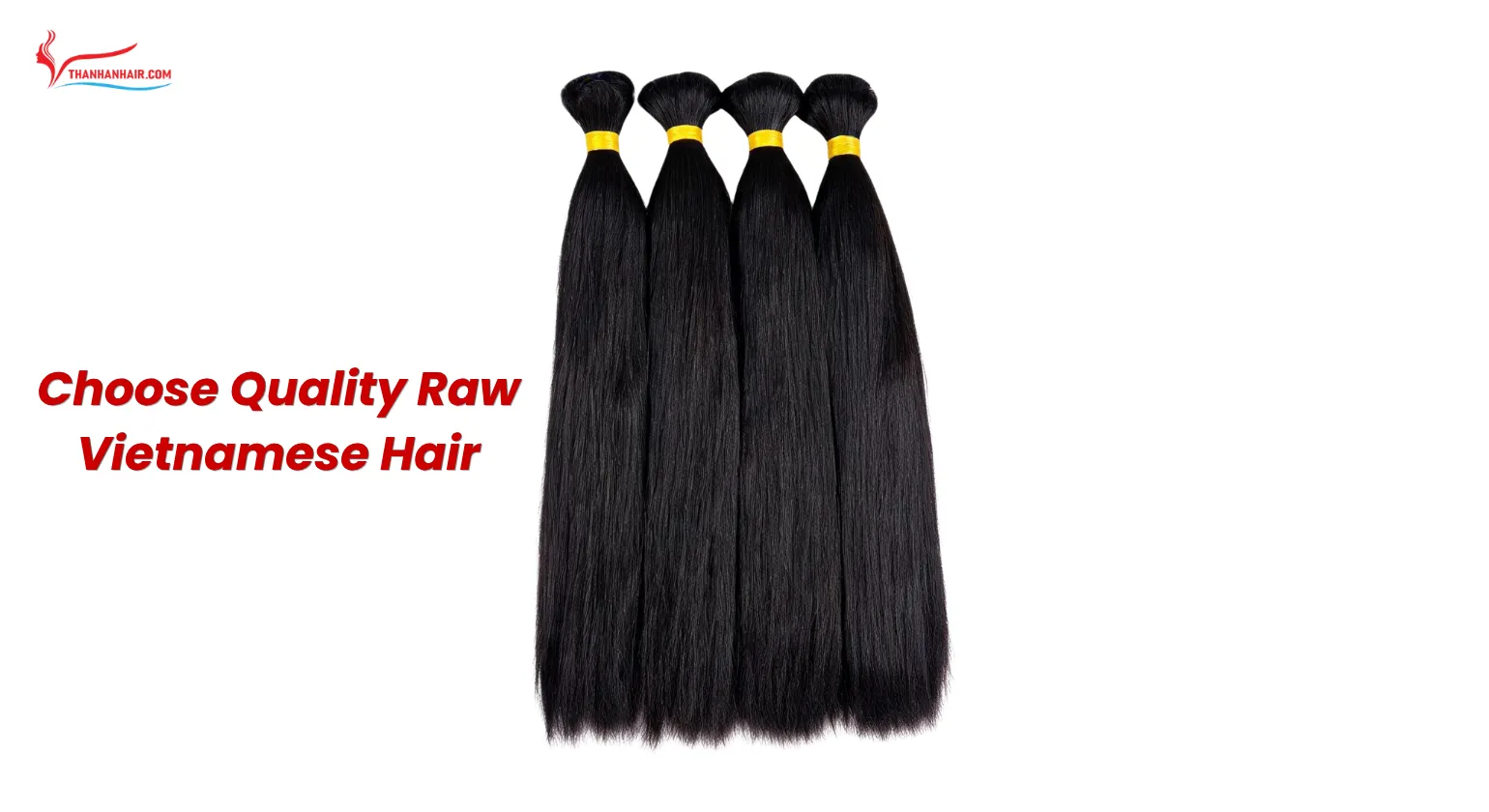
Yes. Hair quality can influence how extensions respond to repeated washing, styling, and environmental exposure. However, no type of human hair is completely resistant to chlorine, saltwater, or sun damage.
Raw hair extensions are often valued for their natural appearance and styling versatility. Their actual performance still depends on the original hair condition, processing history, manufacturing quality, and ongoing maintenance.
When evaluating raw hair extensions, consider the following factors:
- Hair condition: Check whether the strands feel soft and manageable.
- Texture consistency: Look for a natural texture that suits your intended style.
- Shedding and tangling: Test a sample to understand how the hair behaves during brushing and washing.
- Processing history: Ask the supplier how the hair has been collected and processed.
- Supplier transparency: Choose a manufacturer that can provide clear product information and consistent specifications.
For salons, distributors, and professional buyers, requesting samples before placing a bulk order is a practical way to assess quality. You should also confirm the product’s specifications and care recommendations rather than assuming that every raw hair product will respond identically to water and styling.
=>> Shop now: Bulk Human Hair 100% Vietnamese Hair Factory Price – Explore Vietnamese human hair bundles with different lengths and specifications for professional hair businesses.
10. Common Mistakes to Avoid When Swimming with Hair Extensions
Even high-quality extensions need proper care. Avoid these common mistakes to help maintain their appearance.
1. Swimming with Clip-In Extensions
Clip-ins are designed to be removable. Take them off before swimming and store them safely in a clean, dry place.
2. Leaving Saltwater or Chlorine in the Hair
Rinse your extensions with fresh water as soon as possible after swimming. Do not wait until the end of the day if you can rinse them earlier.
3. Brushing Aggressively When Wet
Wet hair can be more vulnerable to stretching and mechanical damage. Detangle slowly, support the hair above the knot, and work from the ends upward.
4. Applying Heavy Oils Near Attachment Points
Some oily products may affect tape adhesives or create buildup around bonds and beads. Apply conditioning products carefully and follow your stylist’s recommendations.
5. Using Excessive Heat After Swimming
Hair that already feels dry does not need additional stress from high-temperature styling tools. Let it dry gently and use heat only when necessary.
6. Going to Bed with Wet Extensions
Make sure your hair and attachment areas are dry before sleeping. This helps reduce tangling and friction overnight.
7. Ignoring Regular Maintenance
Installed extensions require routine maintenance according to the attachment method and your stylist’s recommendations. Do not wait until the hair becomes heavily tangled or the attachment points become uncomfortable before arranging a maintenance appointment.
11. Frequently Asked Questions
Can You Swim in the Ocean with Raw Hair Extensions?
Yes, you may swim in the ocean while wearing installed raw hair extensions, but saltwater can leave the hair feeling dry or tangled. Secure your hair before swimming and rinse thoroughly with fresh water afterward. Removable extensions, such as clip-ins and halo pieces, should be taken off first.
Is Chlorine Bad for Vietnamese Raw Hair?
Repeated exposure to chlorinated pool water may contribute to dryness, roughness, and tangling. Vietnamese raw hair is still human hair, so it needs proper protection and aftercare when exposed to pool chemicals.
How Do I Protect Hair Extensions from Saltwater?
Wet your hair with fresh water before swimming, apply a suitable lightweight leave-in conditioner to the lengths if compatible with your extension method, and secure the hair in a loose braid. Rinse thoroughly with fresh water after leaving the ocean.
Can I Wear Clip-In Hair Extensions to the Beach?
You can wear clip-in extensions at the beach, but you should remove them before swimming. Store your clip-ins in a clean, dry place and put them back in once your natural hair is completely dry.
Should I Wash My Hair Extensions After Every Swim?
It is important to rinse your extensions with fresh water after swimming to remove chlorine, salt, and residue. Whether you need shampoo after every swim depends on the level of exposure, your hair condition, and your extension method. Avoid excessive cleansing that may leave the hair feeling dry.
How Can I Prevent Hair Extensions from Tangling at the Beach?
Braid your hair loosely before swimming, avoid leaving it loose in strong wind, and detangle gently after rinsing. Use a suitable extension brush and work from the ends upward.
Can Raw Hair Extensions Last Through an Entire Summer of Swimming?
They may remain in good condition with careful preparation and consistent maintenance, but their lifespan depends on hair quality, swimming frequency, installation method, and aftercare. Repeated exposure without proper care can shorten their usable lifespan. Reducing direct exposure to pool and seawater is still the better approach.
12. Final Thoughts
Swimming and beach holidays do not have to mean giving up beautiful hair extensions. With the right preparation, gentle handling, and consistent aftercare, you can help protect your raw hair extensions from unnecessary dryness, tangling, and environmental stress.
Remember three essential rules: prepare your hair before swimming, rinse it with fresh water afterward, and dry and condition it carefully. If you wear removable extensions, take them off before entering the water. If you wear installed extensions, follow care instructions specific to your attachment method.
Most importantly, choose quality hair extensions and maintain them according to their construction and condition. Healthy-looking extensions are the result of both suitable materials and proper care.
Choose Quality Vietnamese Hair Extensions from Thanh An Hair
Beautiful hair extensions begin with careful material selection and reliable manufacturing.
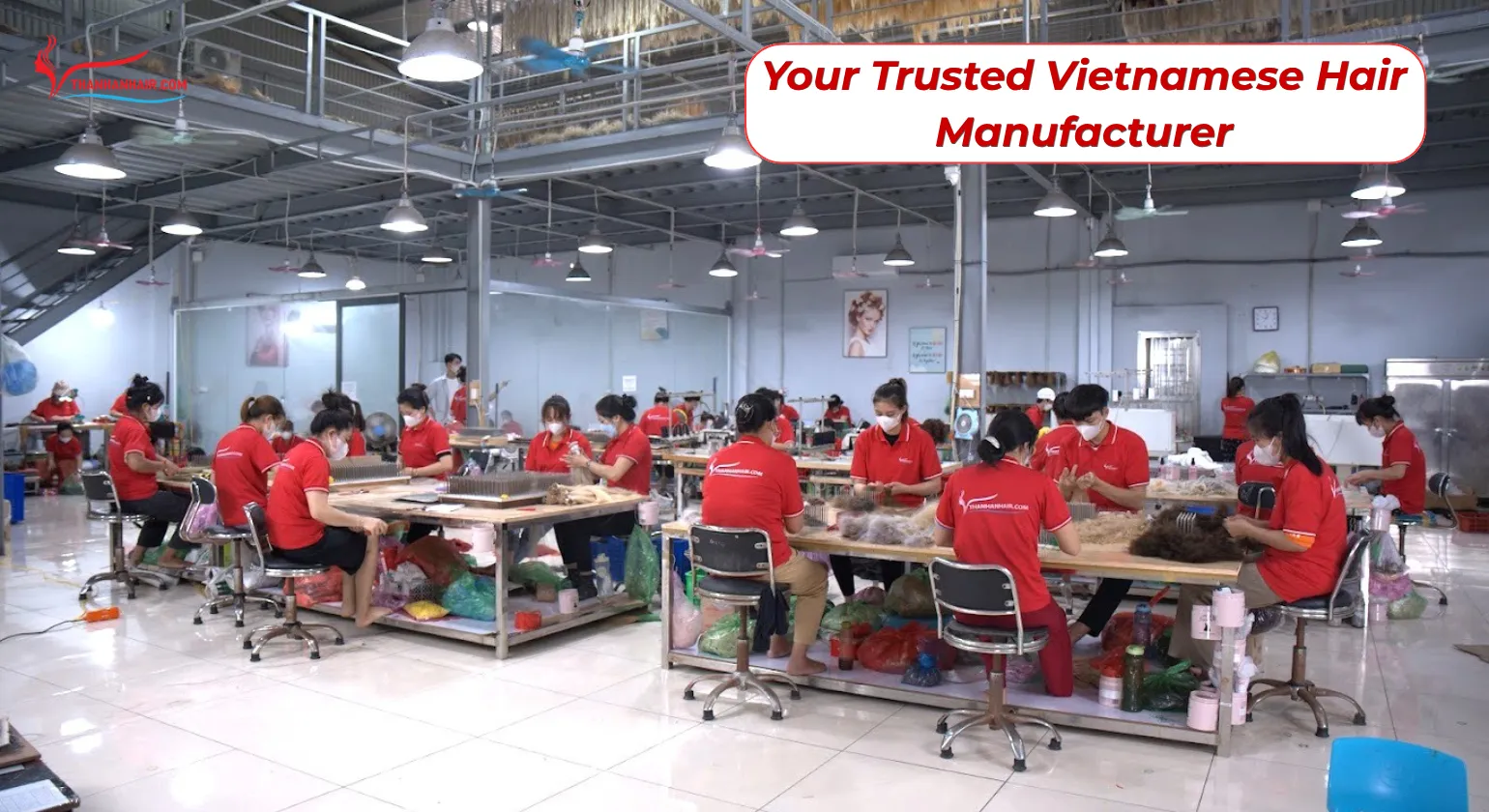
At Thanh An Hair, we specialize in Vietnamese human hair products for salons, distributors, and wholesale buyers. Our product range includes bulk hair, machine weft, hand-tied weft, tape-in extensions, keratin tips, clip-ins, and other extension styles.
If you are sourcing hair materials for your salon, extension services, or wig production, explore our Vietnamese bulk human hair options. You can review product details, available lengths, colors, and specifications to find products that suit your business requirements.
Our factory and production capabilities include:
- A 2,000 m² manufacturing facility in Vietnam.
- Approximately 300 skilled artisans and a professional office team.
- Production capacity of up to 10 tonnes of hair extensions per month.
- MOQ starting from 1 kg for eligible bulk hair and weft orders.
- Multiple textures, lengths, and stock colors.
- OEM and private-label manufacturing services.
We understand that professional buyers need more than attractive product photos. They need consistent quality, clear communication, and a dependable manufacturing partner.
Whether you are sourcing raw hair bundles for your salon, looking for bulk Vietnamese hair, or developing your own hair extension brand, our team can help you review product options and confirm the specifications for your order.
For salons, distributors, and brands looking for a long-term manufacturing partner, Thanh An Hair also provides wholesale product options and OEM solutions to support different business needs.
=>> Explore: Wholesale Hair Extensions – Thanh An Hair – Discover our product range, factory capabilities, and OEM solutions for wholesale buyers.
Contact Thanh An Hair
WhatsApp/Hotline: (+84) 973 522 855
Official Website: https://thanhanhair.com/
Instagram: https://www.instagram.com/thanhanhair/
Email: thanhanexport@gmail.com