
Raw Vietnamese Hair
Machine Weft vs Hand-Tied Weft: Which Should You Choose? (2026)
Nov
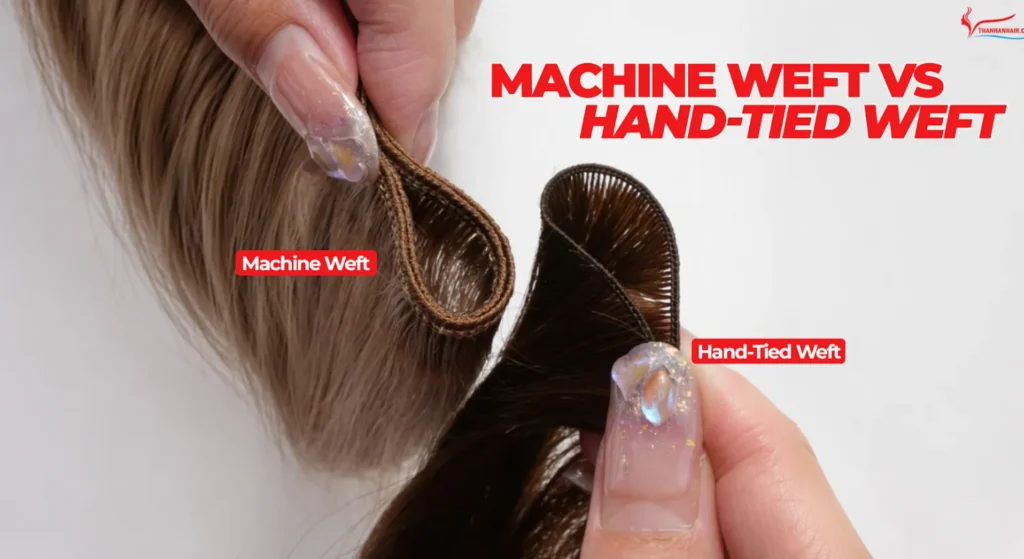
When comparing hand-tied weft vs machine weft hair extensions, understanding the differences in construction, thickness, and installation helps salons and buyers choose the right option.
So, should you choose hand-tied or machine weft extensions if you own a salon, operate a hair distribution business, or are looking for high-quality hair extensions? Making the right decision requires evaluating construction, thickness, application, installation techniques, and cost rather than focusing on price alone.
1. What Are Machine Weft Hair Extensions?
Machine Weft is a type of hair extension manufactured using specialized sewing machines. Individual hair strands are arranged and sewn together to form a continuous weft track. This stitching holds the strands together, creating a relatively secure attachment base that stylists can use with suitable installation methods.
One notable feature of Machine Weft is its clearly defined and relatively strong construction. At Thanh An Hair, the weft is reinforced with double stitching to improve stability and help minimize shedding along the seam. You can explore Machine Weft hair extensions to learn more about this product’s construction and characteristics.
Key advantages of Machine Weft include:
- Secure construction: Machine stitching holds individual hair strands together in a relatively stable track.
- Versatile applications: It can be used for clients who want to add noticeable length and volume, particularly those with medium to thick natural hair.
- Multiple product options: Available in different lengths, textures, and density options.
- Suitable for salon businesses: Its practical construction makes it a versatile option for building a hair extension service menu and purchasing wholesale inventory.
However, Machine Weft tracks generally have a certain amount of thickness. For clients with very fine hair or those who want their attachment points to remain discreet, stylists need to carefully consider track placement, the number of wefts used, and the installation technique.
When comparing Machine Weft vs Hand-Tied Weft, Machine Weft is often valued for its secure stitching and versatility. Nevertheless, actual durability also depends on hair quality, sewing techniques, installation methods, and aftercare.
2. What Are Hand-Tied Weft Hair Extensions?
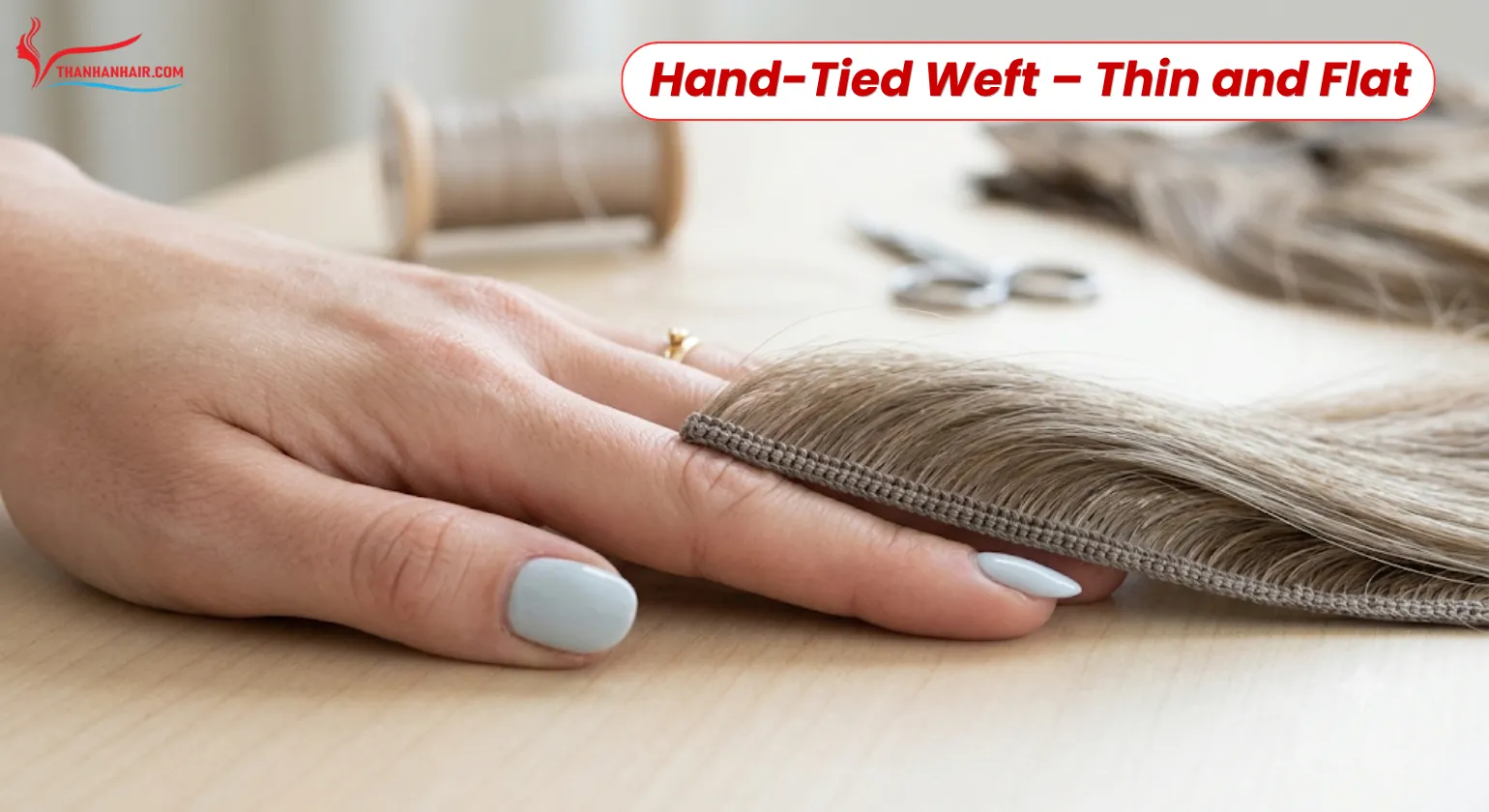
Hand-Tied Weft is a type of hair extension created by manually tying and weaving individual hair strands into thin tracks. Instead of relying on conventional machine stitching, skilled workers use detailed hand-tying techniques to create a smaller, flatter weft base.
The main characteristic of this product is its thin and lightweight construction, which allows the weft to lie relatively flat against the scalp when installed correctly. For this reason, hand-tied hair extensions are often considered by clients who want discreet attachment points and less bulk around the installation area.
Key advantages of Hand-Tied Weft include:
- Thin construction: Its narrow weft base helps the extensions lie flatter against the head.
- Lightweight feel: Its slim structure may reduce the feeling of bulk around the attachment area when the appropriate weight is selected.
- Natural appearance: Suitable for hairstyles where discreet attachment points and a seamless finish are important.
- Versatile styling options: Worth considering for clients with fine hair or those who prefer less visible attachment points.
However, Hand-Tied Weft is not necessarily the best choice for every client. Its thin handmade construction requires careful handling and professional installation. Stylists should follow the manufacturer’s instructions, especially when adjusting the weft length, because cutting it incorrectly may cause the track to unravel.
When researching hand-tied extensions, buyers should pay attention to the consistency of the hand-tied construction, the security of the knots, and the quality of the hair itself. You can examine Hand-Tied Weft hair extensions at Thanh An Hair to learn more about this product type. For salon owners and wholesale buyers, understanding product specifications and ordering requirements is also important when selecting a suitable supplier.
3. Machine Weft vs Hand-Tied Weft: A Detailed Comparison
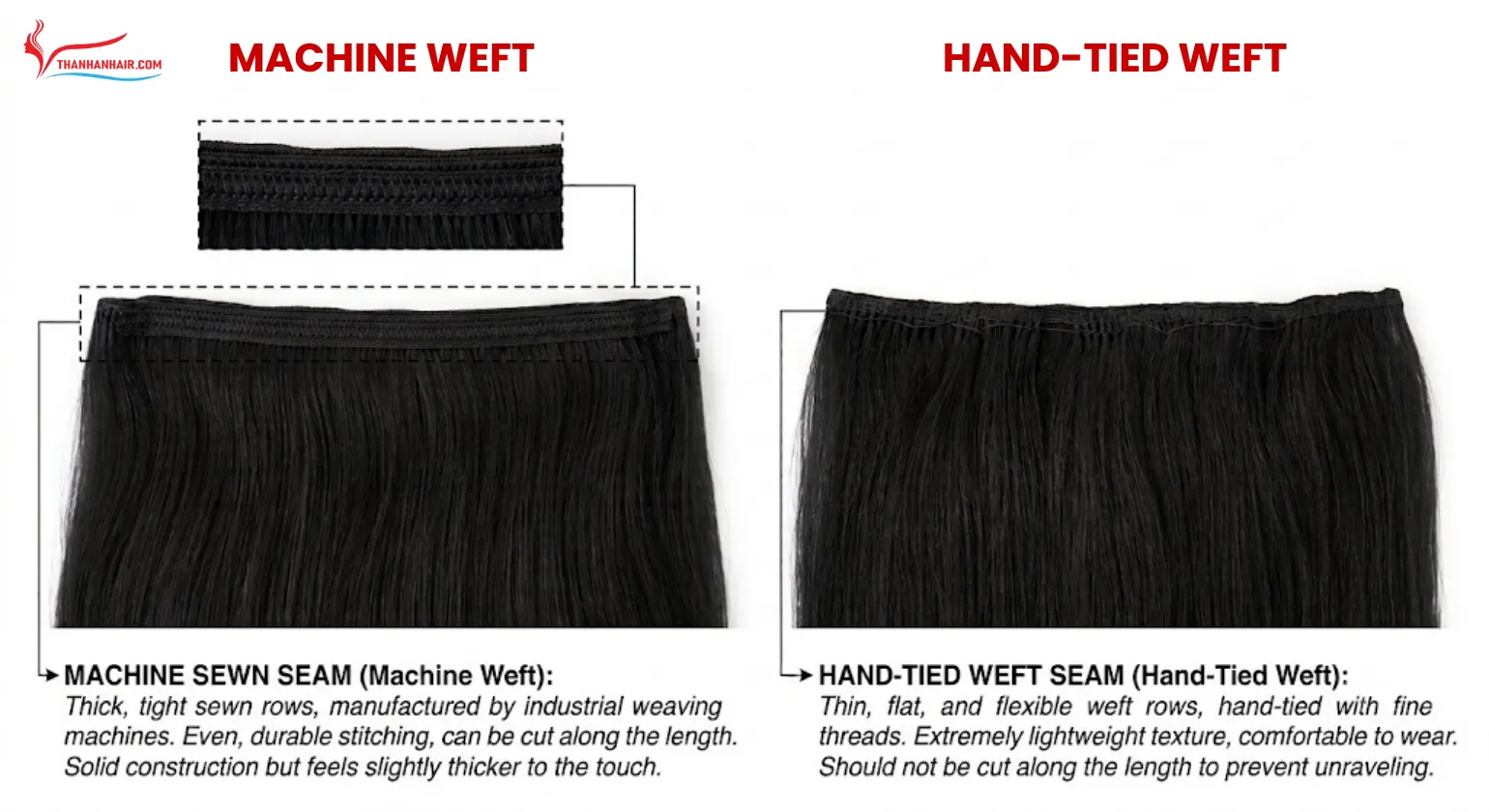
To better understand their differences, the following table compares the key characteristics of both weft types. It can also help salon owners recommend suitable products based on each client’s needs.
| Criteria | Machine Weft | Hand-Tied Weft |
| Manufacturing method | Sewn using specialized machinery | Manually tied and woven |
| Weft construction | Generally thicker and sturdier | Thin, narrow, and flat |
| Feel after installation | Depends on track thickness and hair weight | Generally lightweight and less bulky |
| Discreet appearance | Requires appropriate placement | Offers an advantage with its thin track |
| Track security | Reinforced machine stitching | Depends on tying and finishing techniques |
| Customization | Depends on product construction and manufacturer instructions | Requires careful handling when cutting or adjusting |
| Suitable clients | Those seeking added length, volume, and versatility | Those who prioritize thin, flat attachment points |
| Cost | Generally more affordable | May cost more due to the handmade process |
Overall, comparing Hand-Tied Weft vs Machine Weft is not about deciding whether one product is superior to the other. Each type has a different construction designed to meet specific styling and installation needs.
If you prioritize secure stitching, versatility, and affordability, Machine Weft is worth considering. If you prefer a thinner, lighter, and more discreet attachment, Hand-Tied Weft may be a better fit. When comparing these two options, buyers should evaluate both the hair quality and the overall construction of each product.
4. Should You Choose Hand-Tied or Machine Weft Based on Your Needs?
The decision about whether to choose hand-tied or machine weft extensions should depend on the client’s natural hair condition, desired hairstyle, budget, and the salon’s installation expertise.
Choose Machine Weft if:
- The client has medium to thick natural hair.
- They want noticeable increases in hair length and volume.
- They prioritize a securely constructed weft track.
- The salon needs versatile products for different hair extension services.
- They want to balance product cost with salon or business requirements.
Choose Hand-Tied Weft if:
- The client prioritizes thin and flat attachment points.
- They want to minimize bulk around the installation area.
- They prefer natural-looking and discreet hairstyles.
- The salon has stylists trained in hand-tied installation techniques.
- They are willing to invest in suitable products and professional installation.
For clients with fine or weak hair, Hand-Tied Weft should not automatically be considered completely safe. Extension weight, the number of weft tracks, installation tension, and scalp condition all influence the wearing experience. Stylists should assess the natural hair and distribute the extension weight appropriately before installation.
If a client is experiencing significant hair breakage, excessive shedding, or scalp sensitivity, it may be better to postpone the installation and assess the hair condition first. This helps minimize the risk of applying unsuitable tension to fragile natural hair.
For salons, hand-tied extensions and Machine Weft can both be included in the product range. Offering both options allows stylists to provide more flexible recommendations instead of relying on a single weft type for every client.
5. Key Factors That Determine Weft Hair Quality and Durability
Whether you choose Machine Weft or Hand-Tied Weft, the quality of the hair itself remains essential. Even a well-constructed weft can become tangled, dry, or less manageable over time if it is made with low-quality hair.
When evaluating products, salon owners and hair distributors should pay attention to the following factors:
- Hair source: Confirm that the product is made from human hair and check its hair type and previous processing history.
- Consistency: Check whether the length, thickness, and hair distribution are consistent throughout the weft.
- Weft construction: Examine whether the stitching or hand-tied knots are even, secure, and free from loose sections.
- Hair condition: Assess softness, tangling, split ends, and unusual shedding.
- Product specifications: Confirm the weight, length, texture, and density before ordering.
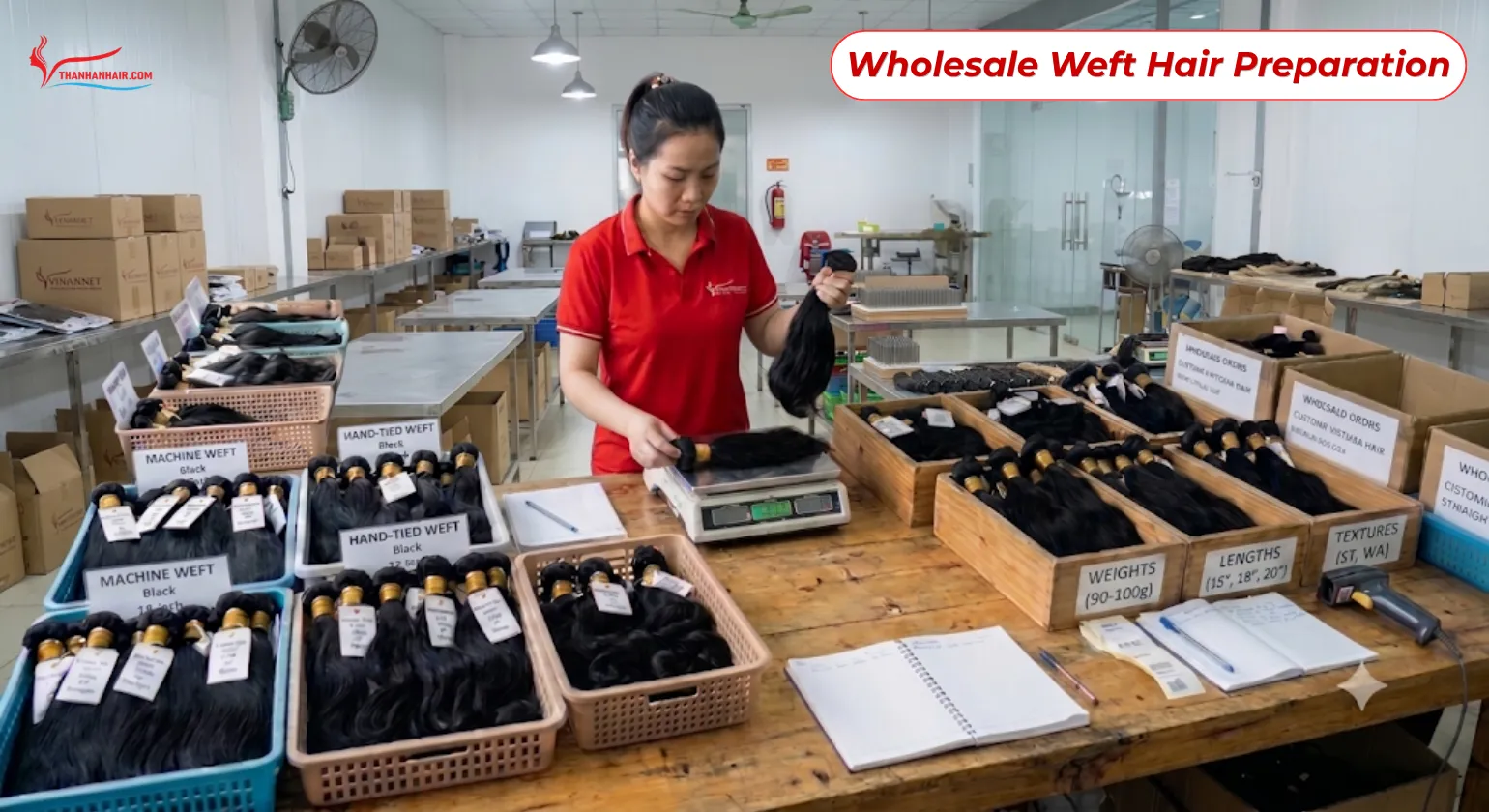
Thanh An Hair offers several weft categories, including Machine Weft, Hand-Tied Weft, Genius Weft, and Flat Weft. The manufacturer also provides different lengths, colors, and textures to meet the needs of salons and wholesale distributors. Buyers can explore the Weft Hair collection at Thanh An Hair to compare the available product options.
Before placing an order, buyers should also understand how hair length and weight affect the final result. This is particularly important for salons that need to match extension specifications with different client requirements. For more guidance, see how to choose weft hair length and weight.
According to information published by Thanh An Hair, the company’s factory covers approximately 2,000 m², employs around 300 workers, and has a production capacity of up to 10 tonnes of hair extensions per month. This production scale supports the manufacturing and supply of various hair extension products for international customers.
According to clinical dermatological guidance discussed by Healthline regarding traction alopecia, excessive tension or heavy wefts can contribute to hair breakage and damage to fragile roots. Therefore, selecting an appropriate extension weight and using professional installation techniques are important considerations.
6. MOQ, Production Time, and Ordering Policies at Thanh An Hair
For salons and wholesale distributors, minimum order quantities and production timelines are just as important as product quality when choosing a hair manufacturer.
According to the information published on the Thanh An Hair website:
- MOQ: Starting from 1 kg for bulk hair and weft hair. Eligible customers may combine different lengths and textures within the same order.
- In-stock preparation time: Approximately 1–7 business days.
- Custom orders: May take up to 30 days, depending on order volume and technical requirements.
- International shipping: Generally around 3–10 business days after dispatch, depending on the destination and shipping provider.
- Damage or defect reporting: Customers should contact the company within 48 hours of receiving the order and provide supporting evidence as instructed.
- Returns and exchanges: Eligible requests are accepted within 7 days under the company’s policy. Custom-made products may be excluded.
- Warranty: A 30-day warranty applies to manufacturing defects, subject to the applicable warranty terms.
- Color ring matching: Color similarity is estimated at approximately 80–90%, as natural hair may vary between samples and finished products.
These details help buyers plan their inventory and distribution schedules more effectively. However, production and shipping timelines are estimates rather than fixed guarantees for every order. Buyers should confirm product specifications, delivery schedules, and return conditions in writing before making payment. For further details about minimum quantities and ordering
requirements, buyers can review Thanh An Hair’s wholesale hair extensions ordering policies.
When ordering hand-tied hair extensions, salons should request physical samples to assess the thinness and security of the weft construction. For Machine Weft, buyers should examine the stitching, consistency, and suitability of the hair weight for their intended applications.
Before placing a large order, buyers can contact the Thanh An Hair team to request a paid sample pack, obtain current product specifications, and discuss their sourcing requirements.
7. How to Care for Machine Weft and Hand-Tied Weft Hair Extensions
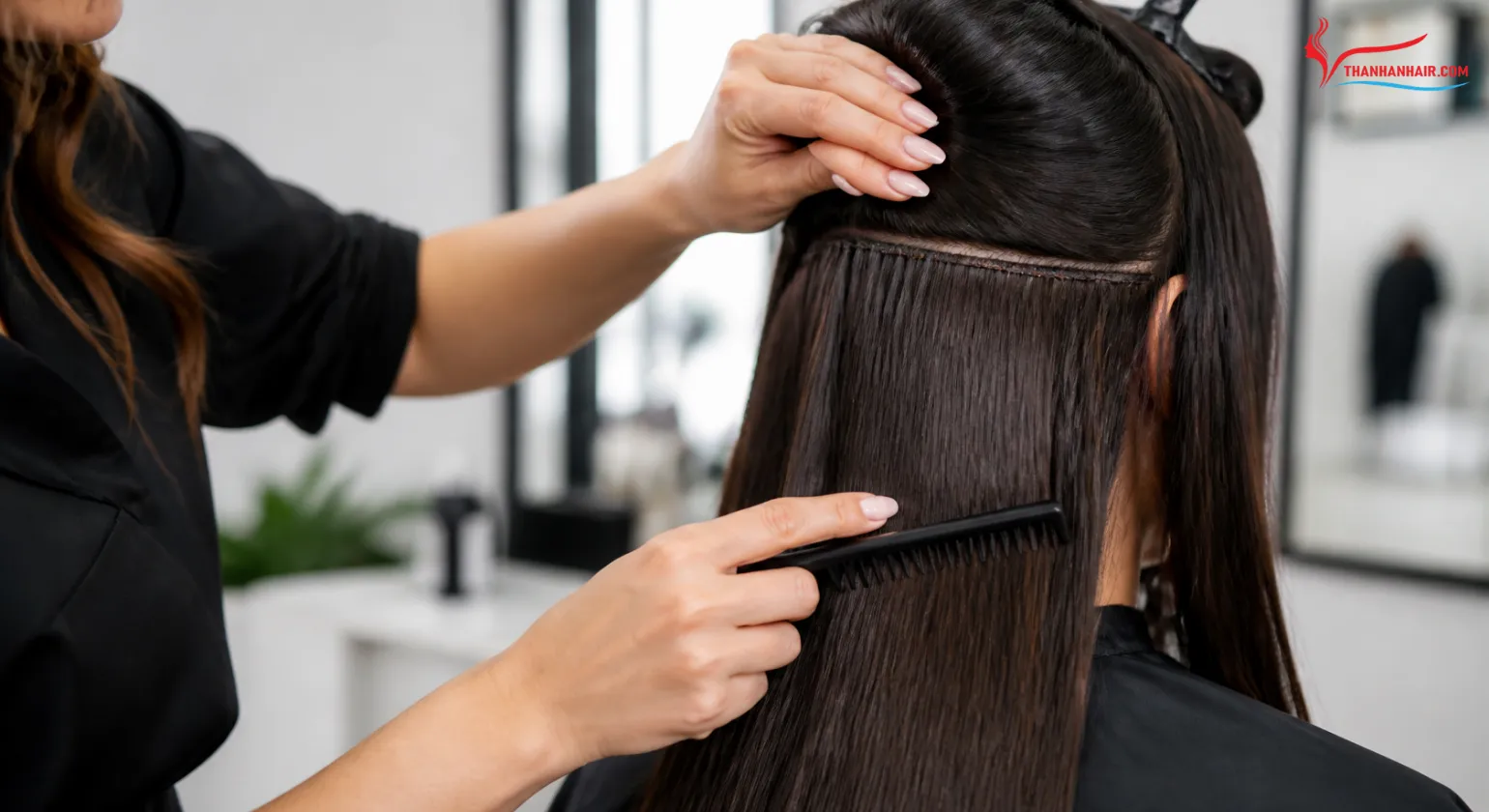
Proper aftercare helps maintain the softness of hair extensions and minimize tangling during use. Whether wearing Machine Weft or Hand-Tied Weft, clients should follow the manufacturer’s care instructions and their salon’s recommended maintenance schedule. For more detailed instructions, read how to take care of weft hair extensions properly.
Here are some basic hair extension care tips:
- Brush gently: Start from the ends and gradually work upward. Avoid pulling or applying excessive tension to the attachment points.
- Wash and condition properly: Use hair care products suitable for extensions. Avoid rubbing or twisting the hair aggressively.
- Limit excessive heat: Apply a heat protectant before blow-drying or using hot styling tools.
- Do not cut the weft yourself: This is particularly important for Hand-Tied Weft, as improper cutting may cause the track to unravel.
- Schedule regular maintenance: Visit a professional salon to check the attachment points, installation tension, and natural hair condition.
- Store properly when not in use: Keep the hair clean and dry, gently detangle it, and store it in a cool, well-ventilated place.
For additional maintenance advice, buyers can also learn how to keep weave hair silky and tangle-free. Choosing between the two weft types should involve balancing appearance, construction, cost, and maintenance requirements. Neither option is universally suitable for every client.
FAQ – Frequently Asked Questions
- What is the main difference between Machine Weft and Hand-Tied Weft?
Machine Weft is sewn using machinery and generally has a sturdy, clearly defined construction. Hand-Tied Weft is manually tied and woven, creating a thinner and flatter track. These differences affect the installation experience and the hairstyles each type is suitable for.
- Does Hand-Tied Weft look more natural than Machine Weft?
Hand-Tied Weft has an advantage in terms of its thin construction and flat profile, which can make attachment points more discreet in many situations. However, the overall appearance also depends on hair color, hair quality, extension weight, and installation technique.
- Is Machine Weft more durable than Hand-Tied Weft?
There is no universal answer. Machine Weft generally features sturdy machine stitching, while Hand-Tied Weft has a thinner handmade construction. Actual durability depends on product quality, installation techniques, and aftercare.
- Should clients with fine hair choose Machine Weft or Hand-Tied Weft?
Hand-Tied Weft may be more suitable when a client wants thinner and flatter attachment points. However, stylists should still assess natural hair density, scalp condition, and extension weight before recommending either option.
- What is the MOQ for ordering weft hair from Thanh An Hair?
The MOQ starts at 1 kg for bulk hair and weft hair. Eligible customers may combine different lengths and textures within the same order. MOQ requirements for other product categories should be confirmed separately with the sales team.
- How long does Thanh An Hair take to prepare and ship orders?
In-stock products generally require 1–7 business days for preparation, while larger or customized orders may take up to 30 days. International shipping usually takes around 3–10 business days after dispatch, depending on the destination and shipping provider.
Conclusion
When comparing Machine Weft vs Hand-Tied Weft, Machine Weft stands out for its secure construction, versatility, and affordability, while Hand-Tied Weft is known for its thin, lightweight structure and discreet attachment points. The best choice is not necessarily the more expensive option but the one that suits the client’s natural hair condition, desired hairstyle, and the salon’s installation expertise.
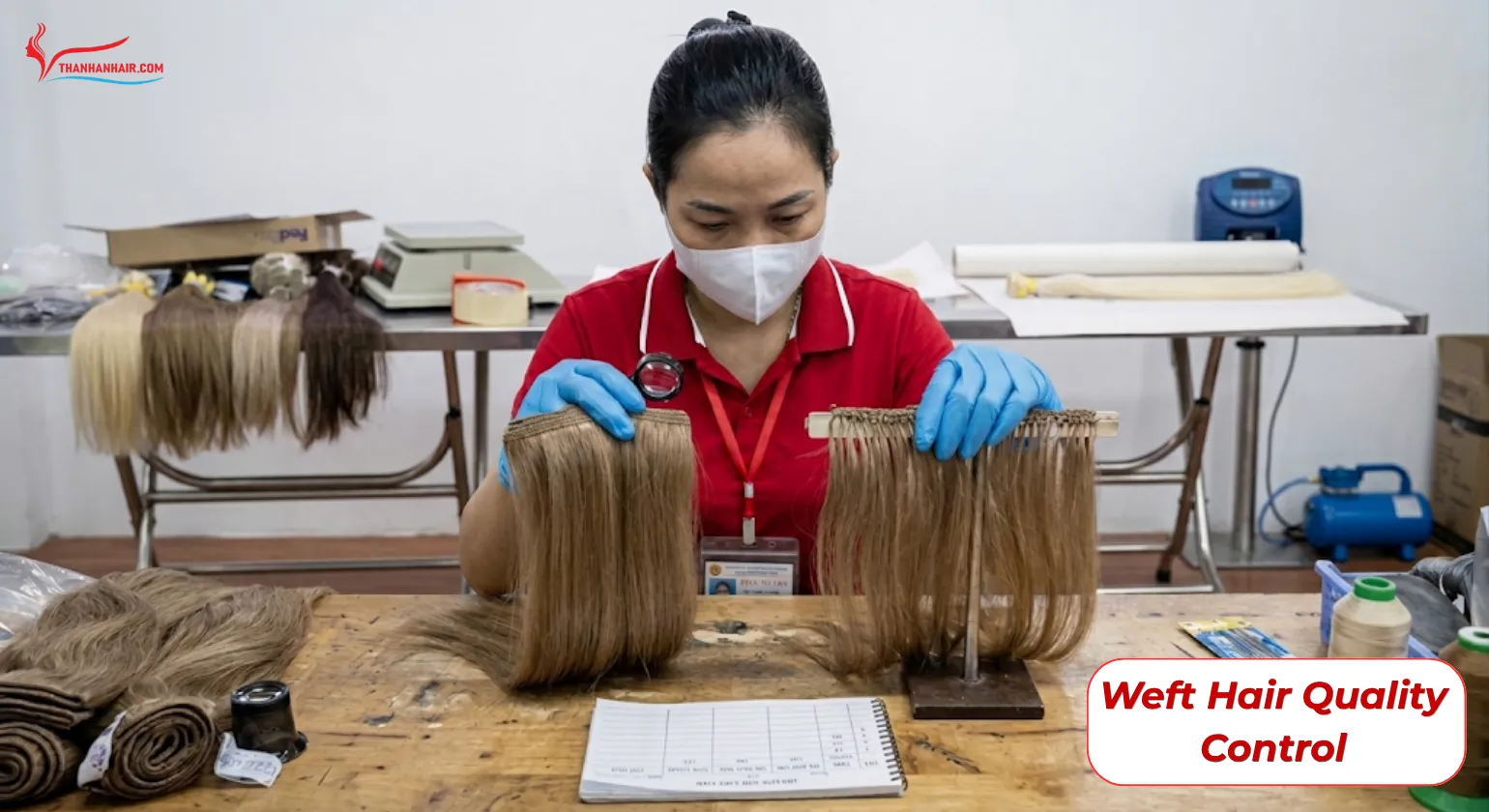
For salons and wholesale distributors, choosing a manufacturer with a clear quality control process is equally important. Thanh An Hair offers various weft types, along with different lengths, colors, and textures, giving business partners more options when building a product range for their target markets.
For salons and wholesale distributors looking for premium Vietnamese hair extensions, choosing a suitable manufacturer is an important step toward building a reliable product range. You can explore wholesale hair extensions ordering terms and sample options at Thanh An Hair to learn more about the company’s ordering process and product selections.
WhatsApp/Hotline: (+84) 973 522 855
Official Website: https://thanhanhair.com/
Instagram: @thanhanhair
Email: thanhanexport@gmail.com