
Thanh An Hair
Can You Use Purple Shampoo on Brown Hair?
Aug
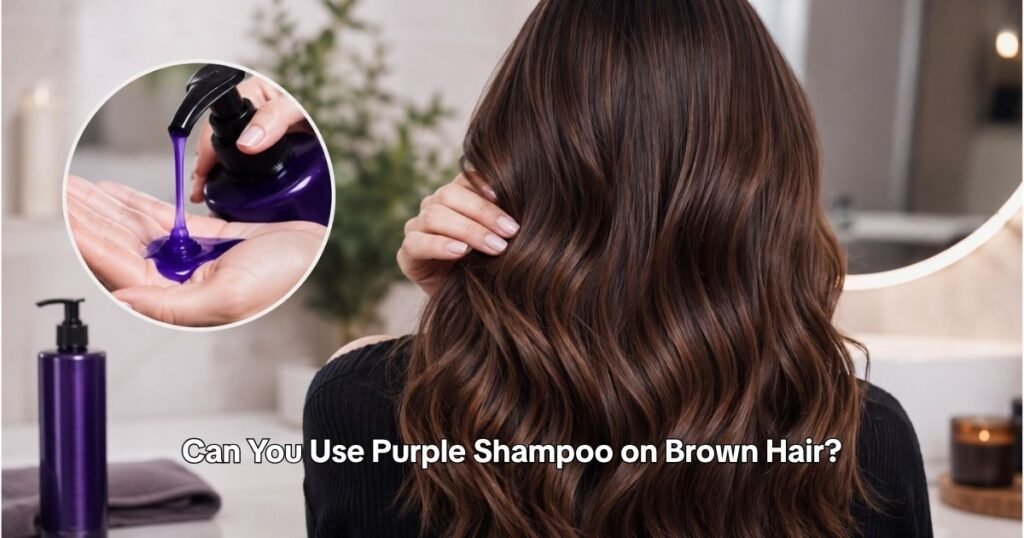
Yes, but with a limit: use purple shampoo on brown hair only where it has been lightened to level 8 or above, because that is where brassiness reads yellow. Most brunettes sit between level 4 and level 7, where brass reads orange. Orange needs blue pigment. Violet cancels yellow. Match the pigment to the tone you see, not to the shade on the bottle.
That single distinction decides whether a purple shampoo brightens your hair or turns it flat and muddy. Almost every guide on this topic skips it. We make and color hair for a living, and we watch the same mistake repeat itself in customer photos every month: a brunette buys violet shampoo, applies it to a level 5 base, and ends up with a dull gray cast she then has to correct.
What does purple shampoo actually do to brown hair?
Purple shampoo deposits a violet direct dye on the outside of the hair fiber. It does not lift, bleach, or change your natural pigment. The common colorant is Acid Violet 43, an anthraquinone dye also listed as Ext. D&C Violet No. 2, which produces a bluish violet hue in daylight. Because it is a direct dye rather than an oxidative one, it needs no developer and it washes out over roughly one to eight shampoos.
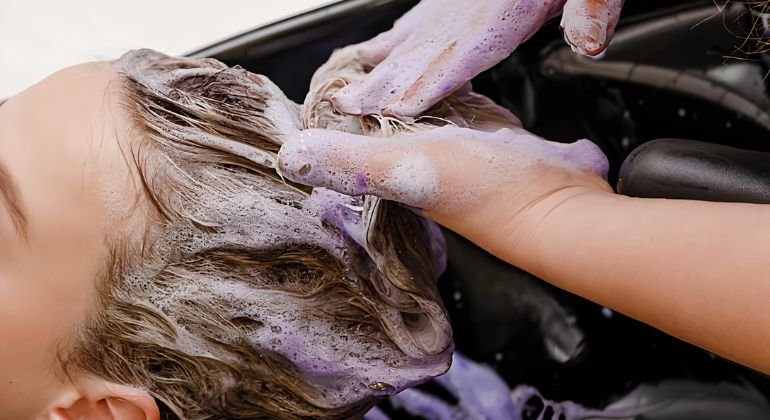
The concentration is low by design. The Cosmetic Ingredient Review panel’s safety assessment of Acid Violet 43 records a maximum on-head concentration of 0.5 percent active dye for non-oxidative hair dye use, and historical filings put shampoo formulations in the 0.1 to 1 percent band. You are applying a thin film of tint, not a color service.
So a purple shampoo can do three things to brown hair: cancel yellow where yellow exists, add cool depth where it does not, and build up on porous sections faster than you expect. Only the first of those is what you wanted.
The yellow versus orange rule: why brassy brown hair usually needs blue
Your natural color comes from two pigments. Eumelanin produces the dark brown and black tones. Pheomelanin produces the red and yellow ones, and its warmth comes from sulfur-containing amino acids built into the molecule, as the NIH StatPearls entry on melanin biochemistry sets out. Brown hair holds a great deal of eumelanin sitting over a warm pheomelanin foundation.
When anything lightens that hair, whether a bleach service, a box dye, chlorine, or a summer of sun, the two pigments do not break down at the same speed. Eumelanin oxidizes first. Pheomelanin resists longer, so the warmth underneath gets exposed while the darkness around it disappears. Researchers at Yonsei University and Hanseo University describe the sequence plainly in a 2024 electron microscopy study in Applied Microscopy: as the chromophore breaks down, brown hair moves from red to yellow.
Read that order again, because it is the whole answer. Red comes first. Yellow comes last. Brown hair has to travel through the entire orange band before it ever arrives at the yellow that violet pigment was formulated to cancel.
Hair level chart: underlying pigment by level, and the toner that neutralizes it
| Level | What you see | Warmth exposed | Correct toning pigment |
| 1 to 3 | Black to darkest brown | Deep red, mostly hidden | None needed |
| 4 to 5 | Medium brown | Red to red-orange | Blue |
| 6 | Light brown | Orange | Blue |
| 7 | Dark blonde, lifted highlights | Orange-gold | Blue-violet blend |
| 8 to 9 | Light blonde balayage ends | Yellow | Violet |
| 10 | Platinum pieces, blonde extensions | Pale yellow | Violet |
Hold a section against a window in daylight. If the warmth looks like a copper penny, you are in orange territory and violet will gray it down rather than clean it up. If it looks like straw or lemon, violet is the right tool.
How to use purple shampoo on brown hair without going gray
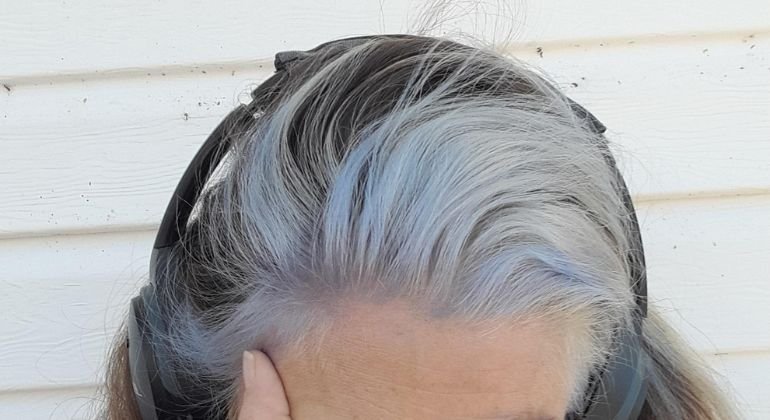
Six steps, in order. The timing matters more than the product.
- Strand test underneath first. Pick a hidden section at the nape, apply the shampoo, and time two minutes. Rinse and dry it. This one test tells you more than any label, because it reads your porosity and your actual level rather than the shade on the bottle.
- Wash with a regular shampoo before you tone. Product buildup and hard-water minerals block pigment and cause patchy results. Clean the hair first, then apply the toning shampoo to damp, not soaking, hair so the formula is not diluted before it works.
- Use warm water, not hot. Hot water swells the fiber and speeds the loss of the dye already in your hair. Warm water is enough. Lightened sections are already porous from processing and need no extra help absorbing pigment.
- Apply to the light pieces only. Section the hair and place the product on balayage ends, highlights, and face-framing strands. Skip the natural brown at the root. Violet on a level 5 base adds gray depth instead of brightness.
- Time it, starting at two minutes. Set a timer. Two minutes on the first use, then adjust from what you see. Porous ends can take full pigment in under a minute, so leaving it on while you do the rest of your shower is how brown hair goes lilac.
- Rinse cool and follow with conditioner. Cool water flattens the cuticle and slows further deposit. Conditioner restores slip on sections the toning shampoo left rough, and it dilutes any pigment still sitting on the surface.
One correction to advice you will read elsewhere: several guides tell you to rinse in hot water first to open the cuticle. Skip that. Hot water swells the fiber and accelerates the loss of the artificial color already in your hair, and lightened sections are porous enough already. The American Academy of Dermatology’s coloring guidance notes that lifting hair more than three shades requires higher peroxide volumes and causes more damage, which is the same reason those sections drink pigment so fast.
How to fix brown hair that turned purple or gray
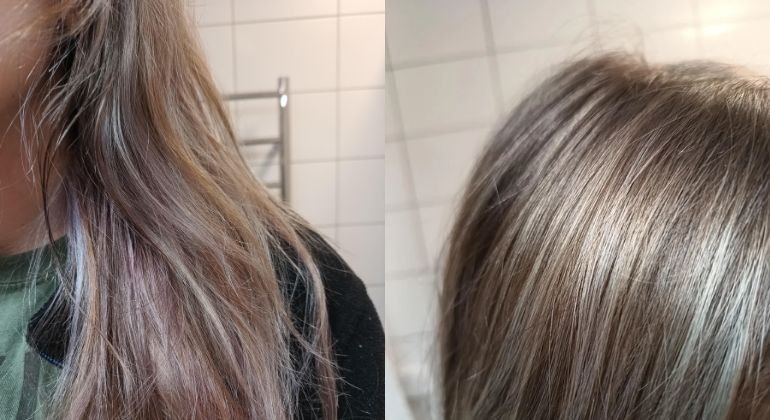
Direct dye sits near the surface, which means this is recoverable. Work in this order.
- Wash with a clarifying shampoo, twice. Most violet releases across two or three clarifying washes. Give it a few days before you judge the result.
- Follow with a moisture mask. Clarifying strips lipids along with the pigment, and the sections that over-toned are the porous ones that needed those lipids most.
- Do not reach for bleach. Lightening a cosmetic tint means damaging the fiber to remove something that would have washed out on its own. The AAD’s guidance on staying within three shades of your natural color applies here too.
- On extensions, reassess after three washes. If the cast holds, the factory toner underneath has shifted rather than your shampoo sitting on top. That is a supplier conversation, not a home fix.
When brown hair does not need purple shampoo at all
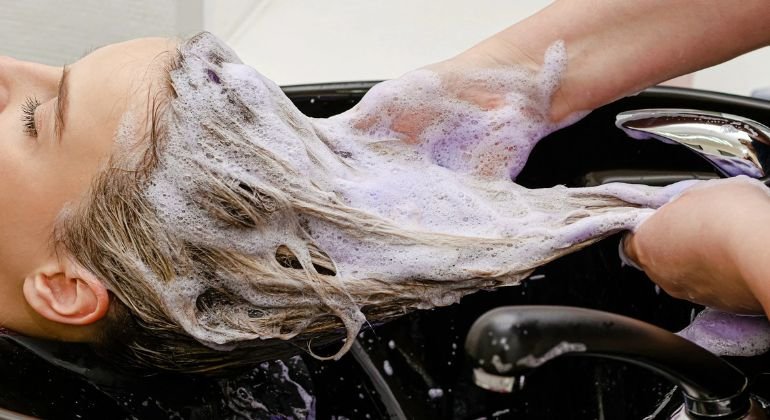
A natural level 4 or 5 brunette with no highlights, no box dye, and no sun lift has no exposed yellow to cancel. Violet shampoo on that hair adds a cool gray film and reads as dullness. The dimension people admire in rich brunette shades comes from light bouncing off an intact cuticle, not from tone correction, which is why dimensional espresso and chestnut shades keep dominating the color requests we fill.
If your brown hair looks flat rather than brassy, the problem is shine, not pigment. A gloss, a cool rinse, and less heat will do more than any toning shampoo.
Sourcing hair that tones the way you expect
Every toning problem in this article traces back to the same variable: how the fiber was processed before it reached your hands. Consistent lift and aligned cuticle mean predictable tone. We manufacture raw Vietnamese hair in-house across weft, tape, clip-in, and color bulk formats, and we can tell you the base level and toner used on any blonde shade we ship, because we lifted it ourselves.
Ordering for a salon or your own brand? Request a sample pack and our full color ring, and tell us which shades your clients tone at home. We will tell you how each one takes violet before you commit to an order.
Ready to find your perfect match? Contact us today for expert advice and exclusive discounts on premium human hair extensions.
📲Phone/WhatsApp: +1 (206) 698‑5133
🛜Instagram: RAW HAIR LUXURY COMPANY
🌐Tik Tok: RAW HAIR LUXURY
📧 Email: Rawhairluxury.us
🌐Website: rawhairluxury.com