
Thanh An Hair
The Bixie Haircut: What It Is, Who It Suits, and How to Grow It Out

Aug
A bixie haircut layers a bob over a pixie. The nape and sides sit short, about 1 to 2 inches, while the crown and face frame keep 3 to 5 inches of choppy length. You get a pixie’s clean neckline plus a bob’s movement, on straight, wavy, or curly hair.
What Is a Bixie Haircut?
A bixie is a hybrid crop: pixie in the back, bob in the front. Stylists cut the nape and the area around the ears short, then run choppy, feathered layers through the crown with longer pieces framing the face. The finished shape reads as a grown-out pixie on purpose, softer than a true crop and lighter than a bob.
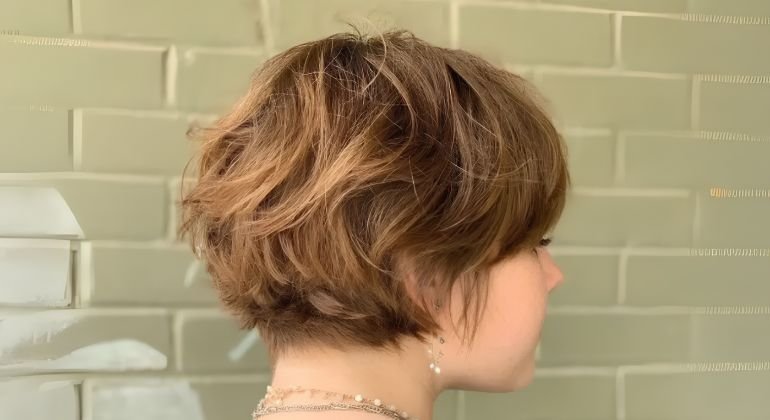
The name blends bob and pixie, and it settled into American salon vocabulary in the early 2020s. The silhouette is older than the word. Layered crops in this family filled 1990s salons, and the current version keeps that DNA while adding more texture and a lived-in finish.
The fastest way to understand the cut is to set it next to its parents.
Bixie vs. pixie vs. bob at a glance (typical salon ranges)
| Feature | Pixie | Bixie | Bob |
|---|---|---|---|
| Overall shape | Cropped close all over | Short back, longer crown and face frame | One length or lightly layered |
| Typical length | 1 to 3 inches | 1 to 2 inches at the nape, 3 to 5 inches on top | Chin to shoulder, roughly 8 to 12 inches of strand |
| Layering | Heavy, sculpted | Heavy, choppy, feathered | Minimal to moderate |
| Trim cadence | Every 4 to 5 weeks | Every 5 to 7 weeks | Every 8 to 10 weeks |
| Daily styling time | 3 to 5 minutes | 5 to 10 minutes | 10 to 20 minutes |
| Grow-out to a bob | 12 months or more | About 8 to 10 months | Already there |
Treat the ranges as starting points. A good stylist bends every one of them around your head shape, density, and texture.
Who Does a Bixie Cut Suit?
Most faces and most hair types can wear a bixie, because the cut adjusts at three points: nape length, crown height, and the face frame. The consultation decides which lever moves.
On face shape, the usual logic runs like this. Heart and diamond faces balance a narrow chin with jaw-length front pieces. Square faces soften when the face frame is point cut rather than blunt. Round faces gain length from extra height at the crown and front pieces that end at the cheekbone instead of the jaw. Oval faces can carry nearly any version.

Hair type matters more than face shape, and one distinction does most of the work. Fine describes the diameter of each strand; thin describes how many strands grow per square inch. In our factory we sort donor hair by both measures, and the same distinction holds on heads. A bixie flatters fine hair, because removing length removes the weight that drags lift out of small-diameter strands. Low density is the harder case: a short crop exposes the crown faster than a long style does, so if your part has widened, keep extra length on top or plan the cut around a clip-in crown topper from the start.
Thick, coarse hair takes the cut well when the stylist removes interior bulk. Skip that step and the silhouette turns into a triangle by week three. Curly hair should be cut dry, curl by curl, and left longer than the target, because curls contract as they dry.
Skip the bixie if you refuse trims every 5 to 7 weeks, if you depend on a daily ponytail, or if a strong cowlick at your nape has fought every short cut you have tried. The first two are commitments. The third is geometry.
How to Ask Your Stylist for a Bixie
Bring numbers and pictures, not adjectives. Choppy means five different things to five stylists. The six steps below take ten minutes of prep and prevent the two most common bixie complaints: a back cut too short and a fringe nobody discussed.
- Collect front, side, and back photos. Save three reference photos of the same haircut from three angles. The back view matters most, because the nape is where a bixie is won or lost, and it is the one angle you cannot check from the chair.
- Set the nape length in inches. Tell your stylist the shortest point you will accept, in inches. One inch reads pixie; two inches keeps a soft edge that grows out faster. An exact number survives the trip from your mouth to the shears better than any adjective.
- Choose the fringe before the cut. Decide between curtain bangs, a side sweep, or no fringe at all, and say so before scissors touch hair. The fringe sets the entire face frame, and adding one afterward shortens pieces you may want later.
- Request point-cut layers. Ask for point cutting through the crown, which leaves soft, broken ends that read as texture. A razor can suit thick, straight hair, but it frays fine or curly ends. If your stylist reaches for one, ask why first.
- Leave length on the first cut. Keep the first version half an inch longer than your reference photos, everywhere. Most salons will take more off at a two week check for free. Nobody can put it back.
- Book the next trim before you leave. Reserve a nape and edge cleanup for 5 to 7 weeks out while you are still in the chair. The bixie’s shape lives in its perimeter, and the perimeter is the first thing to blur.
How Do You Style a Bixie Haircut?
Style a bixie in three moves: lift the roots while the hair is damp, rough-dry against the direction of growth, then pinch the ends with a small amount of texture paste. The whole routine runs 5 to 10 minutes.
Adjust the recipe for your hair. Fine hair holds the shape longer when you dust texture powder at the crown before it falls flat, not after. Curl wants a diffuser and a cream instead of a paste. Coarse hair takes a smoothing balm through the ends only, never the roots. On heat, the American Academy of Dermatology’s healthy-hair guidance is to let hair partly air dry and use the lowest effective heat setting, and the advice counts double on a cut this short: damaged ends on a bixie sit right at eye level.
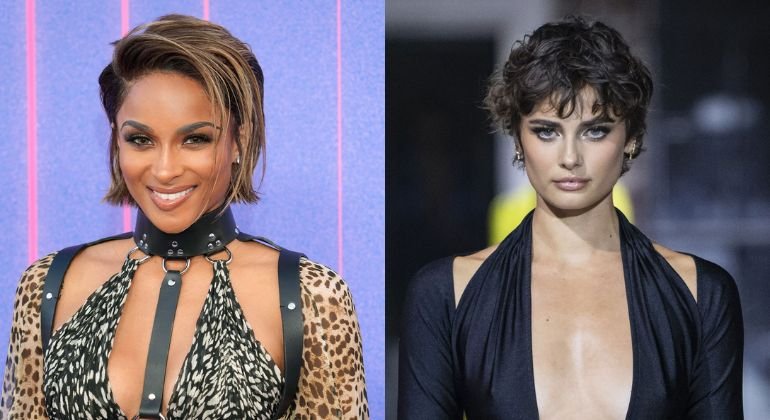
The fringe is the one section that needs its own routine. It rides your forehead all day and collects oil faster than the rest of the cut, so wash it alone at the sink between full washes. Our guide on how to keep bangs from getting greasy walks through the two minute version.
How Long Does It Take to Grow Out a Bixie?
Plan on 8 to 10 months from bixie to chin-grazing bob, and 14 to 18 months to a collarbone lob. Scalp hair grows about 0.35 millimeters a day, roughly half an inch a month or 6 inches a year, per the peer-reviewed anatomy reference StatPearls. Published growth rates range from about 0.6 to 1.5 centimeters a month across individuals, so read every timeline as a midpoint rather than a promise.
The grow-out goes better with a phase map than with patience alone:
- Months 1 to 3: hold the shape. Book nape-only cleanups so the back stays intentional while the crown gains ground.
- Months 3 to 6: cover the crown. The in-between stage. A crown topper adds density up top and hides the shape while your own hair does the work.
- Months 6 to 9: start blending length. Once the shortest layers reach roughly 6 to 8 inches, chin to jaw on most heads, clip-in wefts and a halo piece can blend for evenings out.
- Months 9 to 12 and beyond: gather it. The hair finally collects at the back, and a wrap ponytail piece covers events while the ends catch up to one length.
One honest limit: no weft, tape, or halo blends over a fresh 2 inch nape, whatever the product listing promises. Extension hair needs your hair to cover its attachment points, and a new bixie cannot. Pieces earn their place from the middle of the grow-out onward, not in week one.
When you do add pieces, follow the American Academy of Dermatology’s rules for extension wear: keep them light, have semi-permanent methods installed by a specialist, wear them for 2 to 3 months at most before a break, keep the scalp clean underneath, and rotate styles so the same strands never carry the load twice.
Blending is a fiber problem before it is a styling problem. Raw, cuticle-aligned hair moves and reflects light the way growing hair does, so it disappears into a short cut at lengths where processed hair still reads as a stripe. In our workshop we steam texture into single-donor hair instead of perming it, which is why a wave pattern can match a client’s own bend rather than fight it.
A bixie gives you the least demanding form of short hair: a pixie’s neckline, a bob’s movement, and a grow-out that comes with a map. Take the numbers in this guide into your consultation, and the cut you leave with will match the one in your photos.
Cutting short and planning the pieces for the road back? Thanh An Hair steams, sorts, and wefts raw Vietnamese hair to order for salons and stylists across the US. Contact our team for a texture match on toppers, clip-ins, and halos.
Ready to find your perfect match? Contact us today for expert advice and exclusive discounts on premium human hair extensions.
📲Phone/WhatsApp: +1 (206) 698‑5133
🛜Instagram: RAW HAIR LUXURY COMPANY
🌐Tik Tok: RAW HAIR LUXURY
📧 Email: Rawhairluxury.us
🌐Website: rawhairluxury.com