
Raw Vietnamese Hair
Real Human Hair Extensions: Top Reasons to Choose in 2026
Aug
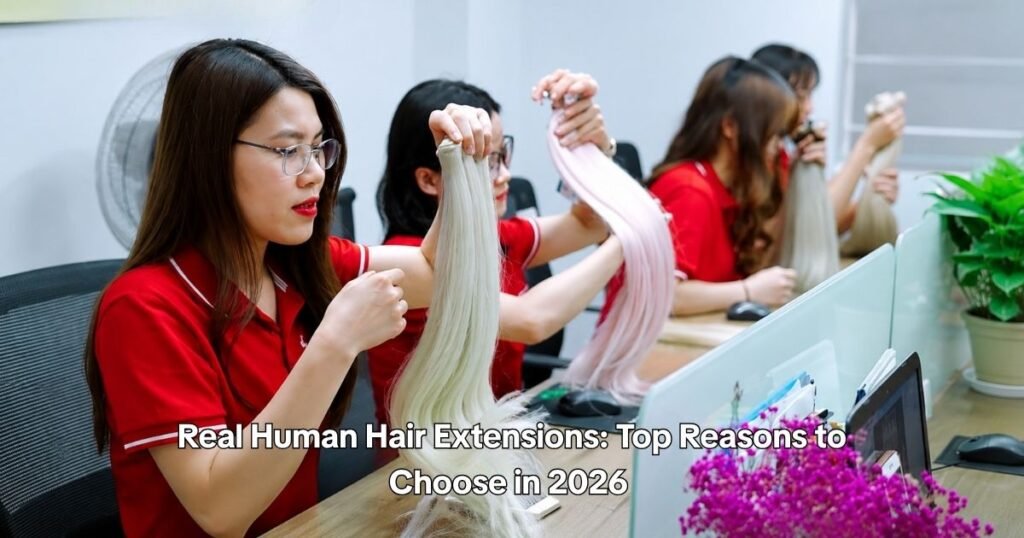
Real human hair extensions are strands cut from a human donor with the cuticle layer intact and every fiber running root to tip in one direction. Salons choose them over synthetic fiber because they take heat, hold color, reflect light like growing hair, and last through months of wear rather than weeks.
That definition sounds simple. Buying against it is not. Roughly 96 percent of the world’s raw human hair trade by value moves through a single country, most of it collected as mixed lots, and a large share of what reaches US salons labeled “100% human hair” has had its cuticle dissolved in acid and replaced with a silicone film that survives about three washes. We manufacture wefts at our own factory in Vietnam, so we see what arrives at the sorting table before anyone writes a product description. This guide covers what actually separates grades, how to test a bundle in your own chair, and what the numbers say about cost.
What Are Real Human Hair Extensions?
Real human hair extensions are hair fibers harvested from a living donor, kept in their natural growth direction, and attached to a weft, tape, keratin tip, or clip. The phrase carries no legal definition in the US, which is why it gets stretched. A bundle of chemically stripped, silicone-dipped strands mixed from a dozen donors still technically contains human hair.
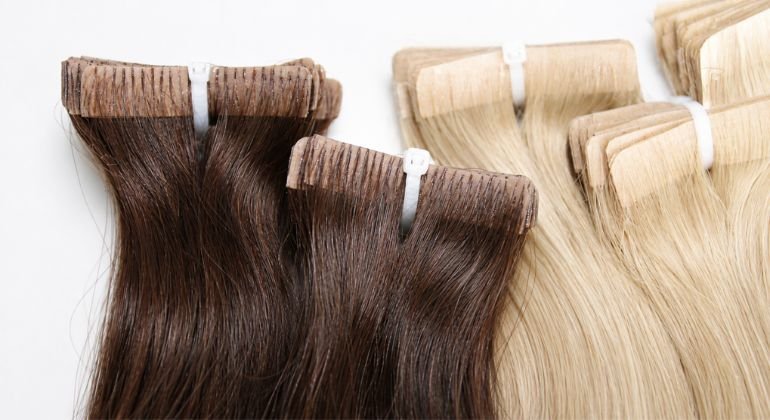
What matters is the cuticle. According to StatPearls anatomy references hosted by the NIH National Library of Medicine, the hair shaft consists of a medulla core, a cortex making up the bulk of the fiber, and a single outer layer of cells forming the shaft cuticle. Those cells overlap like roof shingles, all pointing away from the scalp. Strip that layer and you remove the fiber’s protection, its light reflection, and its resistance to tangling.
Real Human Hair vs Synthetic: The Fiber-Level Difference
Synthetic hair is extruded plastic filament, usually kanekalon or toyokalon. It arrives with a fixed curl pattern locked in by heat during manufacture and no cuticle at all. The two materials fail in completely different ways.
| Property | Real human hair extensions | Synthetic fiber |
| Surface structure | Overlapping keratin cuticle scales | Smooth extruded polymer, no scale layer |
| Heat tolerance | Styles at typical flat iron temperatures | Stiffens or melts; most sets are heat-restricted |
| Color | Takes deposit-only color and toner | Cannot be dyed; color is locked at manufacture |
| Light behavior | Diffuse, varied reflection like growing hair | Uniform sheen that reads artificial in daylight |
| Typical service life | Multiple installs with proper care | Roughly 6 to 12 weeks of regular wear |
| Upfront cost | Higher | Lower |
| Best use | Daily wear, salon clients, color work | Costume, festival color, short-term looks |
Top Reasons to Choose Real Human Hair Extensions
Six reasons hold up under testing. They are ordered by how much they affect the outcome in a real chair.
1. Cuticle alignment controls tangling
This is the whole ballgame, and most buying guides skip it. Hair researchers measure detangling behavior through the differential friction effect, the gap between how much friction a fiber generates when rubbed along the scale direction versus against it. A review of hair fiber properties published in Frontiers and archived on PubMed Central notes that a high differential friction value indicates hair that resists tangling, and that susceptibility to tangling rises with surface damage and mechanical agitation.
Reverse half the strands in a bundle and cuticle edges face each other. They interlock. That is the matting customers report at week three, and no conditioner fixes it because the cause is geometry, not dryness.
2. The lipid layer survives, so the hair keeps sliding
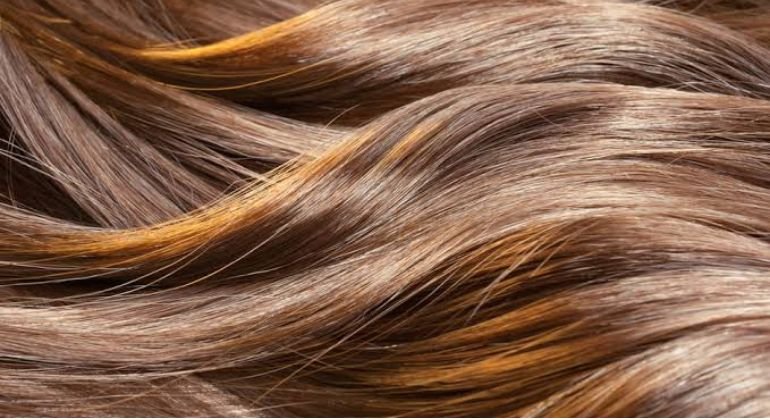
The same research describes 18-methyleicosanoic acid, a fatty acid monolayer bonded to the cuticle surface that gives hair its lubrication. High temperature and chemical processing remove it. Once it goes, friction climbs and fibers fracture more readily. Acid-bath processing of non-Remy hair destroys this layer by design, then masks the result with silicone. The silicone washes out. The lipid does not come back.
3. Color work becomes possible
A stylist can tone real human hair extensions, add lowlights, and blend a root shadow. Deposit-only color on virgin fiber behaves close to how it behaves on the client’s own hair. That single capability is why extension specialists build entire service menus around human hair and why synthetic sets stay in the costume aisle.
4. Cost per wear beats the sticker price
Run the arithmetic instead of comparing price tags. A synthetic clip-in set at $60 that frizzes past saving after 40 wears costs $1.50 per wear. A human hair set at $220 worn 300 times across two years costs about $0.73 per wear. The cheaper product is more expensive. Salon owners feel this twice, because a failed set also costs a redo appointment and sometimes a client.
5. Scalp safety depends on weight and tension
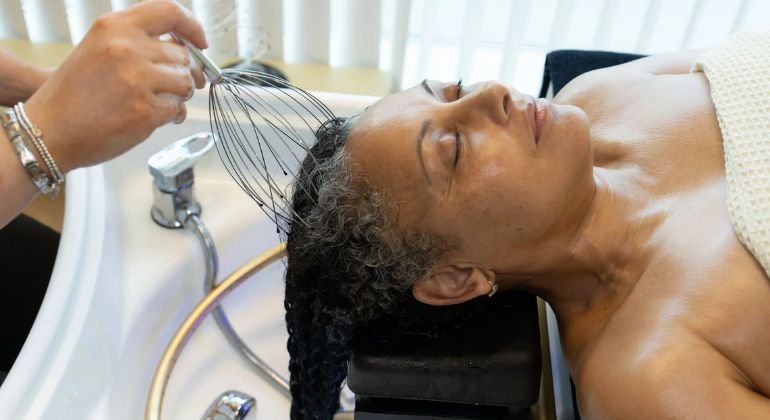
This reason cuts against easy marketing, so read it carefully. The fiber itself does not cause hair loss. Tension does. The American Academy of Dermatology lists tight buns, ponytails, cornrows, weaves, and extensions among styles that pull on the follicle and can lead to traction alopecia, and advises wearing them only occasionally, choosing sewn-in weaves over bonding glue, and removing weaves promptly if they cause pain. A Johns Hopkins review published in the Journal of the American Academy of Dermatology found roughly one third of African American women affected by traction alopecia and noted that untreated, unprocessed hair withstands greater traction.
Lighter, properly distributed weft hair extensions and clip-in sets that come out at night reduce sustained load. Anyone with existing thinning at the hairline should see a board-certified dermatologist before adding any extension method.
6. Light behaves correctly
Intact cuticle scales sit flat and reflect light in a way that varies slightly along the strand. Damaged cuticle scatters light and reads dull; extruded polymer reflects it too evenly and reads plastic. Under salon lighting either failure passes. In daylight, on video, in a client’s selfie, it does not.
Not All Real Human Hair Is Equal: Raw, Virgin, Remy, and Non-Remy
These four terms get used interchangeably in listings. They are not interchangeable, and the price spread between them runs several hundred percent.
| Grade | Donors | Cuticle | Chemical processing | Colors it holds |
| Raw | One | Intact, aligned | None; washed only | Lifts and tones predictably |
| Virgin | One or few | Intact, aligned | No dye or perm; may be steamed | Takes color well |
| Remy | Often several | Intact, aligned | May be dyed, steamed, texturized | Deposit-only color is safer |
| Non-Remy | Mixed lots | Stripped by acid, silicone coated | Extensive | Unpredictable; often refuses color |
Non-Remy hair is where most complaints originate. It costs a fraction of raw hair, looks identical on arrival, and turns on the customer somewhere around wash three. Our one donor bulk hair sits at the opposite end, collected from a single head so the texture and porosity stay consistent across the whole bundle.
How to Verify Real Human Hair Extensions Before You Buy
Five tests, run on a sample bundle, in about twenty minutes. Do them before you place a wholesale order, not after.
- Run the cuticle direction test Wet your fingers, pinch a strand near the weft, and slide down toward the tip. It should feel smooth. Slide back up toward the root and it should catch slightly. That resistance is the cuticle scale edge doing its job. If the strand feels equally slick in both directions, the cuticle has been stripped with acid and coated in silicone.
- Wash out the coating before you judge Shampoo a test bundle three times with a clarifying, sulfate-free formula and air dry it. Silicone-coated non-Remy hair feels glorious in the package and turns coarse after the third wash. Cuticle-aligned hair barely changes. Buy one bundle and run this test before you commit to a kilo.
- Check root-to-tip thickness Hold the bundle up to a window and look at the last two inches. Single drawn hair thins into wispy ends because it mixes several lengths. Double drawn hair stays thick to the bottom because short strands were pulled out by hand. Ask which one you are quoted on, since the price gap runs 30 to 60 percent.
- Heat test a small section Flat iron a half-inch section at 350F and feel it as it cools. Real hair goes soft and pliable. Synthetic fiber and heavily processed blends stiffen, smell of burnt plastic, or melt against the plate. Do this on a sample, never on hair already installed on a client.
- Ask the supplier three sourcing questions Ask who cut the hair, whether the bundle came from one donor or a mixed lot, and what chemical steps happened between the donor and the weft. A factory answers all three without hedging. A reseller who buys unmarked stock and relabels it usually cannot.
Matching the Method to the Client
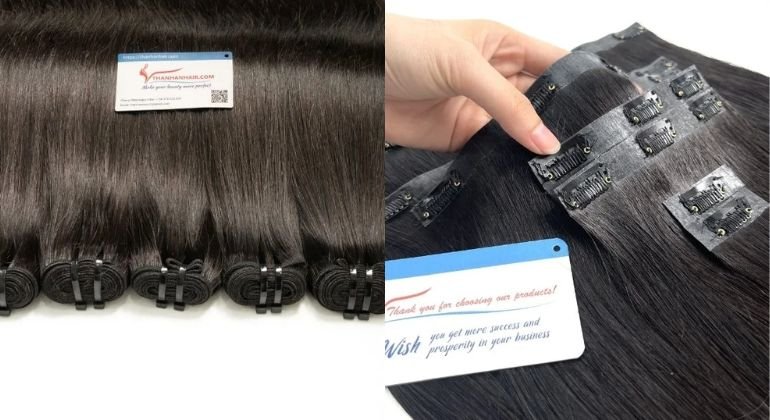
Fiber grade decides how the hair behaves. Attachment method decides who can wear it.
- Wefts suit clients wanting long-term volume with a stylist handling maintenance. Hand-tied wefts lie flattest; machine wefts hold up to more washing.
- Clip-in hair suits fine hair and anyone who wants the load off the scalp overnight. It is the lowest-tension option available.
- Tape hair sits flat and installs fast, though it needs a stylist for every move-up.
- I tip hair gives strand-by-strand placement for the most seamless blend, at the cost of install time.
Whichever method you choose, spread the weight. Concentrating rows along the same section of hairline is the single most common install mistake we hear about from salon partners.
Buy From the Factory That Made It
Thanh An Hair has produced hair extensions in Vietnam for roughly two decades as a family-run manufacturer, shipping factory-direct to salons, stylists, and resellers worldwide. We cut out the middle layer, which means you can ask us question two and get a real answer.
Request a sample bundle and run the five tests above on our hair yourself. That is a better argument than anything written on this page.
Ready to find your perfect match? Contact us today for expert advice and exclusive discounts on premium human hair extensions.
📲Phone/WhatsApp: +1 (206) 698‑5133
🛜Instagram: RAW HAIR LUXURY COMPANY
🌐Tik Tok: RAW HAIR LUXURY
📧 Email: Rawhairluxury.us
🌐Website: rawhairluxury.com