
Raw Vietnamese Hair
How to Curl Halo Hair Extensions Like a Pro
Jul
How to curl halo hair extensions like a pro, mist on a heat protectant, set your wand or iron to 150 to 180 degrees C based on how thick the hair is, and curl in small sections below the wire. Let every curl cool fully before you touch it, because cooling is what sets the shape. Standard synthetic halos need heat-free methods instead.
A halo is the fastest length upgrade in the extension world. You drop it over your crown, pull your own hair through, and walk out with volume in under a minute. The one part that trips people up is curling it: there is a wire, there is heat, and there is the fear of frying an expensive piece. None of that is hard once you know the numbers and the sequence. As a raw hair factory, we curl and quality-check thousands of wefts, so this guide gives you the exact temperatures, tools, and technique we use, plus how to make the curls actually last.
Halo curling heat settings by hair type (quick reference)
Most guides tell you to “use heat protection” and stop there. The right curling iron temperature matters more than any product. Match your tool to the hair, start at the low end of the range, and step up only if the curl will not hold.
| Hair type or condition | Recommended temperature | Best tools |
|---|---|---|
| Fine, fragile, or color-treated human hair | 150 to 165 C (300 to 330 F) | Small to medium wand, hair waver |
| Normal, healthy human hair | 165 to 180 C (330 to 355 F) | Any wand, curling iron, or straightener |
| Thick, coarse, or very long human hair | 180 to 185 C (355 to 365 F) | Large barrel wand, chopstick wand |
| Standard synthetic halo | No heat | Braids, rollers, or ribbons only |
| Heat-friendly synthetic (labeled) | Follow the label, usually under 150 C | Low-heat wand within the stated limit |
Hairdressing educators advise not exceeding roughly 180 degrees C (356 degrees F) on human hair. Above that, the cuticle can crack and lift, which leads straight to tangles and split ends, according to Schwarzkopf Professional. The American Academy of Dermatology makes the same point for hot tools in general: use a low or medium setting and keep contact brief (AAD).
First, know your halo: human hair versus synthetic
This single fact decides everything that follows. You can only heat-curl a human hair halo. A standard synthetic halo is plastic fiber; a hot barrel melts it, and the frizz never brushes out. Human hair halo extensions behave like the hair growing from your head, so they take a curl, hold it, and drop it the same way.
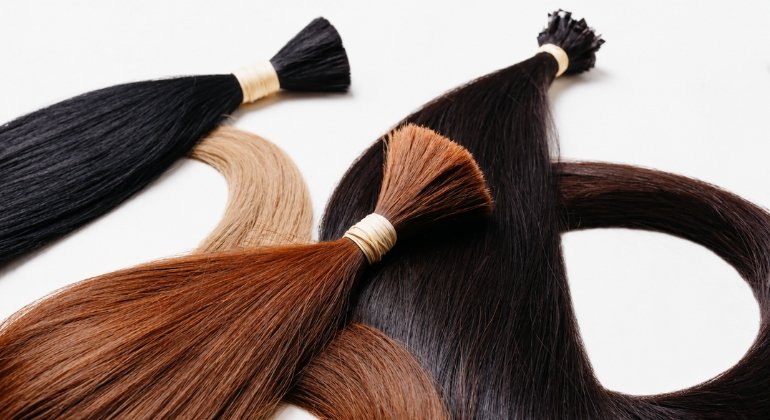
Raw, cuticle-aligned human hair holds a curl best. The cuticle is the shingle-like outer layer of each strand, and it “gives the hair an untangled appearance and shape,” while the cortex underneath “plays a vital role in determining the physical and mechanical properties of the hair, such as strength” and texture, per NCBI StatPearls. When every strand runs root to tip in the same direction, as it does in single-donor raw hair, the curls sit smooth and the weft resists the tangling you get from processed or mixed-direction hair. That is the difference you feel between a curl that lasts a weekend and one that collapses by lunch. You can see the raw hair we build our halo extensions from, and the wider halo hair range, on our site.
Human hair also leads the market for exactly this reason. Analysts at Grand View Research put the human hair segment at 65.6 percent of the global wigs and extensions market in 2025, and one-piece clip-in formats, the halo family included, are the top-selling extension type according to Fortune Business Insights. If you bought human hair, you bought the version that curls properly.
Three rules that protect the wire and the hair
Every clean curl comes back to the same three habits. Get these right and the rest is styling preference.
Rule 1: Heat protectant is not optional
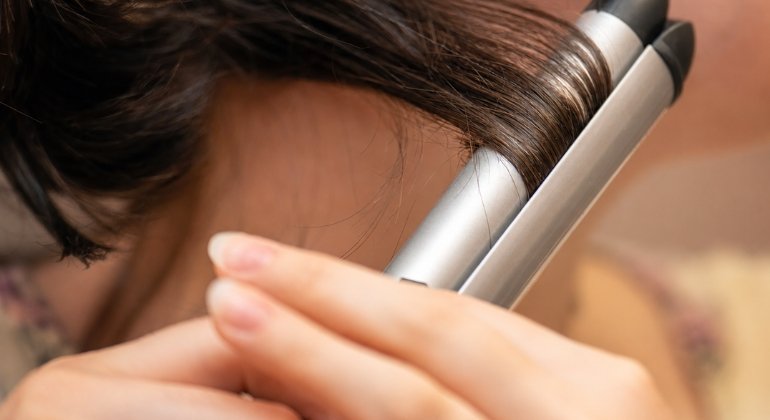
Extension hair takes no oil from your scalp, so it dries out and scorches faster than the hair on your head. A heat protectant slows how fast heat reaches the strand and cuts protein loss, which is why dermatologists treat it as the baseline step before any hot tool (AAD). Mist it on, let it dry for a few seconds, then style. Think of it as sunscreen for the weft.
Rule 2: The wire is a no-heat zone
Never bring a wand, iron, or straightener near the halo wire. Direct heat weakens it and it can snap, which ends the life of the piece. Treat the top band of the weft as off limits and begin every curl a few centimeters down the length. For volume near the crown, curl the halo off your head so the barrel never gets close to the wire.
Rule 3: Cool is what sets the curl
Heat breaks the temporary hydrogen bonds inside the hair so the strand can bend into a new shape. As the hair cools, fresh bonds form and lock that shape in place. Touch a curl while it is still warm and you pull it loose before it has set. Let each curl cool fully, and it holds far longer. This one habit fixes most “my curls dropped in an hour” complaints. It also carries over to your night routine; our nighttime hair routine for extensions covers how to protect the shape while you sleep.
How to curl halo hair extensions step by step
This is the core method with a curling wand or iron. It works for every look in the next section; you only change the tool, the section size, and the barrel.
- Prep and section the halo. Detangle the weft with a loop brush or soft bristle brush, then mist a heat protectant from mid-length to ends. Divide the hair into 3 to 5 sections and clip them apart so every pass around the barrel is clean and even.
- Decide off-head or on-head. For tight, uniform curls, clip the halo to a stand or hanger and curl it off your head for full control. For loose, blended waves, fit the halo first and curl it on your head with your natural hair.
- Set the right temperature. Match the dial to your hair using the table above. Start at the lower end of the range and step up only if the curl will not hold. Let the tool reach its set temperature before the first section.
- Curl below the wire. Wrap a 1 to 2 cm section around the barrel, keeping the top band of the halo and the wire well out of the heat path. Hold for 5 to 8 seconds, no longer, then release.
- Drop and cool the curl. Release each curl into your palm, or pin it coiled against the weft with a clip. Let it cool completely before you touch it. Cooling is the stage where the curl actually sets and holds.
- Blend and separate. Once every curl is fully cool, run your fingers or a wide wave comb through to soften the shape into natural movement. Attach the halo and blend the ends with your own hair.
- Lock and store the style. Finish with a flexible-hold spray held 20 to 30 cm from the hair. Store the halo flat or on a hanger between wears so the curls keep their shape for next time.
The best curling method for every look
Once the three rules are second nature, the tool you pick decides the finish. Here is the fastest route to each style, matched to section size and where to curl.
| Look you want | Tool | Section size | Where to curl | Hold time |
|---|---|---|---|---|
| Loose beachy waves | Hair waver | Medium | On head, once blended | Brief passes |
| Undone soft curls | Large barrel wand | Large | Below the wire | 5 to 8 sec |
| Bouncy blowout curls | Large barrel wand or iron | Medium | Below the wire | 5 to 8 sec |
| Defined spiral curls | Chopstick or thin wand | Small | Off head, on a stand | 6 to 10 sec |
| Subtle end flicks | Straightener | Medium | Mid-length down | One quick glide |
| Heatless waves | Braids, rollers, or ribbons | Medium | Off head, on damp hair | A few hours or overnight |
For everyday wear, a hair waver on the mid-lengths gives that undone, cool-girl texture without looking overdone. For a night out, a large barrel wand builds soft, bouncy volume. When you want sharp, uniform spirals, a thin chopstick wand on small sections is unbeatable, and that is the one look you should always curl off your head.
Heatless curls for halo extensions
Heat-free days keep any hair healthier, and heatless methods are the only safe route for synthetic halos. Lightly dampen the weft, then braid it, wrap it in foam rollers, or coil it around curling ribbons and leave it for a few hours or overnight. One braid gives loose beachy waves; two or three give more defined texture. Unravel, finger-comb, and set with a light spray. Style the halo off your head for this, since sleeping in a halo is neither comfortable nor kind to the wire. If you refresh between washes, our guide to using dry shampoo on hair extensions keeps the roots fresh without adding heat.
How to make halo curls last
A curl that looks perfect at 9 a.m. and vanishes by noon usually failed at one of four points. Fix these and the style holds for days.
- You touched it warm. Let curls cool completely before brushing or separating. This is the single biggest fix.
- Sections were too big. Thinner sections take and hold a curl far better than thick ropes of hair.
- Nothing locked the shape. A flexible-hold spray after cooling gives the curl something to hold onto. Skip stiff, high-hold lacquers that leave the hair crunchy.
- The hair was heavy. Over-conditioned or product-heavy hair is too slippery to hold a curl. Wash, dry fully, and curl on clean hair.
Between wears, store the curled halo flat or clipped to a hanger rather than balled up in a drawer. The shape survives, and a quick finger-comb revives it. New to all of this? Our hair extensions guide for beginners walks through fitting, blending, and care from the start, and our clip-in range works the same way if you want more coverage than a single halo gives.
Troubleshooting common halo curling problems
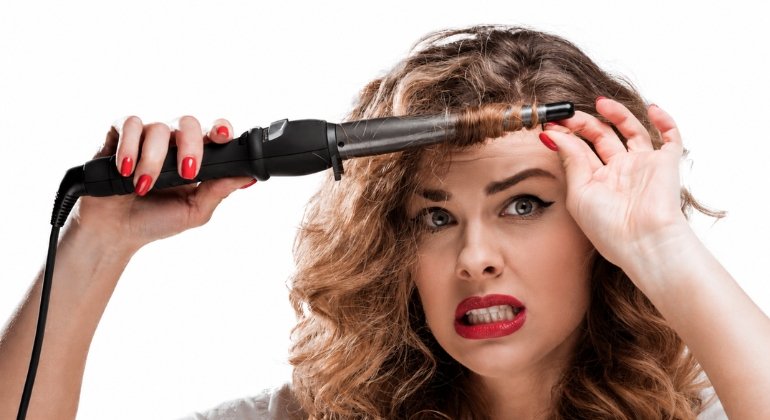
- Curls look frizzy. The tool ran too hot or passed too many times. Drop the temperature, use one clean pass, and always prep with heat protectant.
- Curls drop within an hour. You skipped the cool-down or the hold spray. Let curls set fully, then lock them.
- The weft tangles near the top. Heat crept too close to the wire and lifted the cuticle. Keep all heat lower down, and choose cuticle-aligned raw hair that resists matting.
- Curls sit differently from your own hair. Match the barrel size and temperature you use on your natural hair so the two blend seamlessly.
Frequently asked questions
What temperature should I curl halo hair extensions at?
For human hair halos, 150 to 165 degrees C (300 to 330 degrees F) suits fine or color-treated hair, 165 to 180 degrees C (330 to 355 degrees F) suits normal hair, and up to 185 degrees C (365 degrees F) suits thick, coarse hair. Professionals advise staying near 180 degrees C and no higher, because the cuticle begins to crack above that point.
Can you curl synthetic halo hair extensions?
Standard synthetic halos cannot take a hot iron. The fibers melt or frizz permanently, so use heat-free methods such as overnight braids, foam rollers, or curling ribbons instead. Only heat-friendly synthetic, labeled by the maker, tolerates low heat, and only within the stated limit. Human hair halos curl like your own hair.
Why do curls fall out of my halo extensions?
Curls drop for four common reasons: you touched them before they cooled, your sections were too large, no flexible-hold product locked the shape, or the hair was heavy and over-conditioned. Let each curl cool fully, curl smaller sections, and finish with a light hold spray to make curls last.
Should I curl my halo on or off my head?
Curl off your head on a stand for tight, uniform spirals and full control. Curl on your head, after fitting the halo, for loose beachy waves that flow into your natural hair. Off-head styling also keeps all heat away from the wire and protects the weft.
Do you need heat protectant on human hair extensions?
Yes. Extension hair receives no scalp oil, so it dries and scorches faster than growing hair. A heat protectant slows heat transfer and reduces protein loss. Dermatologists treat it as the baseline step before any hot tool, on extensions and natural hair alike.
How do I curl the hair near the halo wire without damaging it?
Keep every pass below the wire and treat the top band as a no-heat zone. Begin curls a few centimeters down the length. For volume near the crown, curl the halo off your head so the barrel never approaches the wire, then blend once the hair has cooled.
Curl-ready raw human hair halos, factory direct
Every look in this guide starts with hair that can actually take a curl. Thanh An Hair makes single-donor, cuticle-aligned raw Vietnamese halos that hold their shape wear after wear, at factory-direct wholesale pricing for salons and resellers. Shop raw human hair halo extensions or contact us for a wholesale quote and a sample.
Contact Thanh An Hair today for expert consultation and the most competitive price list.
- WhatsApp/Hotline: (+84) 973 522 855
- Official Website: https://thanhanhair.com/
- Instagram: @thanhanhair
- Email: thanhanexport@gmail.com