
Raw Vietnamese Hair
Clip-In Hair Extensions Explained: A Complete Guide for 2026
Jul
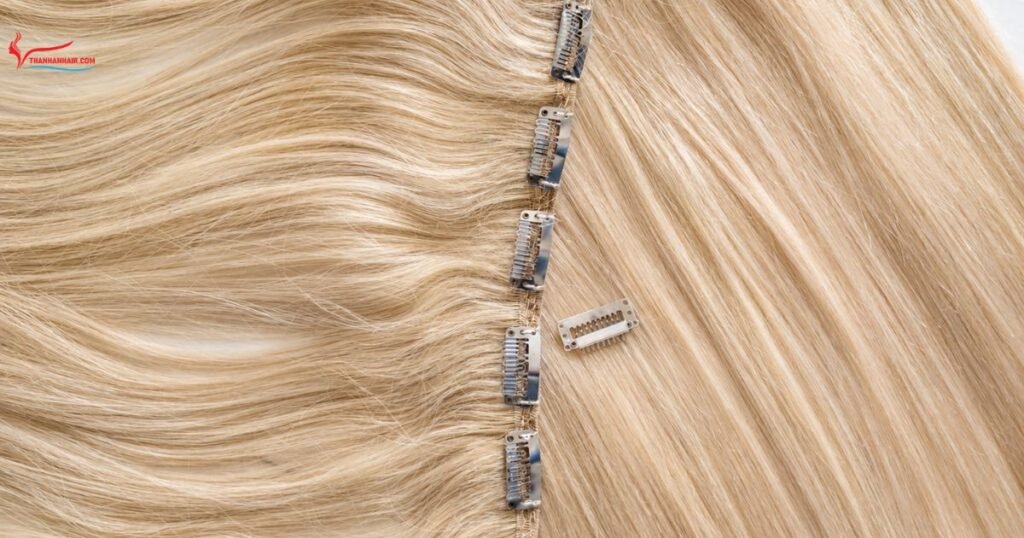
Clip-in hair extensions are wefts of hair fitted with small pressure-sensitive clips that snap onto your own hair near the root. You put them in and take them out yourself in minutes, with no glue, no heat, and no salon visit. They add instant length, volume, or color, then come out again at night.
That freedom is why clip-in hair extensions are the fastest way into extensions and the safest to wear. This guide, written by a factory that makes raw-hair extensions, walks through the main types, how to apply a set, how to judge quality that a product photo hides, and whether clip-ins damage your hair. Demand is climbing: analysts at Fortune Business Insights valued the United States hair extension market at 2.46 billion dollars in 2024 and expect it to reach 4.49 billion by 2032, with extensions the fastest-growing segment.
What Are Clip-In Hair Extensions?
A clip-in hair extension is a weft, a thin curtain of hair sewn along a fabric or silicone strip, with a row of sprung metal clips attached to the top edge. Each clip opens, presses onto a section of your own hair at the root, and clicks shut. A full set is several wefts of different widths that you layer up the back and sides of your head.
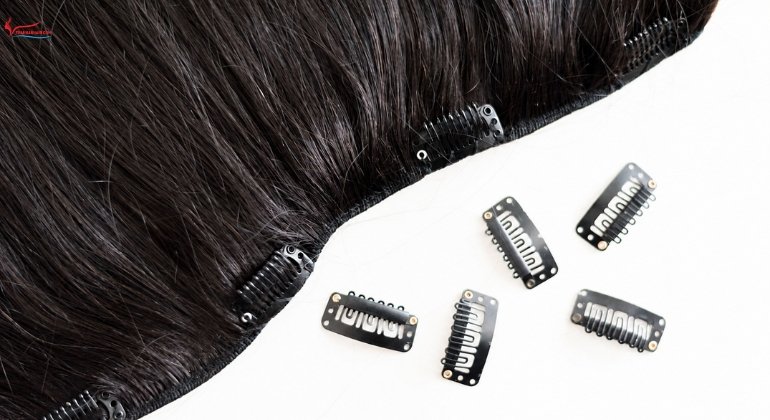
Unlike permanent methods that a stylist installs and you keep in for weeks, such as tape-in extensions, keratin bonds, or a sew-in weave, clip-ins are the only kind you control entirely at home. You wear them for a day or an evening, then remove them. Market analysts at The Business Research Company track clip-in as one of the four main fitting types, alongside tape-in, micro-link, and glue-in.
Because you do not wear a set continuously, the same clip-ins can serve you for a long time. Commonly cited figures put the lifespan of a well-cared-for human hair set at up to a year or more of regular wear, far longer than bonded hair that lives through daily washing and sleeping.
The Main Types of Clip-In Hair Extensions
There is no single best set. The right one depends on how much hair you have and the look you want. The table below compares the common types of clip-in hair extensions, then the notes explain how to choose.
| Clip-in type | Typical weight | Best hair type | Time to apply | What it does |
| Full-head set, single weft | 100 to 120g | Fine to medium | 5 to 10 min | All-over length with light volume |
| Full-head set, double weft | 150 to 220g | Medium to thick | 10 to 15 min | Maximum length and dense volume |
| Volumizer or top-up, one piece | 30 to 50g | Fine or thinning | Under 2 min | A quick lift at the crown or parting |
| Halo, wire, one piece | 100 to 150g | Fine to medium | About 60 sec | Length and volume with no clips on the scalp |
| Clip-in ponytail | 100 to 140g | All types | 1 to 2 min | An instant, full ponytail |
| Clip-in fringe or bangs | 20 to 40g | All types | Under 1 min | Try bangs without cutting your hair |
If your hair is fine, a lighter single-weft set of around 100 to 120g sits flat and stays hidden, while a heavy set can slip or peek through. A seamless set with a thin silicone weft, like our seamless clip-in hair, lies closest to the scalp. If you want length without any clips against your head, a halo extension rests on a clear wire instead.
If your hair is thick, a double-weft set of 150 to 220g adds real density and blends through your own volume. For a full ponytail or bangs on demand, a clip-in ponytail or a clip-in fringe gives the effect in under two minutes. New to all of this? Start with our hair extensions for beginners guide, and see our clip-in extensions for Black hair guide for textured matches.
How to Apply Clip-In Hair Extensions (Step by Step)
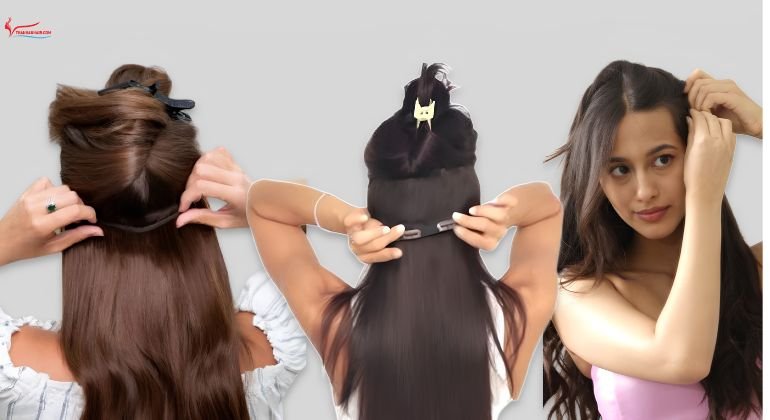
Applying clip-in hair extensions takes most people five to fifteen minutes once they have done it twice. Work from the bottom of your head upward, one weft per layer.
- Section the hair. Part your hair horizontally across the back of your head, from ear to ear, and clip the top half up out of the way.
- Backcomb the roots lightly. Tease a thin line at the roots where the clips will sit so they grip and hold, which matters most in fine, slippery hair. This step is optional.
- Place the widest weft. Open all the clips on the widest weft, press it onto the roots of the sectioned hair, then click each clip shut.
- Work upward in layers. Let down the next horizontal section and repeat, adding one weft per layer and keeping each weft a little below the last so the clips stay hidden.
- Add the face-framing pieces. Place the narrow one-clip and two-clip wefts along the sides, below your temples, to blend the hair around your face.
- Blend and style. Brush your own hair over the wefts, then curl, straighten, or tie the whole head together so the extensions and your hair move as one.
Take the set out in the reverse order at night, starting from the top.
Remy, Raw, and Synthetic: How to Judge Clip-In Quality
Two sets can look identical online and behave nothing alike after a month. The difference is the hair itself, and most of it you cannot see in a photo.
Human hair beats synthetic for a natural look. Human hair clip-in extensions can be washed, curled, straightened, and even colored like your own hair. Synthetic fibers such as kanekalon melt under a hot tool and lose their finish faster, which is why human hair leads the market on realism and stylability.
Cuticle alignment is the quality no photo shows. Every strand of human hair is wrapped in a cuticle, a layer of flat overlapping cells that, according to NCBI StatPearls, gives hair its untangled appearance and shape. Those scales all point one way, from root to tip. In true Remy and single-donor raw hair, every strand in the weft faces the same direction, so the cuticles lie flat together and the hair stays smooth. In cheaper non-Remy hair, strands are gathered in mixed directions, the cuticles clash, and the set mats and tangles within weeks. That single factor separates a set that lasts a year from one you throw away after a month.
What to look for before you buy. Choose single-donor or cuticle-aligned Remy human hair; wefts that are thin, flat, and tightly sewn so they lie invisibly; clips that are sturdy with a silicone grip strip; and a color-ring or sample service so you match your shade first. Buying clip-in hair extensions factory-direct from the maker, rather than through a reseller, lets you ask exactly how the hair was sourced and how the weft was built. [INSERT: one real named quote from the Thanh An founder or QC lead, never fabricated]
Do Clip-In Hair Extensions Damage Your Hair?
Clip-in extensions are the gentlest way to wear extra hair, because you take them out every night and they never pull on one spot for long. The American Academy of Dermatology explains that constantly tight styles, and extensions that are glued or tied to the base of the hair, can create lasting tension at the roots. That mechanical pull is the cause of a form of hair loss called traction alopecia. Removing a clip-in set daily removes that sustained tension entirely.
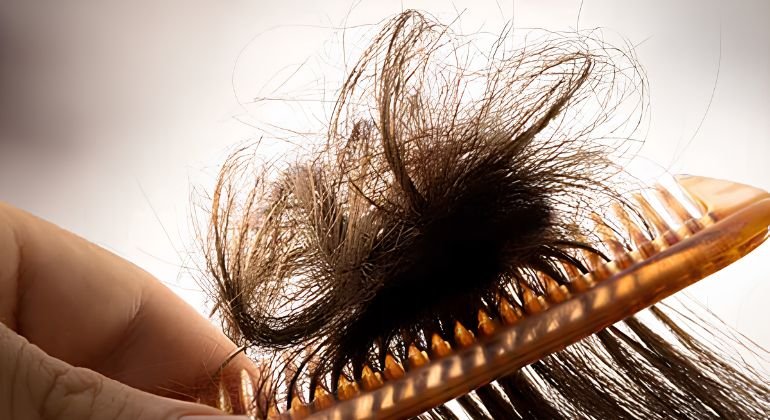
Clips can still stress fine hair if you misuse them. Do not sleep in a set, do not clip the exact same few strands day after day, and do not wear a weight your hair cannot carry. Shift each clip a few millimeters when you reposition, and match the grams to your density. If you notice real scalp soreness, itching, or thinning, treat that as a signal to see a dermatologist rather than a styling problem.
How to Care for Clip-In Extensions So They Last
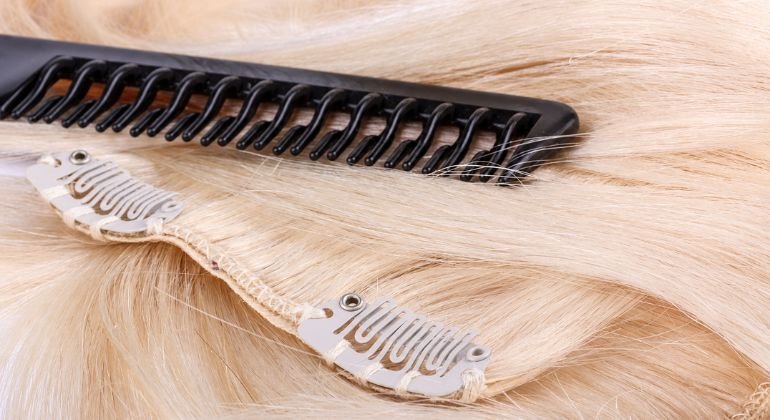
Human hair on a weft has no scalp feeding it oil, so it dries out faster than the hair on your head. A light routine keeps a set soft for months:
- Wash rarely. Clean the set only every 15 to 20 wears, or when product builds up, using a sulfate-free shampoo and a moisturizing conditioner or mask through the mid-lengths and ends.
- Dry flat and air dry. Lay the wefts on a towel rather than wringing them, and skip the hot blow-dry when you can.
- Use low heat. Style on a medium setting with a heat protectant, and avoid daily hot tools.
- Store them properly. Keep the set clipped closed, flat in a box or on a hanger, so it does not tangle or gather dust.
- Brush gently. Work from the ends upward with a loop brush or soft bristles.
How Much Hair Do You Need?
Match the weight of your clip-in hair extensions to your own density, not to the fullest set you can find:
- Fine hair: one 100 to 120g full-head set is usually plenty. More can slip or show through.
- Medium hair: a 150 to 180g double-weft set gives full length and volume.
- Thick hair: 200g or more, and sometimes two sets, to carry length through dense hair.
- Long lengths: for hair past the shoulders, move up one weight band, because the same grams spread thinner over a longer strand.
Frequently Asked Questions
Do clip-in hair extensions damage your hair?
No, not when you wear them correctly. Because you remove them each night, clip-in hair extensions avoid the sustained root tension that the American Academy of Dermatology links to traction alopecia. Damage happens only if you sleep in them, clip the same strands every day, or wear a set that is too heavy for fine hair.
How long do clip-in hair extensions last?
A quality human hair set lasts far longer than tape or bonded hair because you do not wear it continuously. With gentle washing, low heat, and flat storage, commonly cited figures put a well-cared-for set at up to a year or more of regular wear. Ask the maker for a tested figure on their own hair.
Can you sleep in clip-in hair extensions?
It is better not to. Sleeping in the clips pulls on your roots for hours and tangles the wefts against your pillow. Take the set out, click the clips closed, and store it flat or hanging so both your own hair and the extensions last longer.
What is the difference between Remy and non-Remy clip-ins?
In Remy hair, every strand faces the same direction, so the cuticles lie flat and the hair stays smooth. Non-Remy hair mixes strand directions, so the cuticles clash and the set mats within weeks. Remy hair and true single-donor raw hair keep their finish far longer.
Are clip-in extensions real human hair?
The best ones are. Human hair clip-in extensions can be washed, heat-styled, and colored like your own hair. Synthetic fibers such as kanekalon cannot take real heat and look less natural over time, which is why human hair leads the extension market.
How many clip-in wefts do I need for a full head?
Most full-head sets use seven to nine wefts of different widths, from one wide piece at the nape to narrow one-clip pieces near the face. Fine hair needs fewer grams to stay hidden, while thick or long hair needs a heavier set or even two.
Try the Difference Factory-Direct
Thanh An Hair makes clip-in hair extensions from single-donor, cuticle-aligned raw Vietnamese hair, sold factory-direct to salons and resellers worldwide. Feel the difference before you commit: contact us for a wholesale sample or color ring and factory-direct pricing.
Contact Thanh An Hair today for expert consultation and the most competitive price list.
- WhatsApp/Hotline: (+84) 973 522 855
- Official Website: https://thanhanhair.com/
- Instagram: @thanhanhair
- Email: thanhanexport@gmail.com