
Raw Vietnamese Hair
What Is Remy Hair? Definition, Collection Process and Buyer Guide
Jul
Remy hair is 100% human hair in which every strand keeps its cuticle intact and running the same root-to-tip direction, from the moment it is cut through every production stage. That single feature, cuticle alignment, is what lets a finished extension or wig resist tangling, hold color, and survive repeated washing and heat styling. This guide explains what Remy hair really is, how it is collected, how it compares with non-Remy, virgin, and raw hair, what a “100% Remy” label does and does not promise, and exactly what wholesale buyers should verify before a bulk order.
What Is Remy Hair? A Clear Definition
Remy hair is human hair collected and processed so that all strands keep their outer cuticle layer intact and pointing the same way, root to tip. It is the raw-material grade manufacturers use to build extensions and wigs that stay smooth and tangle-free through real-world wear.
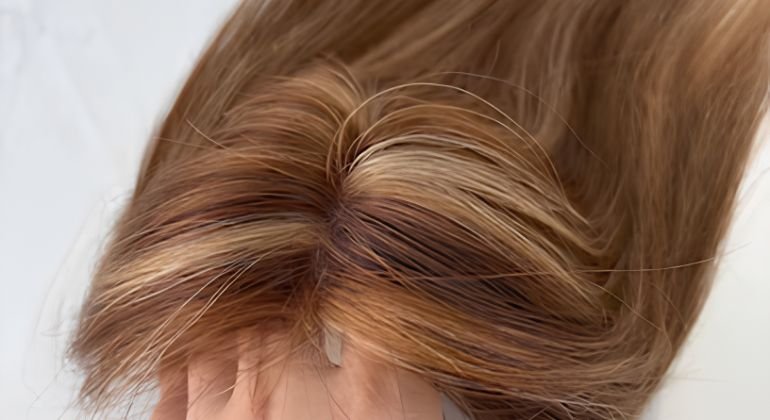
Three things have to be true for hair to count as Remy grade at intake:
- Real human origin. Every strand comes from a human donor, with no synthetic fiber or animal hair blended in.
- Cuticle intact. The outermost protective layer of each strand is present and undamaged, not stripped away in processing.
- Uniform direction. All strands run root-to-tip the same way, so neighboring cuticles slide past each other instead of catching.
Why Cuticle Direction Decides Everything
The cuticle is not marketing language, it is anatomy. Peer-reviewed hair science describes the cuticle as a layer of flat, overlapping, scale-like cells wrapped around the hair’s inner cortex, roughly six to eight layers deep, whose job is to shield the cortex from environmental damage and to reduce friction between the hair and its surroundings (NIH / PMC). Those scales all point in one direction, like roof tiles or fish scales.
When every strand in a bundle faces the same way, the scales lie flat against each other and the hair moves as one smooth surface. When strands are mixed head-to-tail, the scales on adjacent strands point into each other, lock together under movement, and the bundle mats. That is the entire mechanical reason Remy stays tangle-free and non-Remy does not. No conditioner reverses a directional conflict, because the problem is physical, not chemical.
How Is Remy Hair Collected? The Step-by-Step Process
Remy hair is collected by cutting a donor’s gathered ponytail or braid in a single pass, then banding and labelling the bundle root-end up immediately, so the root-to-tip orientation set at that moment is preserved through every stage that follows.
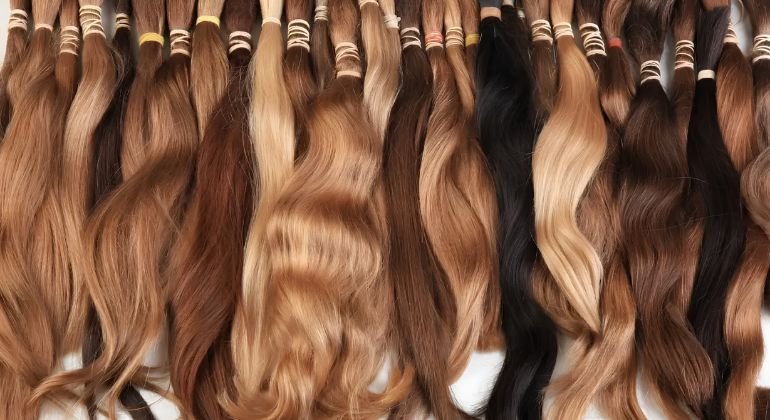
Collection is not a preliminary step before the “real” work. It is the step where Remy status is either created or lost forever. Washing, sorting, drawing, and wefting can only preserve the orientation that collection sets, they can never restore it. Here is how a disciplined collection process runs:
- Donor screening first. Before scissors touch the hair, the donor is asked about recent chemical treatment (color, bleach, perm, relaxer). Heavily treated hair is declined, because its cuticle will not survive processing intact.
- Gather and single-cut. The hair is gathered into a tight ponytail or braid and cut in one clean pass, so the whole bundle shares one root end and one tip end.
- Band root-end up immediately. The cut bundle is tied and labelled with the root end marked, at the point of collection, before it is moved anywhere.
- Field cuticle check. A small section is drawn between fingers or fine paper in both directions. Cuticle-intact hair resists more tip-to-root than root-to-tip. Anything that slides equally both ways is rejected on the spot.
- Orientation-locked transport and processing. Approved bundles move to the factory root-end up, and every wash, sort, and draw stage keeps that orientation. Cleaning uses gentle, non-stripping formulas so the cuticle that arrived is the cuticle that ships.
Non-Remy collection skips all of this. Hair is swept from salon floors and brush collections with no directional control, arrives at the factory mixed head-to-tail, then has its cuticle chemically stripped in an acid bath and replaced with a silicone coating to fake a smooth feel. That coating passes the in-store touch test and then washes out within a handful of shampoos, leaving bare, unaligned strands with nothing left to protect them.
Remy Hair vs Non-Remy Human Hair: The Difference That Matters
All Remy hair is human hair, but not all human hair is Remy. A “human hair” label confirms origin and nothing more. It says nothing about cuticle condition, alignment, or how the hair was processed. The two grades separate across five buyer-relevant attributes.
| Attribute | Remy hair | Non-Remy human hair |
| Source | Single donor or small qualified group, traceable | Mixed multi-source collection, no traceability |
| Cuticle | Intact and aligned root-to-tip throughout production | Stripped in acid bath, masked with silicone |
| Processing | Gentle, non-stripping, no permanent coating needed | Acid strip plus silicone coating to fake smoothness |
| Behavior in wear | Stays smooth, minimal shedding and tangling | Mats and tangles once the coating washes out |
| Practical lifespan* | Commonly cited at many months to a year-plus with care | Often a few weeks to a couple of months |
Remy vs Virgin vs Raw Hair: The Full Grade Ladder
Remy describes cuticle alignment. Virgin describes chemical history. Raw hair is hair that is both at once: cuticle-intact and never chemically processed. They sit on different axes, which is why a strand can be Remy but not virgin, or virgin but poorly aligned.
This is where most buyer confusion lives, and where most competitor pages stop short. Getting the ladder right protects you from paying a raw-hair price for Remy-only stock, or vice versa. Independent market research confirms these are distinct commercial tiers, with human hair extensions formally sub-segmented into Remy, non-Remy, and virgin categories (industry analysis).
| Grade | What it guarantees | What it does not | Best for |
| Remy | Cuticle intact and aligned root-to-tip | Does not promise the hair is chemically unprocessed | Reliable everyday extensions and wigs at scale |
| Virgin | Never bleached, dyed, permed, or relaxed | Does not by itself promise cuticle alignment | Predictable custom coloring and bleach lifts |
| Raw | Cuticle intact, aligned, and chemically untouched | Limited to naturally occurring colors and textures | Highest tier: single-donor bulk, longevity, custom work |
In practice, raw single-donor hair is the top of the ladder because it combines both properties: the alignment of Remy and the untouched integrity of virgin, all from one head. That is the tier our one-donor bulk hair and raw bulk hair are built around, and it is why raw Vietnamese hair holds a bleach lift and a custom color more predictably than color-processed Remy.
Is Remy Hair Worth the Higher Price?
Remy hair costs more per pack but usually less per month of wear, because it lasts through the washing and styling that strips coated non-Remy back to bare, tangling strands. For a salon or reseller, that shows up as fewer replacements, fewer complaints, and a defensible price on the service.

The market is voting the same way. Demand is concentrating on natural-looking, ethically sourced human hair: the global hair wigs and extensions market was valued at roughly USD 15.2 billion in 2025 and is projected to reach about USD 31.1 billion by 2033, with human hair holding the majority share at around 66 percent (Grand View Research). In the United States alone, the hair extension market was valued near USD 2.46 billion in 2024 (Fortune Business Insights). Buyers are trading up to quality that holds, not down to coatings that fade.
Think in cost per wear rather than cost per pack. A cheaper coated set replaced every few weeks quietly costs more across a year than a single Remy or raw set that survives the same period. The premium is real, but so is the payback.
What Does “100% Remy Hair” Actually Mean on a Label?
“100% Remy” should mean every strand is cuticle-aligned and intact. In reality, “Remy” is an industry term with no certifying body behind it, so any brand can print it. The claim is only as good as the supplier’s sourcing.
There is a meaningful difference in wording. “Remy hair extensions” can allow partial Remy content, while “100% Remy human hair” should mean fully cuticle-intact throughout. Because nobody enforces the term, partial-Remy blends, where only the visible outer layer is aligned, are common in the wholesale market. The label is a starting point for questions, not a guarantee. The next section is how you turn the claim into something verifiable.
[INSERT COMPARISON IMAGE or short video: aligned Remy weft vs matted coated weft after washing. Alt: “Remy weft staying smooth beside a tangled non-Remy weft after washing.”]
How Wholesale Buyers Verify Genuine Remy Before Ordering
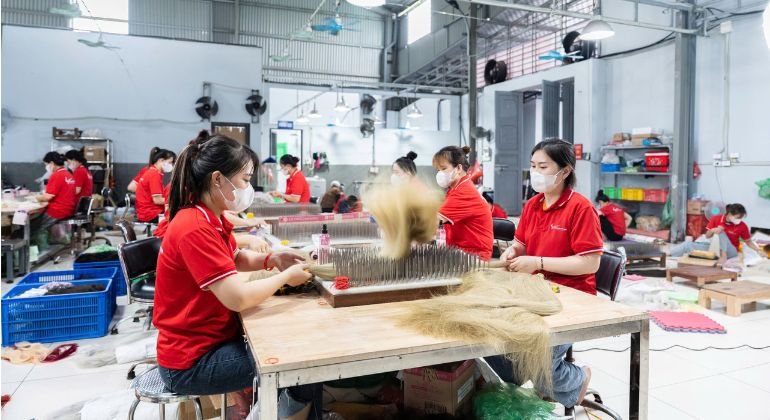
Real verification happens at the supply-chain level, not on the packaging. Every layer of middleman between you and the factory is a point where lower-grade hair can enter without your visibility. Four signals separate a credible Remy supplier from a reseller:
- Single-donor traceability in writing. If a supplier cannot document where a batch came from, the sourcing claim is unverifiable.
- No silicone coating in the processing spec. Genuine Remy does not need a coating to feel smooth. Ask for the product spec sheet.
- Factory-direct supply. Each distributor layer is a quality-control gap and a margin leak. Factory-direct pricing removes both.
- Sample before bulk. Order a few units to your exact spec before committing to fifty. A real factory ships the same product at both volumes. A reseller sourcing through intermediaries often cannot.
Run the Two-Second Touch Test
You do not need a lab. Pinch a dry strand and slide your fingers root-to-tip, then tip-to-root. Cuticle-intact Remy feels smooth downward and slightly resistant upward. If it feels equally slippery both ways, you are holding silicone-coated non-Remy that will tangle once the coating washes off.
What Genuine Remy Looks Like in Each Product Format
Alignment shows up differently depending on how the hair is finished, so know what to check for the format you stock:
- Bulk hair. Loose, unwefted hair for braiding and custom wig-making shows alignment most directly. Inspect raw bulk hair and single-donor bundles root-end to tip-end.
- Weft hair. On a machine or hand-tied weft, run the touch test along the weft body, not just the sewn edge, where partial-Remy blends hide.
- Tape and tip hair. For tape-in and keratin-tip sets, check the free length below the bond, since the bond hides the roots.
- Wigs and closures. On a wig or lace closure, alignment and knot quality together determine whether it stays natural after repeated wear.
Origin matters too. Vietnam has become one of the fastest-rising sources of raw human hair, with reported exports climbing about 257 percent from 2023 to 2024, and Vietnamese hair commanding among the highest average export prices per ton worldwide, a reflection of its quality reputation (World’s Top Exports). Before a large order, request a physical color ring so you can match shade against real hair rather than a screen.
How to Care for Remy Hair So It Lasts
Genuine Remy rewards good after-care and punishes bad habits like any human hair, because once damaged, hair cannot repair itself. Board-certified dermatologists at the American Academy of Dermatology recommend low or medium heat with a heat-protectant, detangling gently from the ends upward with a wide-tooth comb, and blotting rather than rubbing hair dry (AAD). For extensions specifically, pass these on to clients:
- Use sulfate-free shampoo, which is gentler on the cuticle layer per wash.
- Brush from tip to root, never dragging root-to-tip through dry hair.
- Always apply heat protectant before hot tools, and keep temperatures moderate.
- Protect at night with a silk pillowcase or a loose braid to cut friction.
Frequently Asked Questions About Remy Hair
Does Remy hair mean real human hair?
Remy hair is always real human hair, but real human hair is not always Remy. “Real” confirms the strand is human. “Remy” describes whether the cuticle is intact and aligned through manufacturing. Hair can be 100 percent human and still be non-Remy if its cuticle was stripped and replaced with silicone.
What is the difference between Remy hair and virgin hair?
They sit on different axes. Remy describes cuticle alignment, maintained from collection through production. Virgin describes chemical history, meaning hair never bleached, dyed, permed, or relaxed. A strand can be both, and that combination is called raw hair. Color-processed Remy is still Remy, but no longer virgin.
How long does Remy hair last?
Lifespan depends on grade, texture, and care rather than any fixed standard, so treat quoted ranges as directional. Cuticle-intact Remy and raw hair are commonly cited as lasting many months to a year or more with proper after-care, while coated non-Remy typically fades much sooner once its silicone washes out.
Is Remy hair the same as raw hair?
No. Remy guarantees cuticle alignment but not chemical purity. Raw hair guarantees both: it is cuticle-intact, aligned, and never chemically processed, usually from a single donor. Raw single-donor hair is the top of the grade ladder, which is why it holds custom color and bleach lifts most predictably.
How do wholesale buyers verify Remy quality before ordering?
Check three things at the supply-chain level: written single-donor traceability, silicone-free processing records, and factory-direct sourcing. Add a fourth: order a small sample to your exact spec before a bulk order, since a genuine factory ships the same product at both volumes.
Contact Thanh An Hair today for expert consultation and the most competitive price list.
- WhatsApp/Hotline: (+84) 973 522 855
- Official Website: https://thanhanhair.com/
- Instagram: @thanhanhair
- Email: thanhanexport@gmail.com