Nov
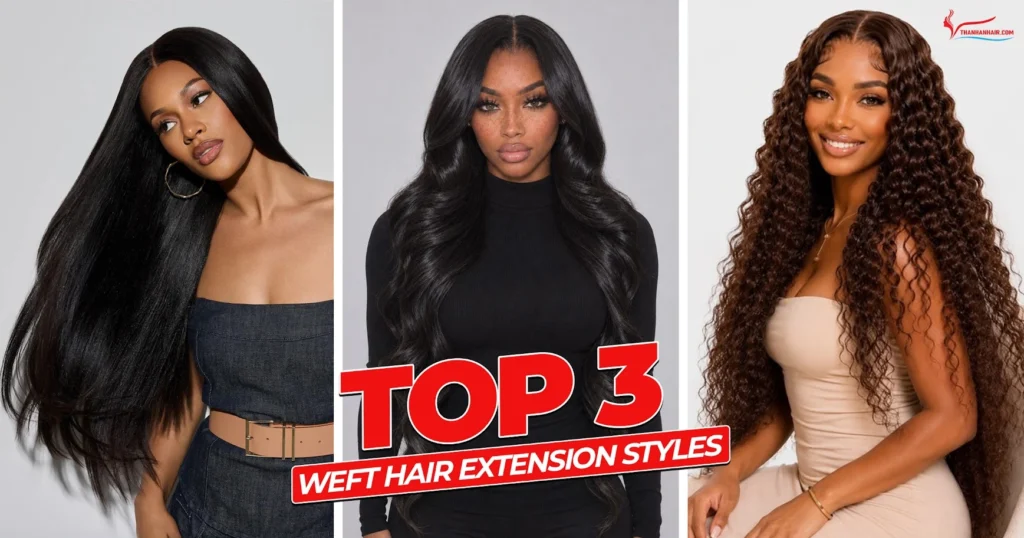
Weft hair extensions are one of the most versatile ways to add length, volume, and thickness while achieving natural-looking hairstyles. The three popular installation methods are traditional sew-in wefts, beaded row wefts, and clip-in wefts. Each offers different advantages depending on natural hair density, styling preferences, lifestyle, and maintenance requirements.
Whether you want fuller hair for everyday wear, a discreet semi-permanent installation, or a temporary transformation for special occasions, understanding these three weft hair extension styles will help you choose the right option.
What Are Weft Hair Extensions?
Weft hair extensions are made by securing multiple strands of human or synthetic hair onto a continuous strip or track. This construction allows stylists to attach larger sections of extension hair rather than installing individual strands one by one.
Unlike individual strand extensions, wefts cover wider areas of the head, making them a practical solution for adding noticeable fullness and length.
There are several common weft constructions:
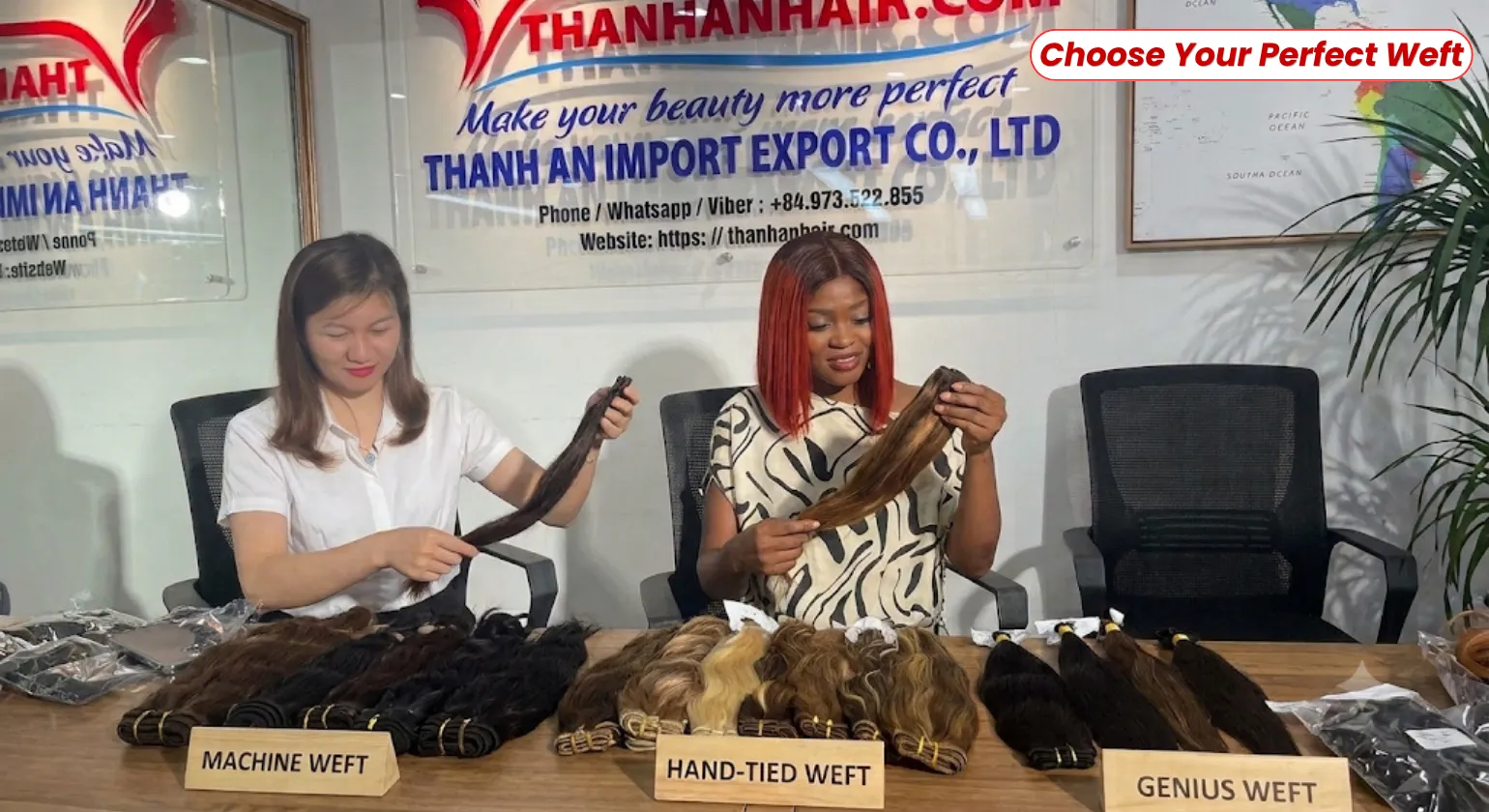
- Machine Weft: Hair strands are sewn together using specialized machinery to create a reinforced, consistent track.
- Hand-Tied Weft: Individual strands are manually tied into a thin, flexible strip.
- Genius Weft: A specialized construction designed to combine a slim profile with flexibility.
- Flat Weft: A flatter construction intended to reduce bulk around the attachment area.
An important distinction is that weft construction and installation methods are not the same thing. Machine Weft and Hand-Tied Weft describe how the extension product is manufactured, while sew-in and beaded row describe how the product is attached to natural hair.
Choosing the right weft construction is an important first step toward achieving a comfortable, natural-looking result.
Top 3 Most Popular Weft Hair Extension Styles
1. Traditional Sew-In Weft: A Classic Choice for Full, Voluminous Hair
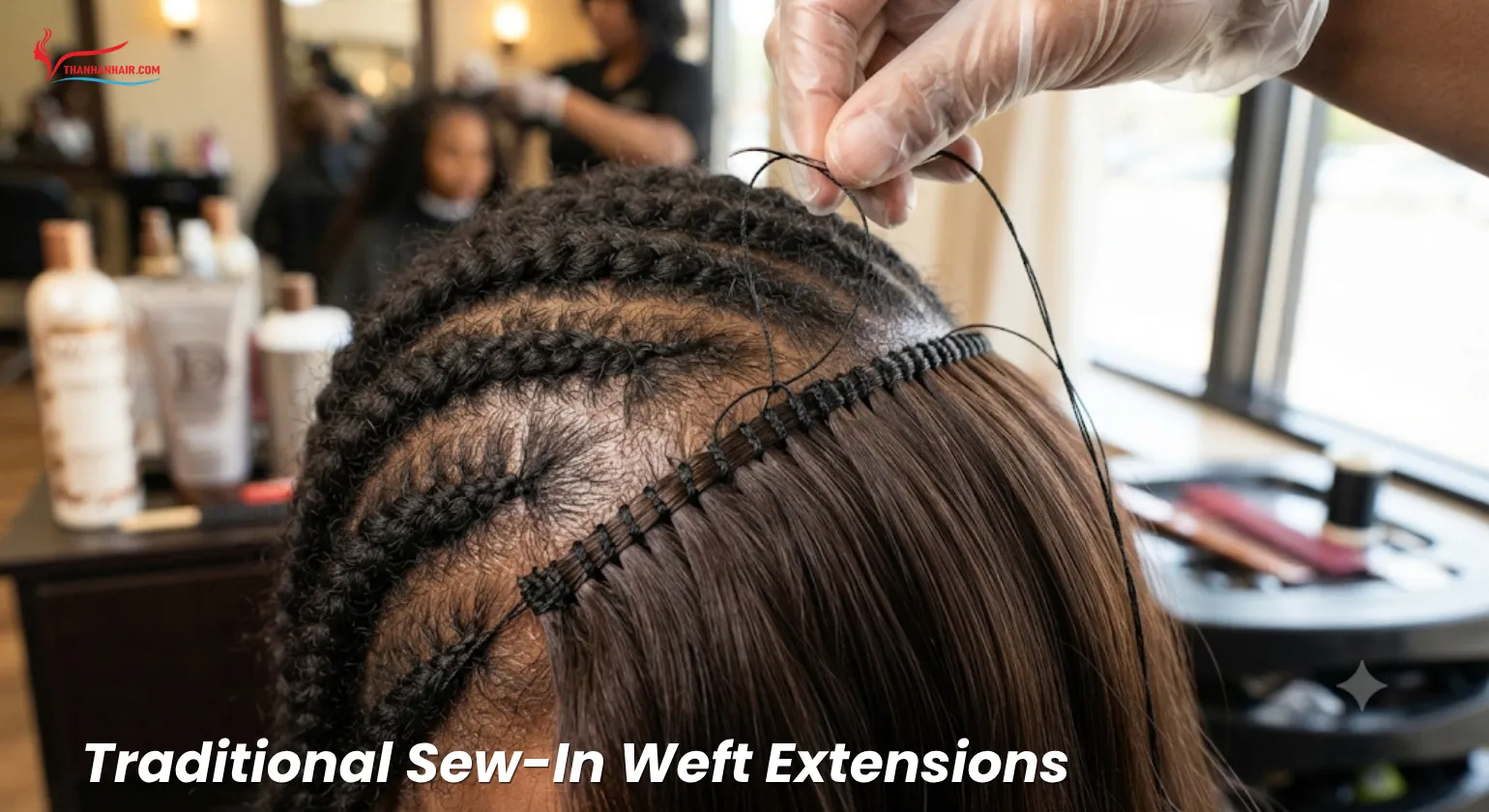
Traditional sew-in weft extensions, also known as the braided sew-in method, are one of the most established techniques for adding substantial length and volume.
The process begins by sectioning the client’s natural hair into horizontal rows. The stylist then creates cornrow braids close to the scalp, forming a foundation for the extension hair.
A professional curved needle and specialized thread are used to sew the weft onto the braided foundation. This creates a secure attachment without applying bonding glue directly to the weft.
Main advantages:
- Full coverage: Multiple weft rows can create significant volume and length.
- No adhesive required: Extensions are sewn onto braided foundations.
- Versatile styling: Suitable for straight, wavy, and curly textures.
- Multiple product options: Different weft constructions can be selected according to the desired thickness and finish.
Potential disadvantages:
Traditional sew-in extensions require professional installation and removal. Tight braiding, excessive extension weight, or uneven stitching can create unnecessary tension on natural hair.
This method is generally more suitable for clients whose natural hair has sufficient strength and density to support a braided foundation.
Who should choose traditional sew-in extensions?
This method is worth considering if you want noticeable fullness, longer hair, and a relatively secure installation without adhesive.
Machine-sewn wefts are commonly selected for their reinforced stitching and versatility in professional salon applications. Their construction makes them a practical option for stylists who need durable weft tracks for different installation requirements.
=>> Shop now: Machine Weft Hair Extensions – High Quality – Explore different lengths, textures, and hair grades for professional extension services.
2. Beaded Row Weft: A Modern Method for a Natural, Seamless Finish
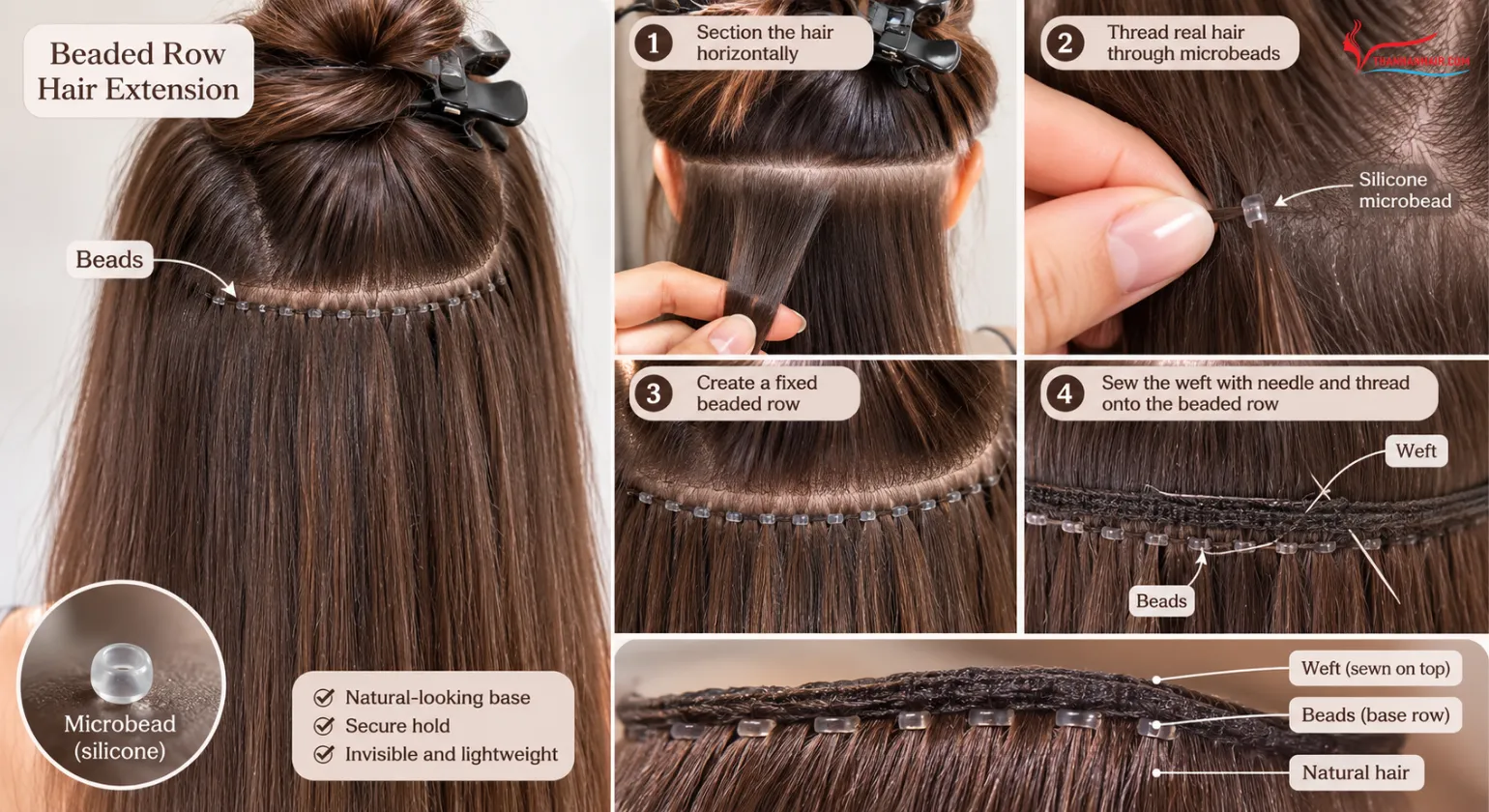
Beaded row weft extensions are a modern installation technique that uses small beads to create a foundation for attaching extension hair.
Unlike traditional sew-in methods, this technique does not require the natural hair to be braided into cornrows.
The stylist sections the client’s hair horizontally, threads selected natural hair strands through small silicone-lined beads, and secures the beads to create an anchor row. The weft is then sewn onto this foundation using specialized thread.
The number of rows and their placement depend on the client’s natural hair density, desired volume, and hairstyle.
Main advantages:
- No bonding glue: The weft is attached using beads and sewing thread rather than adhesive.
- Natural movement: Correctly positioned rows can allow extension hair to move naturally.
- Flexible product selection: Suitable weft constructions can be chosen according to the stylist’s technique.
- Customizable placement: Stylists can adjust row positioning to improve coverage and concealment.
Potential disadvantages:
Beaded row extensions require accurate sectioning and professional installation. If beads are positioned incorrectly, secured too tightly, or used to support excessive extension weight, they may cause discomfort and unnecessary tension.
The attachment points may also become visible if the client’s natural hair is too short or thin to cover them properly.
Who should choose beaded row extensions?
This method is suitable for clients who want semi-permanent extensions with discreet attachment points and flexible movement.
It can be particularly appealing to people who prefer a bead-supported foundation instead of traditional cornrow braids, especially when paired with ultra-thin Genius Weft Hair Extensions.
Professional installation also requires suitable equipment, including silicone-lined beads, bead-closing pliers, curved needles, and specialized extension thread.
=>> Read more: Weft Hair Extension Tools: Best Salon Guide (2026) – Discover the professional tools used for sewing, beaded row installation, and extension maintenance.
3. Clip-In Weft: The Best Temporary Option for Flexible Styling
Clip-in weft extensions offer one of the most convenient ways to transform a hairstyle without committing to a long-term installation.
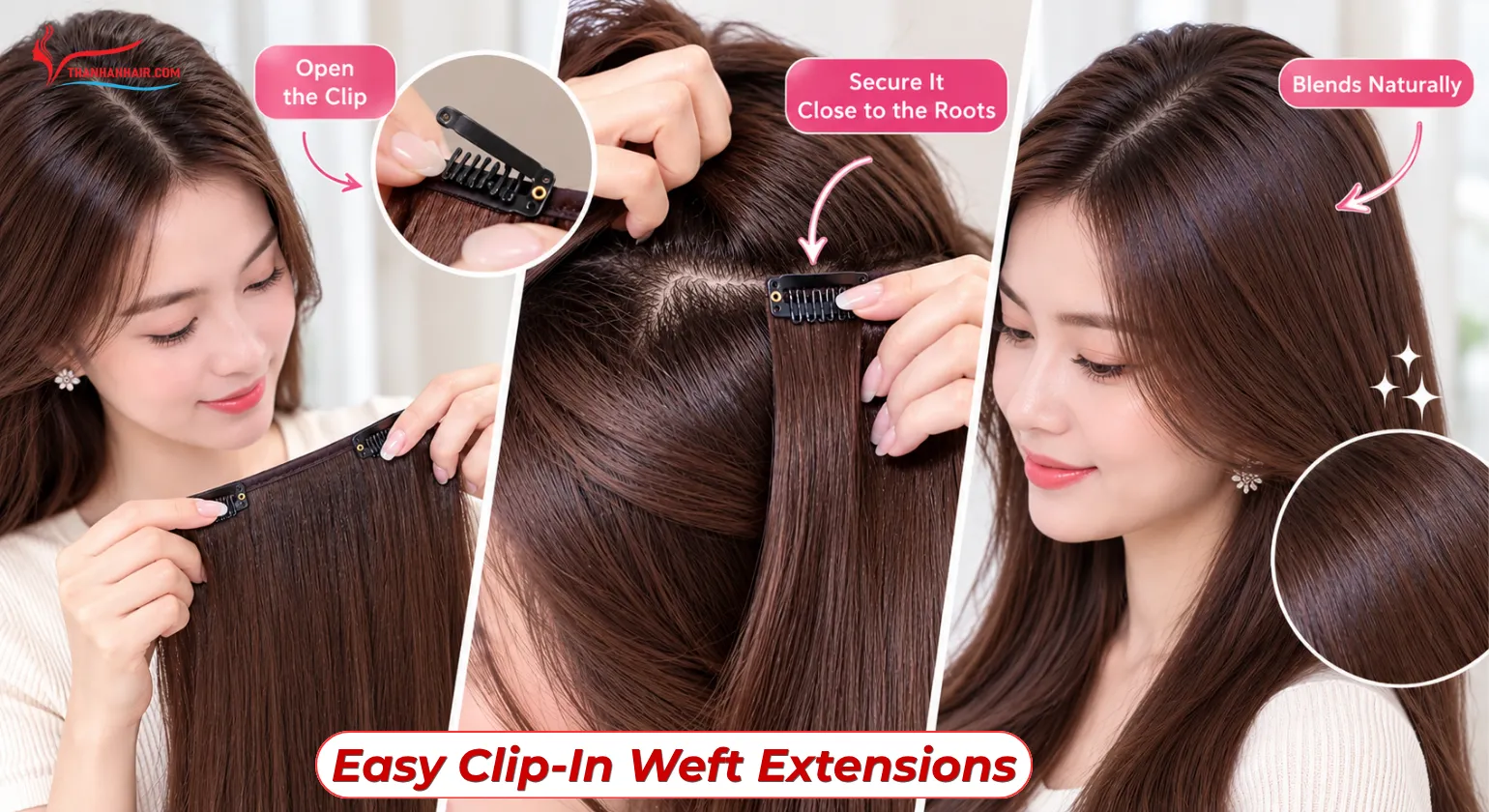
These extensions consist of wefted hair panels with small clips attached along the upper seam. Users section their natural hair, position the clips near the roots, and snap them securely into place.
Unlike traditional sew-in and beaded row methods, clip-in extensions can be installed and removed at home without professional sewing.
Main advantages:
- Easy installation: Most users can apply clip-in extensions themselves after learning the correct placement.
- Temporary styling: They can be removed before sleeping, showering, or washing natural hair.
- No permanent attachment: No sewing, beads, or adhesive are required.
- Styling flexibility: Different panel sizes can add length, volume, or subtle highlights.
Potential disadvantages:
Clip-in extensions are not designed for continuous wear. Repeatedly attaching heavy panels to the same sections of natural hair may create tension, especially when clips are secured too tightly.
They may also become visible if the panels are positioned incorrectly or the natural hair does not provide sufficient coverage.
Who should choose clip-in extensions?
Clip-in wefts are ideal for people who enjoy changing their hairstyles frequently, need extra volume for events, or prefer extensions they can remove independently. They are particularly useful for temporary transformations without committing to regular salon maintenance.
Thanh An Hair offers seamless clip-in hair extensions in multiple lengths, weights, and natural or highlighted shades, making it easy to achieve instant length and fullness at home.
Seamless Clip-In Hair Extensions – 100% Vietnamese Human Hair
Shop now: Seamless Clip-In Hair Extensions
Comparing the Top 3 Weft Hair Extension Styles
Choosing between these three methods depends on your natural hair condition, desired appearance, installation preferences, and maintenance routine.
| Feature | Traditional Sew-In | Beaded Row | Clip-In |
| Attachment | Braided foundation and thread | Beads and thread | Small clips |
| Adhesive required | No | No | No |
| Installation | Professional | Professional | DIY or professional |
| Wear type | Semi-permanent | Semi-permanent | Temporary |
| Maintenance | Regular salon maintenance | Regular salon maintenance | Remove after use |
| Main benefit | Fullness and coverage | Discreet row placement | Convenience |
| Best for | Fuller hairstyles | Flexible, discreet styling | Occasional styling |
There is no universally best method. A professional stylist should assess natural hair density, scalp condition, extension weight, and the client’s preferred styling routine before recommending an installation.
It is also important to distinguish installation methods from weft construction. Machine Weft and Hand-Tied Weft have different manufacturing characteristics, thicknesses, and handling requirements, even when used in similar installation techniques.
For example, a machine-made weft generally has a reinforced stitched track, while a hand-tied weft is constructed with individually tied strands to create a thinner base.
=>> Read more: Hand-Tied Weft vs Machine Weft: Which Is Best for You? (2026) – Compare construction, thickness, flexibility, installation considerations, and product suitability.
How to Choose the Right Weft Hair Extensions
Before choosing a weft installation method, consider four important factors.
- Natural hair thickness
Clients with medium-to-thick hair generally have more options for traditional sew-in and beaded row installations.
Those with fine or fragile hair should be more careful about extension weight and attachment tension. A lighter weft or temporary clip-in option may be more appropriate, depending on the stylist’s assessment.
- Desired volume and length
If your goal is dramatic fullness, Machine Weft hair can be a practical option because of its reinforced construction and suitability for creating fuller hairstyles.
For clients who prefer a thinner, more discreet seam, Hand-Tied Weft may be worth considering.
- Hair texture
The extension texture should blend naturally with your own hair.
- Natural Straight: Ideal for sleek, polished hairstyles.
- Body Wave: Suitable for soft, voluminous everyday looks.
- Deep Wave: Creates more defined waves and noticeable texture.
- Loose Wave: Offers a relaxed, flowing appearance.
Choosing a texture that is close to your natural hair pattern can reduce the amount of heat styling needed to achieve a seamless blend.
- Color matching
Choose an extension shade that complements your natural hair, including its undertones, highlights, and root color.
A professional color ring can help narrow down suitable shades. However, lighting conditions, screen differences, and the original hair color may affect the final appearance. Always confirm the shade before installation.
For clients who prefer a thin and flexible weft construction, hand-tied options are also worth exploring.
=>> Shop now: Hand Tied Weft Hair Extensions – 100% Raw Vietnamese Hair – Explore different lengths, colors, and hair grades for professional styling.
Thanh An Hair also provides flat weft hair extensions designed with a slim, flexible track in various lengths, textures, and colors for salons and private-label brands.
Flat Weft Hair Extensions – High Quality Human Hair
Shop now: Flat Weft Hair Extensions
How to Maintain Weft Hair Extensions and Protect Natural Hair
Proper maintenance helps keep weft hair extensions attractive while minimizing unnecessary stress on natural hair.
Follow these practical recommendations:
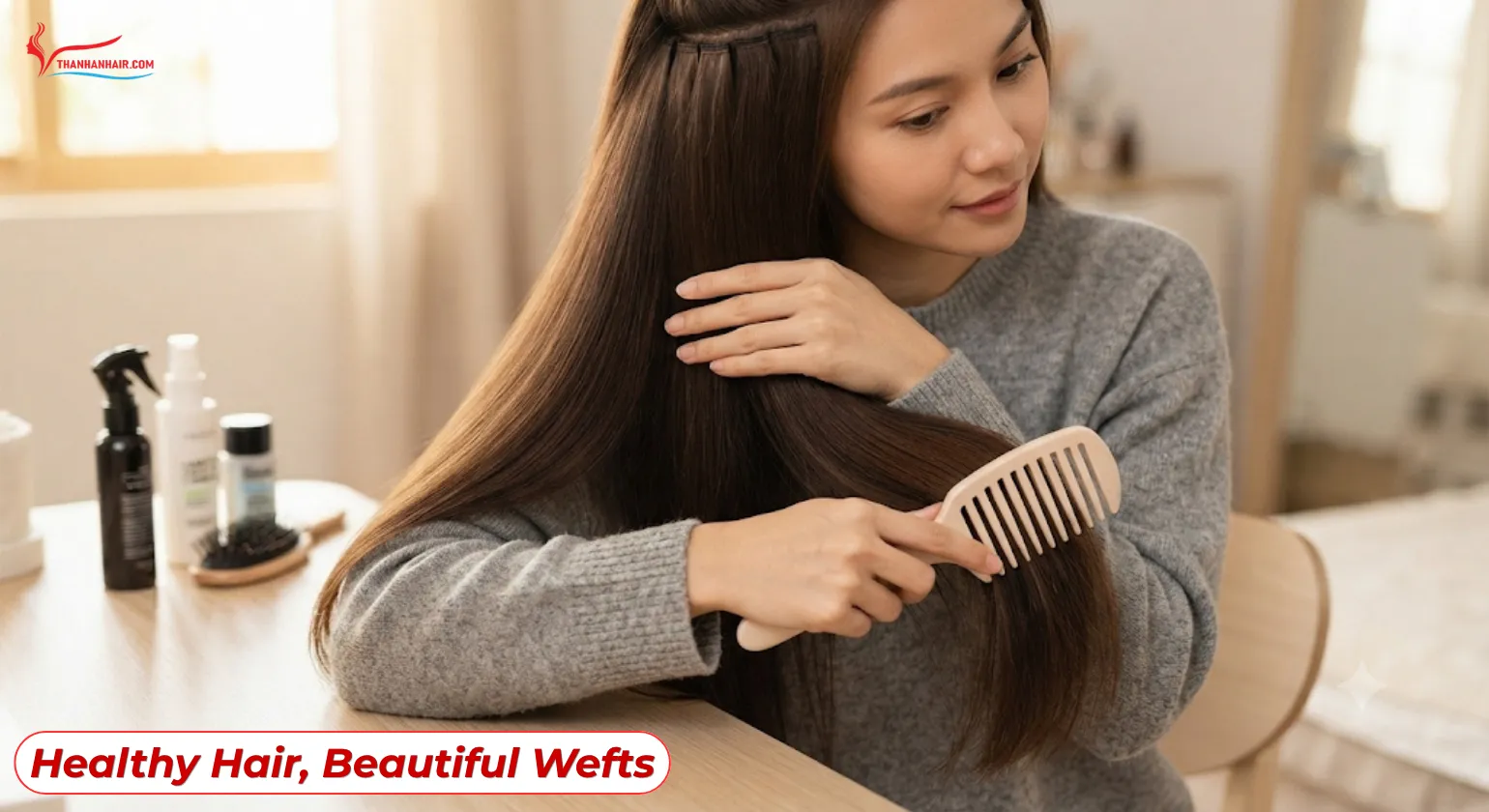
- Brush gently: Start from the ends and gradually work toward the roots. Avoid pulling directly on the weft attachment.
- Use suitable products: Choose moisturizing shampoo and conditioner appropriate for human hair extensions.
- Dry thoroughly: Pay attention to the roots and attachment areas to prevent prolonged moisture buildup.
- Control heat styling: Use heat protectant when styling with curling irons or straighteners.
- Schedule professional maintenance: Have a qualified stylist inspect attachment points and reposition or remove extensions when necessary.
- Take breaks: Give natural hair time to recover between installations.
Most importantly, extension installation should never cause persistent pain, scalp irritation, or excessive pulling.
According to the American Academy of Dermatology, tight braids, weaves, and hair extensions can contribute to traction alopecia when they repeatedly pull on the hair.
A peer-reviewed review published in Clinical, Cosmetic and Investigational Dermatology also discusses how prolonged tension from hairstyles and extensions can contribute to traction alopecia. Read the research: Traction Alopecia: The Root of the Problem.
For further dermatological information, DermNet’s guide to traction alopecia explains the causes, warning signs, and potential consequences of repeated tension on the scalp.
If an installation causes pain, stinging, redness, or persistent discomfort, ask the stylist to loosen or remove it. Do not ignore these warning signs.
Why Choose Quality Weft Hair from Thanh An Hair?
Choosing the right installation method is only part of achieving beautiful results. The quality of the extension hair, weft construction, and consistency between batches also matter.
Thanh An Hair is a Vietnamese hair manufacturer supplying human hair extensions to salons, distributors, and international buyers.
The company offers different weft constructions, including Machine Weft, Hand-Tied Weft, Genius Weft, and Flat Weft, with various lengths, colors, and textures.
According to the company’s manufacturing and ordering information:
- Factory area: Approximately 2,000 m².
- Workforce: Approximately 300 workers.
- Production capacity: Up to 10 tonnes of hair extensions per month.
- Minimum order quantity (MOQ): 1 kg for eligible wholesale hair and weft products.
- Standard production time: Approximately 1–7 days, depending on stock and processing requirements.
- Custom orders: May take up to 30 days.
- International shipping: Approximately 3–10 days, depending on the destination and shipping conditions.
- Color ring matching: Approximately 80–90%, depending on the reference shade and matching conditions.
Customers should also review the applicable order policies:
- Report product defects within 48 hours of receiving the order.
- Eligible returns and exchanges are available within 7 days, subject to applicable conditions.
- Manufacturing-defect warranty: 30 days, subject to warranty terms.
These details can help salons and distributors plan their inventory, production schedules, and wholesale orders more effectively.
For bulk purchases, confirm the specific product specifications, MOQ, sample availability, production schedule, and applicable policies with the Thanh An Hair team before placing an order.
Conclusion
The three popular weft hair extension styles offer different ways to achieve longer, fuller, and more natural-looking hair.
Traditional sew-in wefts are a classic choice for substantial coverage and volume. Beaded row extensions provide a modern installation option with flexible placement, while clip-in wefts offer convenience for temporary styling.
The best choice depends on your natural hair condition, desired appearance, maintenance routine, and the quality of the extension hair.
By combining the right installation technique with suitable human hair wefts and professional care, you can achieve beautiful results while minimizing unnecessary tension on natural hair.
Frequently Asked Questions (FAQs)
1. What are the most popular weft hair extension styles?
The three popular options are traditional sew-in wefts, beaded row wefts, and clip-in wefts. Each offers different benefits in terms of installation, styling flexibility, and maintenance.
2. What is the difference between sew-in and beaded row extensions?
Traditional sew-in extensions use braided natural hair as the foundation for sewing the weft. Beaded row extensions use small beads to create an anchor row before the weft is attached with thread.
3. Are weft hair extensions suitable for thin hair?
Some lightweight weft options may be suitable for fine hair, but the attachment method and total extension weight must be carefully selected. A professional consultation is recommended.
4. How long do weft hair extensions last?
Wear time depends on the installation method, hair growth, product quality, and maintenance. Semi-permanent installations require regular professional checks, while clip-in extensions are removed after each use.
5. Can I wash my hair with weft extensions installed?
Yes, professionally installed weft extensions can generally be washed. Use gentle products, avoid pulling around attachment points, and make sure the roots and weft areas dry thoroughly.
6. What is the difference between Machine Weft and Hand-Tied Weft?
Machine Weft is manufactured using specialized sewing machinery, creating a relatively reinforced track. Hand-Tied Weft is manually constructed by tying individual strands into a thinner, more flexible base. The right option depends on the desired appearance, installation technique, and natural hair condition.
=> Looking for the right weft type for your salon? Contact Thanh An Hair today for expert product consultation and wholesale catalog access.
Ready to Find Your Ideal Weft Hair Extensions?
Whether you are looking for Machine Weft, Hand-Tied Weft, or other professional hair extension products, Thanh An Hair can help you explore suitable options for your salon or business.
Contact our team to discuss product specifications, color matching, wholesale pricing, and customized orders.
WhatsApp / Hotline: (+84) 973 522 855
Official Website: https://thanhanhair.com/
Instagram: https://www.instagram.com/thananhair/
Email: thanhanexport@gmail.com
Choose the right weft hair, create beautiful hairstyles, and grow your hair business with Thanh An Hair.