Raw Vietnamese Hair
How to Distinguish 100% Genuine Raw Hair Extensions from Synthetic Blended Hair
Nov
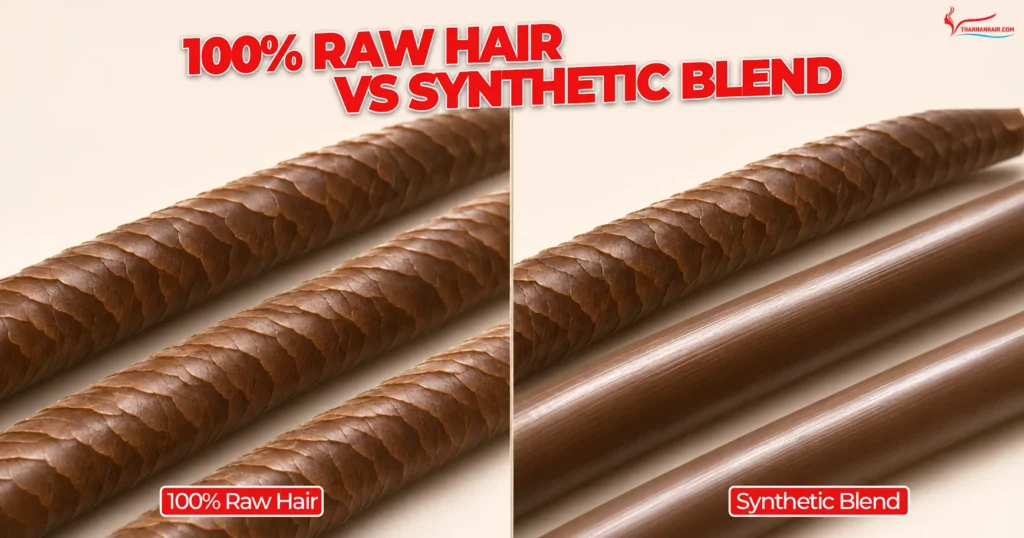
To distinguish 100% genuine raw hair extensions from synthetic blended hair, examine their texture, elasticity, water absorption, and response to heat. The most reliable approach is to combine several inspection methods rather than relying on appearance or a supplier’s claims alone.
For salons, distributors, and wholesale buyers, understanding hair composition helps prevent poor purchasing decisions and maintain consistent product quality.
1. What Are 100% Genuine Raw Hair Extensions?
Raw hair generally refers to human hair that has undergone minimal processing and retains much of its natural structure. Its cuticles are typically intact and aligned, helping reduce friction and tangling when properly maintained. Buyers interested in this type of product can explore Thanh An Hair’s Vietnamese raw bulk hair collection to review available raw hair products.
Synthetic blended hair combines human hair with artificial fibers. Some products may also have silicone coatings or surface treatments that make them look smoother and shinier than their actual composition suggests.
Before purchasing, understand these commonly used hair classifications:
- Raw Hair: Minimally processed human hair that retains its natural characteristics.
- Virgin Hair: Human hair that has not undergone chemical processing to alter its color or structure. It is not necessarily the same as raw hair.
- Remy Hair: Human hair with cuticles aligned in the same direction to help minimize tangling.
- Synthetic Hair: Hair made from artificial fibers such as polyester, acrylic, or specialized polymers.
- Blended Hair: Hair combining human hair with synthetic fibers.
When evaluating a product, ask the supplier about its origin, fiber composition, processing history, and classification standards. Buyers can also explore Thanh An Hair’s Vietnamese raw bulk hair collection to review available raw hair products.
2. Seven Ways to Distinguish Genuine Raw Hair from Fake Hair
No single test can confirm hair authenticity with absolute certainty. Combining several checks provides a more useful assessment.
Method 1: Examine the Hair’s Surface and Shine
Genuine raw human hair usually has a natural shine that changes depending on lighting and the direction of the strands.
Synthetic or silicone-coated hair may appear excessively glossy, with a uniform, plastic-like reflection. However, shine alone cannot prove authenticity because chemically treated human hair can also look unusually glossy.
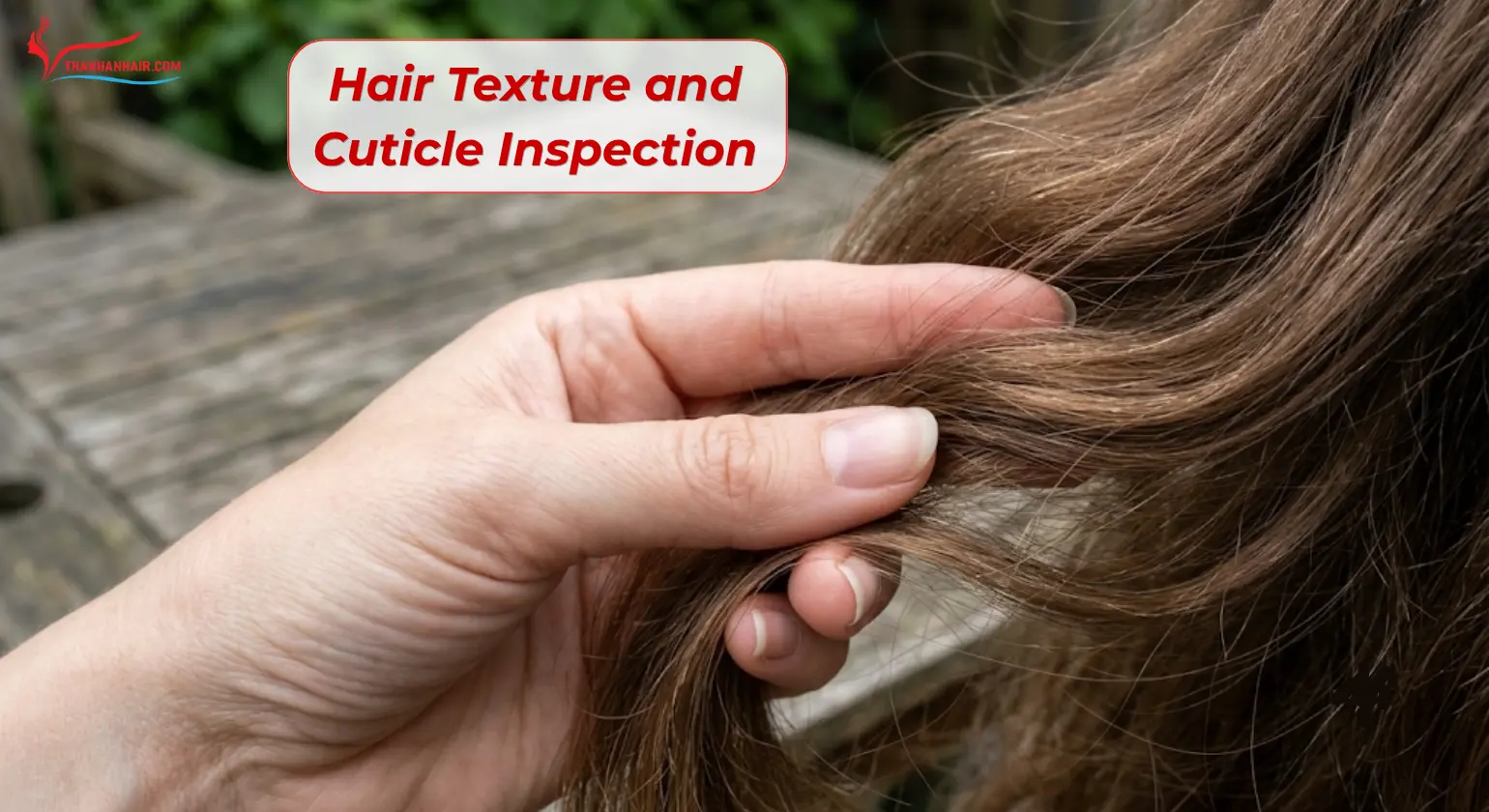
Method 2: Check the Texture by Touch
Gently run your fingers along a small section of hair from roots to ends. Pay attention to softness, friction, and consistency.
Quality human hair generally feels soft, flexible, and natural. Hair that feels stiff, sticky, unusually slippery, or coated may require further inspection.
You can also move your fingers in the opposite direction. Hair with intact cuticles may feel slightly different when touched against their natural alignment. This check is useful when products have similar colors and appearances.
Method 3: Test Elasticity and Recovery
Lightly dampen a few strands and gently stretch them within a safe range. Observe whether they return toward their original shape.
Healthy human hair has some natural elasticity, although recovery depends on moisture levels, damage, and previous chemical treatments. Severely damaged hair may break easily, while some synthetic fibers can also be elastic. Therefore, this test should not be used independently.
Method 4: Perform a Water Test
Wet a small hair sample with clean water and observe how its texture and weight change.
Human hair generally absorbs moisture and may feel heavier when wet. Many synthetic fibers absorb less water and dry more quickly.
After gently washing the sample, check whether it remains manageable or becomes tangled and difficult to comb. Results vary depending on fiber type, coatings, and manufacturing processes, so water absorption is only one indicator.
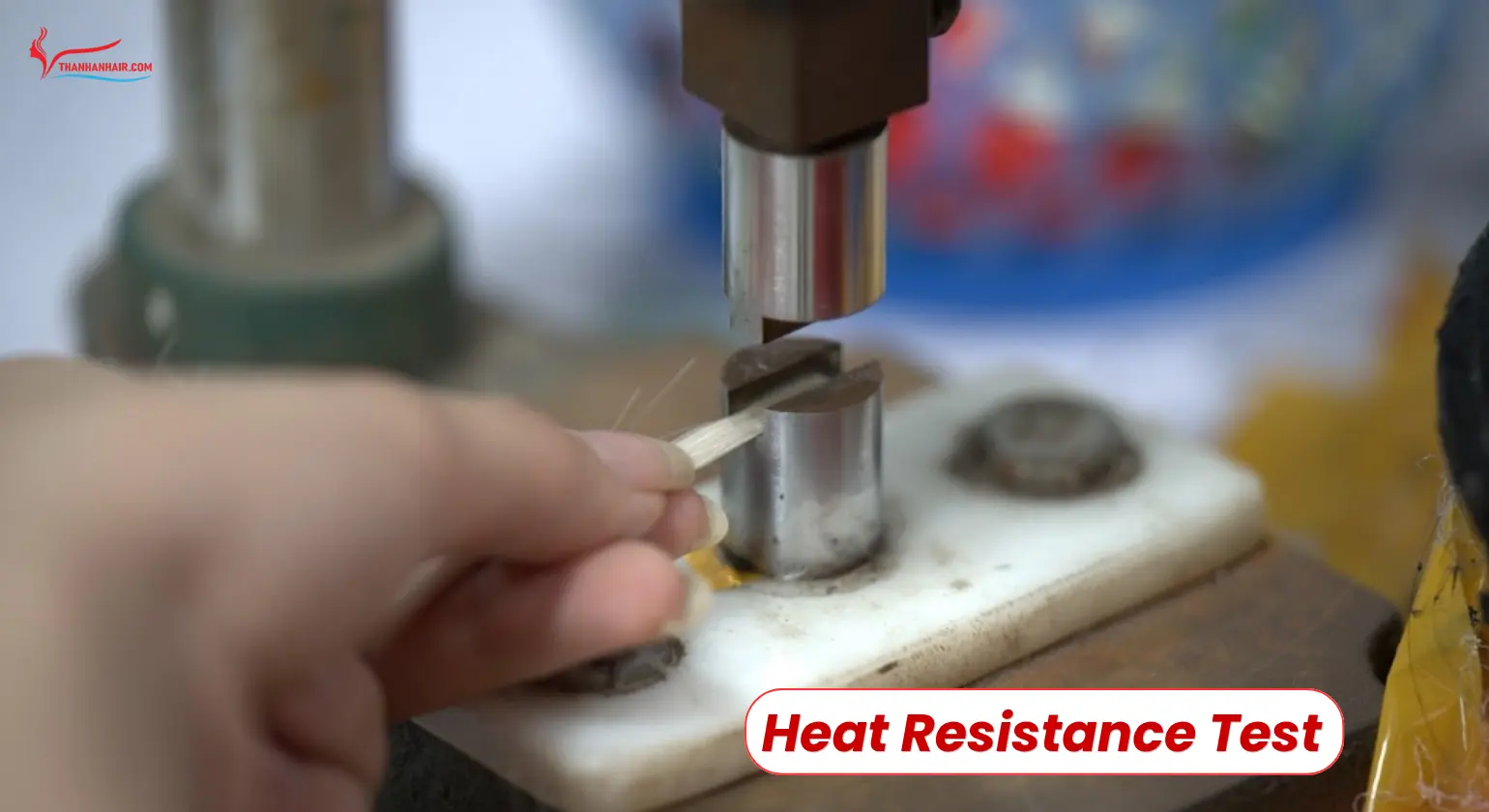
Method 5: Check Heat Resistance on a Small Sample
Human hair can generally be styled with suitable heat tools, depending on its condition. Many conventional synthetic fibers may shrink, deform, or melt when exposed to high temperatures.
If the manufacturer confirms that a sample is heat-resistant, begin with a low heat setting and follow the recommended temperature limits. Some specialized synthetic fibers can tolerate heat, so heat resistance alone does not prove that a product is human hair.
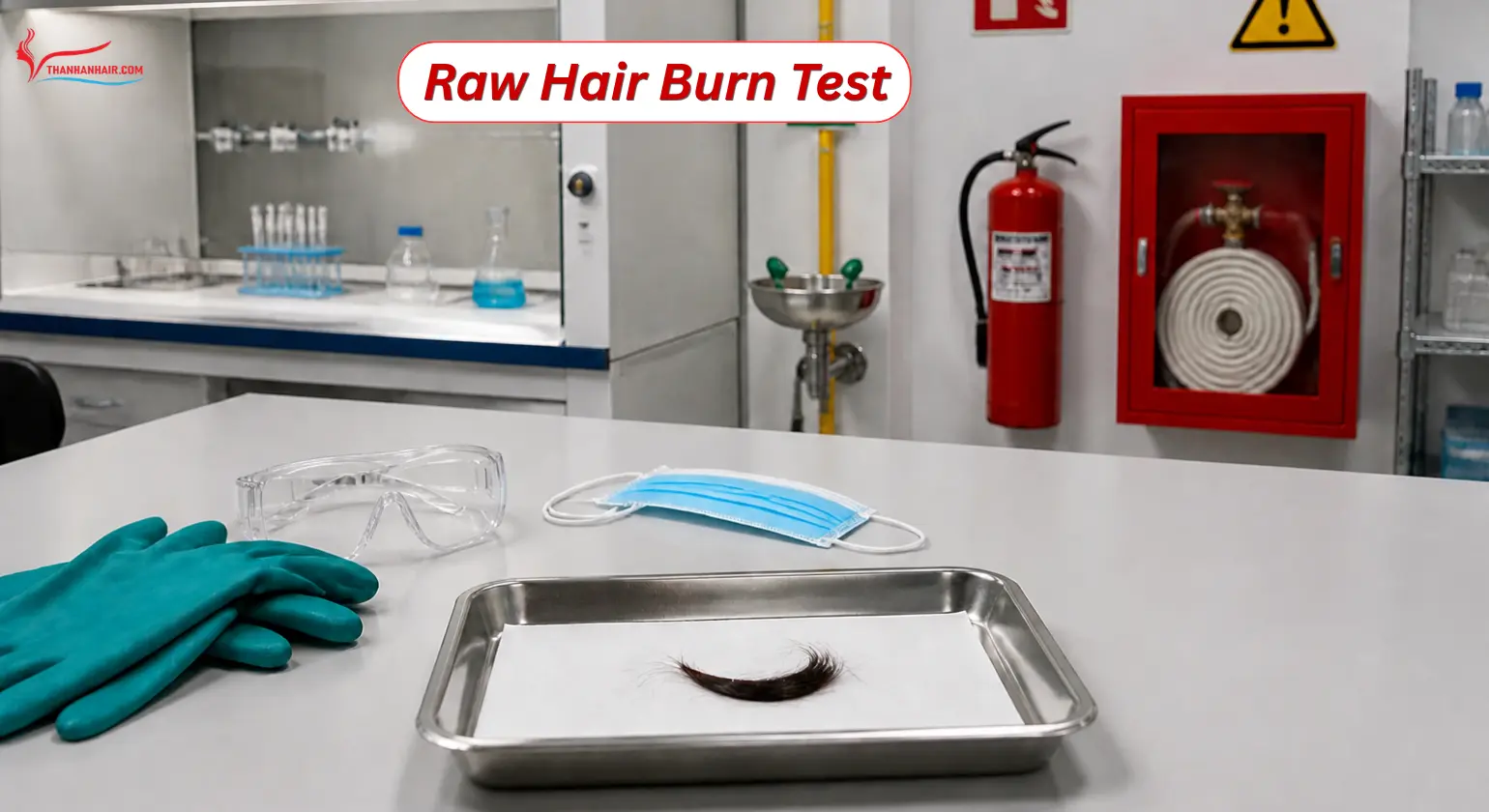
Method 6: Understand the Raw Hair Burn Test
A raw hair burn test is sometimes used as a preliminary way to examine fiber composition. Human hair typically burns and produces an odor similar to burning hair, leaving ash that can usually be crushed. Synthetic fibers may shrink, melt, form hard beads, and produce a plastic-like odor.
Blended hair can show a combination of these reactions.
However, this method is not a reliable standalone verification test. Coatings, dyes, adhesives, and mixed materials can affect the results. Do not recommend open-flame testing as a routine purchasing check. If material testing is necessary, use a qualified professional and an appropriate controlled testing environment.
Method 7: Examine Color Retention and Styling Performance
Genuine human hair can generally be colored, curled, and styled using suitable techniques. Conventional synthetic fibers, however, cannot be processed with ordinary hair dyes designed for human hair.
Repeated bleaching or coloring can damage even genuine raw hair, so assess the sample’s condition before applying chemicals.
For salons and distributors, requesting samples before placing a large order is a practical way to evaluate color consistency, washing performance, and styling results.
3. Genuine Raw Hair vs. Synthetic Blended Hair: Comparison
The following table summarizes common differences buyers can look for when evaluating hair samples.
| Criteria | Genuine Raw Human Hair | Synthetic Blended Hair |
| Composition | Human hair | Human hair mixed with artificial fibers |
| Shine | Natural and varies with lighting | May appear uniformly glossy |
| Texture | Generally soft and flexible | May feel stiff or unusually slippery |
| Heat resistance | Can be styled appropriately | Depends on fiber type |
| Water absorption | Absorbs moisture | Many fibers absorb less |
| Coloring | Can be colored depending on condition | Conventional synthetic fibers are difficult to dye |
| Burning reaction | Typically burns and produces ash | May melt and form hard beads |
Note: These are common characteristics, not universal laboratory standards. Some advanced synthetic fibers can closely imitate human hair.
4. Warning Signs When Buying Raw Hair Bundles
Product photos alone cannot establish hair quality. Before purchasing, pay attention to these warning signs:
- Prices that seem unusually low for the advertised specifications.
- Unclear information about hair origin and fiber composition.
- No confirmation of whether the product is raw, virgin, or chemically processed.
- No opportunity to inspect samples before a wholesale order.
- Noticeable differences in texture, length, or color between bundles.
- Unclear policies for defective or incorrectly described products.
For Vietnamese raw hair orders, ask suppliers about material sourcing, sorting procedures, and quality inspection standards. Request at least two samples from the same production batch to compare color, length, texture, and consistency.
You can also review this 100% Vietnamese raw human hair product as a reference when evaluating product specifications and hair quality.
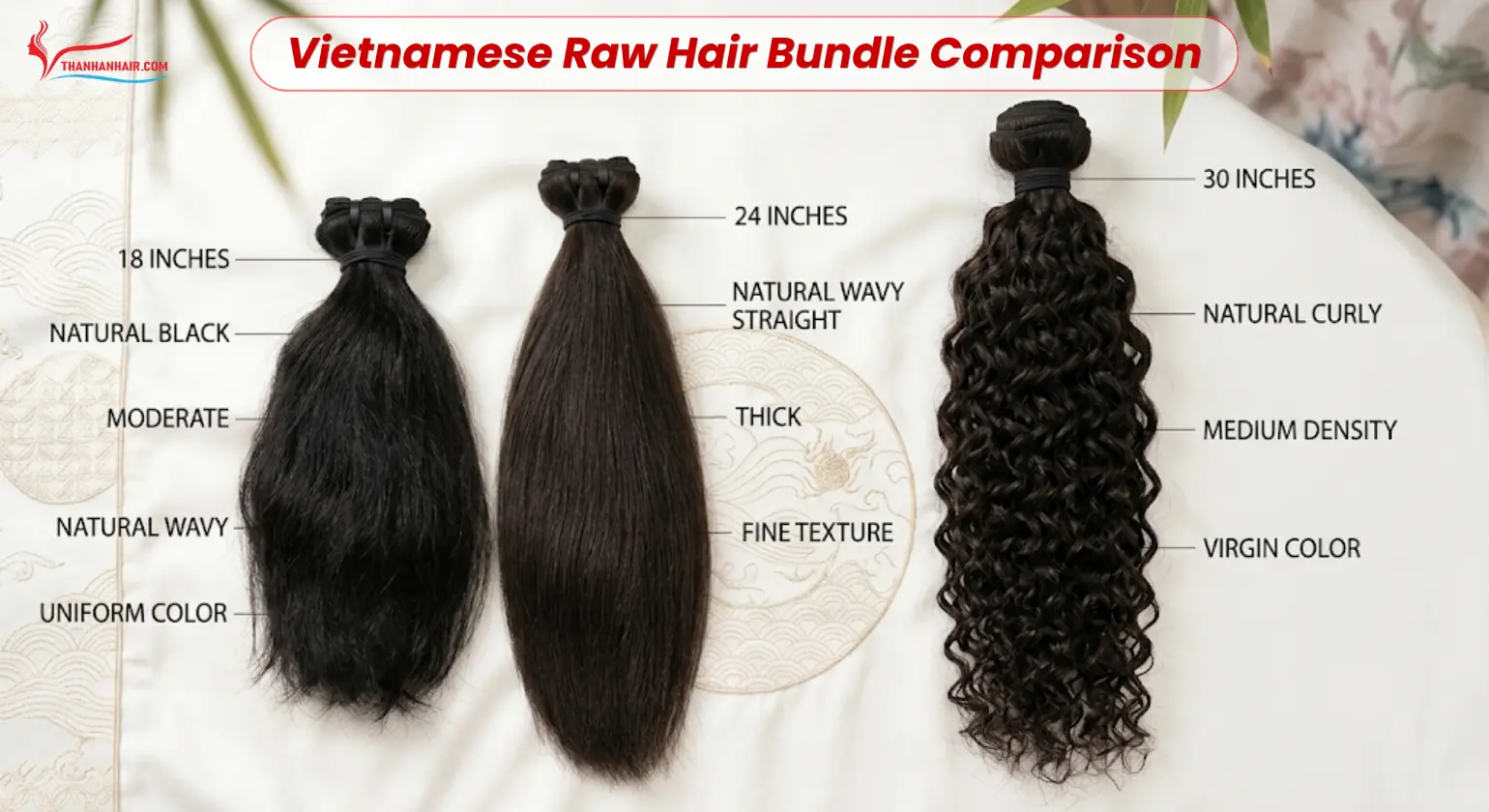
5. Quality Control at Thanh An Hair’s Manufacturing Facility
Besides inspecting samples yourself, choosing a manufacturer with a transparent quality control process is important.
Thanh An Hair is a Vietnamese hair extension manufacturer operating since 2012. According to company-provided information, its factory in Bac Ninh covers approximately 2,000 m², employs around 300 workers, and has a production capacity of up to 10 tonnes of hair extension products per month.
Buyers can learn more about the company’s manufacturing facility and company background to understand its production operations.
Important wholesale details include:
- MOQ: Starting from 1 kg for eligible bulk hair and weft hair products. Other categories have separate minimum quantities.
- Processing Time: Approximately 1–7 business days for in-stock products; custom orders may take up to 30 days.
- International Shipping: Typically 3–10 business days, depending on the destination and shipping provider.
- Color Matching: Estimated at approximately 80–90% against a reference sample; an exact match is not guaranteed.
- Defect Reporting: Customers should report damaged or defective products within 48 hours of receipt.
- Returns and Warranty: Eligible returns or exchanges may be available within 7 days, while a 30-day warranty applies to manufacturing defects under the relevant policies.
Before ordering, review Thanh An Hair’s wholesale hair extension ordering terms and sample options to understand the applicable purchasing conditions.
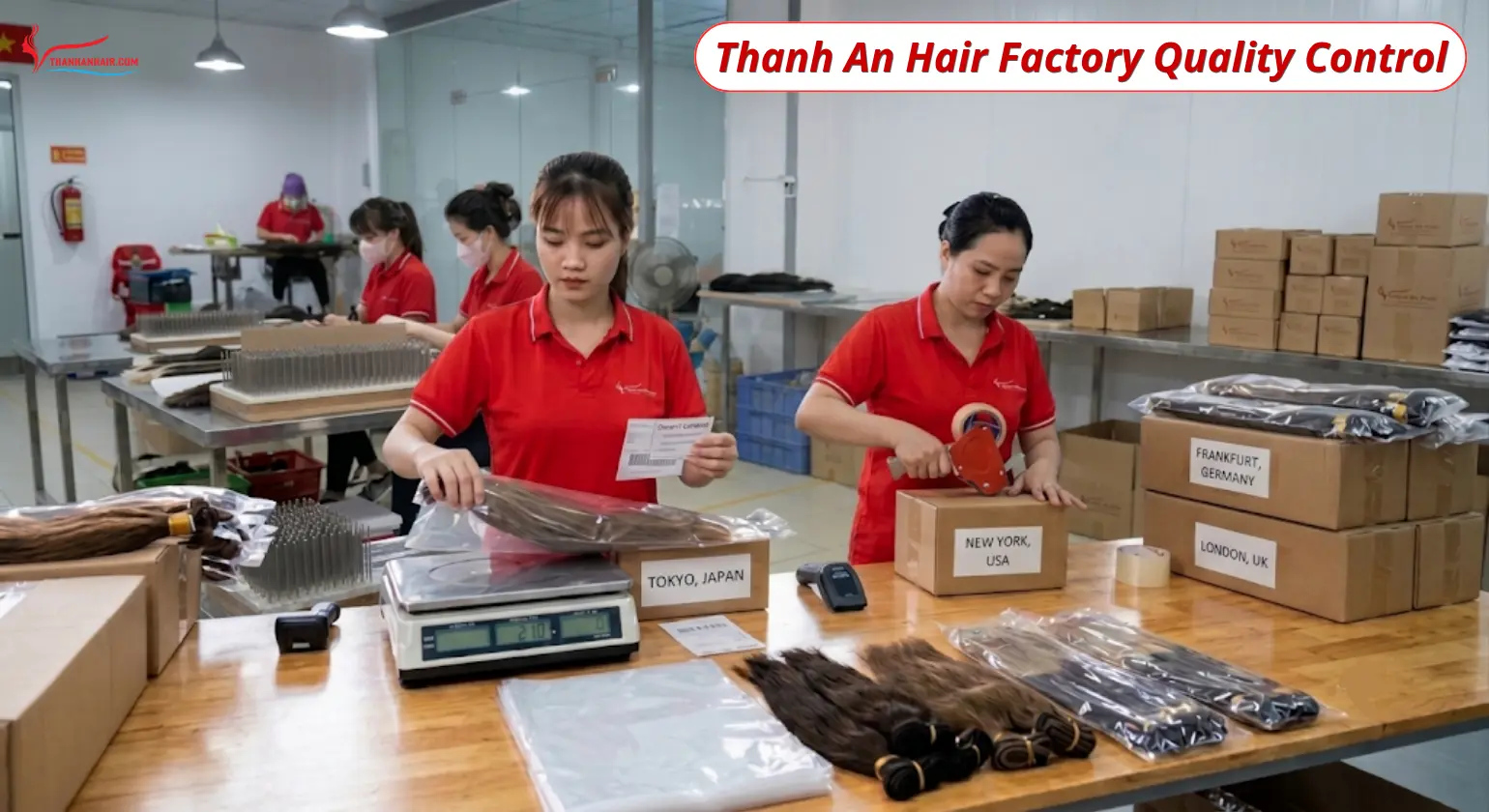
6. Tips for Buying Genuine Raw Hair for Salons and Distributors
For professional buyers, hair authentication should be part of the incoming quality inspection process. Follow these five steps before placing a large order:
- Request Product Specifications: Confirm hair type, origin, length, texture, color, weight, and processing history.
- Order Samples: Inspect actual samples instead of relying only on photos or videos.
- Check Batch Consistency: Compare multiple bundles for color, length, texture, and overall condition.
- Confirm After-Sales Policies: Clarify defect reporting deadlines, returns, exchanges, and warranty coverage.
- Test Before Scaling Up: Evaluate sample quality and consistency across initial orders before increasing quantities.
If you are looking for Vietnamese raw hair for your salon or distribution business, browse Thanh An Hair’s full range of Vietnamese hair extensions to find products that suit your requirements.
7. Frequently Asked Questions About Identifying Genuine Raw Hair
- Are Raw Hair and Virgin Hair the Same?
No. Raw hair generally refers to minimally processed human hair, while virgin hair has not undergone chemical treatments that alter its color or structure. Suppliers may use these terms differently, so confirm the product standards.
- Can a Raw Hair Burn Test Identify Genuine Hair with 100% Accuracy?
No. A burn test only provides preliminary indications. Coatings, chemicals, and blended materials can affect the results. Professional material testing is more reliable.
- Can You Identify Synthetic Hair by Appearance Alone?
Not accurately. Some synthetic fibers closely imitate the shine and surface of human hair. Combine visual inspection with texture checks and supplier-provided composition information.
- Can Genuine Raw Hair Be Dyed and Curled?
Yes. Human hair can generally be dyed and styled using suitable techniques. However, assess its condition first to avoid unnecessary damage.
- What Is the MOQ for Hair Extensions at Thanh An Hair?
The MOQ starts from 1 kg for eligible bulk hair and weft hair products. Other categories have separate requirements, so confirm the quantity for your chosen product.
- How Can You Buy Quality Raw Hair Directly from a Manufacturer?
Request product specifications, samples, sourcing information, and quality control policies. Confirm product standards and defect-handling conditions before making a large payment.
8. Conclusion
Identifying genuine raw hair requires several inspection methods, including checking shine, texture, elasticity, water absorption, and styling performance. No single test can verify authenticity with absolute certainty.
For salons and distributors, choosing a manufacturer with clear product specifications, transparent quality control, and reliable after-sales support is essential.
Thanh An Hair supplies Vietnamese hair extension products for wholesale customers and international business partners. Request actual samples, evaluate their quality, and confirm product specifications before placing a large order.
Next step: Request a paid sample pack and current product specifications.
- WhatsApp/Hotline: (+84) 973 522 855
- Official Website: https://thanhanhair.com/
- Instagram: @thanhanhair
- Email: thanhanexport@gmail.com