
Raw Vietnamese Hair
Weft Hair Manufacturing Process at Thanh An Hair Factory (2026)
Oct
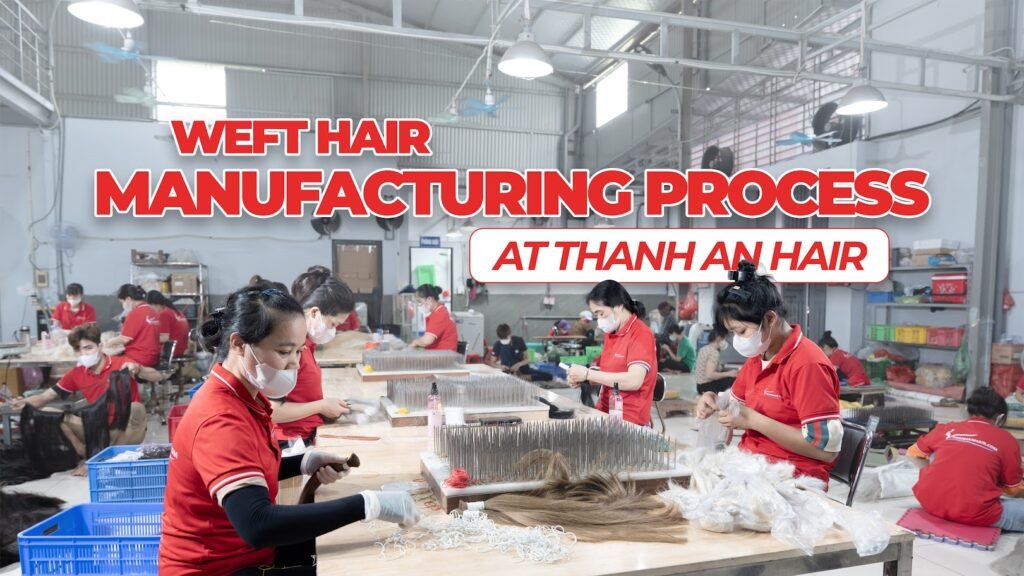
The weft hair manufacturing process at Thanh An Hair involves raw hair selection, sorting, preparation, weft construction, quality inspection, and packaging. Depending on the product specifications, a weft hair manufacturing factory may use machine-based production or hand-sewing techniques to create wefts that meet the needs of salons and wholesale distributors.
1. Selecting and Inspecting Raw Hair
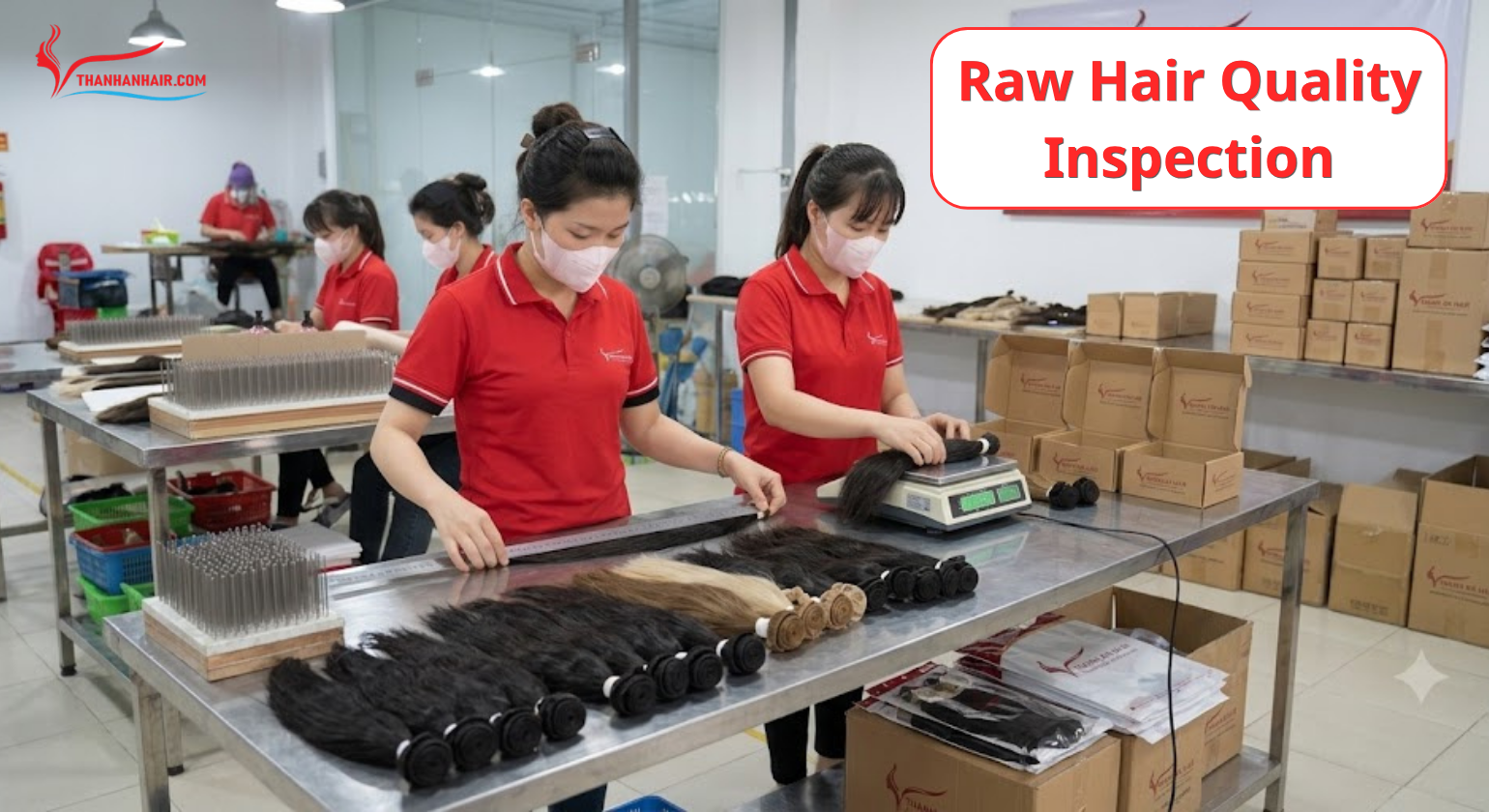
Finished product quality begins with the raw materials. Before starting the weft hair manufacturing process, manufacturers need to assess hair origin, length, base color, texture, and overall condition. For human hair extensions, consistency between bundles and the ability to meet customer specifications are important considerations.
Thanh An Hair offers Vietnamese human hair extensions in a range of lengths, colors, and textures. You can browse our full range of Vietnamese hair extensions or read about how the Thanh An Hair factory works to understand our sorting standards. Sorting raw materials helps the weft hair manufacturing factory select suitable hair for each order and manage variations between bundles.
2. Sorting, Cleaning, and Preparing the Hair
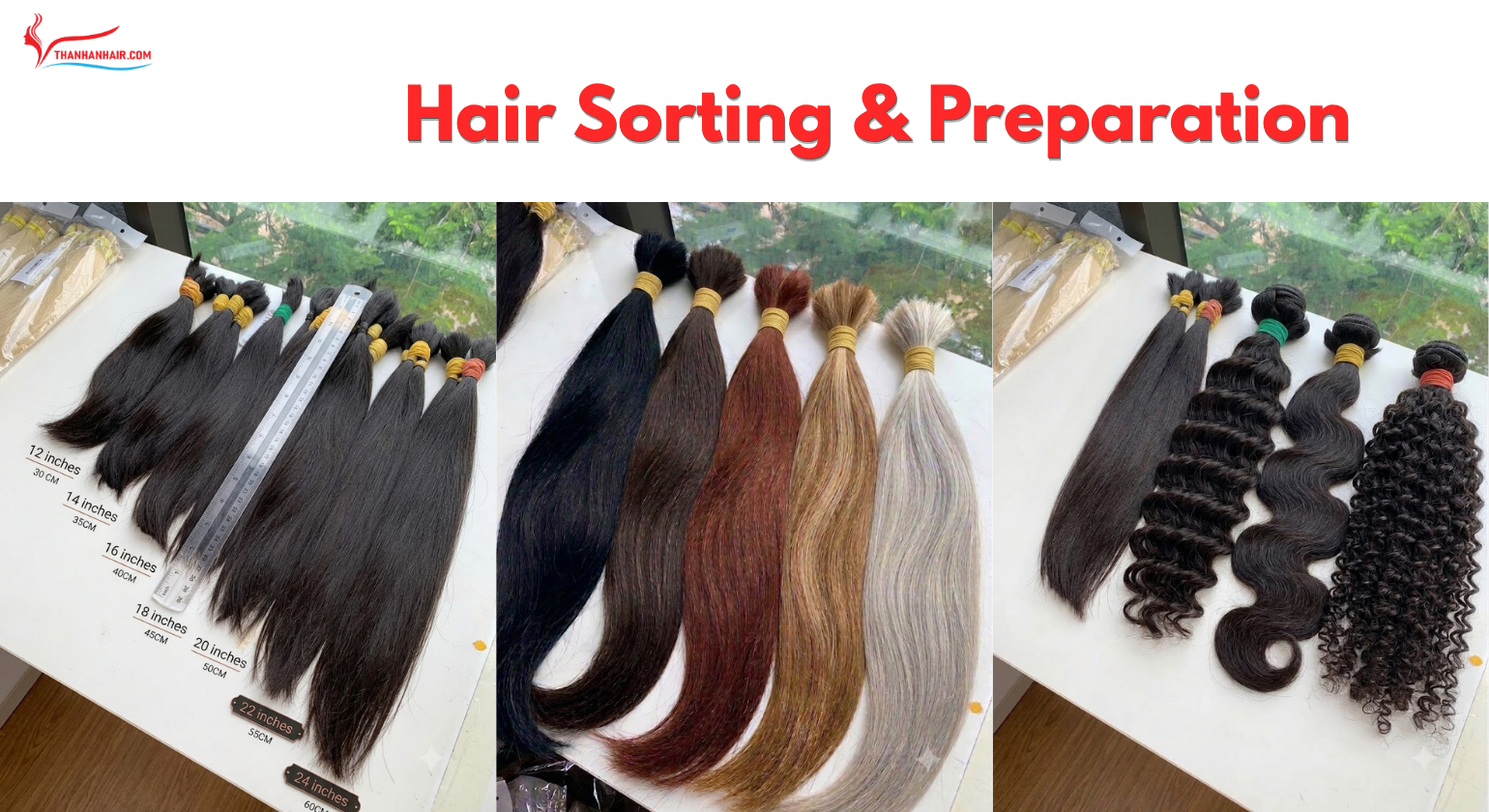
After the initial inspection, hair is sorted by length, color, texture, and the required finished specifications. Proper preparation helps minimize tangling, inconsistencies between hair groups, and deviations from the customer’s order requirements.
During the weft hair manufacturing process, careful preparation supports smoother production and more consistent results. For orders requiring specific colors or textures, buyers should confirm their specifications before production begins to avoid discrepancies between the reference sample and the finished product.
3. Hand-Tied Wefts vs. Machine-Made Wefts
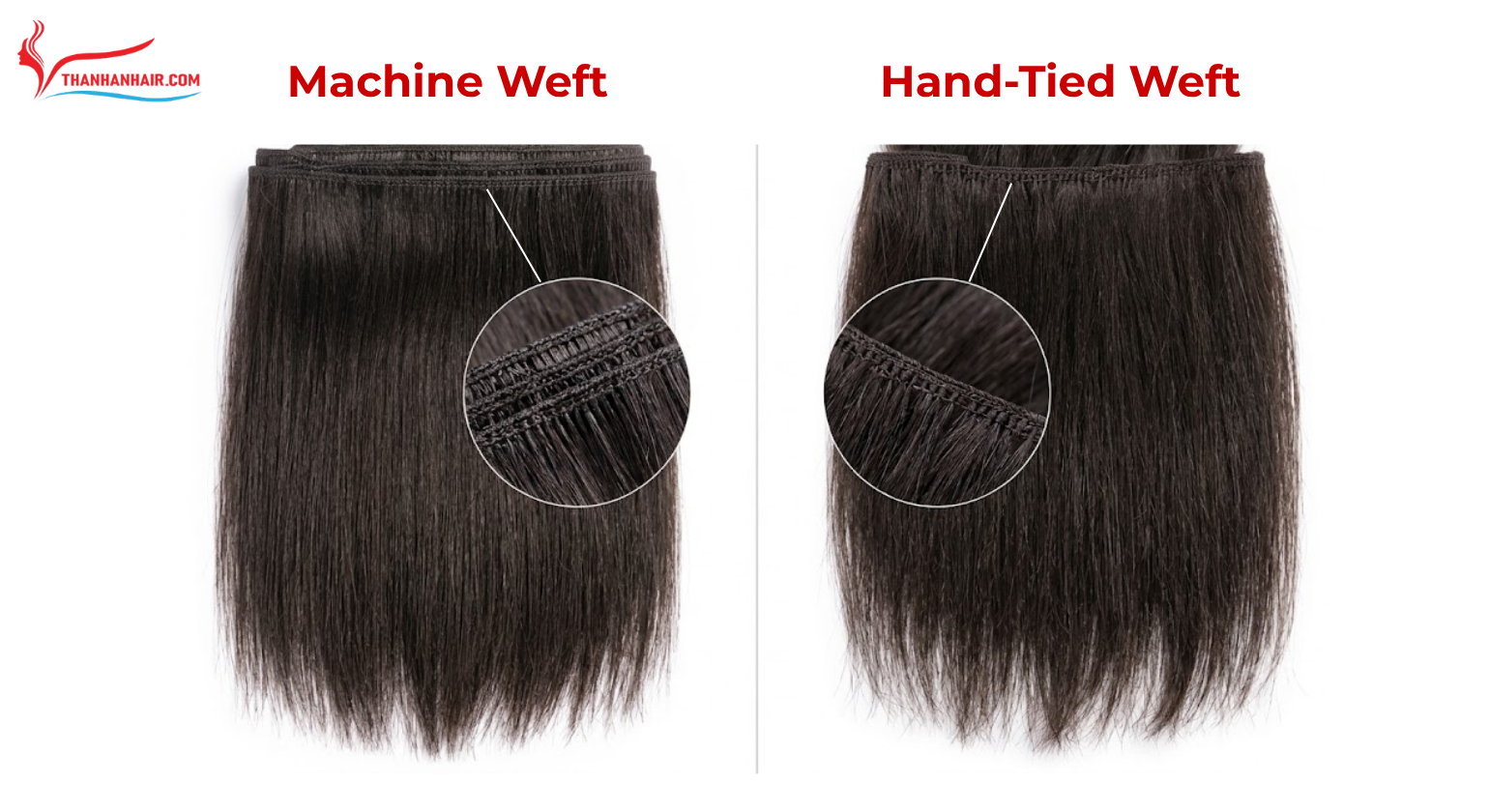
Two common methods of creating wefts are machine stitching and manual sewing. The appropriate method depends on the required weft structure, thickness, flexibility, and intended application, as also noted by industry insights from Hair Authority.
Machine-Made Wefts
In machine weft manufacturing, hair is fed through specialized sewing equipment to create a continuous weft track. This method is suitable for larger production volumes and can help maintain consistent stitching when the equipment is properly adjusted and the raw materials are well prepared.
During the weft hair manufacturing process, manufacturers should inspect stitch consistency, seam strength, and the condition of the hair along the weft. Thanh An Hair offers Machine Weft products with a double-stitched construction designed to help secure the hair and reduce shedding during use.
Hand-Tied Wefts
Hand-tied weft manufacturing uses manual sewing techniques to create a hair track according to specific structural requirements. Certain hand-tied styles may be selected when buyers need a fine, lightweight, or specialized weft construction.
However, not every hand-tied product has the same thickness or flexibility. When comparing weft hair extensions, buyers should evaluate actual samples, stitching structure, and installation requirements rather than relying on the product name alone.
4. Weft Construction and Product Finishing
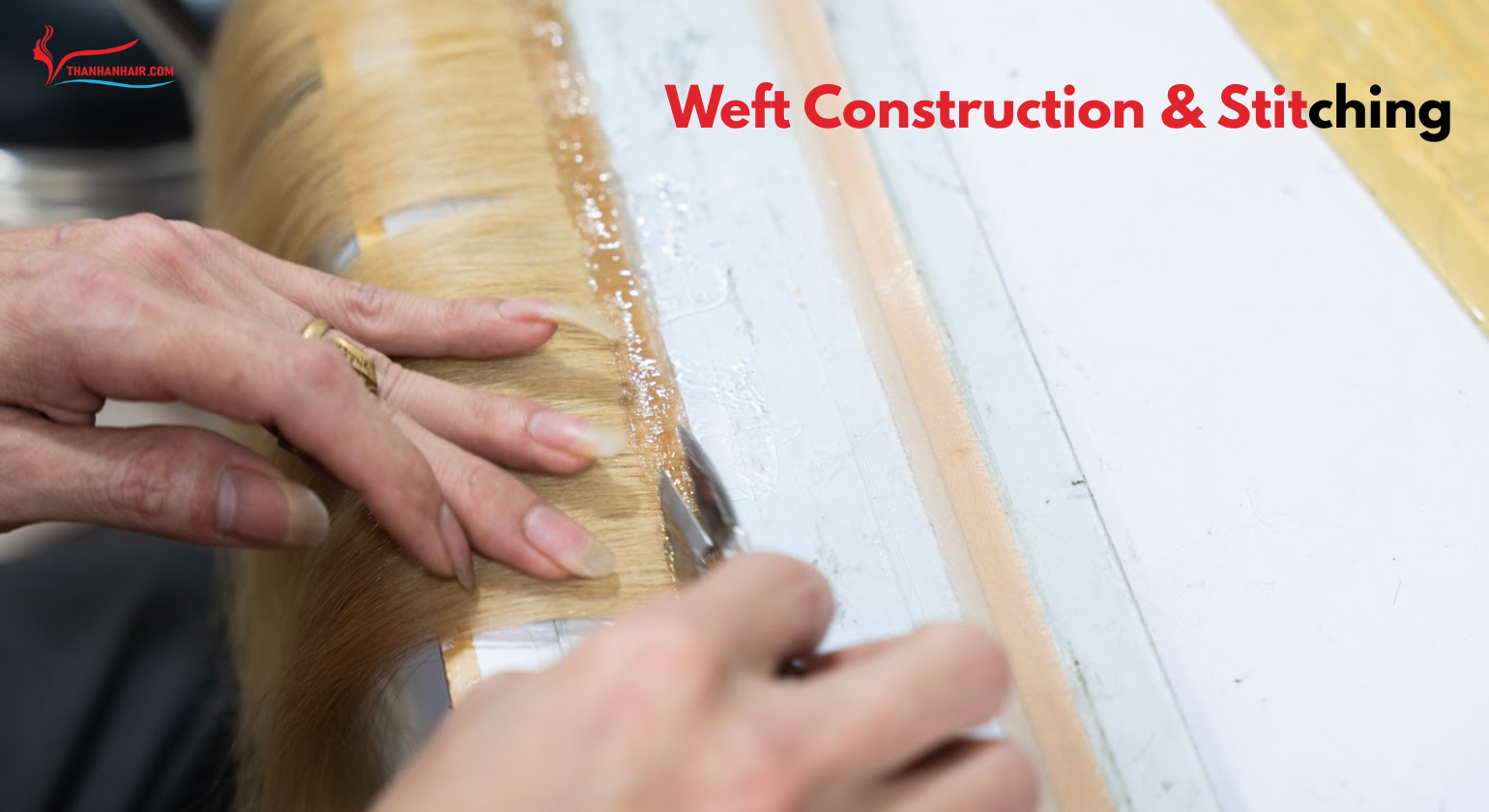
After the hair has been prepared, the strands are secured into a continuous weft according to the agreed specifications. This is a central stage of the weft hair manufacturing process because the construction affects seam strength, thickness, and usability.
During machine weft manufacturing, technicians should inspect stitch consistency, connection points, and the condition of the hair along the weft. For hand-tied weft manufacturing, workers also need to maintain appropriate stitching tension and consistent construction to meet the agreed specifications.
Different types of weft hair extensions may vary in thickness, flexibility, and construction. Salons should therefore select products based on their installation method, the client’s natural hair density, and the desired hairstyle.
5. Quality Control, Color Matching, and Packaging
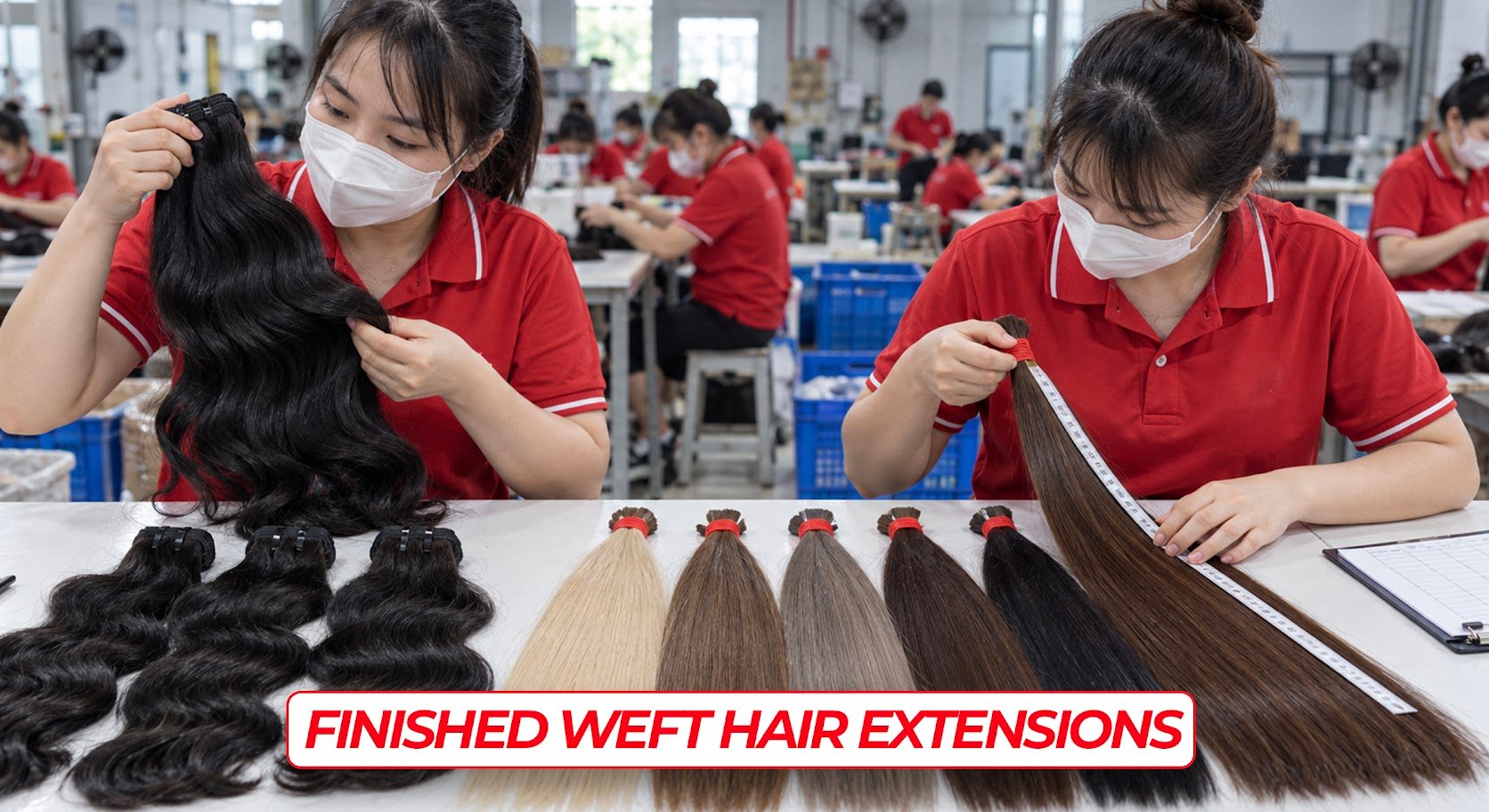
Before packaging, finished wefts should be checked for length, weight, color, texture, and stitching strength. This stage of the weft hair manufacturing process helps identify deviations from the order specifications and reduces the risk of shipping incorrect products.
Thanh An Hair reports an approximate 80–90% color and texture matching rate. This is a reference estimate, not a guarantee that every batch will perfectly match a photograph or color sample under all lighting conditions. Buyers should confirm the reference shade and request samples before placing large orders.

Production Capacity and Wholesale Ordering at Thanh An Hair
According to information published by Thanh An Hair, the factory operates at a scale covering approximately 2,000 m², with around 300 skilled workers and a production capacity of approximately 10 tonnes of hair extensions per month. These figures help wholesale buyers understand the manufacturer’s operating scale.
Key ordering and shipping details according to Thanh An Hair standard operating procedures include:
- Minimum Order Quantity (MOQ):
- Wholesale orders: Starts at 1 kg for applicable bulk hair and weft products.
- Sample test orders: Customers can place sample orders starting from 2–3 bundles (200–300 grams) for quality testing. (Note: Invisible tape extensions require a minimum sample order of 500 grams).
- In-stock processing time: Typically 7–10 business days (natural straight and natural wavy hair are available in stock).
- Custom orders: May require up to 30 days, depending on detailed specifications and order volume.
- International shipping: Estimated at 3–5 business days via major express carriers such as FedEx, DHL, and UPS (or local shipping agents for specific African destinations).
- Damage reporting: Contact the supplier within 48 hours of receiving the order with photos/videos as evidence.
- Returns and exchanges: Eligible requests must generally be submitted within 7 days, subject to official terms and conditions.
- Warranty: A 30-day warranty applies to manufacturing defects under published terms.
To learn more about the weft hair manufacturing process and available products, please see wholesale hair extensions ordering terms and sample options.
Conclusion
An effective weft hair manufacturing process combines suitable raw materials, consistent weft construction, and quality inspections before shipment. For salons and wholesale distributors, understanding the differences between hand-tied weft manufacturing, machine weft manufacturing, and the characteristics of different weft hair extensions can help them choose products that better meet their business needs.
Before placing a large order, confirm the required length, color, texture, weight, and delivery schedule with the supplier. As a recommended next step: request a paid sample pack and current product specifications to evaluate the finished product firsthand.
Frequently Asked Questions (FAQ)
1. What are the main stages of the weft hair manufacturing process?
The main stages typically include raw hair selection, sorting and preparation, weft construction, quality inspection, and packaging. Specific steps may vary depending on the product type.
2. What are the advantages of machine-made wefts?
Machine-made wefts are suitable for larger production volumes and can help produce consistent stitching. Actual quality still depends on the raw materials, machine settings, and quality control procedures.
3. Which products are suitable for hand-tied weft manufacturing?
Certain hand-tied styles may be suitable for customers who require fine weft tracks or specialized construction. Buyers should inspect samples to assess thickness, flexibility, and suitability for their intended installation method.
4. What is the MOQ for weft hair from Thanh An Hair?
The MOQ for wholesale orders starts at 1 kg for applicable bulk and weft products. For testing quality, sample orders are accepted starting at 2–3 bundles (200–300g), except for invisible tape extensions which require an MOQ of 500g.
5. How long do production and shipping take?
Processing time for in-stock hair (such as natural wavy and natural straight) is 7–10 business days, while custom manufacturing orders may take up to 30 days. Express international shipping via FedEx, DHL, or UPS usually takes 3–5 business days.
6. What should buyers do if their weft hair arrives damaged?
Contact the supplier within 48 hours of receiving the order, retain all packaging and product evidence, and follow the resolution steps. Return requests must be made within 7 days, and manufacturing defects are supported under a 30-day warranty policy.