
Thanh An Hair
Hair Extensions for African American Hair: Where to Buy in Hair Extensions for African American Hair: Where to Buy
Oct
If you are looking for hair extensions for African American hair, the hard part is not finding a seller. There are thousands. The hard part is knowing which one will send you hair that actually blends with yours, and will send you the same thing again next time.
We are Thanh An Hair, a family factory in Vietnam. We have made human hair extensions for about twenty years and we ship to salons and customers in the United States. This page is how we would explain the choice to you in person, including the parts that are not flattering to us.
Start with texture, not price
Almost every complaint we get about blending comes down to the wrong texture, not bad hair. So pick the texture first and worry about price after.
One thing to decide before you look at anything: do you wear your hair pressed, or natural? The answer changes which texture you need. If you switch between both, you will get a better result from two smaller sets than one set that half works for each.
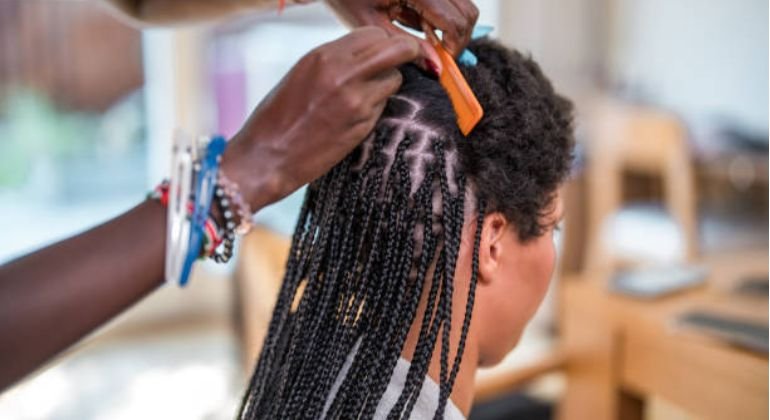
Which extension texture matches your hair
| Your hair | Texture to ask for | Blends best when |
| Relaxed | Natural straight, or light Yaki | Blown out or flat ironed |
| 3C | Loose wave or body wave | Air dried |
| 4A | Deep wave or curly | Air dried with product |
| 4B | Kinky straight if you press, kinky curly if you wear it natural | In whichever state you wear most |
| 4C | Kinky straight if you press, coily or afro kinky if you wear it natural | Pressed, or washed and shrunk |
Texture names are not standard across the industry. One seller’s kinky straight is another seller’s Yaki. So do not buy on the name. Ask for a photo of the hair after a plain water wash with no product and no heat. Hair that only looks right when it is styled was styled for the photograph.
Kinky straight is the one we sell most for African American hair. It carries enough texture to sit well against pressed 4B and 4C hair, and it still straightens cleanly when you want a sleeker look. You will find it in our weft hair and in single donor bulk hair for braiding and crochet.
Then pick how it goes on
How the hair attaches matters as much as the hair itself. It decides how long you can wear it, how much pull your scalp takes, and whether you can use the hair again.
Ways to wear hair extensions for Black hair
| Method | How long you wear it | Good for | Use again? |
| Sew-in weft | 6 to 8 weeks | Most textures, full looks | Yes, if removed carefully |
| Crochet | 4 to 6 weeks | 4B and 4C protective styles | Sometimes |
| Microlinks | 6 to 10 weeks | Looser curl patterns | Yes |
| Lace front or full wig | Day to day | Giving your scalp a rest | Yes |
| Clip-in | A few hours | Length for one night out | Yes |
| Halo | A few hours | No attachment at all | Yes |
Two honest notes. Tape-in gets recommended a lot, but the tape needs a smooth surface to stick to, so it does not hold well on tightly coiled hair worn natural. And microlinks pull at one small point each, which suits looser patterns better than dense 4C hair at the hairline.
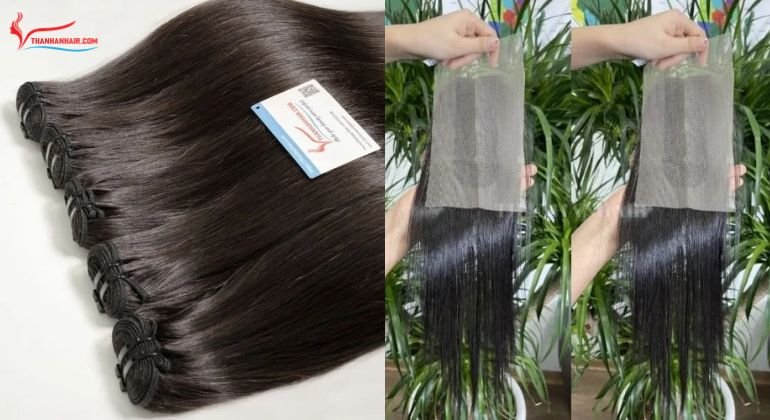
If you want length with no pulling at all, clip-ins and a halo piece do the job in minutes. A full lace wig does the same and lets your own hair rest completely between installs.
Where to buy hair extensions for African American hair
You have four realistic options. A beauty supply store is fine when you need something today. A marketplace listing is fine for trying one bundle cheaply, but the same photo gets used by a dozen sellers. A salon will sell you hair with the install included, at the highest price. A factory or a specialist seller costs less per bundle and can repeat an order, which is why most people end up there once they know what they want.
We sell direct, so there is no middle seller adding a markup and no listing written by someone who has never touched the hair. Here is how it works.
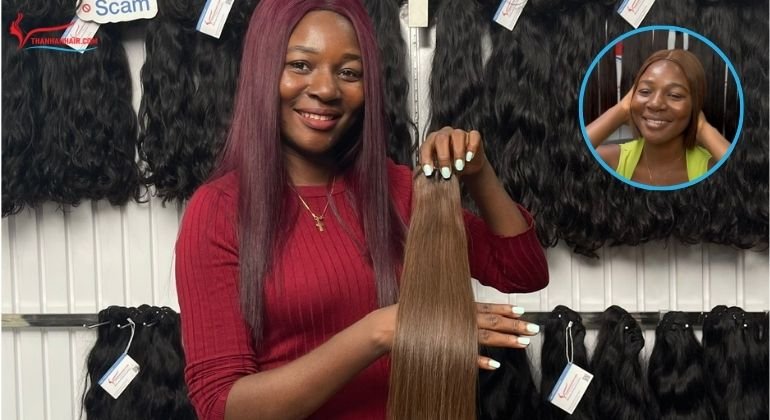
How to order hair from Thanh An Hair
- Send us a photo of your hair
Take one photo of your natural hair, clean and dry, with no product in it. Natural light near a window works best. This is how we pick the right texture for you, and it takes us about a day to come back to you. - Tell us the length and how much you need
Give us the length in inches and roughly how many bundles or grams. If you are not sure, tell us the style you want and how thick your own hair is, and we will suggest an amount. - Look at the photos we send back
We send photos of the actual hair, including a close-up of the weft and both cut ends of the bundle. Ask for anything you want to see. If we do not have your texture, we will tell you instead of sending something close. - Order one bundle first
Order a single bundle before a full set. Wash it, blow it out and wear it for two weeks. This costs you very little and tells you more than any review. - Reorder with your order number
When you reorder, send us your previous order number. We match the new hair to the batch you already have, so your second set looks like your first.
One more thing worth asking any seller, including us. US rules require imported goods to be marked with the country they came from, so you can always ask for that in writing. Vietnam is a real source rather than a marketing line: the country shipped about 58.7 million dollars of finished hair goods in 2022, with roughly half of it going to the United States. A seller who will not put origin in writing is worth skipping.
Making it last
Good hair still gets ruined by a tight install. Dermatologists are clear about the limits. The American Academy of Dermatology says to keep braids and weaves in no longer than six to eight weeks, to choose sewn-in over glued, and to make sure the cornrows underneath are not tight. Their rule is simple: if the style hurts, it is too tight. Pain, stinging, crusting or your scalp pulling up like a tent all mean take it out.
Between installs, the same group suggests washing once a week or every other week, conditioning every time, using heat protection, and only relaxing new growth.
If you notice scalp pain that does not settle, ongoing itching, or thinning along your hairline, see a board-certified dermatologist. That is a medical question and we are not the right people to answer it.
Common questions
What are the best hair extensions for African American hair?
The best hair extensions for African American hair are the ones that match your curl pattern in the state you wear it. Kinky straight suits pressed 4B and 4C hair. Deep wave suits 4A. Natural straight suits relaxed hair. Texture match matters more than brand name.
Where can I buy good hair extensions for Black hair?
Buy from a factory or a specialist seller who will send you real photos of the hair and answer questions about where it came from. Beauty supply stores are fine in a hurry. Marketplace listings are best used for trying one bundle, not for stocking up.
How long does a sew-in last on 4C hair?
Most sew-ins are worn for six to eight weeks. The American Academy of Dermatology advises against leaving braids or a weave in longer than that, and says to take out any style that causes pain, stinging or crusting on your scalp.
Is human hair better than synthetic?
Human hair takes heat, color and washing, so you can press it, curl it and dye it. Synthetic costs less and holds one shape, but heat ruins it. If you plan to wear the hair longer than a month, human hair is worth the extra.
Does Vietnamese hair work on African American hair?
Yes, as long as the texture is right. Vietnamese hair grows straight to wavy, so we steam and press it into kinky straight, deep wave and curly textures. Ask to see that exact texture rather than buying on the country name alone.
Ready when you are
You do not need to know what to order before you talk to us. Most people start with one photo and a rough idea of the length they want, and we take it from there.
Send us a photo of your hair and we will tell you which texture matches. If we do not have the right one, we will say so rather than sell you something close.
- WhatsApp/Hotline: (+84) 973 522 855
- Official Website: https://thanhanhair.com/
- Instagram: @thanhanhair
- Email: thanhanexport@gmail.com