
Raw Vietnamese Hair
What Hair Color Suits Me?
Aug
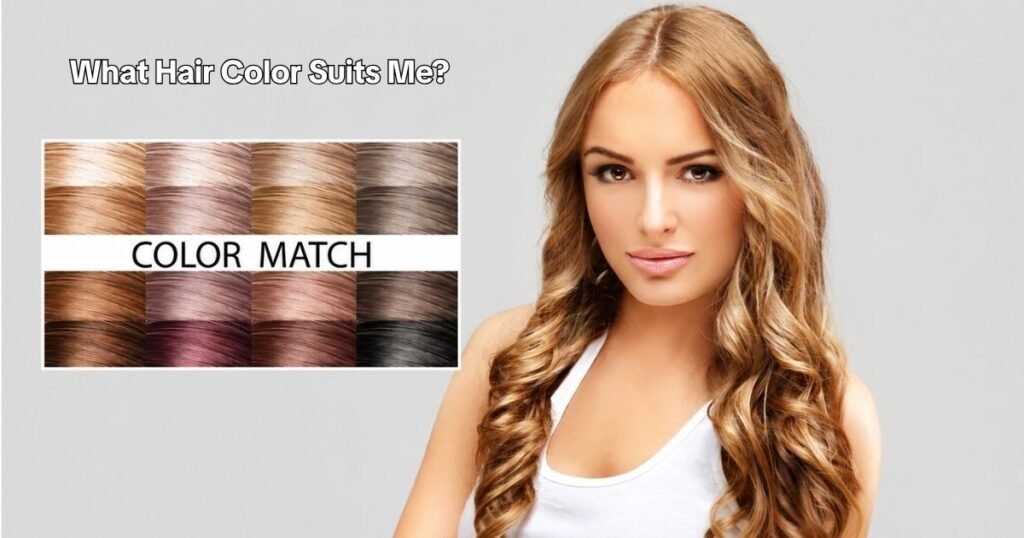
What hair color suits me comes down to two facts about you rather than to a trend: your skin undertone, which decides whether warm or cool shades flatter you, and your natural level on the 1 to 10 scale, which decides how far you can travel without wrecking the hair. Dermatologists advise staying within three shades of your natural color.
How do I find my skin undertone?
Your skin undertone is the muted color sitting under the surface, and it stays constant while your surface tan comes and goes. Warm undertones read yellow, peach, or gold. Cool undertones read pink, red, or blue. Neutral undertones carry both. Run four checks rather than one, because any single test misfires often enough to send you toward the wrong shade family.
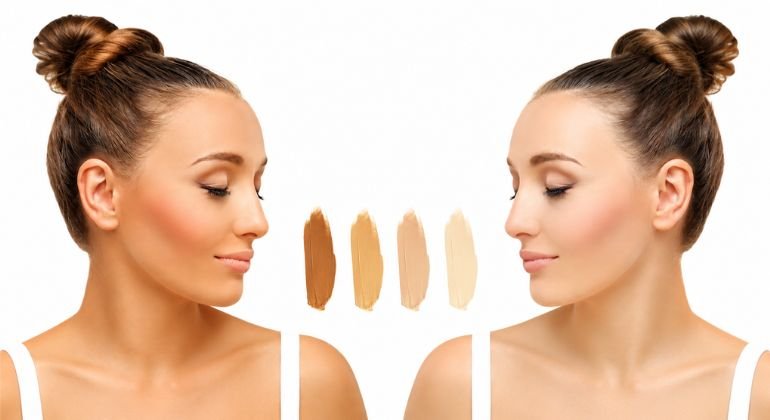
- Jewelry test. Hold gold and silver against your bare jaw in daylight. Gold flatters warm skin, silver flatters cool skin, and both looking fine points to neutral.
- White against cream. Pure white sharpens cool skin. Cream and ivory soften warm skin.
- Sun response. Skin that burns and refuses to tan usually skews cool. Skin that tans readily and rarely burns usually skews warm. This maps onto the Fitzpatrick phototype scale, which classifies skin I through VI by burning and tanning response and gives you a more repeatable read than eyeballing a wrist.
- Vein check, used last. Blue or purple veins suggest cool, green suggests warm. Vein color shifts with skin thickness and lighting, so treat it as a tiebreaker rather than the verdict.
Where the four tests disagree, you are almost certainly neutral, and neutral is the easiest undertone to dress. It carries blended shades such as bronde, mushroom brown, and soft balayage without fighting them.
What is the hair color level system?
Every professional color line numbers darkness from 1 to 10, where 1 is black and 10 is the lightest blonde. Your natural level is the single most useful number in this whole decision, because it sets both your starting point and the amount of lift a colorist has to buy with peroxide.
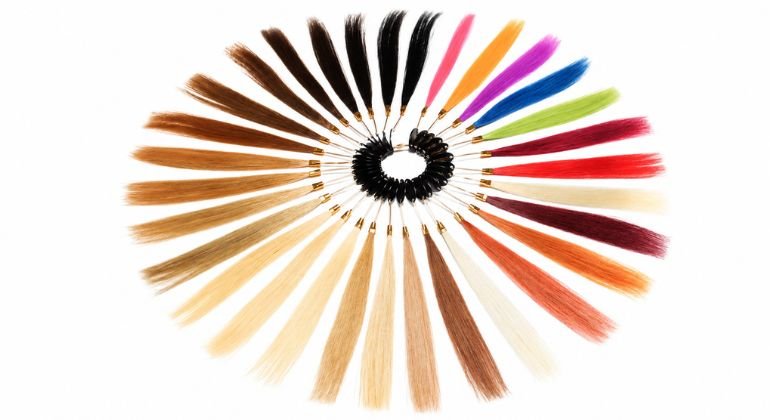
Many lines add a decimal for tone. In the widely used European convention, the digit after the point tells you the reflect: .0 natural, .1 ash, .2 violet, .3 gold, .4 copper, .5 mahogany, .6 red. A shade written 6.1 is a level 6 with an ash reflect. A shade written 9.03 is a level 9 leaning gold. Once you can read those two digits, a color chart stops being a wall of pretty names and starts being a map. Our own factory codes follow the same logic, which is why a color ring beats a photograph for matching.
What underlying pigment appears when you lift?
Lifting hair does not add color. It destroys melanin, and it destroys the cool pigment first, which is why every lightening job passes through warmth on the way up. Chemical analysis of human hair shows eumelanin, the brown-black pigment, falling steadily from black through dark brown to blonde, while red hair carries roughly equal amounts of eumelanin and the red-yellow pigment pheomelanin (Ito and Wakamatsu, 2011). That residual warmth is what your colorist has to neutralize, and it is why ash results fail on dark hair that has not been lifted far enough.
Natural level, and the underlying pigment exposed when that level is lifted
| Level | Natural depth | Pigment exposed on lift | What it means for you |
|---|---|---|---|
| 1 to 2 | Black to darkest brown | Deep red | Ash and platinum need multiple sessions |
| 3 to 4 | Dark to medium brown | Red to red-orange | Copper and auburn land easily, ash fights you |
| 5 to 6 | Light brown | Orange to orange-gold | Caramel and honey are one-step shades |
| 7 to 8 | Dark to medium blonde | Gold to yellow | Most blonde families are reachable |
| 9 to 10 | Light to lightest blonde | Pale yellow | Platinum and cool beige are within reach |
What hair color suits me for my undertone and level?
Cross your undertone with your natural level and the field narrows to a handful of shades. Maintenance intervals below assume a root that grows at the population average of roughly half an inch per month, and they shorten as the contrast between your root and your color widens.
Shade families by skin undertone and natural level
| Undertone | Natural level | Shade families that suit | Root touch-up interval |
|---|---|---|---|
| Cool | 1 to 5 | Blue-black, espresso, cool mocha, burgundy | 6 to 8 weeks |
| Cool | 6 to 10 | Ash blonde, cool beige, platinum, icy pearl | 4 to 6 weeks |
| Warm | 1 to 5 | Warm chestnut, chocolate with a red base, auburn | 8 to 10 weeks |
| Warm | 6 to 10 | Honey, caramel, golden copper, strawberry blonde | 6 to 8 weeks |
| Neutral | Any | Bronde, mushroom brown, soft balayage, teddy blonde | 8 to 12 weeks |
Two shades break the pattern often enough to be worth naming. Auburn behaves as a near-universal because it neutralizes pink in cool skin and warms deeper skin at the same time. Copper flatters warm skin at any level but fades faster than any other family, since the molecule is small and washes out of the cortex quickly.
How do you keep the color once you have it?
Color-treated hair is damaged hair, whatever the box says, and the fiber does not repair itself. Wash with sulfate-free cleanser, cut water temperature, and use UV protection outdoors, because sun fades dyed hair faster than shampoo does. Copper and red need the shortest wash intervals of any family. Blonde needs a violet-pigmented product to hold off the yellow that keeps surfacing from the pigment layer underneath. If your hair snaps or feels gummy after lightening, a protein treatment matched to your damage level rebuilds the fiber before you color again.
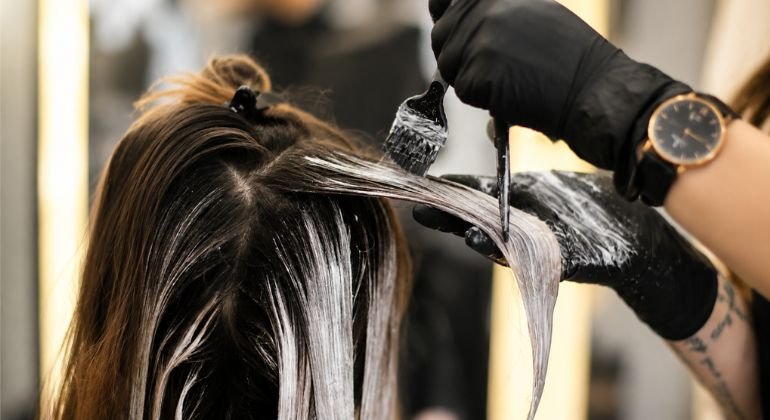
Handle the safety step before any of this. Hair dye contact allergy affects around 1 percent of the population, most of it driven by p-phenylenediamine, and dermatologists patch test PPD at 1 percent in petrolatum to confirm it (DermNet). The AAD is blunt about the home version: test store-bought color first, and if you get a rash, redness, swelling, burning, or itching, do not dye your hair and see a board-certified dermatologist for allergy testing. Sensitization builds with exposure, so a clean history with dye does not exempt you.
Match your shade against real hair, not a screen
Every shade in this guide exists as physical hair on our factory color ring, cut from the same raw single-donor stock we have processed for twenty years. Hold it against your jaw in daylight, decide from the strand rather than from a photograph, then order the bulk hair or clip-in wefts that match. Salons and resellers can also check our quality against the factory bench test before ordering.
Request a Thanh An Hair color ring and factory price list
Ready to find your perfect match? Contact us today for expert advice and exclusive discounts on premium human hair extensions.
📲Phone/WhatsApp: +1 (206) 698‑5133
🛜Instagram: RAW HAIR LUXURY COMPANY
🌐Tik Tok: RAW HAIR LUXURY
📧 Email: Rawhairluxury.us
🌐Website: rawhairluxury.com