
Raw Vietnamese Hair
Hair Broken at the Top of Your Head? What Causes Crown Breakage and How to Fix It
Jul
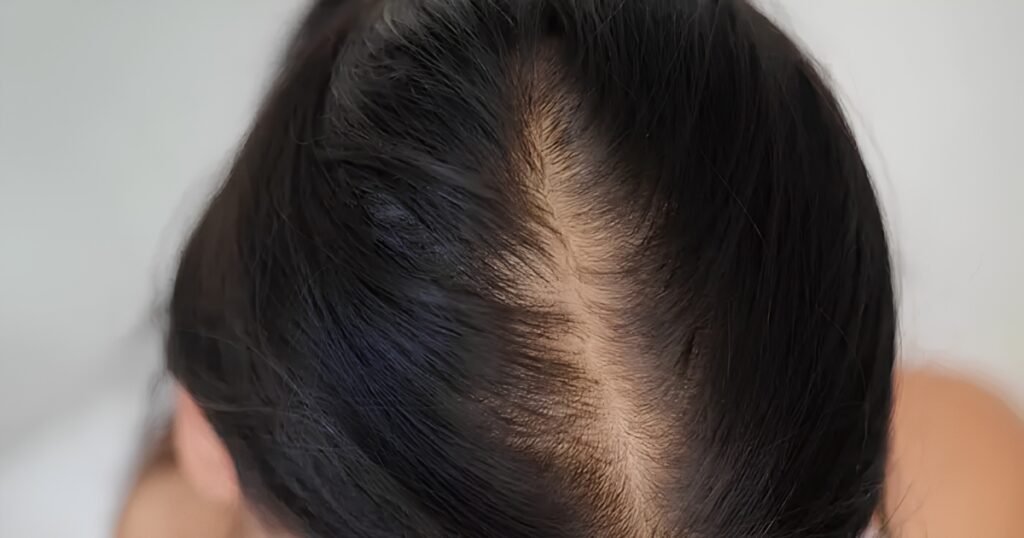
Hair broken at the top of your head is usually crown breakage: the hair shaft snapping mid-length from heat, chemicals, friction, or tension, not hair falling from the root. Because the follicle keeps working, broken strands grow back once you stop the cause. Redness, bumps, or a widening part instead suggest traction alopecia, which needs a dermatologist.
Is it breakage, new growth, or hair loss?
Before you treat anything, work out what those short strands at your crown actually are, because three harmless-looking things get confused constantly and each has a different fix. Crown breakage is a snapped shaft. New growth is healthy regrowth. Shedding is a whole strand leaving the follicle. Telling them apart takes about ten seconds.
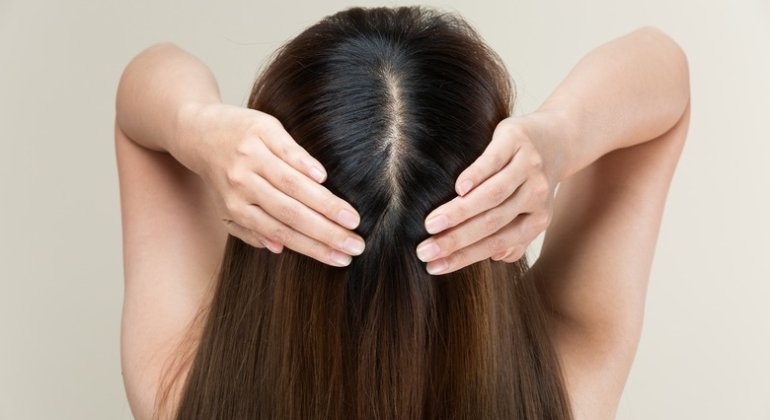
Pull one of the short strands and look at the end that sat against your scalp. A shed hair carries a small pale bulb at the root end. A broken hair has no bulb; both ends look like plain shaft, usually blunt or split. Healthy new growth tapers to a fine, soft point and follows your hairline or part in an even line. It is normal to lose 50 to 100 hairs a day, so a few full strands on your brush are not the issue. Short, wiry strands standing up only at the crown are.
Crown breakage vs new growth vs shedding vs traction alopecia
| What you notice | Crown breakage | New growth | Shedding | Traction alopecia (early) |
| The strand’s scalp end | No bulb; blunt or split | Fine tapered tip | Small pale bulb (club root) | Broken shafts plus bulbed shed hairs |
| How it looks | Short wiry strands at the crown, a frizzy halo | Even line of soft short hairs along the part or hairline | More hair than usual in the brush, drain, and on the pillow | Thinning with redness or small bumps along the tension line |
| Root cause | Damaged shaft: heat, chemicals, friction, tension | Normal regrowth | Follicles pushed into the resting phase by a stressor | Sustained pulling on the follicles |
| Reversible? | Yes; grows out once damage stops | Nothing to fix | Usually, once the stressor resolves | Yes if caught early; permanent if tension continues |
What causes hair breakage at the crown?
The top of your head takes more punishment than anywhere else on your scalp. It is the first section a flat iron touches, the first place colour is painted, the highest point of tension in a ponytail, and the spot a brush drags through most. Five causes account for most crown breakage.
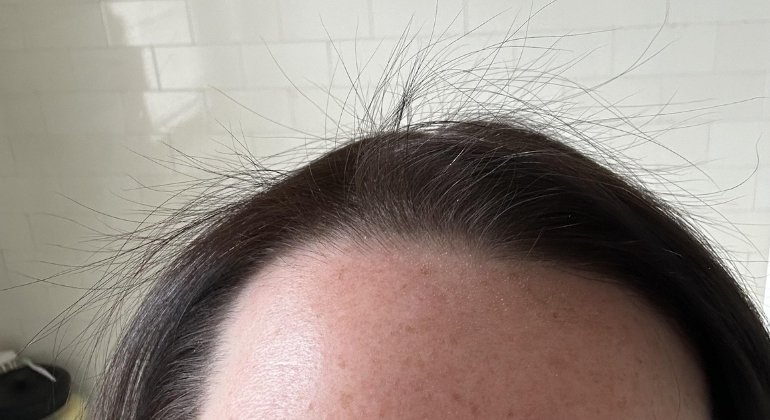
- Heat styling. Blow dryers, straighteners, and curling irons concentrate on the crown because it is the most visible layer, so the top gets the heaviest dose of heat. Repeated high heat cracks the cuticle and weakens strands until they snap.
- Chemical processing. Bleach, permanent colour, and relaxers make hair more porous and fragile, and the crown is usually processed first and touched up most often.
- Tension from tight styles. High ponytails, top knots, and slick buns pull hardest at the crown. Constant pulling weakens strands at the root and can tip into traction alopecia.
- Friction and rough handling. Aggressive brushing, especially on wet hair, plus cotton pillowcases, create mechanical breakage right where the brush starts its stroke.
- Poorly fitted extensions. Extensions are not damaging by nature, but heavy sets, bonds placed too close to the crown, or a braid base tied too tight put steady tension on fragile hair. Choosing lightweight, well-installed low-tension methods matters more than the type on the label.
The science: why damaged hair snaps
Each strand is built in layers. The outer cuticle is a sheath of overlapping cells, arranged like roof shingles, that shields the inside of the hair. Beneath it sits the cortex, the bulk of the fiber, built from keratin held together by disulfide bonds that give hair its strength and flexibility. Heat temporarily breaks the weaker hydrogen bonds so you can reshape a curl, which is harmless on its own. The damage comes when repeated heat and chemicals also strip moisture, chip the cuticle, and wear down the cortex. Once the cuticle is gone, the exposed cortex fractures at its weakest point, and that fracture is what stands up at your crown.
How to fix hair broken at the top of your head
There is no single miracle product for how to fix damaged hair. Recovery is a sequence: stop the cause, rebuild the shaft, then protect new growth as it comes in. Work through these steps in order.
- Confirm it is breakage. Do the strand test above. If you find pale bulbs, redness, or diffuse thinning instead of snapped shafts, skip ahead to the dermatologist step and treat the cause rather than the shaft.
- Remove the cause first. Work out which culprit applies to you (heat, chemicals, tension, friction, or extensions) and stop it before anything else. No treatment outruns ongoing damage.
- Rebuild with balanced protein and moisture. Use a bond or keratin treatment to reconnect broken internal structure, then a moisturising mask, once or twice a week. Protein alone makes hair stiff and more brittle, so alternate it with hydration.
- Style with low tension and gentle detangling. Trade tight elastics for loose styles and silk scrunchies, detangle from the ends upward with a wide-tooth comb, and never drag a brush through soaking-wet hair.
- Protect heat styling and sleep. Apply a heat protectant, use the lowest effective temperature, and pass a flat iron over each section once. Swap a cotton pillowcase for satin or silk to cut friction.
- Trim strategically. Trims do not mend the shaft, but they stop splits traveling upward. A light dusting every 8-12 weeks keeps recovery moving.
- Give it time and watch for warning signs. A healthy follicle grows roughly one centimeter a month, so crown breakage grows out over months, not days. Redness, bumps, or a widening part mean it is time to see a board-certified dermatologist.
Traction alopecia: when crown breakage becomes hair loss
Breakage from tension is usually reversible. Left unchecked, it can turn into traction alopecia, a form of hair loss caused by prolonged or repeated pulling on the follicles. Tight ponytails, buns, braids, cornrows, weaves, and heavy extensions are the usual triggers. Early signs are small bumps or redness around the follicles, broken hairs, and thinning along the areas under the most strain. Dermatology reviews estimate that roughly one-third of women of African descent who wear high-tension styles for long periods develop it, so at-risk readers should treat early signals seriously.
The window matters. Caught early, hair recovers once the tension stops. If the pulling continues, the follicles scar and the loss becomes permanent, and no product reverses it. See a board-certified dermatologist if you notice redness, tenderness, a receding or widening hairline, or thinning that does not improve when you change your styling. Most causes can be stopped or treated, and acting early gives the best outcome.
Choosing low-tension extensions that protect your crown
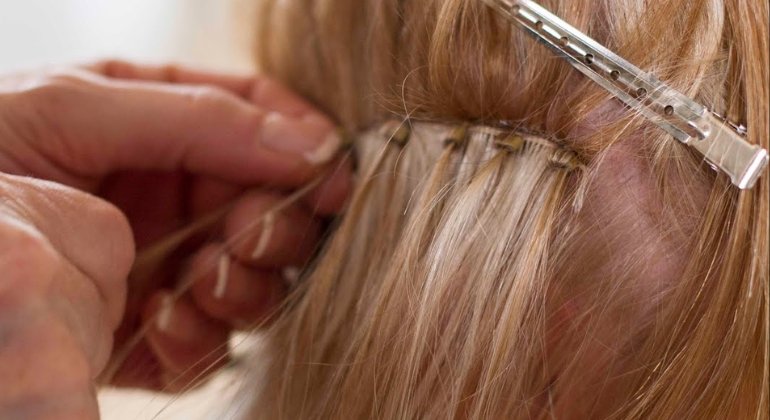
As a raw-hair manufacturer, we see the same pattern behind almost every case of extension-related breakage: weight and attachment, not the category name on the box. The AAD guidance is blunt and correct: wear extensions that are light so they do not pull, have them fitted by a specialist, and give your hair regular breaks. During a recovery phase, the lowest-tension options let the crown rest while you keep length and volume.
Extension methods ranked by tension on the crown
| Method | How it attaches | Tension on the crown | Best for |
| Halo | Sits on a fine wire, nothing bonded to your hair | Very low; weight rests on the head, not the follicles | Fine hair, a fragile crown, recovery periods |
| Clip-in | Wefts clipped in and removed daily | Low; temporary and redistributed each wear | Occasional volume while hair recovers |
| Tape-in | Thin wefts taped to flat sections | Low to moderate; weight spread over a wide bond | Everyday wear on healthy hair |
| Hand-tied or sewn weft | Sewn onto a braided base or beaded row | Moderate; depends on how tight the base is | Thick, strong hair |
| Nano ring, I-tip, K-tip | Individual strands beaded or bonded | Moderate to high if overloaded or set near the crown | Healthy hair with a professional install |
INSERT_EXPERT_QUOTE (a real, named quote from the Thanh An Hair founder or QC lead on how strand weight and attachment affect hair health; do not fabricate, leave as a placeholder until supplied).
Two rules protect the crown whatever method you choose: keep bonds and the braid base off the most fragile section directly on top, and never overload a single bond or panel with too much hair. Aligned-cuticle raw or Remy hair tangles and pulls less, which makes it gentler on the strands it attaches to. Explore our halo, clip-in, and invisible tape ranges for lower-tension wear, or our hand-tied wefts and nano rings for professionally installed length.
Frequently asked questions
How do I know if it is breakage or new hair growth?
Pull one short strand and look at the scalp end. Broken hair has no bulb and often a blunt or split tip. New growth tapers to a fine, soft point and follows your hairline or part in an even line. Shed hair has a small pale bulb at the root.
Does hair broken at the crown grow back?
Yes, as long as the follicle is healthy. Breakage is a snapped shaft, not lost hair, so new hair keeps growing once you stop the damage. The exception is traction alopecia that has scarred, which is permanent, so see a dermatologist if you notice redness or thinning.
How long does it take to fix crown breakage?
There is no overnight fix. You may see healthier new growth within a few weeks, but full recovery takes months because hair grows about one centimeter a month. Consistent gentle care and stopping the cause matter more than any single product.
Can hair extensions cause breakage at the top of my head?
They can when they are too heavy, fitted too tight, or bonded too close to the crown. The AAD advises keeping extensions light, having them installed by a specialist, and wearing them for two to three months at most. Low-tension methods such as a halo or clip-ins let a fragile crown recover.
Is crown breakage the same as hair loss?
No. Breakage is the shaft snapping mid-length, while hair loss and shedding involve the follicle releasing a whole strand. They need different fixes. When redness, bumps, or a widening part appear alongside broken hairs, the cause may be traction alopecia, which a dermatologist should assess.
What temperature should I set my hot tools to avoid crown damage?
Use the lowest setting that works, and the AAD advises flat irons no more than every other day. As a general guide, stylists suggest about 250-300 F for fine hair, 300-375 F for medium, and 350-400 F for thick hair. Always apply heat protectant and pass over each section once.
Protect your clients’ hair with factory-direct raw hair
For salons and resellers: Thanh An Hair manufactures 100% raw Vietnamese human hair, factory-direct, including lightweight low-tension pieces built to protect your clients’ natural hair. Contact us for wholesale pricing and a sample order, or browse the full range.
Contact Thanh An Hair today for expert consultation and the most competitive price list.
- WhatsApp/Hotline: (+84) 973 522 855
- Official Website: https://thanhanhair.com/
- Instagram: @thanhanhair
- Email: thanhanexport@gmail.com