
Thanh An Hair
Weave Extensions for Black Hair: A Manufacturer’s Complete Guide
Jul
Weave extensions for Black hair are wefts of human hair sewn onto cornrowed natural hair to add length, volume, and a protective style. Done well, a sew-in weave conceals every track, blends with Afro-textured hair, and shields your own strands underneath. How natural and how safe it looks comes down to three things: weft quality, texture match, and install tension.
Most guides on this topic treat “Black hair” as a colour and stop at jet black gloss. This one is written from the factory floor. We manufacture raw Vietnamese human hair for salons and resellers, so the advice below is about the wefts themselves, how they sit on coily and relaxed hair, and how to keep your hairline healthy while you wear them. The stakes are real for buyers, too: the global hair wigs and extensions market reached about USD 15.22 billion in 2025, with human hair holding roughly 65.6 percent of it and extensions the fastest growing product segment, according to Grand View Research. Choosing the right weave extensions is a purchase you will repeat, so it pays to get the fundamentals right.
What are weave extensions and why “sew-in”?
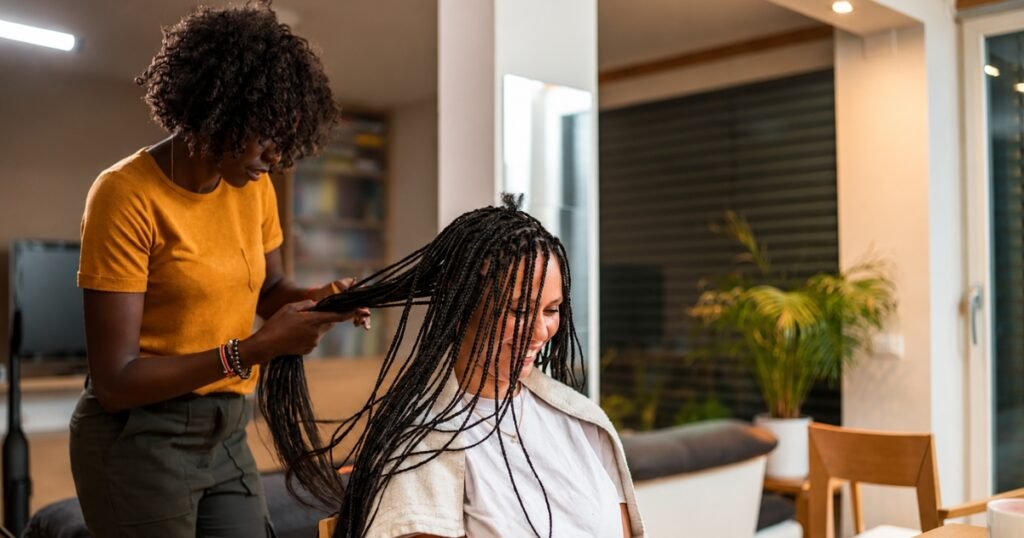
Weave extensions are curtains of hair, called wefts, that are stitched onto a braided base with a curved needle and weaving thread. The words “weave” and “sew-in” describe the same method. A stylist first cornrows your natural hair flat against the scalp, then sews weft after weft over those braids from the nape upward. Because your own hair is tucked away and protected for weeks at a time, a sew-in weave is a genuine protective style, not just a length boost.
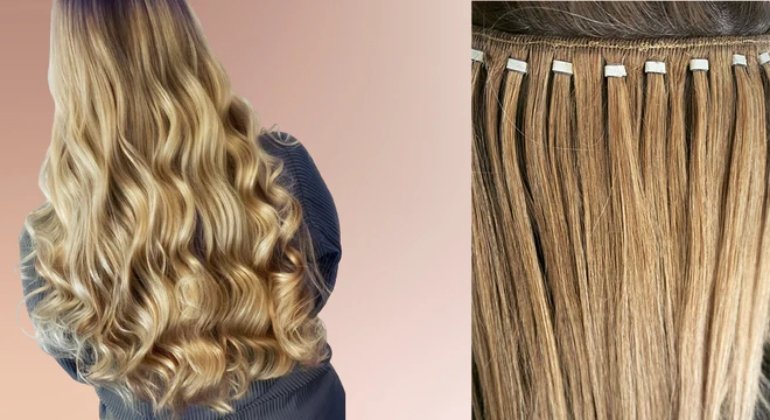
This sets a weave apart from two other formats people often confuse it with. Bonded or glue-in weaves attach wefts with adhesive rather than thread, and clip-in sets snap in and out for a few hours at a time. The distinction matters for hair health. The American Academy of Dermatology recommends sewn-in weaves over glued-in weaves, because glue and its removal tug harder on the hair. That single fact is one of the strongest reasons to choose a true sew-in when you are working with Afro-textured hair.
Sew-in weave methods for Black hair, compared
There is no single “weave.” The install method decides how you can part your hair, whether any of your own hair is left out, and how protective the style is. Here are the methods buyers ask about most, side by side.
| Method | How it is installed | Parting and hairline | Leave-out? | Best for |
|---|---|---|---|---|
| Traditional full sew-in | Whole head cornrowed, wefts sewn over the braids | Created with a closure or a defined part | No | Maximum protection, minimal manipulation |
| Versatile leave-out | Wefts sewn in, a small top section of natural hair left out to cover tracks | Natural, blended with your own hair | Yes | A natural blend when you skip a closure |
| Closure sew-in | Wefts plus a lace or silk closure (4×4, 5×5, 6×6) at the crown | Recreated crown and part, no heat on your hair | No | A protected part and scalp look |
| Frontal sew-in | Wefts plus a lace frontal (13×4 or 13×6) ear to ear | Full recreated hairline, off-face styles | No | Ponytails, updos, side parts, versatility |
| Vixen sew-in | Braids divided into sections with gaps between them | Multi-directional parting, can wear hair up | Partial | Freedom to part and style in any direction |
| LA weave (micro-bead) | Wefts attached with micro rings instead of a full braid and thread | Flat and discreet at the root | Optional | A lighter, flatter, lower-tension option |
For a fully protected look on natural hair, a closure or lace closure and frontal install wins because nothing of your own hair is left out to heat-style. If you want to wear high ponytails and off-face styles, a frontal gives the most parting freedom. A leave-out is the most natural on a budget, but it asks you to blend and style that exposed section, which is the one part of the look that sees regular heat.
The weft is the product: construction types that decide the result
This is where a manufacturer’s view changes how you shop. Buyers obsess over length and colour, but the seam construction of the weft is what makes a sew-in lie flat, last, and feel weightless. Two numbers matter and they are independent: density, measured in grams per bundle, tells you how much hair is on the weft; strand calibre, measured in microns, tells you how fine or coarse each hair is. A high-density bundle of fine strands feels full but soft, which is often the sweet spot for a natural blend. Here is how the main weft types differ.
| Weft type | Construction | Seam profile | Can it be cut? | Best use in a sew-in |
|---|---|---|---|---|
| Machine weft | Sewn by machine along a folded seam | Thicker, very durable | Yes, if the cut end is sealed | Workhorse full-head installs, heavier density |
| Hand-tied weft | Tied by hand, strand by strand | Very thin and flat | No, it unravels if cut | Seamless, flat installs where bulk is the enemy |
| Genius weft | Hand-tied look, machine-secured backing | Thin and flat | Yes, cut anywhere without shedding | Custom-width rows with a low-profile seam |
| Flat weft | Flat, thin bonded seam | Lowest bulk against the scalp | Limited | Comfort-first installs on tender scalps |
The practical takeaway: if your stylist needs to cut wefts to fit each row, a genius weft or a sealed machine weft is the safe choice, because a cut hand-tied weft will shed. If a flat, invisible seam is the priority and rows are sewn at full width, hand-tied delivers the most seamless finish. Whichever you choose, insist on cuticle-aligned Remy human hair, where every strand runs root to tip in the same direction. That alignment is what stops matting and tangling over a multi-week wear.
Matching texture to Afro-textured hair
The most common reason weave extensions read as “fake” is a texture mismatch, not a colour mismatch. Match the extension texture to your natural hair in its styled state, and the blend disappears. If you wear your hair blown out or relaxed, a kinky straight or yaki texture mirrors that smooth-but-not-silky finish. If you wear your natural coils, a kinky curly or coily texture blends where bone-straight hair never could. For looser patterns, deep wave and body wave sit in between.
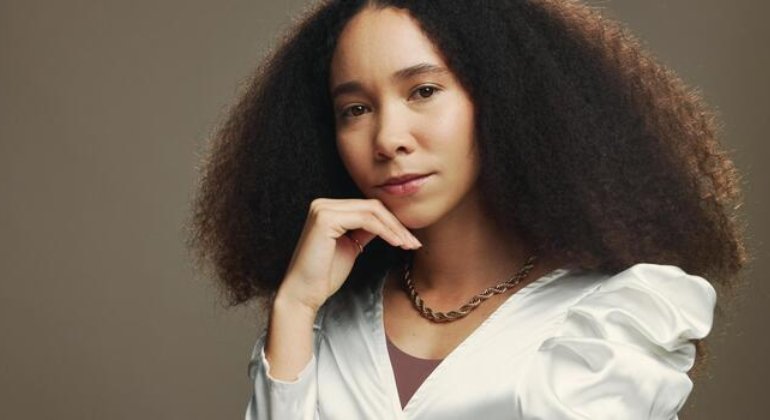
As a raw hair factory we steam-process these textures to hold their pattern through washing, which matters more for Black hair than for any other type, because a curl that drops after one wash breaks the blend. When you buy loose bundles for a sew-in, our single-donor bulk hair keeps one consistent texture across the whole set, so your rows do not fight each other. For denser, coarser natural hair, review our thick-hair guidance on pairing high-density wefts with your own density so the weave does not sit thinner than the hair around it.
How many bundles do you need for a full sew-in?
Bundle count rises with length, because longer hair needs more grams to keep density from thinning toward the ends. These are typical starting points for a full-head sew-in. Add a closure or frontal on top of the bundle count when your method calls for one.
- Up to 16 inches: 2 bundles are usually enough
- 18 to 22 inches: 3 bundles
- 24 to 28 inches: 3 to 4 bundles
- 30 inches and longer: 4 or more bundles
- Any closure or frontal install: add 1 closure or 1 frontal to the count above
Coarser or very full natural hair sits at the higher end of each range, because the weave has to match a denser base. When in doubt, buy one extra bundle from the same batch. Matching a top-up bundle later, from a different production run, is the single most common cause of a mismatched set.
How a sew-in weave is installed
Understanding the process helps you brief a stylist and judge the result. A sew-in should be installed by a professional so tension stays even and off the hairline. Here is what a careful install involves.
- Cleanse and prep. Wash, deep condition, and blow-dry the natural hair. A moisturised, detangled, fully dry base is the foundation of a weave that lasts.
- Braid the foundation. Cornrow the natural hair into a flat pattern suited to the chosen style, straight back for a closure or circular for a frontal. Braids should feel firm but never painful.
- Add a net if used. Some stylists lay a breathable weaving net over the braids for a flatter base and to spread tension away from the edges.
- Sew the wefts. Using a curved needle and weaving thread, sew wefts row by row from the nape upward, keeping tension even and staying clear of the delicate hairline.
- Install the closure or frontal. Attach and customise the closure or frontal to recreate the part or hairline. For a leave-out, blend the exposed section instead.
- Blend and style. Cut, layer, and finish so the wefts and your hair or closure move as one piece.
Protecting your edges and scalp
A weave protects your hair only when it is installed and worn with low tension. The risk to know is traction alopecia, hair loss caused by repeated pulling on the follicle. It is not rare. A peer-reviewed review in the Journal of the American Academy of Dermatology reports it affects roughly one third of women of African descent who wear high-tension styles for long periods, and clinical references note that the shape of tightly curled follicles makes them more vulnerable to tension damage (StatPearls, NCBI).
The reassuring part is that early traction alopecia is reversible if you act on the warning signs, while sustained tension can progress to permanent scarring. So wear a weave the safe way. The American Academy of Dermatology advises keeping braids and weaves loose, especially at the hairline, choosing sewn-in over glued-in, and not wearing one style for longer than two to three months before giving the scalp a rest. Their simplest test is the most useful one: if a style feels painful, it is too tight. Remove or loosen a weave immediately if it stings, itches, or the scalp feels raised.
Maintenance and wash routine
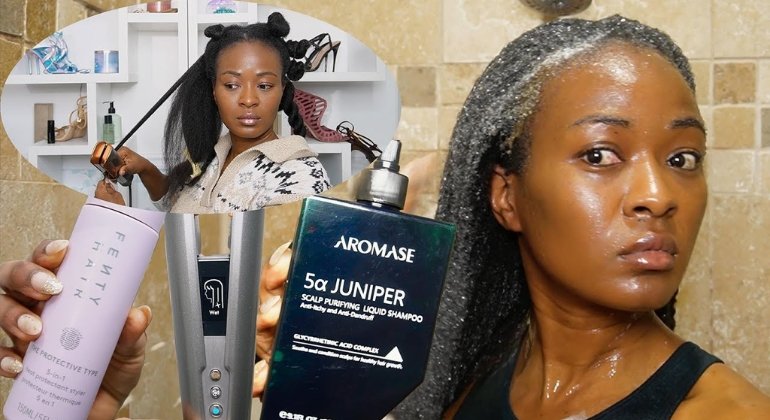
A sew-in stays fresh on a schedule, not on luck. The braids and scalp underneath still need cleansing, and the natural hair still needs moisture.
- Cleanse every one to two weeks. Dilute a sulfate-free shampoo and work it along the braids and scalp, then condition mid-lengths to ends.
- Dry thoroughly. Never sleep on a wet weave. Trapped moisture in the braids causes odour and mildew. Use a cool blow-dry at the roots.
- Moisturise underneath. A light leave-in or oil on the braids and scalp keeps your own hair supple through the wear.
- Protect at night. A satin or silk scarf or bonnet preserves the style and cuts the friction that frays edges.
- Be gentle on edges. Skip heavy gels and tight laydowns that keep the hairline under stress.
- Reinstall on time. Book a tightening or removal by week six to eight rather than stretching a weave past its safe window.
Lifespan and value
Two clocks run at once. The install lasts six to eight weeks before it needs tightening or removal, both for hygiene and to rest your scalp. The hair itself, if it is raw or Remy human hair cared for properly, can be washed, restyled, and reinstalled across a year or more. That gap is the whole value case for premium bundles. Cheap wefts that tangle or shed after one install cost more per wear than quality hair you reuse through several sew-ins. Buying factory-direct removes the layers of markup between the loom and your chair, which is how the same grade of hair reaches you at a wholesale price.
Frequently asked questions
How long does a sew-in weave last?
A sew-in weave stays in for six to eight weeks before it should be tightened or removed, both to keep the scalp clean and to rest your hairline. The hair itself lasts far longer. Quality raw or Remy human hair can be washed, restyled, and reinstalled across a year or more of wear.
How many bundles do I need for a full sew-in?
Plan by length. Up to 16 inches usually needs 2 bundles, 18 to 22 inches needs 3, and 24 to 28 inches needs 3 to 4. Lengths of 30 inches and beyond need 4 or more. Add a closure or frontal on top if your method uses one, and buy a spare bundle from the same batch.
Do sew-in weaves damage Black hair?
Not on their own. The damage comes from tension, not from the weave itself. Dermatologists recommend sewn-in over glued-in weaves, keeping the install loose at the hairline, and not wearing one style beyond two to three months. If it hurts, it is too tight. Worn gently, a sew-in protects your natural hair rather than harming it.
What is the difference between a closure and a frontal sew-in?
A closure is a small piece, often 4×4 to 6×6 inches, that recreates the crown and part. A frontal runs ear to ear and recreates the entire hairline, so you can wear off-face styles, side parts, and ponytails. A frontal gives more parting freedom, while a closure is lower maintenance and less expensive.
Can I wash my hair with a weave in?
Yes, and you should. Cleanse the scalp and braids every one to two weeks with a diluted sulfate-free shampoo, then condition the lengths. The key step is drying. Never leave the braids damp or sleep on a wet weave, because trapped moisture causes odour and mildew underneath the wefts.
What hair texture blends best with natural Black hair?
Match the extension to your hair in its styled state. Kinky straight or yaki blends with blown-out or relaxed hair, kinky curly or coily blends with natural coils, and deep wave or body wave suit looser patterns. Choose cuticle-aligned Remy human hair, and buy one consistent texture across the whole set for a seamless blend.
Buy weave bundles factory-direct
Thanh An Hair manufactures raw Vietnamese human hair wefts, closures, and frontals for salons and resellers worldwide, with twenty years in production and factory-direct wholesale pricing. Tell us your texture, length, and density and we will match a weave set to your clients.
Contact Thanh An Hair today for expert consultation and the most competitive price list.
- WhatsApp/Hotline: (+84) 973 522 855
- Official Website: https://thanhanhair.com/
- Instagram: @thanhanhair
- Email: thanhanexport@gmail.com