Raw Vietnamese Hair
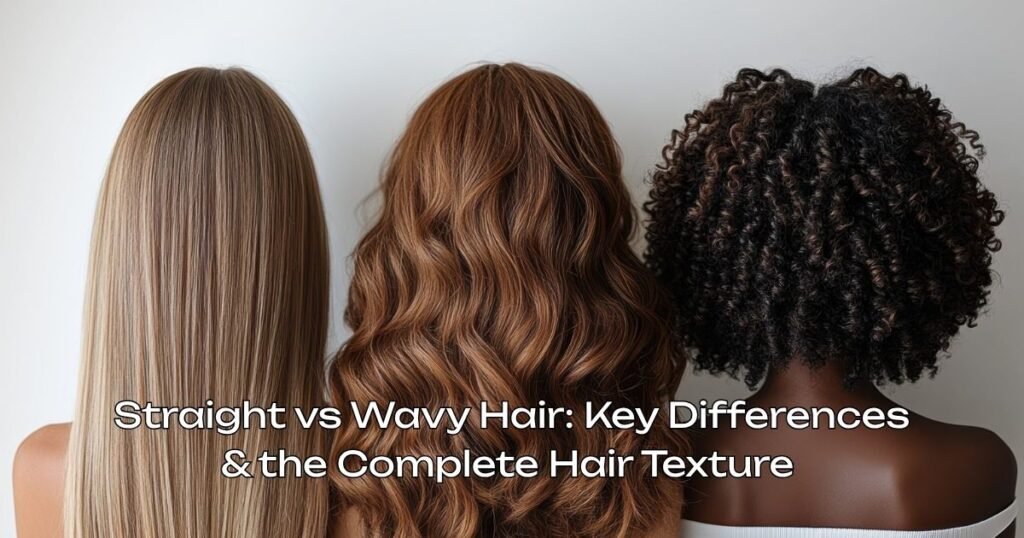
Straight vs Wavy Hair: Key Differences & the Complete Hair Texture Guide
Jun
Straight vs wavy hair differ mainly because of follicle shape. Straight hair grows from round follicles as a smooth strand with a round cross-section, while wavy hair grows from oval follicles that bend into an S-shape. That one structural difference decides how each texture holds oil, resists frizz, reflects light, and behaves every day.
What Makes Hair Straight or Wavy? The Follicle Science
The shape of your hair is set before it ever leaves your scalp. A round, symmetrical follicle pushes out a round strand that grows straight. An oval or curved follicle produces a flatter, elliptical strand that bends as it grows. Researchers writing in Experimental Dermatology describe how the mature strand locks in its straight, wavy, or curly form during keratinization, the hardening stage inside the follicle.
Hair follicle shape and cross-section
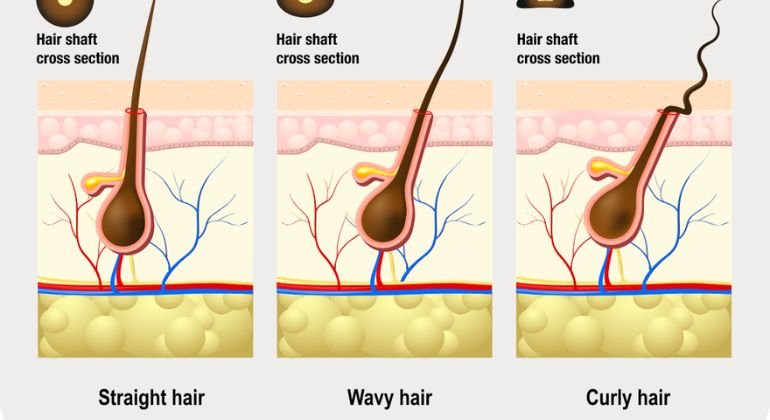
A study indexed on PubMed found that the frequency and amplitude of cross-sectional rotations along the fiber describe how curly a hair is. The rounder and more even the strand, the straighter it lies. The more oval and asymmetric it is, the more it waves. Coverage from Medical News Today summarizes the same principle and notes the effect is largely written into your genes.
How oil, cuticle, and keratin shape behavior
On straight hair, natural scalp oil (sebum) slides down the smooth shaft and coats the strand from root to tip. On wavy hair, each bend slows the oil, so it pools near the scalp while the ends stay drier. Professional education from Redken notes that wavy and curly hair is drier by nature and more porous, which is why it absorbs humidity and frizzes faster than straight hair. The cuticle lies flat on straight hair so light reflects evenly and looks glossy; on wavy hair it lifts slightly at each bend, scattering light into a softer sheen.
Straight vs Wavy Hair: The 6 Key Differences
This quick-reference table compares straight hair (Type 1) and wavy hair (Type 2) across the six features stylists and buyers ask about, including the maintenance load that most comparison articles skip.
| Feature | Straight Hair (Type 1) | Wavy Hair (Type 2) |
| Follicle & cross-section | Round, symmetrical follicle; round strand with even tension | Oval, asymmetrical follicle; elliptical strand that bends into S-waves |
| Oil & moisture | Sebum travels fast; strand stays evenly coated and can look oily sooner | Bends slow the oil; ends run drier and need added hydration |
| Volume & body | Lies close to the scalp; sleek and flat without product | Lifts off the scalp; natural body and fullness at the root |
| Frizz in humidity | Flat cuticle resists moisture; frizzes mainly when damaged or dry | Porous, lifted cuticle absorbs humidity; frizzes readily |
| Shine | High, mirror-like gloss from even light reflection | Softer, diffused sheen as light scatters across the waves |
| Daily maintenance | Low; quick to brush, style, and dry | Moderate; needs moisture, anti-frizz care, and gentle detangling |
| Best suited to | Sleek looks; fine hair; humid climates; low-effort routines | Volume and movement; softening angular faces; drier climates |
Neither texture is “better.” Straight hair wins on shine and simplicity; wavy hair wins on volume and movement. The right answer depends on the head it sits on and the effort behind it, which is why a salon rarely stocks only one texture.
Hair Texture Types: Where Straight and Wavy Sit on the Chart
Professionals use a finer scale than “straight” and “wavy.” The widely used hair typing system, created by stylist Andre Walker, runs from Type 1 (straight) to Type 4 (coily), with letters A, B, and C marking how loose or defined the pattern is. Straight and wavy hair together cover Types 1 and 2.
| Type | Pattern | What it looks and feels like |
| 1A | Straight, fine | Poker-straight with no bend; very soft, holds a curl poorly, can look flat |
| 1B | Straight, medium | Mostly straight with body and bend at the ends; more volume than 1A |
| 1C | Straight, coarse | Straight with a few subtle bends; thick, resists styling, can frizz when dry |
| 2A | Wavy, fine | Loose, tousled S-waves from mid-length; easy to straighten or curl |
| 2B | Wavy, medium | More defined S-waves from mid-shaft; some frizz, holds styles well |
| 2C | Wavy, coarse | Well-defined waves from the root; thick, frizz-prone, borders on curly |
This chart is a practical tool. A 2A client wants lightweight extensions that will not overwhelm fine hair, while a 2C client needs matching density so the blend disappears. When you source single-donor raw hair, the whole bundle carries one consistent texture, which makes matching a client to the chart far more reliable than mixed-donor hair.
How to Identify If Your Hair Is Straight or Wavy
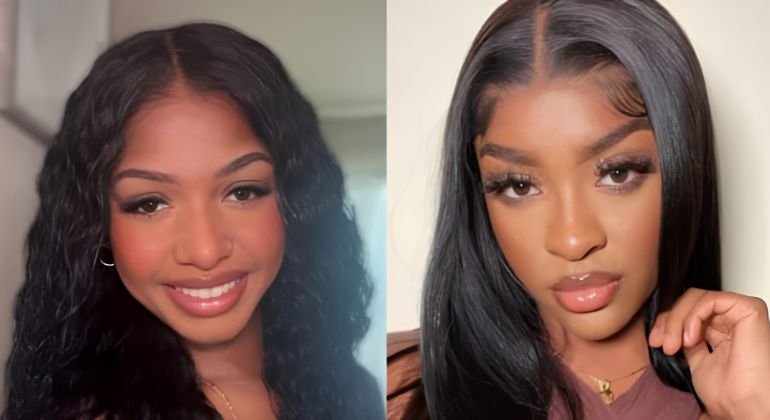
The most accurate reading happens on wash day, before any heat or product touches the hair. Three simple checks give a reliable answer:
- The wash-and-air-dry test. Wash with a clarifying shampoo, then let hair dry fully without touching it. Straight hair dries flat with no bend. Wavy hair forms a visible S.
- The single-strand check. Hold one clean, dry strand up to natural light. No curve means straight. One or more gentle bends means wavy.
- The root-to-end read. Check texture separately at the root, mid-length, and ends. Many people have straighter roots with wavy ends, a classic 2A pattern.
Can You Change Straight Hair to Wavy (or Wavy to Straight)?
Yes, in both directions, and the trade-off is always the same: the longer the result lasts, the harder it is on the hair. Temporary methods reset at the next wash. Chemical methods rebuild the internal bonds and carry a real risk of dryness or breakage, especially on colored hair, so they belong in a professional’s hands.
Straight to wavy
- Heatless (temporary): braid or twist damp hair and sleep on it, or use foam rollers. Lasts until the next wash.
- Heat (temporary): a curling wand, flat-iron waves, or a sea-salt spray. Holds one to three days.
- Perm (long-lasting): a chemical service that rebuilds the wave from the inside; a salon perm usually takes 1.5 to 3 hours.
Wavy to straight
- Blow-dry and flat iron (temporary): smooths waves until humidity or the next wash brings them back.
- Keratin or Brazilian treatment (semi-permanent): relaxes the wave and cuts frizz for several months, then fades.
- Thermal or Japanese straightening (long-lasting): permanently restructures the bond; new growth stays wavy and needs retouching.
One shortcut avoids the chemicals entirely: change the hair, not your hair. A client who wants a different texture for a weekend or a photoshoot can wear weft hair or clip-ins in the opposite texture and switch back with no commitment.
Straight vs Wavy Hair Extensions: Which Should You Choose?
For a salon or hair business, texture is a stocking decision as much as a style one, and demand is climbing. The global human hair extension market was valued at about $5.36 billion in 2025 and is projected to reach $13.36 billion by 2034, per Fortune Business Insights, which also names Vietnam as a major source of high-quality raw hair for North America and Europe. The Professional Beauty Association reported that salon extension services grew by 11% across North America in a single year, and the American Academy of Dermatology estimates that more than 30 million women and 50 million men in the U.S. experience some form of hair loss, a steady base of demand for both textures.
Straight extensions are the easy sell: they brush out fast, blend with most hair, and need little product. Wavy extensions deliver instant volume and a natural look, but they ask for moisture and anti-frizz care to stay defined. The right pick comes down to five questions.
| Decision factor | Lean straight | Lean wavy |
| Client’s natural texture | Straight (Type 1) for a seamless blend | Wavy (Type 2) so the pattern matches |
| Desired look | Sleek, glossy, polished | Volume, movement, soft body |
| Maintenance appetite | Low-effort clients | Clients happy to style and moisturize |
| Climate | Hot and humid regions | Dry or cooler regions |
| Fine or thin hair | Easier to control and hide wefts | Adds fullness but needs skilled placement |
Matching raw hair texture to the client
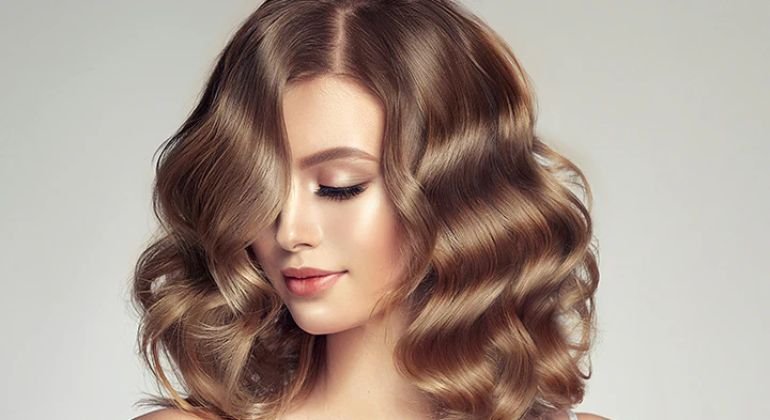
Thanh An Hair offers straight textures such as Natural Straight and Yaki/Kinky Straight, and wavy textures including Steam Body Wave, Steam Loose Wave, and Steam Deep Wave. The waves are set with steam rather than harsh chemicals, which keeps the cuticle intact so the hair still takes color and heat like natural hair. Because the raw hair is cuticle-aligned and available as one-donor bulk hair, texture and color stay consistent through the whole bundle. That consistency lets you fulfill a wavy closure or frontal order and know it will match the wefts beside it.
Straight vs Wavy Hair Care: Maintenance Compared
Because wavy hair is drier and more porous, its routine looks different from a straight routine. Human hair extensions can be washed, heat-styled, and colored like natural hair, and with good care human hair can last a year or longer, so the maintenance you teach a client protects their investment.
Straight hair routine: wash more often with a lightweight shampoo so roots do not turn oily fast; air-dry quickly and finish with a cool blast to keep the cuticle flat; keep products light so the hair is not weighed down; sleep in a loose braid or on silk to prevent tangles.
Wavy hair routine: wash less often with a hydrating, sulfate-free formula to protect the wave; scrunch gently and air-dry or diffuse on low, since rough towel-drying breaks the pattern; apply a leave-in plus a light oil or cream on the mid-lengths and ends; pineapple the hair on a silk surface at night to keep waves defined.
For extensions, the same logic scales up. Steam-set wavy hair holds its pattern well but still rewards moisture and gentle handling. Straight weft hair is the low-maintenance workhorse that keeps clients returning for refills.
Frequently Asked Questions
Is wavy hair harder to maintain than straight hair?
Yes, wavy hair generally needs more care than straight hair. Its bends leave the ends drier and its lifted cuticle absorbs humidity, so it wants regular moisture, anti-frizz product, and gentle detangling to stay defined. Straight hair stays neat with basic washing and brushing.
Can straight hair become wavy naturally?
Yes, straight hair can develop waves over time. Hormonal shifts from puberty, pregnancy, or menopause, along with some medications and health changes, can alter follicle shape and change texture. The change is usually gradual and can move hair in either direction.
Can you put wavy extensions on naturally straight hair?
Yes, and it works best with a small blend step. Either lightly curl the natural hair to match the extensions, or choose loose waves that sit softly against straight hair. Matching the pattern at the root is what makes the blend look seamless.
Which lasts longer, straight or wavy human hair extensions?
Texture is not the main factor; care and hair quality are. Both straight and wavy single-donor human hair can last a year or more when washed gently, moisturized, and heat-styled with protection. Steam-set waves that keep the cuticle intact hold up better than chemically forced textures.
Does wavy hair look thicker than straight hair?
Yes, waves usually read as fuller. The S-pattern lifts strands off the scalp and holds space between them, which creates volume that straight hair only gets from products or heat. That is why wavy extensions are popular for adding body to fine hair.
How do I keep wavy extensions from frizzing?
Lock in moisture and avoid rough handling. Wash less often with a hydrating formula, seal the ends with a light oil, air-dry or diffuse on low, and sleep on silk. Because wavy hair is porous, sealing the cuticle keeps humidity from swelling the strand.
Straight or Wavy: The Bottom Line
Straight and wavy hair come from different follicle shapes, and that single fact drives their oil flow, volume, frizz, shine, and upkeep. Straight hair offers sleek shine and an easy routine; wavy hair offers natural volume, movement, and a softer look with a little more care. For a hair business, stocking both textures in consistent, cuticle-aligned raw hair is what lets you say yes to every order.
Source both textures, factory-direct. Thanh An Hair is a family-run Vietnamese factory supplying single-donor raw hair in straight and steam-set wavy textures, cuticle-aligned and ready for wholesale. Request a sample and wholesale pricing and tell us your target textures, lengths, and colors.
Contact Thanh An Hair today for expert consultation and the most competitive price list.
- WhatsApp/Hotline: (+84) 973 522 855
- Official Website: https://thanhanhair.com/
- Instagram: @thanhanhair
- Email: thanhanexport@gmail.com