
Raw Vietnamese Hair
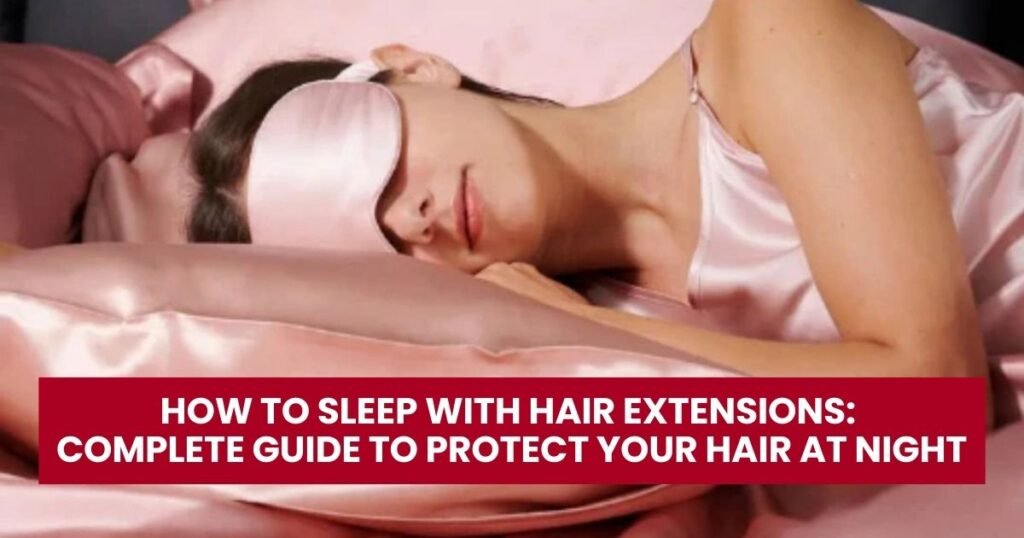
How to Sleep With Hair Extensions: Complete Guide to Protect Your Hair at Night
Jan
Learning the right nighttime routine for hair extensions is an essential part of long term extension care, yet it remains one of the most misunderstood areas. Many people invest in premium hair, professional installation, and quality products, only to face tangling, dryness, or discomfort much sooner than expected.
This typically happens at night. During the day, extensions are styled and controlled. While sleeping, however, the body moves instinctively. Friction increases, tension shifts, and moisture balance changes. Without a proper nighttime routine, even the highest quality extensions are exposed to unnecessary stress for hours at a time.
This guide explains the correct way to protect hair extensions while sleeping, using principles followed by professional stylists and extension specialists. Whether you are new to wearing extensions or have years of experience, adopting the right nighttime habits can significantly improve comfort, longevity, and overall hair quality.
Why Knowing How to Sleep With Hair Extensions Matters
People who struggle with nighttime wear often share similar experiences. They wake up with knots near the roots, feel tension along the scalp, or notice their extensions losing softness and manageability too quickly. This can be especially frustrating when daily care routines are already in place.
The issue is not the hair itself. Extensions do not receive natural scalp oils in the same way as natural hair. When combined with constant movement during sleep, this creates an environment where friction and dryness occur at the same time.

If this pattern continues, the effects become cumulative. Attachment points weaken, bonds gradually wear down, and natural hair is exposed to repeated tension. Over time, this shortens the lifespan of the extensions and compromises the health of the hair underneath.
Understanding how nighttime habits affect hair extensions is therefore not optional. It is a foundational element of responsible, long term extension care.
How to Sleep With Hair Extensions the Right Way
Preparing Hair Extensions Before Bed
Nighttime care begins with proper preparation. Hair should never be slept on while wet or even slightly damp. Moisture can weaken attachment points and increase friction between strands during the night.
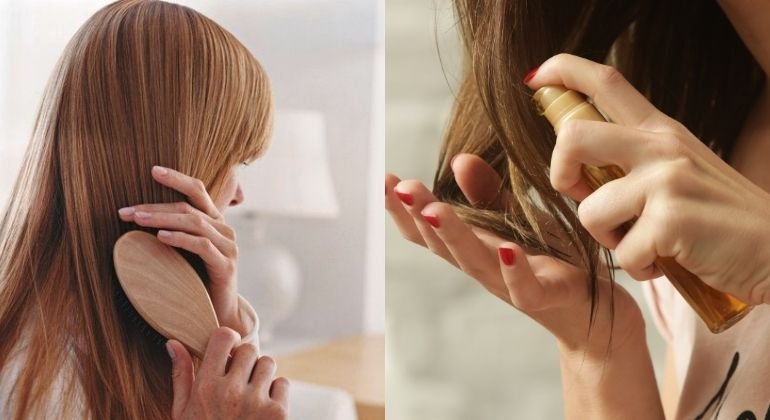
Before going to bed, gently brush the hair using a tool designed for extension wear. Start at the ends and work upward, allowing tangles to release gradually without pulling at the roots. This helps prevent small knots from tightening while you rest.
If the hair feels dry, apply a small amount of lightweight leave in conditioner or hair oil to the mid lengths and ends only. Keep products away from the roots and attachment areas to maintain bond strength.
Best Hairstyles for Sleeping at Night
Hair should be secured in a way that limits excess movement without creating tension. A loose low braid is commonly recommended by professionals, as it keeps strands aligned while reducing stress on attachment points.
For longer lengths, two relaxed braids can help distribute weight more evenly. A low ponytail secured with a soft fabric scrunchie is also a suitable option.
Styles that pull upward, such as high ponytails or tight buns, should be avoided. These place continuous pressure on bonds and roots throughout the night and can lead to unnecessary strain over time.

Sleeping With Hair Extensions and the Role of Pillowcases
Why Fabric Choice Is Important
Many people overlook the surface their hair rests on for several hours each night. Cotton pillowcases create friction and absorb moisture, contributing to dryness and frizz.
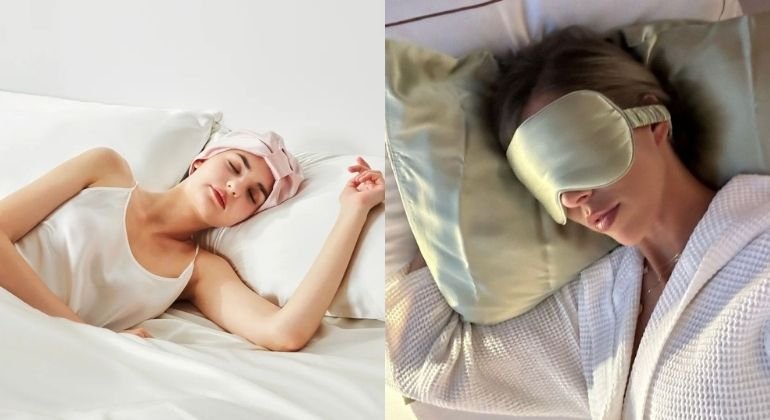
Silk or satin pillowcases allow hair extensions to glide smoothly as you move during sleep. This reduces friction, preserves moisture, and helps maintain cuticle alignment.
For those who regularly sleep with hair extensions, switching to a silk or satin pillowcase is one of the most effective protective measures.
Using Silk or Satin Sleep Caps
Sleep caps provide an additional layer of protection, particularly for those who move frequently while sleeping. They help keep hairstyles in place and further reduce friction against bedding.
A well-fitted silk or satin cap should feel lightweight and comfortable, without compressing the scalp or attachment points.
Sleeping With Hair Extensions by Type
Hair extensions are not designed to behave the same way during sleep. Each attachment method responds differently to friction, moisture, and repeated movement. Treating all extensions with a single nighttime routine is one of the most common reasons they lose shape or longevity too soon. Adjusting your sleep habits to match the structure of your specific hair extensions allows you to protect both the hair and the attachment points more effectively.
Tape In Hair Extensions
Tape-ins depend on adhesive contact, which means nighttime care should focus on keeping the tape area dry, flat, and undisturbed. Any remaining moisture before bed increases the risk of adhesive breakdown and surface matting. Hair should be fully dried, paying particular attention to the tape panels near the roots.
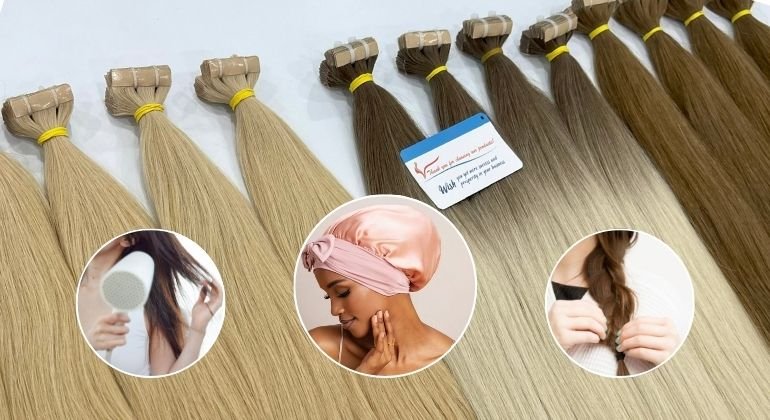
Before sleeping, the hair should be gently secured in a low, relaxed style that keeps the tape panels aligned without pressing them together. Smooth fabrics such as silk or satin help reduce surface friction, preventing repeated rubbing that can slowly weaken adhesion. When friction is minimized and moisture is controlled, tape in hair extensions maintain their placement far more consistently overnight.
>>> Read more: How to Care for Tape In Hair Extensions for Maximum Lifespan
Keratin Hair Extensions
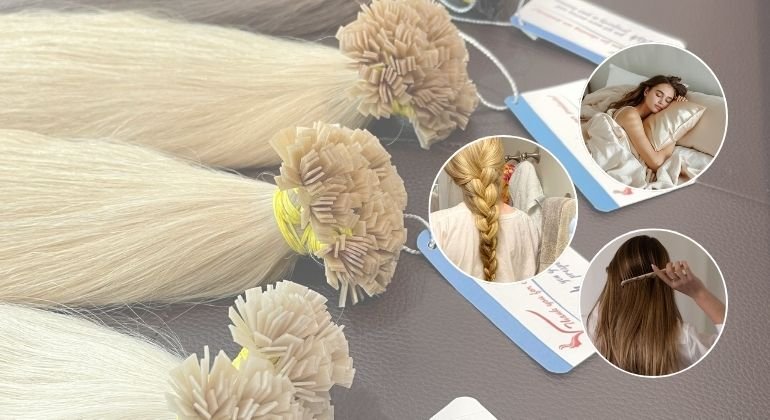
Keratin hair extensions are attached individually, which makes them especially sensitive to tension during sleep. Nighttime preparation should always begin with careful detangling, working gradually through the lengths while stabilizing the bond area to prevent strain at the attachment point.
Hair should then be gathered in a loose, low style that allows bonds to rest naturally rather than pulling in one direction. Positioning the style away from your dominant sleep side helps distribute friction more evenly. Smooth sleep surfaces such as silk pillowcases or bonnets act as a buffer between the bonds and constant movement, reducing long term wear on the keratin tips.
Weft Hair Extensions
Wefts hair concentrate weight along sewn or braided sections, which makes root-level care essential at night. Hair should be separated and smoothed near the base before bed to avoid tangling around the tracks. When dryness is present, a light conditioning product can be applied to the lengths without saturating the attachment area.
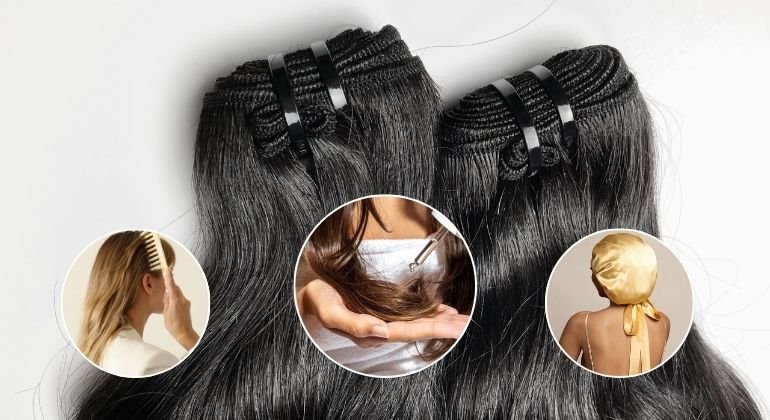
Securing the hair loosely helps maintain alignment while avoiding pressure on the wefts. Protective coverings such as silk wraps help contain the hair without compressing the sewn sections. Sleeping with any remaining moisture in weft extensions should be avoided, as damp tracks are prone to matting and uneven texture.
>>> Read more: How to Take Care of Weft Hair Extensions Properly for Long Lasting Wear
Clip In Hair Extensions
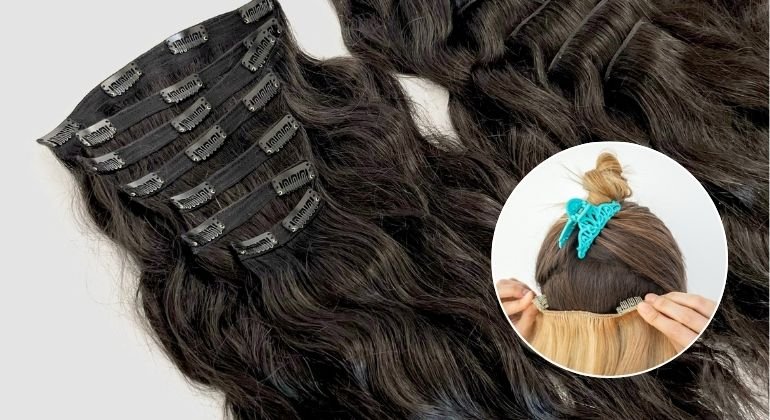
Clip-ins are intended for short-term wear and are not suitable for sleeping. Overnight movement places concentrated pressure on clip points, which can stress both the extensions and the natural hair beneath.
Removing clip-in extensions before rest allows the scalp to relax and prevents unnecessary friction. Once removed, extensions should be gently smoothed and stored in a dry environment to preserve their shape and integrity. Regular overnight wear significantly shortens the usable life of clip-in hair extensions.
Common Mistakes When Sleeping With Hair Extensions
One of the most common mistakes is skipping nighttime preparation altogether. Sleeping with loose, unbrushed hair significantly increases the risk of tangling.
Applying heavy products at night is another frequent error. While hydration is important, excessive oils can weaken bonds and cause buildup.
Ignoring discomfort is also a warning sign. Persistent tightness or soreness indicates that adjustments to nighttime habits are needed.
When the correct approach to sleeping with hair extensions is applied consistently, extensions retain their softness, structure, and appearance for a longer period. Fewer repairs and replacements are needed.
Natural hair benefits as well, experiencing less tension, reduced breakage, and a healthier scalp environment.
FAQs About Sleeping With Hair Extensions
Do hair extensions cause scalp pain while sleeping?
Hair extensions should not cause persistent pain while sleeping. Mild awareness during the first few nights after installation can be normal, but ongoing discomfort usually indicates excessive tension, improper styling, or incorrect attachment placement. Adjusting nighttime hairstyles, switching to softer accessories, or consulting a professional stylist can help resolve this issue.
Do silk pillowcases really make a difference for hair extensions?
Yes, silk and satin pillowcases make a noticeable difference when sleeping with hair extensions. These fabrics reduce friction, help retain moisture, and prevent rough cuticle movement during sleep. Over time, this results in less tangling, smoother texture, and improved longevity of both extensions and natural hair.
How long do hair extensions last if you sleep with them correctly?
When cared for properly, including correct nighttime routines, high quality hair extensions can last significantly longer. Consistent protection during sleep helps preserve softness, structure, and attachment strength, often extending wear time by several weeks or months depending on the extension type and maintenance schedule.
Final Thoughts From a Hair Extension Care Perspective
This guide reflects long term experience observing how hair extensions perform over time under different care routines. The difference between extensions that remain beautiful for months and those that deteriorate early often comes down to nighttime habits.
Understanding how to sleep with hair extensions is about applying a clear principle with consistency. When friction is reduced, tension is controlled, and movement is structured, hair extensions remain comfortable, durable, and visually seamless. That level of care is what separates everyday wear from truly professional results.
>> Read more: Hair Extension Care and Maintenance: Complete Guide to Long-Lasting Extensions
Proper hair extension care goes beyond daily and nighttime routines. Choosing an experienced supplier who understands quality, sourcing, and long-term wear plays an equally important role in achieving lasting results. At Thanh An Hair, we take care of all your concerns from start to finish. We are Vietnam’s premier provider of hair extensions and wigs, with over 20 years of experience in the industry and a verified Alibaba account that has been active for over 13 years. We currently work with over 500 salon owners, hairstylists, and hair suppliers worldwide. We are confident in our position as a top brand, providing the finest customer experience in terms of product quality and affordability.
Contact Thanh An Hair now for expert consultation and the best price list.
🌍 100% Vietnamese Human Hair – Consistent Quality
📦 Ready Stock – Fast Global Shipping
🤝 Competitive Pricing – Flexible for Every Order
👉 WhatsApp: (+84) 973522855
👉 Instagram: THANH AN HAIR WHOLESALE MANUFACTURER
👉 TikTok: Thanh An Hair
👉 Email: thanhanexport@gmail.com