
Raw Vietnamese Hair
How Many Bundles Do You Need for Sew In Human Hair Extensions?
Mar
When planning a sew in hairstyle, one of the first and most important questions is simple: how many bundles do you actually need? The answer is not the same for everyone. It depends on the length you choose, the level of fullness you prefer, and the overall look you are trying to achieve.
If you are investing in sew in human hair extensions, choosing the correct number of bundles ensures your hairstyle looks balanced, full, and natural from root to tip. Too few bundles can leave the ends looking thin, while too many can add unnecessary weight and cost.
In this complete guide, we will break down exactly how many bundles you need based on hair length, density preferences, and installation type. By the end, you will know precisely what to purchase before heading to your stylist.
What Are Sew In Human Hair Extensions?
Sew in human hair extensions refer to a method of adding hair to your own natural hair by sewing bundles of human hair extensions onto braided cornrows. This technique does not use glue, tape, or heat, which makes it one of the healthier, more secure options for long-term wear.
With high-quality human hair bundles, sew in extensions blend seamlessly with your natural hair. You can curl, straighten, style, and color the hair just like your own.
Benefits of Sew In Human Hair Extensions
Some of the key advantages include:
- Long-lasting wear: Sew in installations can last up to 8 weeks or more with proper care.
- Natural look and feel: Human hair bundles look incredibly realistic and blend with your own hair.
- Styling versatility: You can style the extensions freely: curl, straighten, and change parting.
- Low heat and fewer chemicals: Because no glue or tape is used, there is less damage to your natural hair.
Factors That Determine How Many Bundles You Need for a Sew-In
When deciding how many bundles of sew in human hair extensions, several key factors must be considered. The number of bundles is not determined by length alone. Hair texture, head size, and whether you are installing lace frontal and lace closure pieces all play an important role in achieving the right level of fullness.
Below is a detailed breakdown of each factor so you can confidently determine the perfect bundle count for your sew-in.
Hair Length
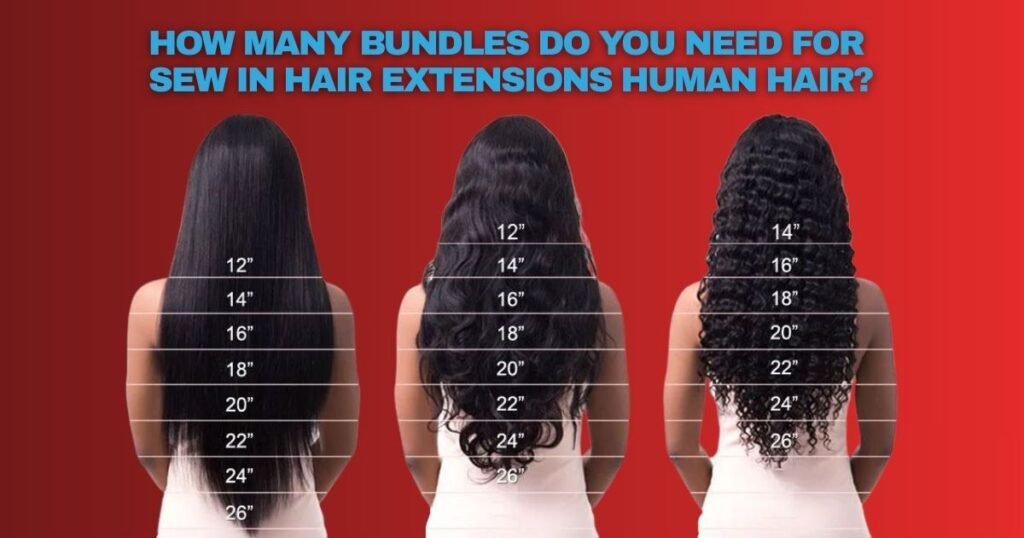
Hair length is the most significant factor influencing how many bundles you need. As the length increases, the density of each bundle decreases toward the ends. This means longer styles often require more bundles to maintain fullness from root to tip.
Short Hair (10-14 Inches)
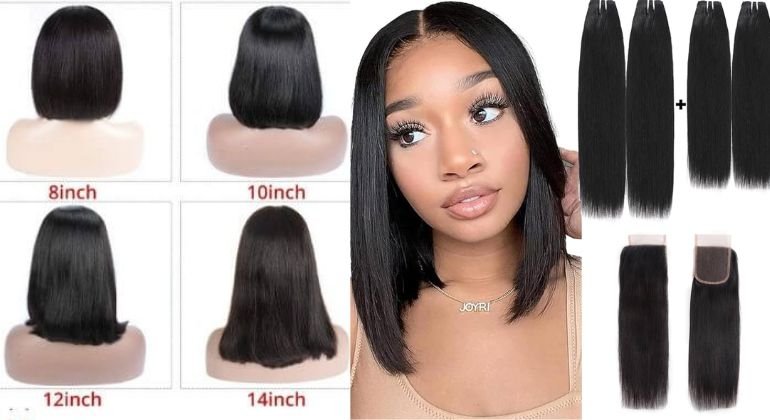
Short sew in styles between 10 and 14 inches naturally appear fuller because the wefts are denser and the weight of the hair is distributed evenly.
For this length:
- Two bundles are typically enough for a complete sew-in.
- If you prefer a slightly thicker look, you may add a third bundle.
- In most cases, three bundles are rarely necessary unless you want a very full finish.
Because shorter hair does not taper as dramatically at the ends, fewer bundles are required to achieve a balanced and voluminous look.
Medium-Length Hair (16-20 Inches)
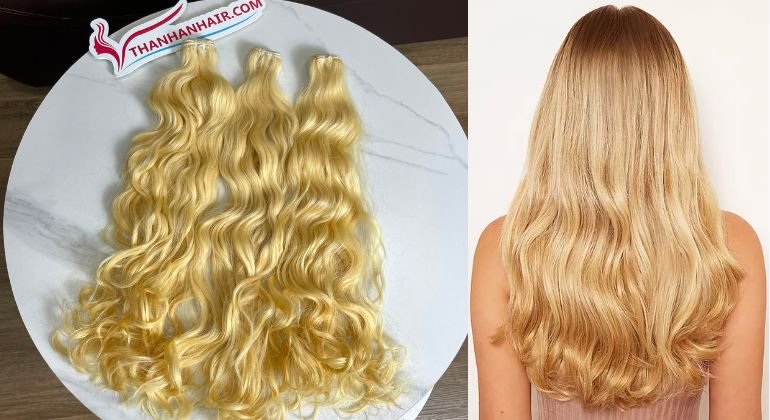
Medium-length sew in human hair extensions, ranging from 16 to 20 inches, are among the most popular choices. This length offers versatility while maintaining manageability.
For medium-length sew-ins:
- Three bundles are generally recommended.
- If you want added fullness, especially for layered cuts or body wave styles, a fourth bundle can enhance volume.
- For a more natural everyday appearance, three bundles are typically sufficient.
At this length, the hair begins to thin slightly at the ends, so three bundles provide the ideal balance between length and fullness.
Long Hair (22 Inches and Above)
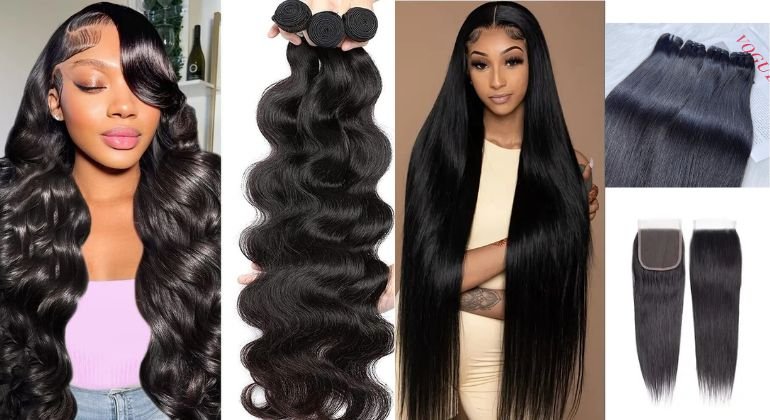
Long sew in human hair extensions require more planning. When you choose 22 inches or longer, each bundle becomes thinner toward the ends due to the extended length.
For longer styles:
- Three to four bundles are recommended.
- If you want a thick, glamorous look, four bundles are ideal.
- For extremely long styles above 26 inches, four bundles may be necessary to maintain density throughout.
The longer wefts naturally appear less dense, so adding an extra bundle ensures the hair remains luxurious rather than stringy at the tips.
Hair Texture
Hair texture significantly impacts how many bundles you need for a sew-in because different textures create different levels of volume.
Straight Hair
Straight sew-in hair extensions lay flat against the head. Because straight hair does not create natural volume through curl patterns, it often requires more bundles to achieve fullness.
For straight textures:
- Three bundles are typically needed for medium density.
- Four bundles may be required for long lengths or a fuller look.
If you are aiming for sleek, straight styles, keep in mind that straight hair tends to show thin ends more easily than textured styles.
Wavy Hair
Wavy textures provide more body than straight hair. The natural movement and curve of waves add visual fullness without requiring as many bundles.
For wavy sew-ins:
- Two to three bundles are usually sufficient.
- Three bundles are ideal for medium- to long-lengths.
Because waves create volume naturally, you can often use fewer bundles while still achieving a full appearance.
Curly or Kinky Hair
Curly and kinky textures are the most voluminous options. Their natural density and lift make the hair appear thicker even with fewer bundles.
For curly or kinky sew-ins:
- Two to three bundles are typically enough.
- Even at longer lengths, three bundles often provide excellent fullness.
These textures expand outward, giving the illusion of thickness without needing additional wefts.
Head Size
Head size is often overlooked, but it directly affects how many bundles you need for sew in human hair extensions. A larger head circumference requires more coverage, while a smaller head may require fewer bundles.
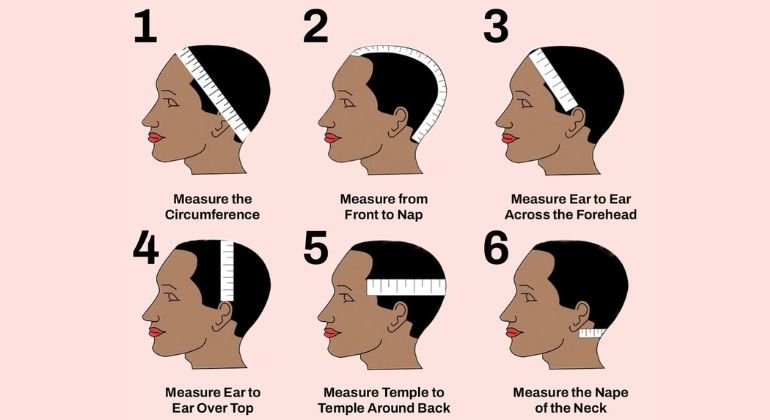
Small Head Size
If you have a smaller head:
- Two bundles are often enough for short to medium lengths.
- Adding a third bundle can increase volume if desired.
Because there is less surface area to cover, fewer bundles are typically sufficient.
Average Head Size
For average head sizes:
- Three bundles are usually the ideal number.
- This applies to most lengths and textures.
- Three bundles provide balanced coverage and density.
This is considered the standard recommendation for most sew-in installations.
Larger Head Size
If you have a larger head circumference:
- Three to four bundles may be necessary.
- Longer and straighter textures may require an additional bundle.
- Extra coverage ensures the sew-in looks even and full around the entire perimeter.
More surface area means more hair is needed to maintain consistent thickness.
Lace Frontal and Lace Closure
The type of lace piece you use also impacts how many bundles you need. Lace frontal and lace closure installations affect the amount of space bundles must cover.
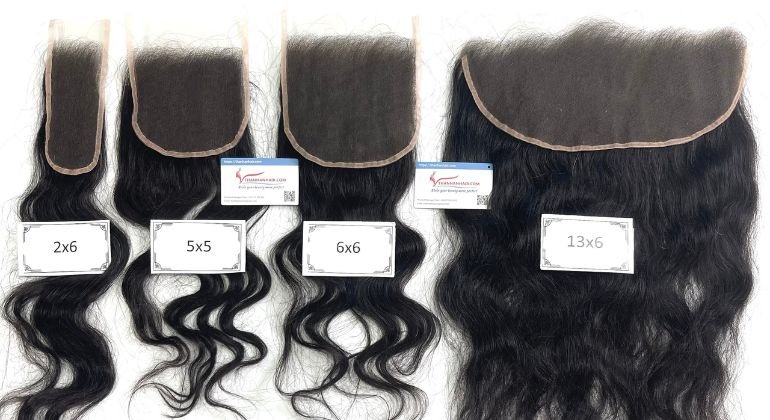
Lace Closure
A lace closure covers a smaller portion of the scalp, typically in the center or side part area.
When using a closure:
- Short lengths (10 to 14 inches) usually require two bundles plus the closure.
- Medium lengths (16 to 20 inches) typically require three bundles.
- Long lengths (22 inches and above) may need three to four bundles for full coverage.
Closures reduce the amount of exposed leave-out hair but do not significantly decrease the number of bundles required for longer styles.
Lace Frontal
A lace frontal covers the entire hairline from ear to ear, offering greater styling flexibility.
Because a frontal occupies a larger portion of the front area:
- Short lengths can often use two bundles plus a frontal.
- Medium lengths usually require three bundles.
- Longer lengths often need three to four bundles for fullness.
Frontals sometimes allow you to use slightly fewer bundles than a traditional sew-in without a lace piece because they cover more space at the front.
360 Frontal
A 360 frontal wraps around the entire perimeter of the head.
With a 360 frontal:
- Two bundles are often enough for shorter styles.
- Medium lengths may require two to three bundles.
- Longer lengths generally need three bundles.
Since the 360 frontal covers the edges and nape area, fewer bundles are required to complete the look compared to a traditional full sew-in.
How Many Bundles Do You Need for Different Sew-In Styles
The number of bundles you need doesn’t just depend on hair length or texture, it also depends heavily on the sew-in style you choose. Different installation methods require different amounts of coverage, and that directly affects how full your final look will appear.
Some styles rely on closures or frontals for coverage, while others leave part of your natural hair out. Understanding how each method works will help you decide exactly how many bundles you should purchase before your appointment.
Let’s break it down by style.
Full Sew-In
A full sew-in means your natural hair is completely braided down underneath, and extensions are sewn across your entire head. This style offers maximum protection and gives you complete control over length, volume, and texture.
Because everything is covered, the number of bundles you need depends mainly on the length you choose and whether you’re installing a closure or a frontal.
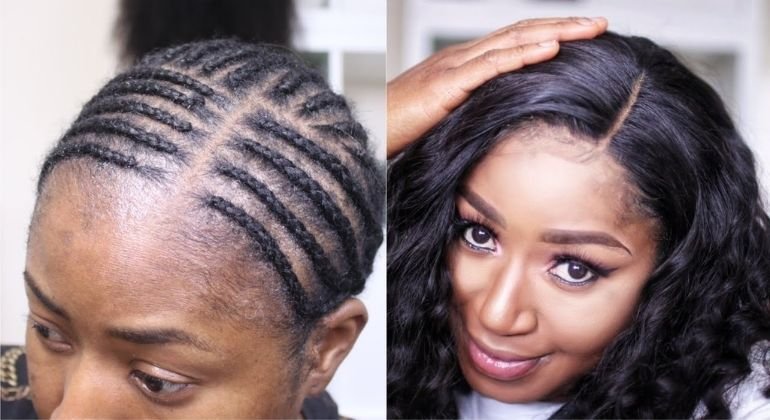
Full Sew-In with a Closure
A lace closure typically covers a small section at the top or crown of your head. Since it replaces several tracks of hair in that area, you won’t need as many bundles as you would with a full head of tracks.
For shorter lengths, such as 10 to 14 inches, two bundles paired with a closure are usually enough. Short hair appears naturally fuller because the wefts are thicker and denser at shorter lengths. If you prefer extra volume, you can add a third bundle, but for most people, two is sufficient.
For medium lengths between 16 and 20 inches, three bundles are ideal. This length is popular because it provides noticeable length while still maintaining fullness. Three bundles ensure the hair doesn’t look thin toward the ends.
For longer lengths, 22 inches and above, three to four bundles are recommended. As hair gets longer, the wefts become thinner, so adding an extra bundle helps maintain thickness from top to bottom and prevents a stringy appearance.
Full Sew-In with a Frontal
A lace frontal offers more coverage than a closure. It runs from ear to ear, covering your entire hairline. This allows for more versatile styling, including middle parts, deep side parts, and even pulled-back styles.
Since the frontal replaces even more tracks at the front, you might think you need significantly fewer bundles. However, fullness still depends largely on the length of the bundles themselves.
For shorter lengths (10–14 inches), two bundles with a frontal can create a complete and natural look.
For medium lengths (16–20 inches), three bundles provide balanced density and prevent the back from looking thin compared to the front.
For longer lengths (22 inches or more), three to four bundles are usually needed to keep the style looking thick and glamorous. Longer hair naturally loses density toward the ends, so the extra bundle helps maintain a luxurious finish.
Partial Sew-In
A partial sew-in leaves some of your natural hair out. That exposed hair helps cover the tracks and blend the extensions more seamlessly.
Because your own hair contributes to the overall look, the number of bundles required can sometimes be slightly lower, but this also depends on how much hair is left out.
Leave-Out Sew-In
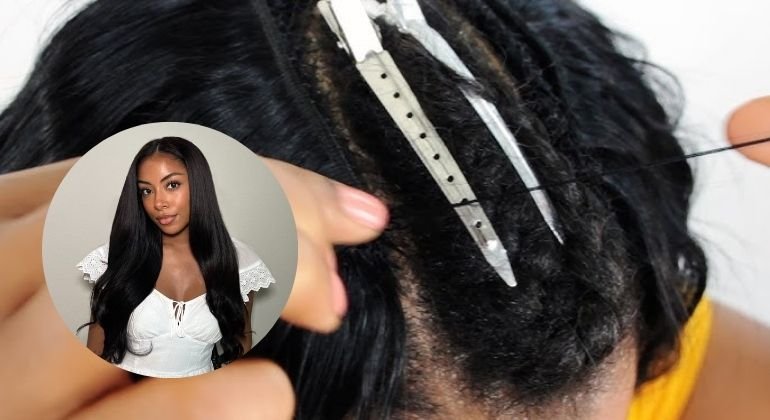
In a traditional leave-out sew-in, a section of your natural hair is left out at the top or along the perimeter. This creates a very natural finish because your real hair is visible and blends with the extensions.
For shorter lengths (10–14 inches), two bundles are typically enough. Since your natural hair adds density at the top, you don’t need excessive bundles for fullness.
For medium lengths (16–20 inches), three bundles are usually recommended. This ensures the body of the hair matches the volume of your leave-out.
For longer lengths (22 inches and above), three to four bundles may be necessary. Longer styles require more hair to prevent the bottom from looking thin compared to the top.
Minimal Leave-Out Sew-In
A minimal leave-out sew-in exposes less of your natural hair than a traditional leave-out style. Because less of your real hair is contributing to the final look, you may need slightly more bundles to compensate.
For shorter lengths, two to three bundles work well, depending on how thick you want the final result to be.
For medium lengths, three bundles are generally ideal for maintaining balance and fullness.
For longer lengths, four bundles are often recommended to ensure the ends remain thick and cohesive. Without enough bundles, long minimal leave-out styles can appear uneven or sparse.
Sew-In with 360 Frontal
A 360 frontal wraps around your entire hairline and perimeter. This allows you to wear high ponytails, buns, and updos while maintaining a natural-looking hairline all the way around.
Because the 360 frontal replaces tracks around the edges and back, you generally need fewer bundles compared to a traditional full sew-in.
For shorter lengths (10–14 inches), two bundles are typically sufficient.
For medium lengths (16–20 inches), two to three bundles usually create enough volume and density.
For longer lengths (22 inches and above), three bundles are commonly recommended. Even though the 360 frontal provides extensive coverage, longer lengths still require enough hair to maintain thickness throughout the style.
Choosing the right bundle count for your sew-in style ensures your hair looks full, balanced, and natural from every angle. When in doubt, especially with longer lengths, adding one extra bundle can make a noticeable difference in achieving a fuller, more polished finish.
Conclusion
Finding the right answer to how many bundles you need for a sew-in isn’t complicated once you understand the key factors. Hair length affects thickness at the ends, texture influences overall volume, and your chosen sew-in style determines how much coverage is required. Short styles can look full with fewer bundles, while longer lengths often need extra hair to maintain density and avoid a thin appearance. Likewise, a closure, frontal, leave-out, or 360 installation will each slightly change the number of bundles you should prepare.
The most important thing is balance. You want enough bundles to achieve fullness and movement without overloading the style. When selected correctly, the right bundle count will give you a seamless, natural look that feels comfortable and long-lasting.
If you are looking for premium-quality bundles with consistent thickness and durability, Thanh An Hair is your trusted partner.
At Thanh An Hair, we take care of all your concerns from start to finish. We are Vietnam’s premier provider of hair extensions and wigs, with over 20 years of experience in the industry and a verified Alibaba account that has been active for over 13 years. We currently work with over 500 salon owners, hairstylists, and hair suppliers worldwide. We are confident in our position as a top brand, providing the finest customer experience in terms of product quality and affordability.
Contact Thanh An Hair today for expert consultation and the most competitive price list.
🌍 100% Vietnamese Human Hair – Consistent Quality
📦 Ready Stock – Fast Global Shipping
🤝 Competitive Pricing – Flexible for Every Order
👉 WhatsApp: (+84) 973522855
👉 Instagram: THANH AN HAIR WHOLESALE MANUFACTURER
👉 TikTok: Thanh An Hair
👉 Email: thanhanexport@gmail.com