
Raw Vietnamese Hair
Difference Between a Lace Frontal and Closure: Everything You Need Before Buying Lace Hair
Jan
Choosing the right lace piece is one of the most important decisions when investing in hair extensions or wigs. Many buyers focus on hair length, texture, or origin while overlooking the lace construction that determines how natural the final hairstyle looks and how comfortable it is to wear. Among all lace options, lace frontals and lace closures are the two most commonly used pieces, yet also the most confusing for buyers.
Understanding the difference between a lace frontal and closure is essential before buying lace hair. Although these two terms are often used interchangeably, they serve very different purposes and affect styling flexibility, installation method, maintenance level, and overall appearance.
This in-depth guide explains everything you need to know about lace frontal and lace closure so you can choose the right option with confidence and avoid costly mistakes.
What Is Lace Hair and Why It Matters?
Lace hair is a functional base, not a decorative feature. Its purpose is to visually replace the scalp in areas where natural hair cannot provide coverage or realism. Through hand ventilation, hair strands are tied onto lace to imitate natural growth patterns, spacing, and density distribution.
High-quality lace hair performs three critical functions at the same time. First, it eliminates visible tracks and wefts. Second, it creates believable parting spaces that resemble a real scalp. Third, in some constructions, it recreates the natural hairline itself.
The amount of lace used and its placement on the head define what the hairstyle can realistically achieve. This is the foundation for understanding lace frontal and lace closure.
What Is a Lace Frontal
A lace frontal is a lace hairpiece designed to recreate the entire front hairline from one ear to the other. It visually replaces the natural hairline area, including the forehead and temple regions, and extends several inches back toward the crown.
Unlike other lace pieces, a frontal directly defines how the hairstyle connects to the face. This means the frontal determines whether the hairline looks natural or artificial under close inspection.
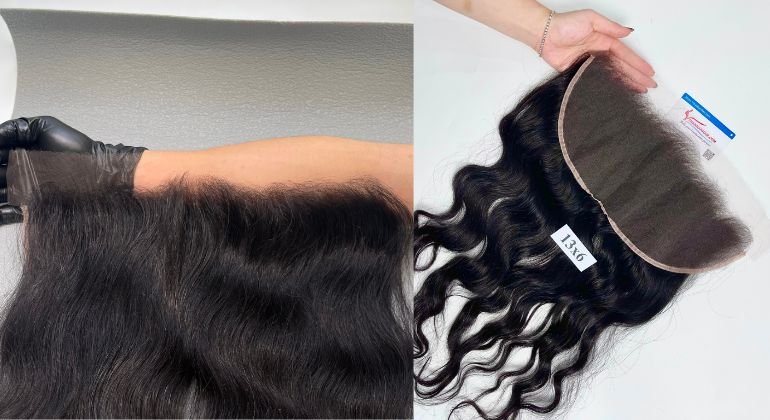
Lace Frontal Construction and Functional Role
From a technical perspective, the frontal requires precise ventilation and density control. Hair density must gradually transition from lower density at the front hairline to higher density toward the back. This gradient is necessary to replicate natural hair growth and avoid an abrupt or unnatural hairline.
Ventilation direction is also critical. Hair must be knotted in specific directions to support multiple parting styles without exposing the lace or creating visible gaps. Knot size must remain small and consistent to prevent a grid pattern from appearing on the lace.
Because the frontal covers the most visually sensitive area of the hairstyle, any issue related to lace thickness, knot visibility, density imbalance, or incorrect placement becomes immediately noticeable. For this reason, lace frontal demands higher production accuracy and more precise installation compared to lace closure.
What Is a Lace Closure
A lace closure serves a different purpose. It is designed to close the top of a sew-in hairstyle by creating a natural-looking parting space at the crown. It does not attempt to recreate the hairline, nor is it meant to be exposed along the forehead.
The closure functions as a visual anchor at the top of the head, allowing wefts to be sewn around it without leaving gaps or visible construction.
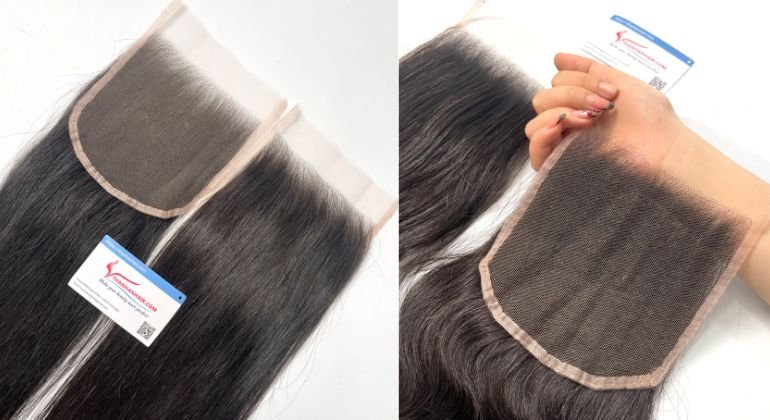
Lace Closure Construction and Technical Purpose
Lace closure construction is more straightforward. The lace area is smaller, and the ventilation pattern focuses on simulating scalp visibility only along the part. Density is more consistent across the piece because it does not need to transition gradually like a hairline.
This simpler structure makes closure more durable and less sensitive to installation imperfections. It is designed for stability rather than versatility.
>>> Read more: Why Everyone Is Switching to Lace Closure in 2025
Difference Between a Lace Frontal and Closure
Understanding how these two lace pieces differ requires looking at their technical design and real-world function. While both are lace-based components used to achieve a natural-looking finish, they are built for different purposes and behave very differently once installed.
Below is a practical comparison based on the key factors professionals evaluate before making a selection.
Coverage Area and Size
The most noticeable distinction lies in how much area each option covers.
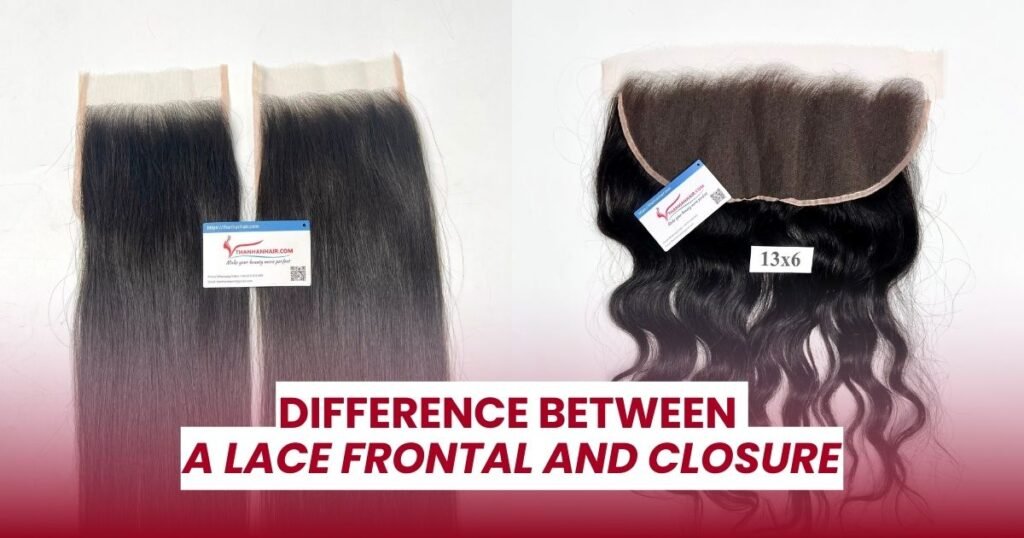
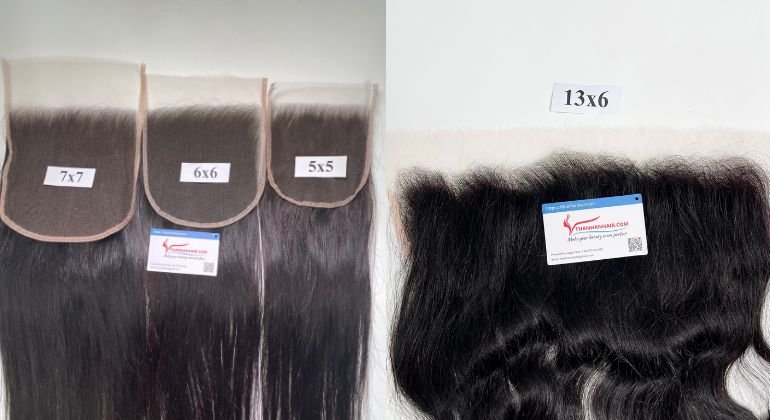
A frontal piece usually measures around 13×4 or 13×6 inches and stretches from one ear to the other along the front of the head. Its role is to recreate the entire front hairline, including the temple zones, so the hair appears to grow naturally from the scalp across the forehead.
A closure piece is significantly smaller, commonly produced in sizes such as 4×4, 5×5, or 6×6 inches. It is designed to cover only a limited section at the crown or front center, mainly to seal a sew-in or wig while forming a defined part.
Because of this difference in coverage, a closure cannot fully replace the natural hairline, whereas a frontal is specifically constructed to do exactly that.
>>> Read more: Lace Closure Sizes for Every Style: What You Need to Know
Hairline Appearance and Realism
Hairline realism is one of the most important factors to consider when evaluating these two lace options.
A frontal design creates a seamless, natural-looking hairline that runs across the entire front of the head. This allows the forehead to remain visible and supports styles where the hair is pulled back or away from the face without exposing tracks or seams.
In contrast, a closure focuses realism mainly on the parting area. The front hairline still relies on leave-out hair or additional styling techniques, which can make certain hairstyles more likely to reveal tracks or an uneven transition.
For buyers who demand a highly realistic hairline under close inspection, a full frontal solution delivers more consistent visual results.
Styling Flexibility
Styling versatility is another important factor that separates these two lace options.
A frontal design allows for multiple parting styles, including middle, side, and deep side parts, as well as free parting across the front. It also supports hairstyles such as high ponytails, slick-back looks, and half-up styles where the hair needs to be pulled away from the face.
A closure, by comparison, restricts styling to the specific area it covers. Most designs are intended for a single fixed part or very limited parting options, making styles that expose or reshape the hairline less practical.
For users who value flexibility and frequent style changes, a frontal-based setup provides far more creative freedom.
Installation Complexity
The installation process further highlights the practical differences between these two lace options.
A frontal setup requires careful placement along the natural hairline. This process often includes trimming excess lace, refining the hairline shape, bleaching knots, and securing the lace with adhesive or gel to create a seamless blend with the skin.
A closure setup is generally quicker and more straightforward. It is usually sewn into place and does not require extensive hairline customization or adhesive use, making it easier for beginners and more efficient in salon environments.
Because of the additional steps involved, a frontal installation typically demands more time, technical skill, and professional experience.
>>> Read more: Lace Closure Sew In Tutorial: Step-by-Step Guide for a Flawless Look
Maintenance and Longevity
Maintenance requirements differ noticeably between these two options.
A frontal design involves a larger lace surface and frequent styling around the hairline, which means it needs more careful day-to-day care. Without proper handling, issues such as lace lifting, fraying, or gradual knot damage can occur over time.
A closure, by contrast, tends to hold up better during regular wear. Its smaller lace area is exposed to less tension and fewer adhesives, making upkeep simpler and extending its usable lifespan with minimal effort.
For users seeking long-term wear with minimal maintenance, a closure-based setup is generally the more forgiving choice.
Cost Considerations
Cost is another practical factor in the difference between a lace frontal and a closure.
Lace frontals are more expensive due to larger lace size, higher labor costs during production, and increased installation effort. Additional expenses may also arise from professional installation and maintenance.
Lace closures are more budget-friendly. They use less lace, require less labor, and incur lower installation and maintenance costs, making them a cost-effective option for many users.
Best Use Scenarios
Choosing between lace frontal and lace closure depends on the intended use.
Lace frontal is best suited for clients who want a fully realistic hairline, frequent hairstyle changes, or styles that expose the forehead and temples.
Lace closure is ideal for users who prefer simple, consistent styles, minimal maintenance, and a more affordable solution without the need for full hairline reconstruction.
Who Should Choose Lace Frontal or Lace Closure
Choosing between a lace frontal and a lace closure depends on lifestyle, styling needs, maintenance tolerance, and long-term usage expectations. Although both options create a natural-looking finish, they serve different user profiles and practical purposes.
Buyers Who Should Choose Lace Frontal
This option is best suited for buyers who need a fully reconstructed hairline and a high level of styling freedom. Since it recreates the entire front hairline from ear to ear, it works well for users who often wear styles that expose the forehead, temples, or sides of the face.
It is ideal for individuals who:
• Prefer versatile hairstyles such as middle parts, deep side parts, slick-back looks, high ponytails, or half-up styles
• Require a natural-looking hairline for close viewing, photography, or video content
• Work with professional stylists or have experience handling lace-based hair systems
• Are comfortable with regular upkeep, including hairline touch-ups, lace cleaning, and periodic reinstallation
• Value visual realism more than convenience and are willing to invest in higher upfront and ongoing costs
Because this setup involves precise installation and careful daily handling, it is best suited for users who see hair styling as an active part of their routine rather than a low-effort solution.
Buyers Who Should Choose Lace Closure
This option is more suitable for buyers who want a stable, low-maintenance hairstyle with reliable, consistent results. Because it covers only a small parting area, it delivers a natural appearance at the crown while keeping the overall structure simple and secure.
It works well for individuals who:
• Prefer fixed or simple parting styles such as a middle or side part
• Wear their hair down most of the time without pulling it away from the face
• Want a secure installation designed for long-term wear
• Have limited time or experience for frequent lace upkeep
• Look for a cost-effective solution that balances natural appearance with ease of use
With less tension on the lace and minimal adhesive involved, this setup is often favored by beginners, daily wear users, and those who prioritize durability over styling flexibility.
Conclusion
Understanding the difference between a lace frontal and closure is only the first step. Choosing the right product also depends on hair quality, lace construction, consistency, and supplier reliability. Even the best lace frontal or lace closure will not perform well if the hair is poorly sourced or incorrectly processed.
That is why working with an experienced and transparent manufacturer matters just as much as selecting the right lace type.
At Thanh An Hair, we take care of all your concerns from start to finish. We are Vietnam’s premier provider of hair extensions and wigs, with over 20 years of experience in the industry and a verified Alibaba account that has been active for over 13 years. We currently work with over 500 salon owners, hairstylists, and hair suppliers worldwide. We are confident in our position as a top brand, providing the finest customer experience in terms of product quality and affordability.
Contact Thanh An Hair today for expert consultation and the most competitive price list.
🌍 100% Vietnamese Human Hair – Consistent Quality
📦 Ready Stock – Fast Global Shipping
🤝 Competitive Pricing – Flexible for Every Order
👉 WhatsApp: (+84) 973522855
👉 Instagram: THANH AN HAIR WHOLESALE MANUFACTURER
👉 TikTok: Thanh An Hair
👉 Email: thanhanexport@gmail.com